
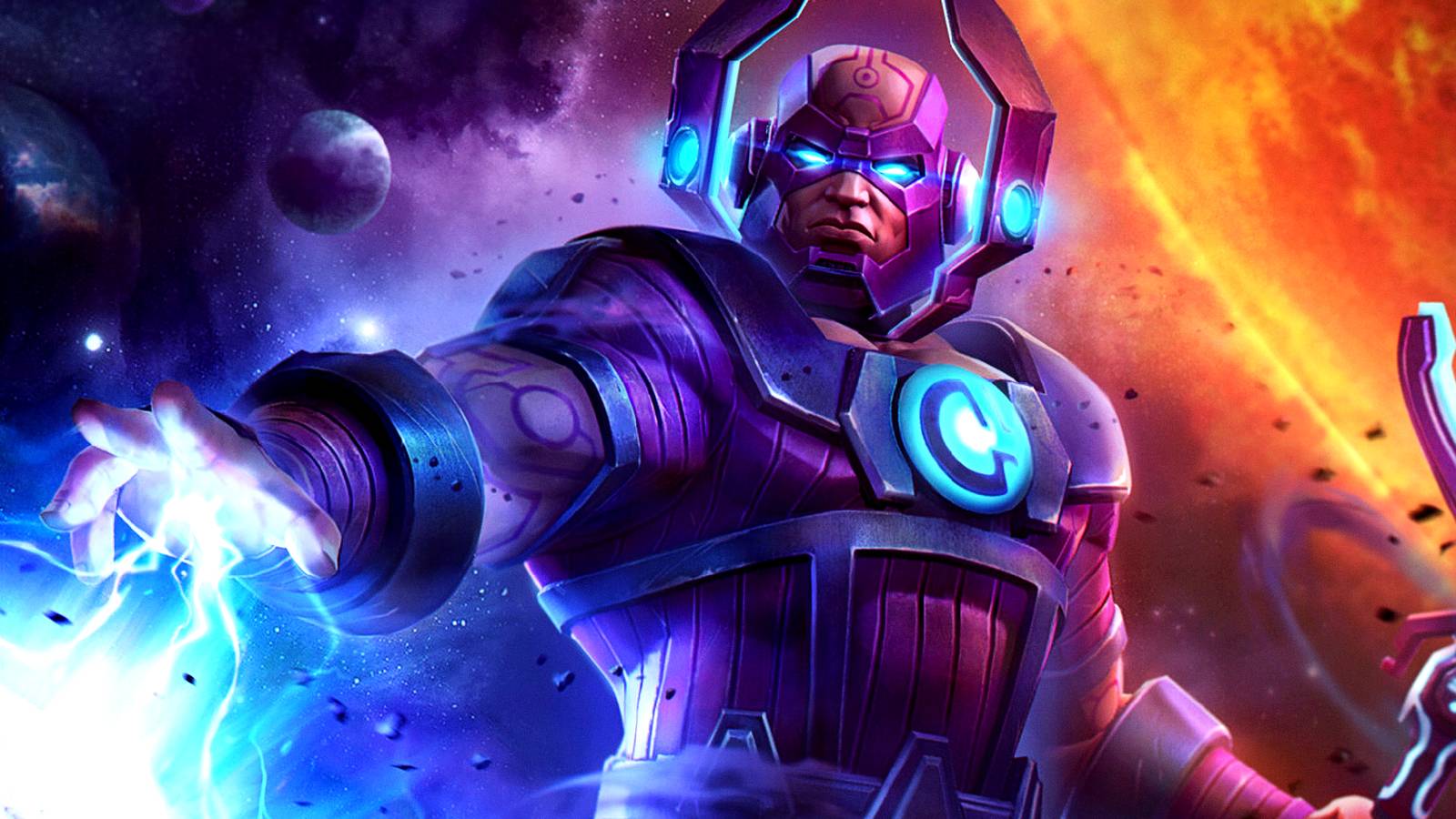
Published Sep 12, 2026, 4:30 PM EDT Nicolas Ayala is a Senior Writer for the Comics team at ScreenRant, with over five years of experience writing about Superhero media, action movies, and TV shows. Marvel's Galactus is once again overshadowed by a cosmic character more powerful, more grandiose, and more terrifying than the Devourer of Worlds. Without a doubt, Galactus has been the definitive personification of cosmic horror in the Marvel Universe ever since he made his comic book debut in 1965's Fantastic Four #48. Jack Kirby's masterclass character design captures a being that exists beyond human comprehension and morality. Galactus' terrifying majesty is deeply intertwined with the history of the Fantastic Four, being both a lifelong nemesis and an occasional cosmic ally. Despite his fame, Marvel has developed a distinct habit of using Galactus as a high-stakes measuring stick to legitimize new threats. The Devourer of Worlds' colossal stature and immense power level make him the ultimate target for new heroes and villains looking to prove just how dangerous they are. This trend has led to numerous storylines where Galactus is overpowered or slain by new characters or already established figures with new power upgrades. While this trope of overshadowing Galactus succeeds in instantly establishing an apocalyptic atmosphere for a new comic event, Galan of Taa has never lost his iconic status. As long as Galactus continues to be Marvel's ultimate cosmic force, there will always be new entities that challenge him, directly or indirectly. Nightmare's Dream-Destroying Counterpart Gulgol Returns Doctor Strange: Endless Nightmare; Written By Kevin J Anderson; Art By Raúl Jallén & Patricia Martín Kevin J Anderson, Raúl Jallén, and Patricia Martin's 2026 graphic novel Doctor Strange: Endless Nightmare brings back the cosmic entity Gulgol, created by Stan Lee and Steve Ditko themselves in 1964's Strange Tales #122, where Stephen Strange summoned it from the Netherworld to defeat Nightmare. Doctor Strange: Endless Nightmare acknowledges Gulgol's long absence and explains that Strange's previous victory over Nightmare only created a bigger villain, as Gulgol threatens to destroy the very ideas of nightmares, dreams, and sleep, leading Strange and Nightmare to team up and fight the giant villain together. Galactus is the most famous representation of cosmic annihilation, as the Devourer of Worlds is a force that can't be reasoned with, and he consumes entire planets only to satisfy his hunger. However, there are other similar beings who possess Galactus' nature at higher levels of power and cosmic significance. The Black Winters consume entire universes, the Beyonders have the power to rewrite the multiverse, and Gulgol is able to destabilize reality by removing essential elements like dreams and nightmares. Only a coalition as strong as Doctor Strange and Nightmare can stop Gulgol from injecting slow-burning decay into the Marvel multiverse. Gulgol Proves The Marvel Universe Needs Negative Forces The War Between Good And Evil Will Never End In The Marvel Multiverse The cosmic architecture of the Marvel universe possesses a delicate equilibrium that requires destructive forces to coexist with order and heroism. Removing apex cosmic predators like Galactus, the Black Winters, the Void, Dormammu, and Nightmare might seem like a victory for life, but it would actually trigger catastrophic systemic failures across the multiverse. As Gulgol proves, eliminating Nightmare would affect the collective unconscious of sentient beings, leaving the mortal mind unable to process trauma through dreams. Likewise, banishing Dormammu would leave an unfillable vacuum in the Dark Dimension, which could invite even more chaotic horrors to breach the walls of reality. This cosmic necessity for conflict ripples all the way down to the most grounded, street-level struggles of Earth's heroes. The eternal battle between good and evil also applies to the X-Men, who can never escape oppression and hatred and always find themselves on the verge of extinction. For Spider-Man, the infamous "Parker luck" is a personalized version of Marvel's cosmic balance, as every single one of Peter Parker's victories is met with an equal and opposite personal tragedy. Likewise, the Punisher's endless war on crime reflects this immutable law, as Frank Castle understands that crime can never truly be wiped eliminated from society. Which Marvel cosmic entity is your favorite? Doctor Strange: Endless Nightmare is now available from Marvel Comics
62 Years Later, Marvel Finally Tops Galactus
Full Article
Original Source
Read the full article at Screenrant →KhanList aggregates and links to publicly available news content. We do not host full articles from third-party sources. Always verify important information with original sources.