
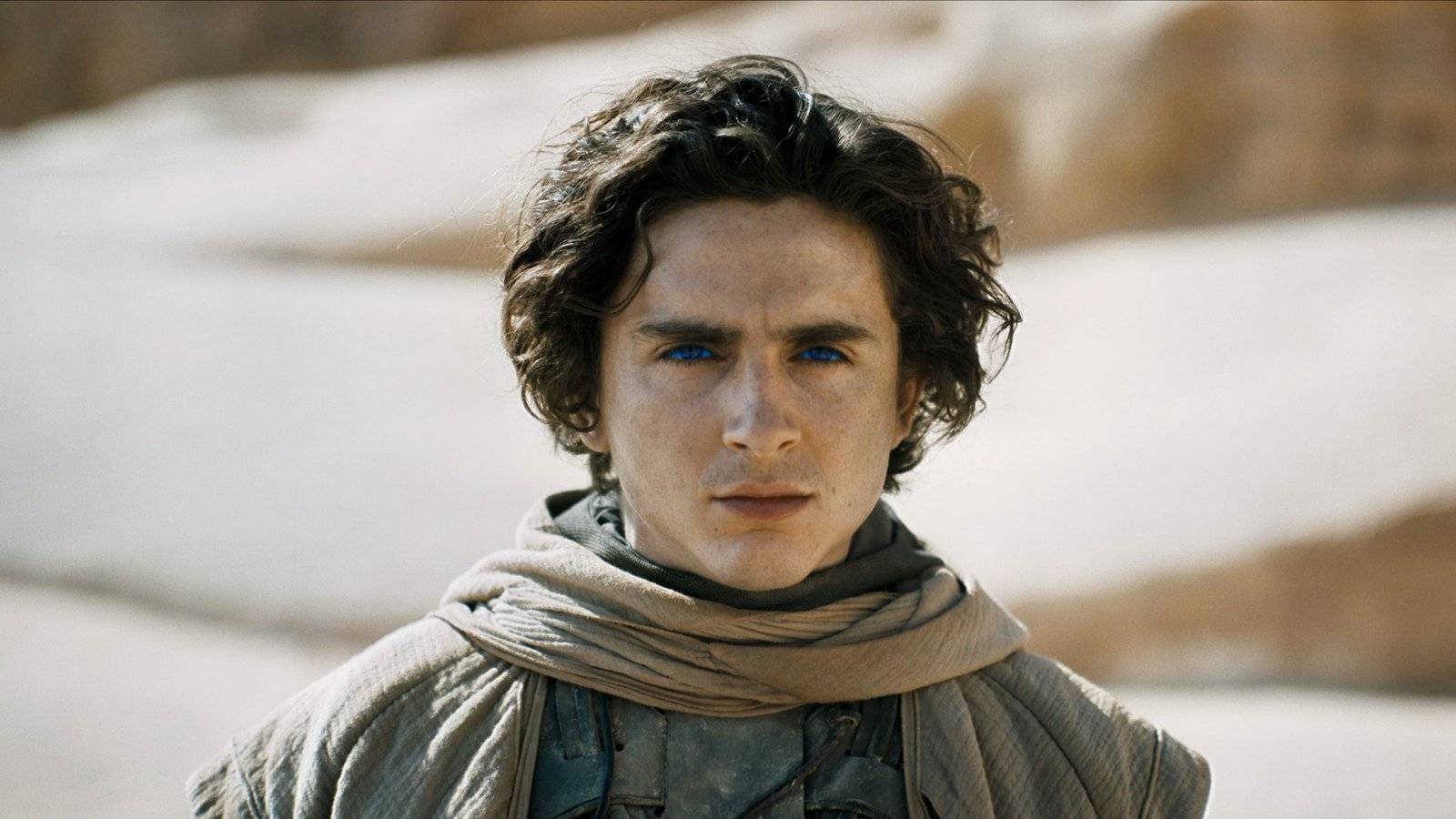
Published Oct 25, 2026, 4:00 AM EDT Paul's quote about cyclical violence is a seminal aspect of Dune Image: Warner Bros. Frank Herbert’s Dune novels were once considered unfilmable. This makes sense, since Herbert’s world is chock-full of ecological details and complex characters. It is a cautionary tale about unchecked power, nestled within a vast setting with several dense subplots. David Lynch tried to make sense of Herbert’s saga in his flawed 1984 adaptation, while Alejandro Jodorowsky was unsuccessful in bringing his eccentric vision for Dune to life. That said, the phenomenal success of Denis Villeneuve’s Dune movies proves that the impossible is always within reach. So far, Villeneuve’s adaptation has captured the sheer scale of the books and also made some meaningful changes to the source material. This version of Paul Atreides (Timothée Chalamet) begins his journey with a hesitant vulnerability that feels more intense than in the books. This is also why his turn as a self-proclaimed messiah feels more ominous and devastating in Dune: Part Two. Herbert’s novels are full of unforgettable quotes, but most of them are attributed to Paul through “Collected Sayings of Muad'Dib,” compiled by Princess Irulan Corrino. Although the book is an in-universe historical record that shapes Paul into a messianic legend, it includes actual statements mixed in with aphorisms and out-of-context remarks. The book is also a political tool, as Irulan uses objective truth to present a controlled narrative. Even so, it contains one of the best quotes in sci-fi history: “There is no escape — we pay for the violence of our ancestors.” Image: Warner Bros Dune is many things: an allegory for ecological devastation and an epic space opera about the rise and fall of dynasties. Most importantly, it is about the dangers posed by charismatic leaders. Some of Paul’s attributed quotes as Muad'Dib are incredibly self-revealing, such as when he says, “How often it is that the angry man rages denial of what his inner self is telling him.” Paul’s quote about present generations having to pay the price for the sins of their ancestors feels less like a prophecy and more like an undeniable truth. Dune is also about cycles of hatred and retribution. Past conflicts and atrocities can never be erased with time. Instead, they quietly snowball into the present, forcing present generations to inherit the same feelings. The tragic irony of Paul’s best quote in Dune Image: Warner Bros. Pictures Feudal politics is at the heart of Dune. Paul’s ascension as messiah is complicated by his status as the face of House Atreides, who have historically been known for their honor and competent leadership. Paul’s father, Duke Leto I, was not immune to flaws or criticisms, but he is ultimately perceived by history as a morally just ruler. Paul, however, transforms this legacy in effective and violent ways. He inherits his father’s loyalty to ideals and successfully ensures the continuation of his bloodline by ascending the Imperial throne. Although a powerful ruler from a political standpoint, Paul’s status as Muad'Dib unleashes a bloody holy war that is waged with the Atreides name still attached to it. Perhaps the most heartbreaking implication of the quote is that nobody can escape such a horrible cycle. While Paul’s fate is ultimately tragic, the heaviest price is paid by his children, Leto II and Ghanima. Dune explores the horrific repercussions of Paul’s actions (and in some cases, inaction) and what the Golden Path — an optimum outcome for humanity foreseen by Paul and the Bene Gesserit — truly entails. Although Leto II and Ghanima weren’t shaped by the same circumstances as Paul and his younger sister Alia, they are burdened by the sins of their father. Like all great sci-fi, Dune holds up a mirror to the world we live in. While there are no gigantic sandworms in the deserts of our planet, our present reality is shaped by the weight of historical atrocities and injustices. Unlike Dune, our paths aren’t pre-written, and we’re free to choose a gentler world. Paul Atreides didn’t have that option, and neither did every character in his doomed, charismatic orbit.
61 Years Later, Paul's Best Dune Line Is Still the Coldest Quote in Sci-Fi History
Full Article
Original Source
Read the full article at Polygon →KhanList aggregates and links to publicly available news content. We do not host full articles from third-party sources. Always verify important information with original sources.