
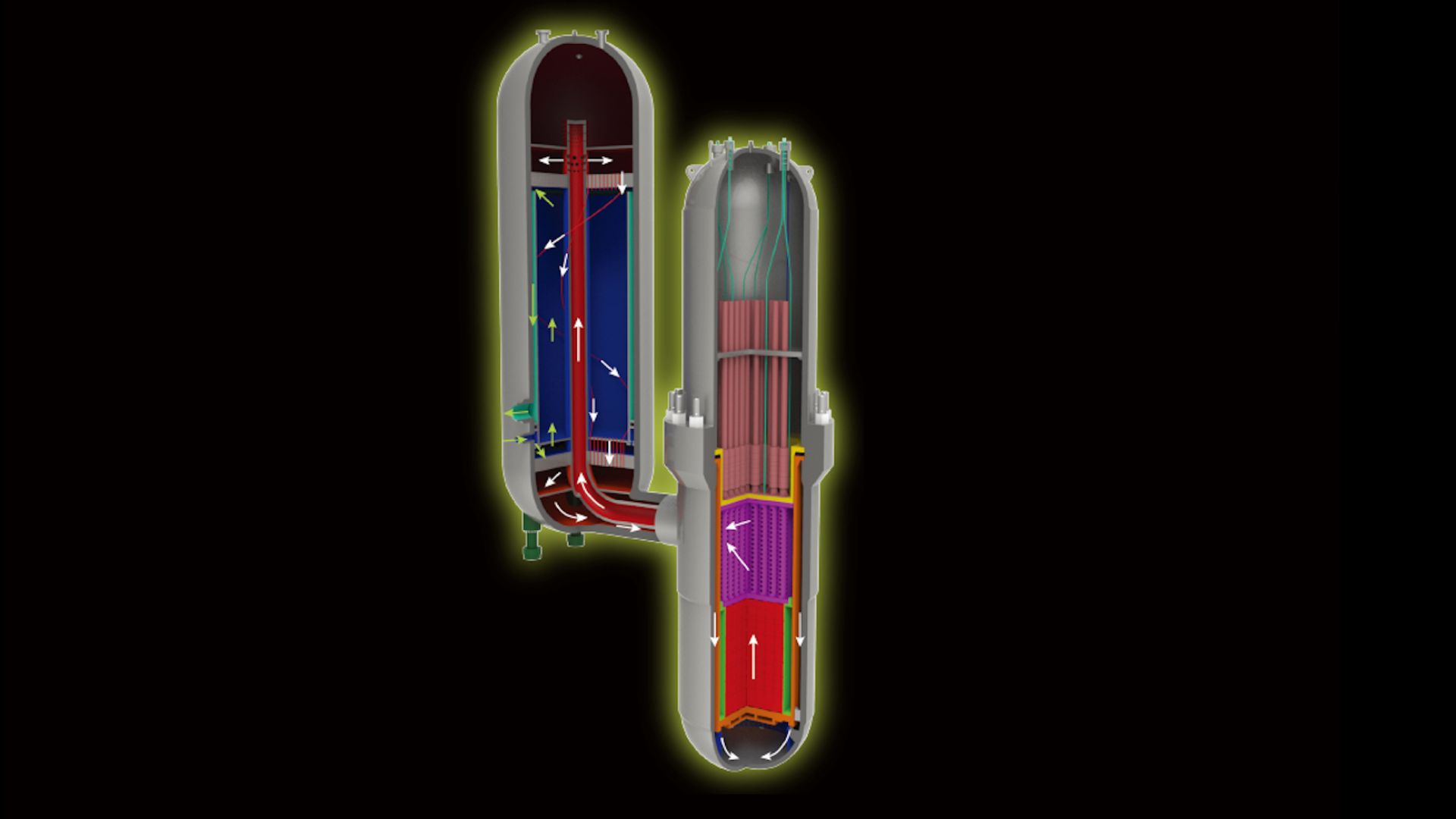
KEPCO E&C is accelerating the development of its standardized nuclear reactor for maritime use. The company leads the project for its BANDI small modular reactor, aiming to supply energy to floating power plants and commercial cargo vessels. KEPCO E&C plans to complete preliminary technical plans and submit a request for state funding in early 2027, as per a news report from Asia Today. If government officials approve the proposal, full-scale engineering development will begin in 2029. The BANDI system is a pressurized light-water reactor built for small electrical networks. “BANDI is a small nuclear reactor plant with a thermal output of 200 MW and an electricity output of 60 MW that can generate the energy needed for electricity and heating free of GHG emissions in remote areas such as small cities, isolated islands, and deserts,” explained the company. A single module produces enough electrical power for approximately 150,000 homes. KEPCO E&C engineers designed the core to operate continuously for 60 years without major structural overhauls. “BANDI features a single-loop design for the Reactor Coolant System (RCS), utilizing a semi-integral or block-type arrangement where the Reactor Vessel (RV) block and Steam Generator (SG) block are directly connected by nozzles,” highlighted KEPCO E&C. Scaling down components into compact vessel Rather than creating entirely new nuclear technology, designers adapted hardware from large commercial land plants. They scaled down key components into a single compact containment vessel. This design choice reduces technical risk and keeps development costs low. “Instead of competing with large nuclear reactors or thermal power plants that are more suitable for large power grids, we identify and target differentiated niche markets such as distributed power sources, district heating, seawater desalination, and nuclear-renewable energy hybrid systems,” said KEPCO E&C. Liquid coolant inside the reactor moves differently when a ship tilts. Engineers address this challenge by using proven physical containment boundaries and passive cooling systems that function without external electric power. Naval architecture for propulsion systems Ship layout is another primary concern for naval architects. Lloyd’s Register recently worked with Hyundai Heavy Industries and Korea Shipbuilding & Offshore Engineering to study reactor installation on vehicle carriers. Designers must place heavy radiation shields around the reactor to keep crew members safe. Because radiation shielding adds significant weight to one spot, engineers must adjust the ship’s overall balance and ballast systems. Proper weight distribution ensures the vessel remains stable in rough weather while keeping enough space for cargo decks. Modern commercial ships usually rely on massive diesel engines linked straight to a propeller shaft. A nuclear-powered vessel works differently by separating heat generation from physical propulsion. The BANDI reactor uses atomic fission to heat water and generate high-pressure steam. This steam spins a turbine generator, which creates electricity to drive electric motor propellers. “BANDI is KEPCO E&C’s brand for SMRs and equates to the term for ‘tiny fireflies’ in Korean, with their characteristic light green light that twinkles in the dark in a tranquil forest on a mid-summer night,” concluded the company. Meanwhile, HD Hyundai and the American Bureau of Shipping are currently developing this electric propulsion system for large container vessels. Recommended ArticlesGet the latest in engineering, tech, space & science - delivered daily to your inbox.An active and versatile journalist and news editor. He has covered regular and breaking news for several leading publications and news media, including The Hindu, Economic Times, Tomorrow Makers, and many more. Aman holds expertise in politics, travel, and tech news, especially in AI, advanced algorithms, and blockchain, with a strong curiosity about all things that fall under science and tech.
60-MW BANDI reactor able to power 150,000 homes pitched for marine nuclear use
Full Article
Original Source
Read the full article at Interestingengineering →KhanList aggregates and links to publicly available news content. We do not host full articles from third-party sources. Always verify important information with original sources.