
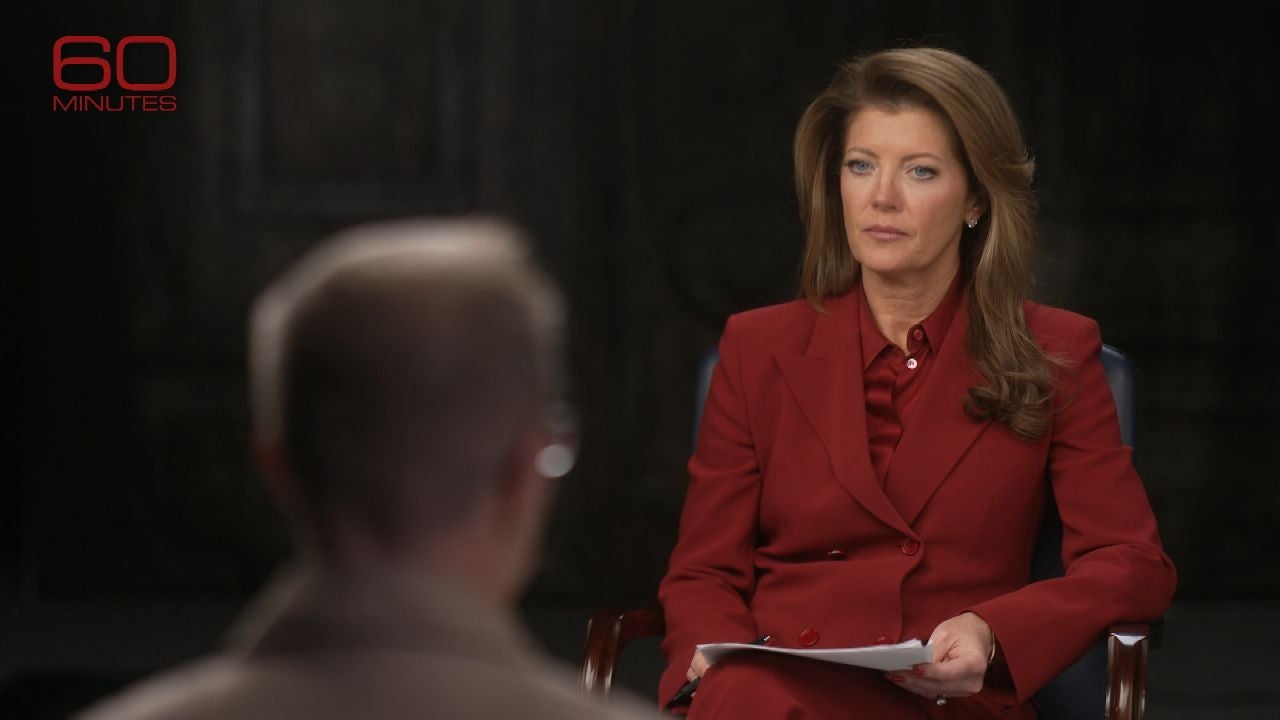
For months, the loudest “60 Minutes” story unfolded outside the broadcast. Sunday night, it spoke for itself. The Season 59 premiere was more evolution than revolution. CBS News editor in chief Bari Weiss and executive producer Nick Bilton refreshed the packaging without dismantling the formula. But its access-driven opener showed why independence questions persist. The 7:50 p.m. broadcast, delayed on the East and Central timezones by CBS’ NFL coverage, opened with its hardest test: Norah O’Donnell’s reconstruction of two U.S. Air Force officers’ rescue after their F-15E was shot down over Iran. Defense Secretary Pete Hegseth tells 60 Minutes that news of a U.S. fighter jet being shot down over Iran woke him in the middle of the night. His first thought: “S***.” pic.twitter.com/8Dt1iqZ91G— 60 Minutes (@60Minutes) September 13, 2026 Pilot “Alpha” was rescued within six hours. Weapons systems officer “Bravo” landed five miles away with a damaged parachute and broken bones. “It was the most terrifying thing I’ve ever seen,” Bravo said of looking up and seeing no parachute. He nevertheless climbed toward a 7,000-foot ridgeline as Iranian forces searched for him. Newly declassified footage showed his extraction. Interviews with Defense Secretary Pete Hegseth and commanders supplied remarkable access — and the hour’s largest complication. CNN’s Zachary Cohen reported Saturday that Pentagon political appointees had pushed both crew members to participate. Bravo agreed; Alpha declined. Weiss personally lobbied Hegseth for access, while Joint Chiefs Chairman Gen. Dan Caine initially expressed concern about exposing sensitive tactics. Chief Pentagon spokesman Sean Parnell said the decision belonged to each airman. The broadcast did not explain how the exclusive came together, mention Alpha’s refusal or address the reported pressure. O’Donnell did not confront Hegseth about it. The result was a deeply reported reconstruction of a rescue that also played, at times, like a Pentagon showcase. Bravo’s story remained remarkable, but officials framed the rescue without accounting for how they helped put it on television. The clearest test of its willingness to challenge power came next in “The Pardon Economy,” Lesley Stahl’s investigation of the presidential-clemency business. The report was classic “60 Minutes.” Hidden cameras captured right-wing operatives Jack Burkman and Jacob Wohl offering to advance Ammon Covino’s pardon application for $300,000, using events, influencers and political contacts in what they called a “pincer movement.” Applying through the Justice Department had cost Covino a postage stamp. Stahl paired those scenes with an original finding: About 70% of President Trump’s second-term clemency grants have bypassed the Justice Department, a figure that rose to 92% when Jan. 6 defendants were included. She put the disparity to former Justice Department pardon attorney Ed Martin. With 16,000 applications pending as applicants paid brokers six- or seven-figure sums, Stahl asked, “Is that a fair system?” “I reject your characterization of the system,” Martin replied. When Stahl cited pardons that followed major political donations or payments for access to Mar-a-Lago fundraisers, she sharpened the point: “Why isn’t that a quid pro quo? Why isn’t that pay to play?” Martin said he did not know the examples and dismissed the brokers as “snake oil salesmen” and “swamp salesmen.” If the Iran piece showed the vulnerability created by high-level access, Stahl’s report supplied the counterweight: original data, hidden-camera reporting and direct confrontation. It was the strongest evidence that the revamped broadcast had preserved the franchise’s accountability journalism. Jon Wertheim supplied the hour’s change of pace with “Battering Ram,” an inside look at the Los Angeles Rams featuring coach Sean McVay, general manager Les Snead and quarterback Matthew Stafford. The profile moved beyond football strategy when McVay said the losing season after the Rams’ Super Bowl title revealed “how fragile I was and all the insecurities that I did have.” He considered leaving for broadcasting until his wife told him, “That never sounded like the kind of leader you wanted to be.” The show’s presentation changes were restrained: the logo lost its fuzzy shadow, rectangular screens replaced the “book” graphics and veteran correspondent Bill Whitaker, who did not report a segment, spoke last in the signature introduction. A new final-minute feature closed the show, with new correspondent Ross Douthat saying “no story looms larger than the latest developments” in AI. “60 Minutes” was never going to be judged primarily by its graphics. The real test was whether it retained the formula that has sustained it for nearly six decades: consequential subjects, deep reporting and correspondents willing to challenge powerful people. On that measure, the premiere mostly passed. O’Donnell delivered extraordinary testimony but did not address the Pentagon’s role in arranging her access. Stahl followed the money and pressed an administration official on the contrast between a free public process and a costly private one. Wertheim found unexpected vulnerability beneath the Rams’ Super Bowl title ambitions. Weiss’ arrival, Bilton’s appointment and a wave of prominent departures turned this episode into a referendum. Former CBS News CEO Wendy McMahon worried that its DNA was being “rewritten in real time.” Brian Williams said it could “use a new coat of paint.” Sunday’s premiere gave Williams the stronger case — but not a clean victory. Stahl showed the old machinery still produced accountability reporting with bite, while O’Donnell’s opener showed why the newsroom’s independence would remain under scrutiny. Weiss and Bilton finally had a program on which to be judged. The premiere suggested the formula remained intact. Now they must prove its editorial independence did too.
’60 Minutes’ Changed Its Look, Not Its Formula | Analysis
Full Article
Original Source
Read the full article at Thewrap →KhanList aggregates and links to publicly available news content. We do not host full articles from third-party sources. Always verify important information with original sources.