
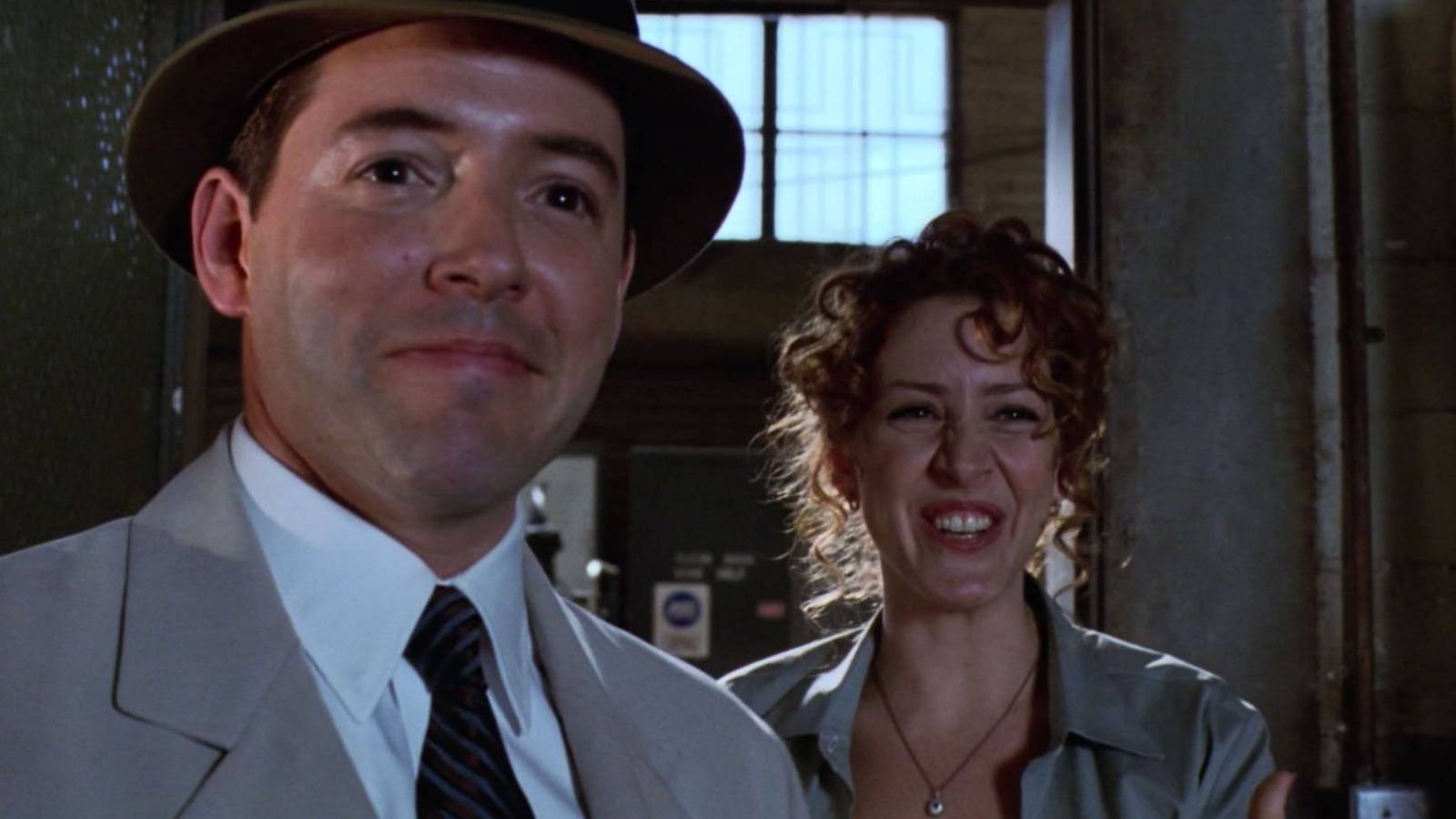
Image via Disney Published Aug 10, 2026, 6:11 AM EDT Liam Gaughan is a film and TV writer at Collider. He has been writing film reviews and news coverage for ten years. Between relentlessly adding new titles to his watchlist and attending as many screenings as he can, Liam is always watching new movies and television shows. In addition to reviewing, writing, and commentating on both new and old releases, Liam has interviewed talent such as Mark Wahlberg, Jesse Plemons, Sam Mendes, Billy Eichner, Dylan O'Brien, Luke Wilson, and B.J. Novak. Liam aims to get his spec scripts produced and currently writes short films and stage plays. He lives in Allentown, PA. Sign in to your Collider account Science fiction was experiencing a renaissance in the ‘90s, even if not every film within the genre was successful. Independence Day and Jurassic Park shot to the top of the list of highest-grossing films ever made, and there were a number of “out there” sci-fi blockbusters that ended up being both critical and commercial successes, such as Total Recall and Twelve Monkeys. This was the decade that launched the Men in Black series, brought about Terminator 2: Judgment Day, and brought about a number of “guilty pleasure” sci-fi films starring the likes of Jean-Claude Van Damme, Sylvester Stallone, and Keanu Reeves. Of course, the genre changed in 1999 thanks to two of the most influential sci-fi films ever made; The Matrix opened up a new era of visual and philosophical possibilities for cyberbunk and tech noir, and Star Wars: Episode I- The Phantom Menace initiated a divide within the Star Wars fanbase that has only grown more complicated as the franchise has grown into different iterations. There are still a number of studio executives and marketing gurus who didn’t “get” sci-fi, and that resulted in some astounding failures that entirely missed the mark. It’s often that the sci-fi films that didn’t resonate were those that were either based on nostalgic properties or attempting to evoke classical traditions that were no longer in touch; even if audiences showed that they were interested in hip, inventive new sci-fi films like Gattaca and Dark City, there were still attempts to dig up the past and offer the same thing as before. The fact that there were so many genuine masterpieces of sci-fi within this decade makes the misfires stand out even more. 6 ‘Alien: Resurrection’ (1997) Image via 20th Century Alien: Resurrection is about as disappointing of an ending as fans of the Alien franchise could ask for because it seemed to understand none of what made the previous films successful, and worst of all failed to do anything interesting with the character of Ellen Ripley (Sigourney Weaver). Even though there is a charm in the fact that every subsequent entry in the series has more or less ignored the events of its predecessor, Alien: Resurrection felt completely out of place with how it skipped past the noble sacrifice made by Ripley at the end of Alien 3. While both of these films were messes, David Fincher had at least presented a number of compelling ideas in Alien 3 and made a visually stunning spectacle; in Alien: Resurrection, the aesthetic sensibilities of director Jean-Pierre Jeunet and sardonic dialogue of Joss Whedon simply did not congeal. Alien: Resurrection is simply not very scary, exciting, or intelligent in its plot, and it reduces the mythology of one of the greatest science fiction franchises of all-time into a cheap creature feature. 5 ‘Lost in Space’ (1998) New Line Cinema Lost in Space is one of the more disastrous attempts to reboot a classic television show because it did not make the right choices in what to adopt from the original series. Although it is easy to criticize the CGI of an older film that had less advanced effects, Lost in Space looked terrible at the time, especially in comparison to other films of the same decade, like Men in Black or Star Wars: Episode I- The Phantom Menace. The outer space battles contain no sense of scale and the interiors, planets, and cockpits are all remarkably flat and uninteresting. The biggest issue with Lost in Space is the cast, as it never feels as if the Robinsons are an actual family that care about one another, and the film can’t seem to settle on a main character. Matt LeBlanc’s portrayal of a hotshot pilot is so ridiculous that it could basically stand-in for an in-universe Friends project that looked at what Joey Tribbiani’s acting career might look like. It’s hard to not feel bad for the late great William Hurt, one of the greatest actors of all-time, who seems to be thoroughly embarrassed by what he’s signed up for. 4 ‘Inspector Gadget’ (1999) Image via Disney Inspector Gadget is another misfire of a television adaptation that simply didn’t understand the right tone to crack in order to be compelling in a different medium. One of the reasons that the original cartoon series was so popular was that it incorporated visual inventiveness and quirky humor that worked specifically within the realm of animation; when translated into live-action, it’s blunt and awkward, feeling closer to the dark satire of Paul Verhoeven's Robocop than a family-friendly adventure film. Matthew Broderick’s performance doesn’t work at all, as it was a bad idea to cast someone known for their gregarious, charismatic persona and give them the role of a robot. Broderick is a great actor who proved within the next decade that he was perfectly suited for independent dramas and stage work, but the double blow of Inspector Gadget and Roland Emmerich’s completely derided 1998 Godzilla film proved that he should stay far away from blockbusters altogether. Collider Exclusive · Sci-Fi Personality Quiz Which Sci-Fi Hero Are You Most Like? Paul Atreides · Captain Kirk · Princess Leia · Ellen Ripley · Max Rockatansky Five iconic heroes. Five completely different ways of facing an impossible universe. One of them shares your instincts, your values, and your particular way of refusing to back down. Eight questions will tell you which one. 🏜️Paul Atreides 🖖Capt. Kirk ✊Princess Leia 🔦Ellen Ripley 🔥Max Rockatansky FIND YOUR HERO → 01 How do you lead when the stakes couldn't be higher? The way you lead under pressure is the most honest thing about you. AI absorb everything — every variable, every pattern — and move only when I know the path forward. BI read the room, make the call, and own the consequences. Hesitation costs more than mistakes. CI rally people. A cause needs a voice, and I refuse to let fear be louder than conviction. DI assess the threat, establish what needs doing, and get it done without waiting for permission. EI don't lead. I act. Others can follow or not — I'm already moving. NEXT QUESTION → 02 What is your greatest strength in a crisis? The quality that keeps you alive when everything else fails. APrescience — the ability to see further ahead than anyone else and plan accordingly. BImprovisation — I'm at my best when the plan falls apart and I have to invent a new one. CConviction — I know what I'm fighting for, and that certainty doesn't waver under fire. DComposure — I stay functional when everyone around me is falling apart. Panic is a luxury. EEndurance — I outlast things. I take the hit and keep moving long after others have stopped. NEXT QUESTION → 03 What is the thing you'd sacrifice everything else for? Your deepest motivation is your truest compass. AThe survival and dignity of my people — even if I have to become something frightening to ensure it. BThe safety of my crew — every single one of them. No one gets left behind. CFreedom — for my people, for every world still crushed under the weight of an empire. DThe truth — what actually happened, what's actually out there, whether anyone believes me or not. EThe one person — or the one memory — that still makes any of this worth surviving for. NEXT QUESTION → 04 How do you relate to the people around you? Who you are to others under pressure is who you really are. AWith intensity and distance — I care deeply, but the weight I carry makes closeness complicated. BWith warmth and irreverence — I take the mission seriously, not myself. CWith directness and trust — I say what I mean, and I expect the people I work with to rise to it. DWith professional care but clear limits — I'll protect you, but I won't pretend we're family. EWith wariness that slowly becomes loyalty — I don't trust easily, but when I do, it holds. NEXT QUESTION → 05 You're facing a threat that no one else believes is real. What do you do? How you respond when you're the only one who sees it defines everything. APrepare in silence. If they won't listen, I'll be ready when they finally have to. BKeep pushing until someone listens — and if no one does, handle it myself. CBuild the case, find the allies, and make the threat impossible to ignore. DDocument everything. The truth matters even if no one believes it yet. EStop trying to convince anyone. Survive it. That's the only argument that counts. NEXT QUESTION → 06 What has your heroism cost you personally? Every hero pays. The question is what — and whether they'd pay it again. AMy innocence — I've seen what I'm capable of, and I can't unsee it. BPeople I loved — the command chair has a view, but it's a lonely one. CA normal life — I gave up everything ordinary the moment I chose the cause. DMy sense of safety — I know exactly what's out there now, and I can't pretend otherwise. EAlmost everything — and I'm still not sure what I'm carrying it all for. But I keep going. NEXT QUESTION → 07 How do you feel about the rules of the world you're in? Every hero has a relationship with the system. What's yours? AI understand them deeply — and I know exactly which ones must be broken, and why. BI respect the spirit of them and bend the letter when the situation demands it. CThe system is the problem. I'm not here to work within it — I'm here to dismantle it. DI follow protocol until protocol stops being useful. Then I make the call myself. EThe rules collapsed a long time ago. What's left is instinct, and mine are reliable. NEXT QUESTION → 08 When everything is on the line, what keeps you going? The answer is the most honest thing about you. ADestiny — or something that feels so much like it that the difference no longer matters. BThe people on my ship — their faces, their trust, the fact that they're counting on me. CThe belief that what we're fighting for is worth every sacrifice, including this one. DSheer refusal to let it win — whatever it is. I don't stop. That's just who I am. EI'm not sure anymore. But the road is still there, and I'm still on it. REVEAL MY HERO → Your Hero Has Been Identified Your Sci-Fi Hero Is…Your answers point to the iconic sci-fi hero who shares your instincts, your values, and your particular way of facing the impossible. Paul AtreidesYou carry a weight most people would crumble under — the knowledge of what you're capable of, and the burden of what you might have to become. You see further ahead than others and you plan accordingly, even when the vision frightens you. You are driven by loyalty to your people and a sense of destiny you didn't ask for but can't escape. Paul Atreides is not simply a hero — he is someone who understands the cost of power and chooses to bear it anyway. That gravity, that willingness to carry what others won't, is exactly you. Captain KirkYou lead with instinct, warmth, and an absolute refusal to accept a no-win scenario — because you've always believed there's a third option nobody else has thought of yet. You take the mission seriously without ever taking yourself too seriously. Your crew would follow you anywhere, not because you demand it, but because you've earned it. Kirk's genius isn't tactical — it's human. He reads people, bends rules with purpose, and wills outcomes into existence through sheer conviction. That combination of warmth, audacity, and relentless optimism is unmistakably yours. Princess LeiaYou are the kind of person who holds the line when everyone else is losing faith — not because you're fearless, but because giving up simply isn't something you're capable of. You lead through conviction. Your voice carries because your belief is unshakeable. You gave up everything ordinary the moment you chose the cause, and you've never looked back. Leia is not a supporting character in her own story — she is the moral centre of the entire rebellion. That same fierce, principled, unbreakable core is what defines you. Ellen RipleyYou are not reckless, not grandiose, and not particularly interested in being anyone's hero — you just refuse to stop when it matters. You see threats clearly, you document the truth even when no one listens, and when the time comes you handle it yourself. Ripley's heroism is earned, not performed. She doesn't have a speech — she has a flamethrower and a plan. You share her composure under the worst possible pressure, and her refusal to pretend the monster isn't there. When it counts, you don't flinch. That's everything. Max RockatanskyYou have been through fire that would break most people — and what came out the other side is something the world underestimates at its peril. You don't ask for help, don't need validation, and don't wait for anyone to tell you the rules no longer apply. Your loyalty, when it finally arrives, is absolute — but it's earned in silence and tested in action, not in words. Max is not a nihilist. He is someone who lost everything and found, against his will, that he still has something worth protecting. That bruised, stubborn, ultimately human core is exactly yours. ↻ RETAKE THE QUIZ 3 ‘Memoirs of an Invisible Man’ (1992) Image via Warner Bros. Memoirs of an Invisible Man is the film that broke the hot streak of John Carpenter, who had been making nothing but genre masterpieces since his 1974 directorial debut Dark Star. Although the idea of seeing Carpenter take on a concept associated with H.G. Wells’ classic novel The Invisible Man seemed like an exciting prospect, Memoirs of an Invisible Man fell apart because of the casting of Chevy Chase, one of the most notoriously “difficult” actors in Hollywood. Chase caused such stress and frustration for Carpenter on set that the film is barely comprehensible, and doesn’t feel like the product of anyone’s vision; even though there are problems baked into the script from the beginning, it’s easy to imagine that Memoirs of an Invisible Man might have at least been somewhat watchable had someone else taken on the lead role. Chase was a poor casting choice, as the character is designed to be free of charisma and completely haunted. The best work Chase has done is when he plays charming, snarky tricksters who are given the room to do physical gags, so restricting him to playing an invisible character was a terrible idea. 2 ‘Star Trek: Insurrection’ (1998) Image via Paramount Star Trek: Insurrection isn’t quite the worst film in the Star Trek franchise, as it isn’t as utterly incompetent as Star Trek V: The Final Frontier or as tonally misjudged as Star Trek: Nemesis, but it is by far the most boring. The advantage that the crew of the original series had is that their show had never been completed, and they went on to take on older, more seasoned versions of their characters over a decade after they had been off the air. Star Trek: The Next Generation was a massively successful show that ran for seven seasons and cycled out through nearly every good idea with the characters, and the films didn’t start coming out long enough after for them to feel like events. While Star Trek: First Contact at least had fun because it was basically “Die Hard on the Enterprise,” Star Trek: Insurrection just felt like an overlong television episode. Star Trek: Insurrection features another metaphor for the “Fountain of Youth” that felt derivative of the show, and included one of the worst villain performances in the franchise from F. Murray Abraham. There was also a strange decision to try and create a friendship between Captain Jean-Luc Picard (Patrick Stewart) and Data (Brett Spiner) that was equivalent to that of Captain James T. Kirk (William Shatner) and Spock (Leonard Nimoy) in the prior films, despite the fact that it didn’t bear anything in common with the dynamic that they had on Star Trek: The Next Generation. 1 ‘The Postman’ (1997) Image via Warner Bros. The Postman was a massive disaster for Kevin Costner, who was directing his second feature after Dances With Wolves, a gigantic hit that had won him the Academy Awards for Best Picture and Best Director (in what became known as a controversial victory over Goodfellas and Martin Scorsese). Costner clearly loves the Western genre, but The Postman was a strange roundabout way of making a classical gunslinger film because it is set within a post-apocalyptic America in which technology has regressed to that of the 19th century. Costner doesn’t even play the titular “postman” that the title refers to, as he is actually a Shakespearean actor who disguises himself as a mail carrier and becomes regarded as a messianic figure. Costner put too much on his own shoulders by investing in a script that had to do a tremendous amount of worldbuilding, but still sparked more questions than it did answers. It wasn’t the only massively unsuccessful science fiction, post-apocalyptic action film that Costner made in the ‘90s, but Waterworld is a fairly enjoyable guilty pleasure with entertaining performances, and is not a slog like The Postman. Costner may have been able to get away with a three hour long running time for Dances With Wolves, but nothing in The Postman justified a length that was so excruciating. The Postman Release Date December 25, 1997 Runtime 177 Mins
6 Worst Sci-Fi Movies of the 1990s
Full Article
Original Source
Read the full article at Collider →KhanList aggregates and links to publicly available news content. We do not host full articles from third-party sources. Always verify important information with original sources.