
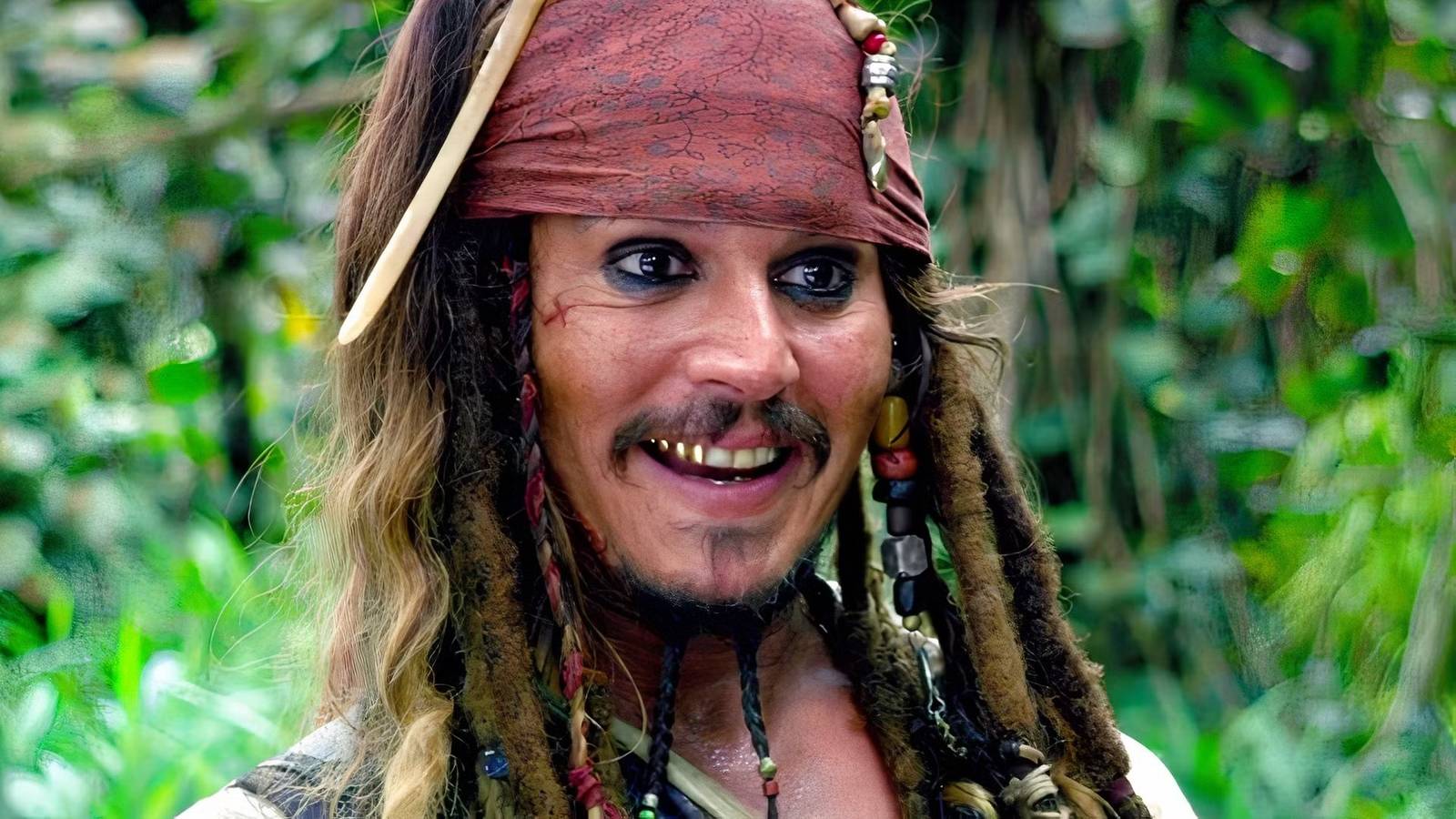
Published Nov 18, 2026, 11:11 AM EST Senior Music Editor at Screen Rant, Sarah's love of sound and story drive the beat. A globetrotting brand whisperer and award-winning journalist, she’s built cross-cultural narratives around the world—but music has always been her true north. She launched DJ Mag North America, successfully introducing the iconic UK brand to the U.S. market. Previously, she carved a space for EDM inside the pages of VIBE, blending electronic and hip-hop culture long before it was trendy. Disney has built an empire around animation, but some of its most beloved movies feature actual people doing extraordinary things. Sometimes that means a nanny arriving by umbrella. Sometimes it's a girl discovering she's royalty, a pair of identical twins plotting against their parents, or a pirate whose walk deserves its own screen credit. Disney keeps revisiting its animated classics, and the debate over which Disney movies deserve live-action remakes isn't going away. Yet its existing live-action catalog has an equally rich legacy. The best films reward another viewing: a family comedy grows more perceptive with age, while an inspirational sports drama hits harder once its difficult choices feel familiar. Disney's live-action history stretches from the musical fantasy of the 1960s through the family comedies of the '90s and the enormous adventure franchises of the 2000s. It has helped set the standard for several genres, including the kind of swashbuckling adventure that sends viewers looking for great pirate movies beyond Pirates of the Caribbean. "Universally loved" is inevitably a little generous; even Mary Poppins must have detractors somewhere. But these seven Disney releases have earned lasting affection through memorable performances, repeat viewing, and their ability to find new audiences decades later. The ranking weighs that staying power alongside the films themselves, with the strongest combination of craft and cross-generational appeal taking the top spot. 6 Cool Runnings (1993) There is something irresistible about four Jamaican athletes deciding the Winter Olympics need a bobsled team. Loosely inspired by Jamaica's debut in the sport at the 1988 Calgary Games, Cool Runnings takes liberties with history. That hardly diminishes the energy of the Disney movie. It understands when to be ridiculous and when to let the stakes feel real. John Candy brings warmth to disgraced American coach Irving Blitzer, but the film belongs to the athletes he trains. Their camaraderie is funny and affecting, particularly when the competition treats them like a novelty act. The point is never that they possess supernatural sporting ability. It's that they deserve to be taken seriously before they prove anything. More than three decades later, Cool Runnings remains a particularly rewatchable underdog movie. It has the kind of affectionate following that keeps cult-classic film conversations going long after the original theatrical run. Its broad comic strokes are sometimes obvious, which keeps it out of the top five, but its good humor feels wonderfully unforced. 5 The Princess Diaries (2001) Image via Disney Before Anne Hathaway was an Oscar-winning actress, she was Mia Thermopolis, a San Francisco teenager trying to survive high school unnoticed. Then Julie Andrews arrived to inform her she was Genovia's heir. That pairing explains why The Princess Diaries works: Hathaway makes Mia's awkwardness believable, while Andrews treats the royal absurdity with impeccable seriousness. Director Garry Marshall wisely leaves room for the indignities of adolescence. Mia's makeover is famous, but the more satisfying transformation is her gradual willingness to stand up for herself. She's still clumsy and occasionally overwhelmed when the movie ends. What changes is her understanding that she has some say in who she becomes, with or without a tiara. The film gave Disney a heroine who felt accessible to girls growing up around the millennium. Mia exists outside the studio's animated-princess pantheon, which makes her royal troubles surprisingly ordinary. Her relationship with her grandmother is what viewers remember, and Hathaway and Andrews give the palace fantasy a sturdy foundation. 4 The Parent Trap (1998) Lindsay Lohan was so convincing as separated-at-birth twins Hallie Parker and Annie James that it's easy to forget she played both parts. Nancy Meyers' remake of the 1961 Disney film remains one of the actor's greatest achievements. From their first encounter at summer camp, Hallie and Annie have distinct personalities, speech patterns, and approaches to getting their way. The premise is outrageous. Their parents separated the sisters as babies, neglected to tell either child about the other, and somehow escaped all the questions that decision should have raised. Yet The Parent Trap makes the reunion so joyous that viewers overlook the ethical nightmare. The elaborate scheme to reunite the adults becomes irresistible once the girls take charge. Its appeal is rooted in Meyers' inviting world: summer camp pranks, a London townhouse, and a California vineyard that looks like an ideal holiday. Natasha Richardson gives the comedy an emotional center as the girls' mother, while Dennis Quaid is an appealingly bewildered father. The film remains a nostalgia favorite younger audiences can discover on their own terms. 3 Remember The Titans (2000) Disney's beloved live-action movies aren't all comedies or fantasies. Remember the Titans tells a sports story rooted in an uncomfortable chapter of American history. Denzel Washington plays Herman Boone, tasked with coaching a newly integrated Virginia high school team in 1971. The players confront racial hostility long before they can function as teammates. The film takes dramatic liberties with the events that inspired it, and its hopeful resolution simplifies problems no football victory could realistically fix. Even so, Washington's commanding performance and the relationships among the players give the story emotional force. The football scenes work because the audience has been made to care about the people inside those helmets. There is a reason Remember the Titans remains a staple of sports-movie discussions. It works as a crowd-pleasing team drama but also invites conversations about prejudice, leadership, and easy reconciliation. That combination earns it a higher placement than Disney's carefree nostalgic favorites. The film delivers a rousing finale without pretending every earlier conflict has disappeared. 2 Pirates Of The Caribbean: The Curse Of The Black Pearl (2003) Turning a Disneyland attraction into a movie could have resulted in expensive branding. Instead, director Gore Verbinski delivered a funny, eerie pirate adventure with personality. The Curse of the Black Pearl balances sword fights, cursed skeletons, and romance without losing sight of the audience's most pressing question: What on earth will Captain Jack Sparrow do next? Johnny Depp's performance as Jack is the film's great invention. His unsteady stride and sideways logic make him seem brilliant and hopelessly unreliable. That interpretation earned Depp a Best Actor Oscar nomination and remains central to discussions of his best movie performances. He has a formidable foil in Geoffrey Rush's Captain Barbossa, whose theatrical villainy is equally entertaining. Keira Knightley and Orlando Bloom supply the emotional stakes, while the supernatural curse lends the action menace. Later installments became bigger, but few matched the first film's nimble storytelling or sense of discovery. Its place at No. 2 reflects something rare: a blockbuster designed to launch a franchise that still feels complete and exhilarating on its own. 1 Mary Poppins (1964) "Practically perfect in every way" is a dangerous standard for a movie to set. Somehow, Mary Poppins comes close. Julie Andrews made her feature-film debut as the magical nanny who arrives at the Banks household carrying an umbrella and supreme confidence. Her performance is witty, commanding, and tender without letting the character become ordinary. The combination of live action and animation dazzled in 1964, giving Mary Poppins a claim among the 20th century's enduring fantasy films. Dick Van Dyke's Bert supplies enthusiasm, even if his Cockney accent has invited decades of affectionate criticism. The Sherman brothers' songs give the movie an emotional vocabulary generations of families have shared. For all the singing and dancing, the story's deepest concern is an unhappy family. Mr. Banks believes he's providing everything his children need, yet barely makes time for them. Mary Poppins recognizes the problem immediately. The final emotional shift belongs as much to the father as to his children, which is why the film grows more poignant with age. The Academy recognized Mary Poppins with 13 Oscar nominations and five wins, including Best Actress for Andrews. Awards alone wouldn't put it first, but they reinforce decades of repeat viewing. Its music, performances, and understanding of family reach viewers who first saw it in different eras. If any live-action Disney movie earns the word "universally," it's this one. Release Date December 17, 1964 Runtime 139 minutes Director Robert Stevenson Cast Dick Van Dyke Bert / Mr. Dawes Sr.
6 Universally Loved Live-Action Disney Movies, Ranked
Full Article
Original Source
Read the full article at Screenrant →KhanList aggregates and links to publicly available news content. We do not host full articles from third-party sources. Always verify important information with original sources.