
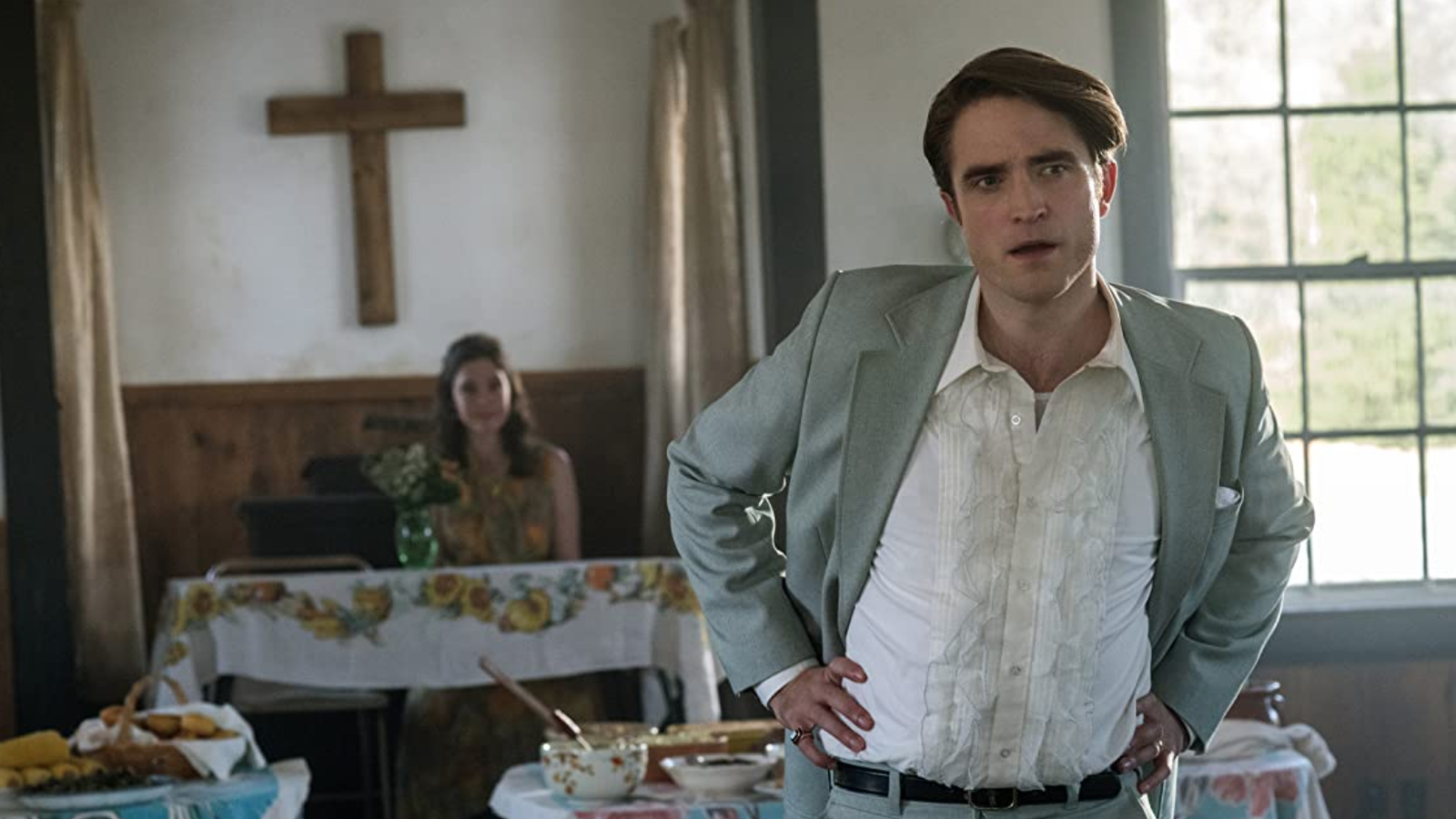
Published Aug 28, 2026, 7:21 AM EDT Ben Brewster is a filmmaker, critic, screenwriter, and actor whose work sits at the intersection of film culture, craft analysis, and storytelling. He is a movie list contributing writer at Collider and a contributing writer for High on Films, where he covers contemporary cinema, independent film, and festival releases with an eye toward narrative structure, performance, and visual language. Ben is an active film festival participant, having worked with Newport Film, the Nantucket Film Festival and as a screener for the Austin, Boston & Woodstock film festivals. He brings to that work a programming instinct shaped by years of close engagement with independent and documentary cinema. This comes with a deep investment in the kinds of films that rarely find their way into the mainstream conversation without someone willing to advocate for them. His background spans documentary and narrative filmmaking, film marketing, and production, including work with award-winning directors. This as well as developing his own indie production company, Lilac Creative Studio, through which he develops and produces original work across fiction and nonfiction forms. His debut documentary, Diamond in the Rust, is an examination of economic redevelopment and displacement in the Queens area of New York City. The film was recently accepted to the Unisphere Film Festival, the Defense of Democracy Film Festival, and the Urbanite Arts & Film Festival. This would mark his first festival recognition as a director. In addition to his writing and programming work, Ben hosts Beneath the Bloom, a film podcast exploring the work behind the scenes in cinema, and the struggles one can face to make a movie become a reality. The show reflects the same sensibility that runs through all of his work. A conviction that film is not merely entertainment but one of the most powerful tools human beings have for understanding each other. Across mediums, his work is driven by a deep belief in film as a communal, transformative art form. It is easy to forget just how far Robert Pattinson has traveled from his Twilight heartthrob days. But never more than the present moment, watching him now anchor projects as varied as The Drama, Primetime, the upcoming crime thriller Here Comes the Flood and the highly anticipated The Batman Part II. The assumption that he would fade into franchise typecasting forever, reduced to little more than tabloid fame, has been almost entirely erased by a decade of relentlessly strange yet ambitious choices. From the signature performance in Good Time's frantic descent into the New York underbelly, to Tenet's icy blockbuster precision and even the more recent plunge into the role of Antinous in The Odyssey, Pattinson has built a career that looks nothing like what anyone predicted when Twilight ended. But this list isn't focused on his marquee successes and those are not the reasons worth tracing how he got here. The films on this list received some genuinely mixed reviews upon release and a few barely resonated with the mainstream audiences at all. High Life came and went with little fanfare; The King asked him to disappear into a smaller supporting role rather than a headline, and even The Lost City of Z, struggled to find its niche audience despite the heavy ambition behind the project. None of that diminishes what these artistic career choices reveal in hindsight. Putting all these films together though, they tell a clearer story than any single performance could. This is an actor deliberately chasing difficultly over comfort, character actor choices over easy paydays. This, all long before that strategy paid off in the form of The Batman and everything that has followed. Whether audiences realized it at the time or not, these performances quietly laid the groundwork for the household name he has become today. 6 'High Life' (2017) Image via A24 High Life is the kind of role that tends to get lost in the conversation about Pattinson's evolution. Perhaps the least known film on the list, it is an unsettling, formally daring sci-fi film by French director Claire Denis that asked Pattinson to disappear into a fairly all-encompassing role, preferring it over his leaning on any of his established screen presence. The film went largely under the radar upon its release, overshadowed by flashier space thrillers of its era. This performance remains one of the clearest signifiers of exactly the kind of role diversity and expansion Pattinson was already playing with this early into his post-Twilight career. In High Life, he plays a death row inmate sent into deep space as part of a reproductive science experiment. He is asked to hold restraint and a quiet kind of menace in a role offering none of the usual spotlight he had become accustomed to. It is not a performance most point to when first discussing his transformation, but it shows an actor already testing and challenging himself with exactly the kind of unglamorous, art-house driven work that would blanket the next decade of his career. 5 'The King' (2019) Image via Netflix The King gave Pattinson a smaller role than any other film on this list, and he made an outsized impression with the little time he had. Playing the Dauphin of France opposite Timothee Chalamet's Henry V, he leaned into an exaggerated, eccentric French accent and mannerisms that bordered on theatrical excess in the middle of an other wise somber medieval war film. He is under the direction of David Michod here, whom he had already worked with on The Rover. It was an unexpected, almost mischievous choice, a period piece cameo that could have easily been forgettable in lesser hands. Instead, it became one of the films most memorable elements, precisely because Pattinson refused to play it safe even if the role was brief. Repairing with Michod showed a growing pattern of loyalty to directors who let him experiment, a choice this broad and strange without restraint proved he was no longer interested in being liked in the conventional way. This role captures the reinvention in miniature, an actor willing to be this odd on screen, unconcerned with protecting a leading man image he had already started dismantling. 4 'The Lost City of Z' (2016) Image via Amazon Studios The Lost City of Z paired Pattinson with James Gray, an art house director whose meticulous, patient film-making style stood in stark contrast to anything that Twilight asked of him. Based on the true story of British explorer Percy Fawcett's search for a lost civilization in the Amazon rain forest, the movie gave Pattinson a supporting role that demanded real character immersion. In this, he is is buried under a beard and period wardrobe as Fawcett's steadfast expedition partner Henry Costin. It is a peculiar choice on paper, a heartthrob willingly disappearing into the background of a slow meditative period epic, but that is exactly the point. The accent work alone signaled something new, a level of technical commitment Pattinson had not been asked to display before. The willingness to vanish into an ensemble, rather than anchor the marketing was itself part of the reinvention. Choosing a project this deliberately unglamorous and that committed to historical accuracy over spectacle showed an actor actively seeking a kind of art house credibility. The kind that would eventually make directors like the Safdie Brothers and Robert Eggers take him seriously enough as a collaborator as opposed to some movie star doing a favor. 3 'The Boy and the Heron' (2023) Image via Studio Ghibli The Boy and the Heron found Pattinson doing something none of his other choices on this list asked of him. This time he lended his voice to legendary director Hayao Miyazaki's mischievous Grey Heron in the English dub of Studio Ghibli's final feature. This is a role completely built on vocal performance, stripped of the physicality and screen presence that had defined his career up to this point. The fact that he took it at all, says something about how far his ambitions had expanded beyond conventional live action stardom. Signing onto a Miyazaki film, even in dubbed form, is as much of a statement on taste as it is performance, aligning himself with one of the most respected artists in any medium, in place of chasing another prestige drama or blockbuster paycheck. It expanded his name into a completely different corner of the film world, animation fans and Ghibli devotees alike who might never have followed his work otherwise. It reinforced the sense that Pattinson's post-Twilight reinvention was never just about darker or grittier roles. It was about range and variety in every direction available to him. 2 'The Devil All the Time' (2020) Image via Netflix The Devil All the Time cast Pattinson as Preston Teagardin a corrupt, predatorily induced preacher whose brief but venomous screen time became one of the most talked about elements of the entire film. It is a striking bit of foreshadowing in hindsight, an actor who would later spend Primetime embodying Chris Hansen, a man who built a career catching predators exactly like the one he played here. It is impressive range from Pattinson, inhabiting both sides of that dark territory years apart. The role paired him against a stacked young ensemble that included Tom Holland, continuing a pattern of Pattinson seeking out scenes opposite the next generation of serious actors rather than resting on his own name recognition. Due to his little screen time, the high critical praise for the performance relative to the role is a masterclass in maximizing impact through pure specificity. A grotesque, religiously charged character built on voice and mannerism rather than exposition or total screen time. It remains one of the clearest examples of Pattinson's willingness to play truly repulsive characters without any concern for likability. 1 'The Rover' (2014) The Rover sits at the top of this list because it might be the purest distillation of everything Pattinson's reinvention would become. Here he plays Rey, a mentally slow, dim-witted younger brother abandoned in the Australian outback. He adopts a highly specific guttural accent and a wildly unglamorous physical presence, dirty, twitchy, and absent-minded. It was the most stark and furthest away audiences had seen him drift from his Twilight saga image up to this point. A performance built entirely on discomfort, and he commits to it without a hint of vanity. In pairing himself with director David Michod, he attached himself to a creative drawn to unorthodox and bleak worlds, setting a template for the kind of collaborators Pattinson would keep chasing the rest of his career. Guy Pearce portrays his older brother, one of Australia's most respected actors, only reinforced how seriously he was taking this career shift. This is the film where the reinvention stops looking like an experiment and starts to resemble the image of a genuine artistic identity. The exact moment Pattinson proved he was willing to look and sound however a role demanded, in many cases in spite of the heartthrob image he had engrained into the minds of the mainstream audience. Release Date July 18, 2014 Runtime 103 minutes Director David Michôd Writers David Michôd, Joel Edgerton Producers David Linde, Liz Watts
6 Robert Pattinson Performances That Predicted His Total Career 180
Full Article
Original Source
Read the full article at Collider →KhanList aggregates and links to publicly available news content. We do not host full articles from third-party sources. Always verify important information with original sources.