
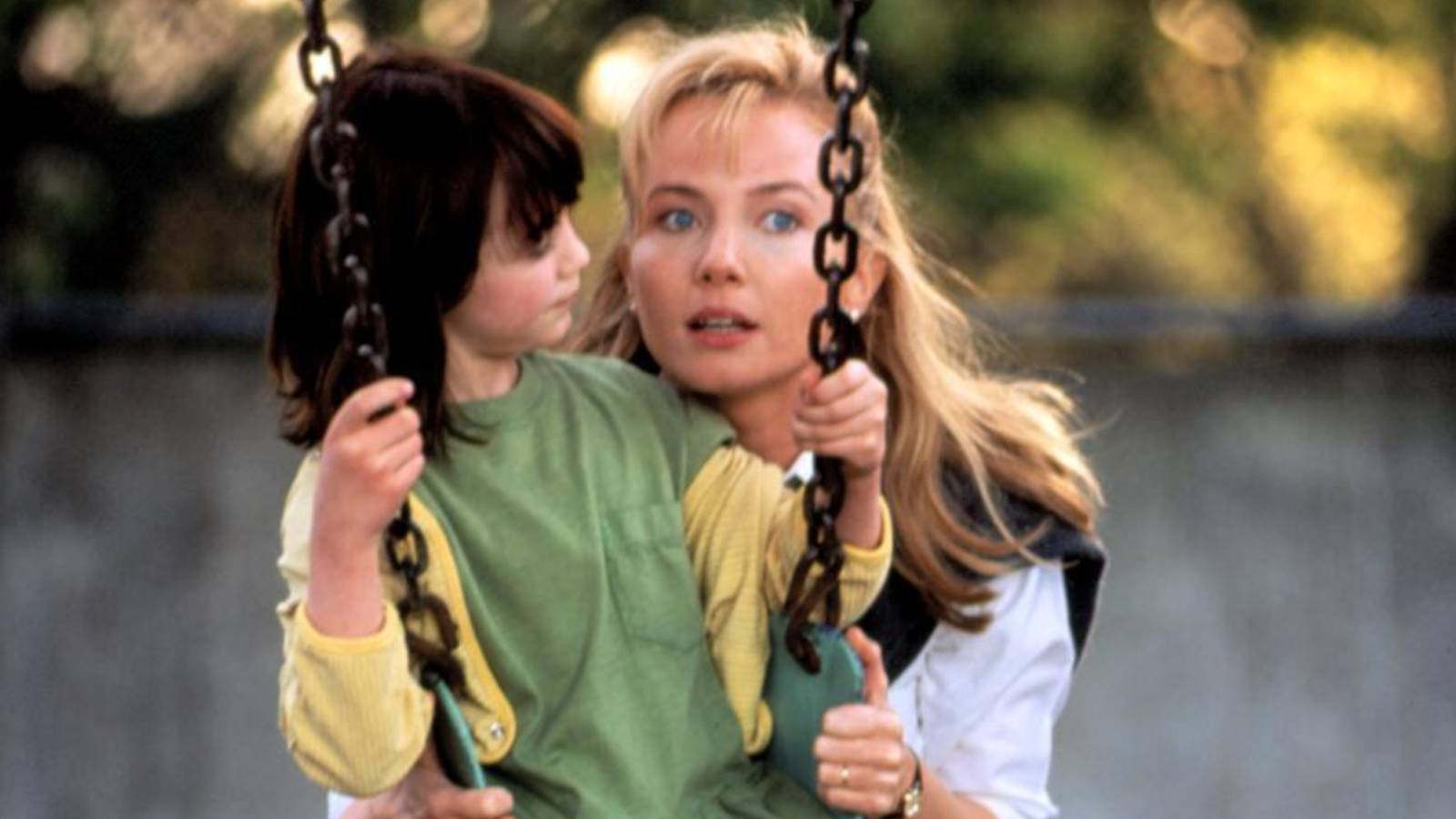
Image via Hollywood Pictures Published Nov 27, 2026, 7:36 AM EST A New York native, Joe graduated from an avant-garde theater school upstate, where he was obsessed with sketch comedy. There, he and his lunatic friends founded The Sketchies — which still lives on at Skidmore College today. Living in New York City, a screenwriter friend of his then taught him how to write for film. This awakened a new passion in Joe. Since then his scripts have garnered over 200 festival selections, nominations, and wins all over the globe (including the BlueCat Best Feature award). Several of his screenplays have been made into feature films — some of them not that bad! Overall, he loves to create unique, hilarious, touching, and bizarre stories. Sign in to your Collider account Anyone with even a casual interest in film is probably well-aware of and even well-versed in the unforgettable psychological thrillers that came out during the 90s. Highly lauded works of cinema like The Silence of the Lambs, Seven, The Sixth Sense, and Basic Instinct are just a handful of the rousing movies that shocked and awed domestic and international audiences. And, thankfully for the viewing public, there was a brilliant barrage of other, less-talked about films that absolutely deserve a few more re-watches. Here are six psychological thrillers that, while perhaps not as flashy as the previously mentioned films, are 10/10 amazing movies nonetheless. As one may suspect, some of these films deal with themes of malicious murder and monstrous mayhem, while others focus on less overt topics in the psychologically electrifying sphere. So, prepare yourself for a half dozen thrilling delights in mentally manipulative joy. 6 'Shallow Grave' (1994) Image via Rank Film Distributors Danny Boyle’s first feature film is the delightfully dark comedic thriller Shallow Grave. A somewhat cheeky precursor to Trainspotting, this British indie gem placed Ewan McGregor in his first major starring role and has rightfully developed a large international cult following over the years. Shallow Grave is as witty and snarky as it is crafty and exhilarating, in a nuanced way. Three distinctly different Edinburgh roommates (or “flatmates” as they call ‘em over there), an accountant, David (Christopher Eccleston), a doctor, Juliet (Kerry Fox), and a small-time journalist, Alex (McGregor), find another renter to help cover the bills. This is the cryptic Hugo (Keith Allen), and shortly after moving in, the others find him dead as a doornail…along with a valise stacked with cash (pounds). So, they can call the cops…or keep the loot and hide the body. Choosing the morally gray, yet cinematically far more interesting option, they dispose of Hugo and divvy up the scratch. Naturally, this was never going to go smoothly, as the “friends” grow paranoid of one another as grimy crime people pop up, in search of the cash — not to mention the police, hot on the trail. The fun here is watching the three mates descend into lunacy and utter savagery. Boyle’s obvious message is that greed corrupts and destroys everything good, but with a clever (if brutal) finale, Shallow Graves leaves us greedy for more. 5 'Following' (1998) Image via Momentum Pictures Another magnificent directorial debut, Following was mega-hit maker Christopher Nolan’s first full-length film. It’s gritty, black-and-white 16mm aesthetic and intricately woven mystery storyline make it feel like a noir of yore, even though it’s set in the 90s. Shot on a budget of roughly $6,000, Nolan showed his ingenuity in filmmaking…which obviously led him to somewhat larger projects. The simplicity of this film is what makes it so endearing, but it’s intellectually compelling plot and complex structure are what make it a classic — especially for Nolan fans and noir enthusiasts. Bill (Jeremy Theobald), aka The Young Man, is a writer living in London. Well, he really wants to be a writer, but is just lacking a bit of inspiration (Pinterest mood boards weren’t a thing yet). So, Bill embarks on little excursions through the city, covertly spying on strangers in an attempt to snatch interesting snippets of their lives that he can put into literary form. To evade detection, Bill never follows the same person twice — that is until he catches a professional thief, Cobb (Alex Haw), and can’t pull himself away from the scintillating action. Cobb eventually spots Bill, and subsequently makes him complicit in his crimes (break-ins, with a twist: Cobb likes to creepily inspect the various aspects of his victims’ lives). As the plot thickens, Bill notices a beautiful woman, The Blonde (Lucy Russell), the perfect femme female prototype, during one of the robberies, and becomes completely enthralled with her. Bill is urged by Cobb to clean up his act, and he tries to woo her…but only succeeds in getting entangled in an intricate scheme that doesn’t necessarily end that well for ole Bill. The performances in this thriller are subtle yet thoroughly engaging, but the stark tone and brilliant crime plot are what give this nifty little film its enduring following. 4 'Copycat' (1995) Image via Warner Bros. What with The Silence of the Lambs, Seven, Natural Born Killers, and Kalifornia, serial killer movies were all the rage in the 90s. One of the more overlooked yet stellar films in this hyper-specific thriller sub-category is Copycat. Directed by Jon Amiel, this incisive film takes all the familiar serial killer tropes and reinvigorates them with a fresh lens. Focusing on a particular brand of killer, the copycat, this film delivers all the best murderous attributes and kills in a saucy gumbo of terror. Dr. Helen Hudson (Sigourney Weaver, slaying) is a criminal psychologist and profiler of serial killers. When one such chap, Daryll Lee Cullum (Harry Connick Jr.), attacks her, and she survives, she develops a debilitating case of agoraphobia (which kind of hinders her speaking engagements). A new maniac on the scene begins to execute victims, each in the manner of a different, infamous killer. The detectives, including M.J. Monahan (Holly Hunter) and her partner Ruben Goetz (Dermot Mulroney), are stumped, and so they call in Hudson to aid in the case. Naturally, because of her trauma, she’s reluctant and, well, terrified. Yet, Hudson joins the team and helps decipher this unoriginal yet cunning killer’s methods in an effort to prevent his next morbid recreation. As one would expect, Hudson soon becomes a target (due in part to the killer’s connection to the jailed Daryll Lee), and she’s forced to relive her very worst fears. With a home run performance by Weaver and fun nods to notorious killers of days gone by, this movie is both edge-of-your-seat exciting and mentally mesmerizing. Collider Exclusive · Villain Personality Quiz Which Criminal Mastermind Would Be Your Nemesis? Lecter · Joker · Moriarty · Chigurh Four of the finest criminal minds ever put on screen. One of them would look at you and see something worth their time. Eight questions decide which one comes for you, why they picked you, and what they would want when they arrived. 🍷Lecter 🃏Joker ♟️Moriarty 🪙Chigurh MEET YOUR NEMESIS → 01 What would a criminal mastermind notice about you first? Great villains choose their opponents carefully. Something about you got their attention. AMy manners, and everything I am careful not to say. BThat I still believe people are basically decent. CThat I am clever, and quietly enjoy proving it. DThat I handle things myself, and always have. NEXT QUESTION → 02 How do they make first contact? The introduction tells you everything about what is coming next. AA polite letter. Beautiful handwriting. Quietly wrong. BSomething on fire, with a message left beside it. CA puzzle, left where only I would look. DNo contact. Just the aftermath, and a coin. NEXT QUESTION → 03 What do you actually believe about right and wrong? Every nemesis is really an argument about the thing you believe most. AThere are lines. Mine are private and absolute. BRules are the only thing keeping us from being animals. CMorality is a system, and systems can be solved. DThings happen. Most of it was never up to me. NEXT QUESTION → 04 What finally gets under your skin? Everybody has a pressure point. Finding yours is the whole plan. ABeing seen clearly by somebody I cannot read. BWatching good people do something ugly. CLosing to someone who was simply better prepared. DHaving no move left that changes anything. NEXT QUESTION → 05 They have made their move. How do you fight back? This is the part of the film where the audience finds out who you are. ACarefully, and never where they expect to be touched. BLoudly. I would rather lose than play their game. CWith a better plan. I can out-think this. DDirectly, once, with whatever is closest to hand. NEXT QUESTION → 06 What would they use against you? A good villain never brings a weapon you have not already handed them. AMy privacy. I have kept far too much to myself. BMy conscience. I will not cross the line they want. CMy ego. I cannot resist a worthy opponent. DMy certainty that I can handle it alone. NEXT QUESTION → 07 What do they actually want from you? The money is never the point. Something else always is. ATo understand me better than anyone ever has. BTo prove I am no better than they are. CTo finally be beaten by someone worth the trouble. DNothing at all. I stepped into the wrong path. NEXT QUESTION → 08 How does it end between the two of you? Eight questions in, this is the one that decides who comes for you. AA conversation I will be replaying for years. BA choice forced on me that has no clean answer. COne final move, and the better mind wins. DA coin in the air, and nothing I can say. REVEAL MY NEMESIS → The Case File Is Complete Your Nemesis Is…Four criminal masterminds. One of them was always going to be yours. Here is who comes for you, why they picked you out of everyone available, and what they want from the encounter. Hannibal LecterYour nemesis does not want to beat you. He wants to know you completely, and he is patient enough to wait for it. The frightening part is how good the conversation is. Lecter is the most dangerous kind of opponent: the one who finds you interesting. He never raises his voice, because he has never needed to. You keep a great deal to yourself and you are careful about what you show. That reserve is exactly the door he would knock on. The films understood something other thrillers missed. The horror is not the violence. It is being perfectly understood by the wrong person. He would be unfailingly polite about all of it. That is the worst part. The JokerYour nemesis is not after money, territory or revenge. He is after a demonstration, and you are the person he has chosen to prove his point on. The Joker only picks opponents who believe in something. Your decency is not a defence against him. It is the entire reason he showed up. He has no plan you can predict and nothing you can take away, which removes every tool you would normally reach for. His whole argument is that you are one bad day away from being him, and you would spend the rest of your life proving him wrong. He would call it a magic trick. You would call it the worst night of your life. MoriartyYour nemesis respects you, which sounds flattering until you work out what it means. He chose you because nobody else was worth his time. Moriarty is the original criminal mastermind, the template every later one borrows from: a mind the equal of the hero's, pointed the wrong way. You enjoy being the cleverest person in the room. He is counting on exactly that, and he has already built the room. This is the rare nemesis who would be genuinely disappointed if you lost badly. He needs the game to be worth playing. It ends the way these things always end. Two people, one problem, and only one way down. Anton ChigurhYour nemesis has no personal interest in you whatsoever, and that is precisely what makes him unsurvivable. You are not a rival. You are a stop on the way. Chigurh does not negotiate, gloat or explain. He arrives, he asks one question, and the answer was decided long before you opened your mouth. You trust yourself to handle things. He is the one problem in the world that has no interest in how capable you are. No Country for Old Men rewrote the screen villain by removing the thing audiences quietly rely on: the sense that talking might work. Call it. He will wait. ↻ RETAKE THE QUIZ 3 'Breakdown' (1997) Image via Paramount Pictures Sometimes you just have to take matters into your own hands. That’s what the lead character in director Jonathan Mostow’s escalating nightmare Breakdown sure does. Set against the blisteringly cruel deserts of the Southwest, this scorched earth psycho-action-thriller is a disturbing thrill ride through the human psyche — capitalizing on every possible fear a human can envision when it comes to the safety of their most cherished loved one. Jeff Taylor (Kurt Russell) and his wife Amy (Kathleen Quinlan) have embarked on a cross-country journey to start a new life on the West Coast. Unfortunately, their vehicle breaks down in just about the most inconvenient place possible: the dusty desert. Eschewing one of the number one rules of any thriller, Jeff and Amy separate — when a kindly trucker, Red Barr (J.T. Walsh), stops and offers to take Amy to town to call for a tow (pre-pervasive cell-phone times were rough), while the Jeffster stays with their defunct car. When Jeff eventually makes his way to their proposed meeting point, Amy is nowhere to be found, and the locals claim to have never seen her. This, of course, sends Jeff spiraling, as he now desperately tries to locate his missing spouse. Jeff eventually finds Red…but the crusty dude claims to have never seen him or Amy before. Cue revenge-fueled rescue mission. The local police force, including Sheriff Boyd (Rex Linn) and Deputy Carver (Kim Robillard), are absolutely unhelpful, so Jeff can only rely on himself to hopefully find (and free) Amy. Mostow steadily increases tension throughout the film’s runtime (as Jeff's frustration is palpable), and the ending sequence is nothing less than thrilling — with a well-deserved, satisfying finale. Jeez, next time though, just call Triple A. 2 'The Hand That Rocks the Cradle' (1992) Image via Hollywood Pictures Long before The Housemaid was conceived, there was an even more stylish take on the attractive-nanny-rules-the-household sub-genre. Director Curtis Hanson’s slow-burn mystery-thriller masterpiece The Hand That Rocks the Cradle was an early 90s hit, putting parents on high alert in regard to whom they let infiltrate their homes. This film works on a variety of levels, but it’s Rebecca De Mornay’s chilling, nuanced lead performance that really brings this baby to life. The cleverly crafted story begins with a mom, Claire Bartel (Annabella Sciorra), who ends the career of her obstetrician, Dr. Victor Mott (John de Lancie), after he sexually assaults her. Indirectly, she ends his life, too, as Doc Mott takes the easy way out and kills himself, rather than face widespread public humiliation and jail time. That leaves his pregnant wife, Peyton (De Mornay), in a state of despair — so much so, that she loses her baby. Ergo, she concocts a plan to ruin the life of the woman who she believes wrecked hers: Claire. Peyton creates a fake identity and charms her way into a job as a nanny for Claire, her husband, Michael (Matt McCoy), and their little rugrats. Once inside, Peyton uses her guileful ways to make Claire seem like a bad mother, all while ingratiating herself to the kids and making Michael drool over her (a slinky nightgown can do that to a chump). Peyton’s ultimate goal is to eliminate Claire, and take over her life (and due to Peyton's traumatic past, the viewer can kind of empathize). Claire’s pal, the snarky Marlene (Julianne Moore) doesn’t trust Peyton, but she is dealt with in a splendid flourish of shattered greenhouse glass. De Mornay is so good in this role that you’re almost rooting for her to pull off her deranged plan. With a methodical, building tension that culminates in a grand, explosive finale, this is one subverted home invasion flick you don’t want to miss — plus, cool title. 1 'Falling Down' (1993) Image via Warner Bros. Ever just have one of those days? In fact, Los Angeles traffic alone can drive a person up the wall. That’s the jumping off point in famed director Joel Schumacher’s bold and scathing film Falling Down. Lush with themes of economic strife, a crumbling society that’s lost its values, and just what happens to a person when they are cast out into the proverbial wilderness, this movie is a harsh look of the bitter realities of modern urban life. William "D-Fens" Foster (Michael Douglas, brilliantly playing against type) is an unemployed defense engineer/weapons tech (yet he still peculiarly dresses for work) who is estranged from his family. Already stressed, anxious, and on the verge of losing it, he gets stuck in the mother of all L.A. traffic jams. So, he does what anyone who has completely had it with the world does: he abandons his car and goes on a rampage through the mean streets of the city, growing more unhinged and violent by the moment (impolite people really get his goat). A seasoned cop, Detective Martin Prendergast (Robert Duvall, solid as ever here), provides the old “last day before retirement” cliché, as he uses his keen detecting skill set to follow William’s trail of destruction and anticipate where he’s headed. The wily Willy is en route to see his ex-wife, Beth (Barbara Hershey), and his daughter, Adele (Joey Singer), at Adele’s birthday party — which is sure to be a blast when grizzled, psychotic Dad shows up. The final, irony-laden showdown is tragic on a variety of levels — and only strengthens Schumacher’s point that the world can be a rough place, especially when you’ve lost everything. Falling Down Release Date February 26, 1993 Runtime 113 minutes
6 Psychological Thrillers From the ’90s That Are 10/10 Masterpieces
Full Article
Original Source
Read the full article at Collider →KhanList aggregates and links to publicly available news content. We do not host full articles from third-party sources. Always verify important information with original sources.