
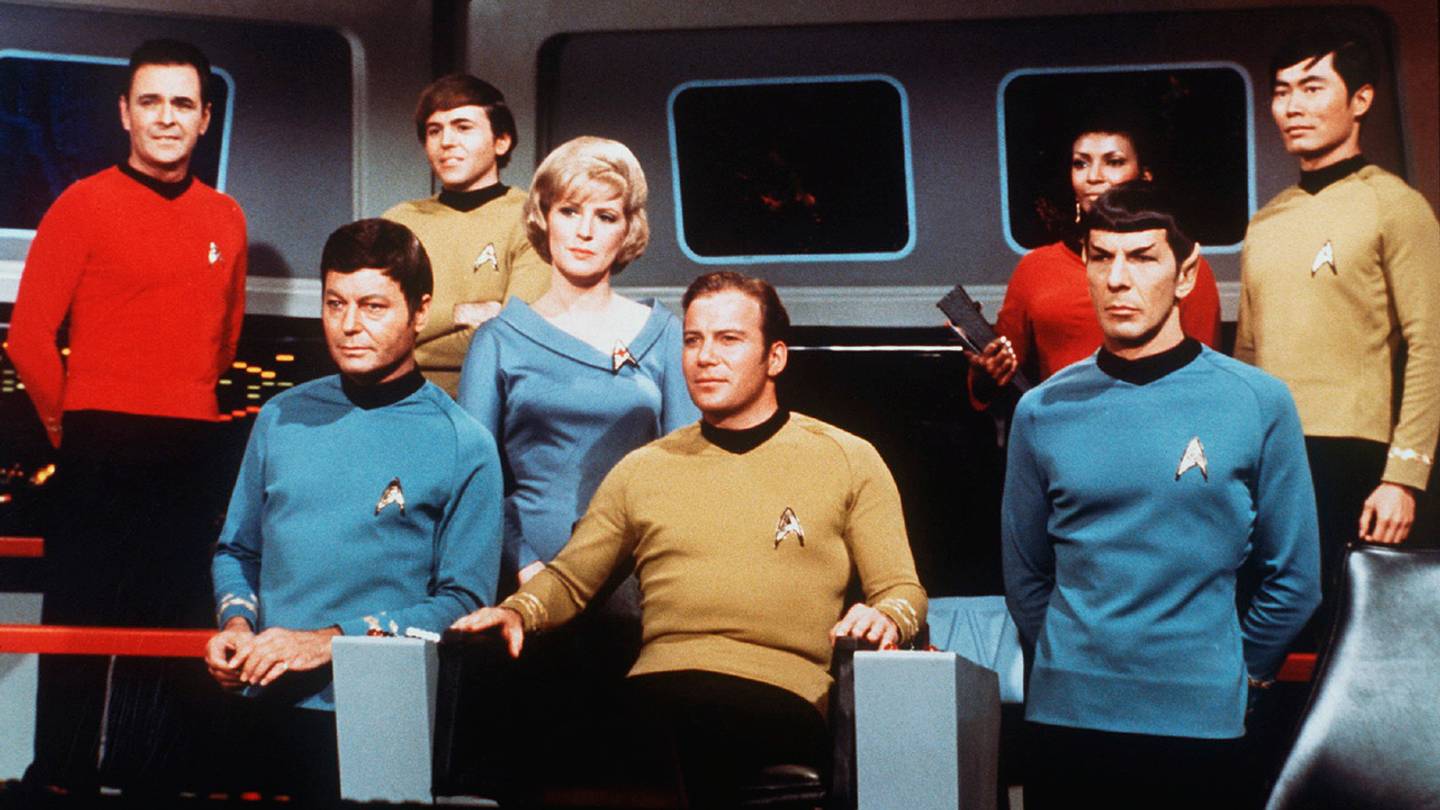
Science fiction has always been something of a step ahead of the real world, and throughout history authors, writers, filmmakers, and designers have long dreamt up wild ideas of how our future might one day look, and the kinds of madcap gadgetry and technology that might one day become commonplace. Unfortunately, it seems we’re still some way off the likes of flying cars, robot assistants, and teleportation, but as the world has progressed in recent decades, a number of once-unthinkable technologies have nonetheless proved reality. And that is perhaps most notable of all in Star Trek.Developed by the US writer and producer Gene Roddenberry in the mid 1960s, Star Trek was first broadcast on American television screens in 1966, before catching on worldwide and becoming a global media phenomenon. At the time of the original series, many of the futuristic gadgets and machinery the crew of the USS starship Enterprise had at their disposal would have seemed impossibly advanced—but in retrospect, looking back from the 2020s, some of it has proved remarkably prophetic and has ended up as a major part of our everyday life. COMMUNICATORSTOUCHSCREENSPADDsTRANSLATORS COMPUTERTRICORDER COMMUNICATORSWhen the first episode of Star Trek was broadcast in 1966, telephone communication was still conducted via landline cables, and handheld wireless radio devices, like walkie-talkies, operated over relatively limited distances. The communicators used by the crew of the Enterprise, ultimately, would have seemed a world away from reality. But today, in a world of wi-fi, Bluetooth, and mobile communication now covering almost the entire population, turning to a handheld device with no wires to speak to whoever you want seems remarkably mundane. TOUCHSCREENSAnother aspect of modern tech that Star Trek handily predicted was the use of smooth glass touchscreens as a means of controlling machinery or gadgets. While some other contemporary science fiction shows and movies clung to the clunkier analog style of the time, with banks of individual buttons, levers, and switches, Star Trek preferred a sleeker style that eventually led to the use of modern-looking touchscreens. PADDsOn the subject of touchscreens, Star Trek’s “personal access display device,” or PADD, proved even more prescient. These handheld control devices neatly predicted the arrival of Apple’s iPad in 2010.TRANSLATORS In a show that saw the Enterprise crew jump from world to world and planet to planet, encountering an array of different cultures and life forms as they did so, a “universal translator,” or UT, neatly allowed them to understand and communicate with whoever or whatever alien language they came across. What would have seemed too wild an idea to surely ever come into fruition six decades or so ago, though, is now a standard feature of search engines, cell phones, and tablet apps—which can listen to, understand, translate, and even read out precisely what it is you want to say in any one of dozens of different languages from all around the world. COMPUTERIt’s worth noting too that at the time of the very first run of Star Trek in the late 1960s, computers were gigantic, punch-card reading mechanical behemoths that would take up entire rooms and produce readouts that were all but impenetrable to only the most well versed information technologists. Each iteration of the Star Trek universe, however, has turned that idea on its head and presented a computer that stores an easily accessed and immediately readable and searchable library of information that can be operated and explored with just a few presses of a few buttons. TRICORDER Scanners and sensors aren’t quite at the same peak as the “tricorder” of the Star Trek universe, admittedly, which allowed its user to do everything from analyze the surrounding environment to record notes and results. The world of handheld devices has understandably expanded enormously since the 1960s, however, with various digital tricorder-like gadgets now capable of doing everything from assessing light levels to measuring background radiation. In a recent Instagram post celebrating real-life Star Trek technology in space, meanwhile, the European Space Agency even compared Dr. McCoy’s tricorder to a handheld device called the MyotonPRO, which, with a simple scan of an astronaut’s skin, can assess how their musculature is coping with being in a zero-gravity environment. Read More:
6 Pieces of ‘Star Trek’ Technology That Eventually Became Real
Full Article
Original Source
Read the full article at Mentalfloss →KhanList aggregates and links to publicly available news content. We do not host full articles from third-party sources. Always verify important information with original sources.