
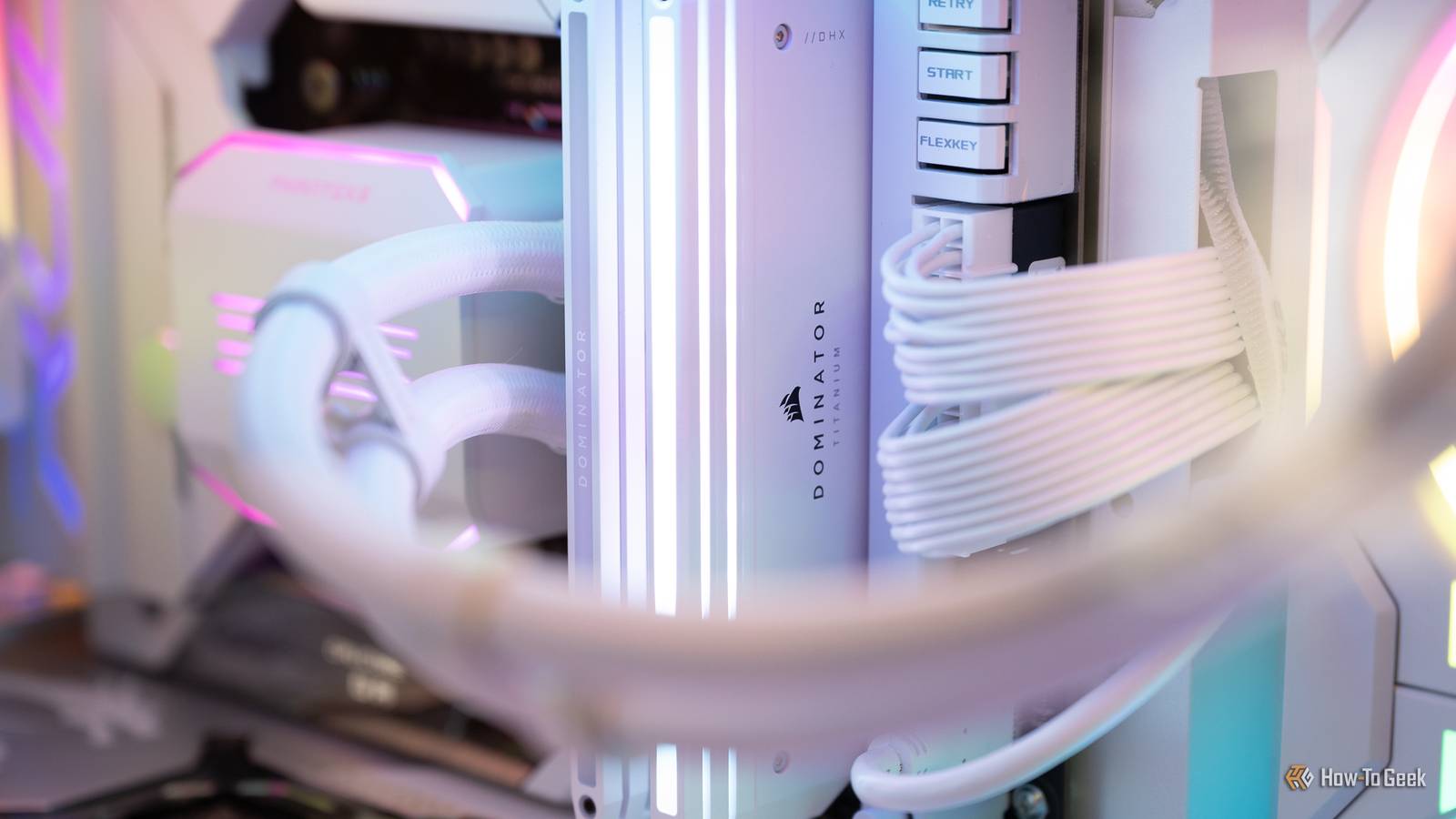
Published Nov 3, 2026, 2:30 PM EST Monica J. White is a journalist with over a decade of experience in covering technology. She built her first PC nearly 20 years ago, and she has since built and tested dozens of PCs. PC hardware is her main beat, and graphics cards and the GPU market at large are her main area of interest, but she has written thousands of articles covering everything related to PCs, laptops, handhelds, and peripherals. From GPUs and CPUs to headsets and software, Monica's always willing to geek out over all things related to computing. Outside of her work with How-To Geek, Monica contributes to TechRadar, PC Gamer, Tom's Guide, Laptop Mag, SlashGear, Whop, and Digital Trends, among others. Her ultimate goal is to make PC gaming and computing approachable and fun to any audience. Monica spends a lot of time elbow-deep in her PC case, as she's always making upgrades, testing something, or plotting out her next build. She's the go-to tech support person in her immediate circle, so she's never out of things to do. Whenever she has spare time, you'll find her gaming until the early hours and hanging out with her dog. The RAM-pocalypse is bad news for our wallets, obviously. Anyone who's had any dream or plan of upgrading their PC during the past year was left with two choices: wait or overspend. Things aren't getting better anytime soon on that front, so we all have reason to complain. But beyond our very valid complaints, the RAM shortage is affecting progress, too. Many interesting advancements had to come to a screeching halt as a result of the skyrocketing prices. Here are some of the ones I'm most upset about. DDR5 becoming the affordable standard for new PCs We were so close, we were almost there Credit: Patrick Campanale / How-To Geek Recently, I called DDR5 the "lost generation" of PC RAM. And I stand by that opinion. Is it an opinion? Is it a fact? In any case, it feels fitting for the current state of things. And it didn't have to be that way. In fact, we were finally headed in the right direction with DDR5 RAM before the entire crisis started, and it took a long time for us to get there. DDR5 memory was super expensive upon launch and stayed that way for quite some time, but in the year or so prior to the RAM shortage, memory prices were downright pleasant. It was a good time to finally take that leap of faith, buy that new motherboard, get that new CPU, and build your DDR5-based PC instead of sticking to DDR4. Now, all of that progress is gone. In fact, AMD and Intel are doubling down on DDR4, and buying older RAM became the most sensible thing you can do during this shortage. DDR3 is still in play in things like homelabs, too. Making 32GB the default for every gaming PC Are you still stuck with 16GB? There was a time, probably a decade ago now, when gamers could get by with 8GB of RAM. These days, I recommend 16GB as a minimum for just about anywhere apart from the least-demanding users. But for gamers and power users, the needle keeps moving. At this stage, most of us should be running 32GB RAM, and again, we were headed in that ever-so-great direction, until the powers that be decided that RAM should cost a fortune. And now, those that never got to upgrade in time are stuck with 16GB for the foreseeable future ... even though 16GB isn't viable in 2026 for power users. Gaming PCs that don't need a dedicated GPU Powerful integrated graphics depend heavily on RAM I built an entire career out of ranting about the mess that is the GPU market, and my main focus was always on discrete GPUs. With that said, I can't deny that the progress in integrated graphics has been nothing short of amazing over the last few years. Gaming on an iGPU, or doing anything beyond the bare minimum really, used to be a pipe dream. Minesweeper, yes. Anything else, no. These days, even my super-bad laptop can run actual games, and it might not be pleasant, but it works. However, the RAM shortage is likely to spoil things for us here, too. As iGPUs don't have their own dedicated VRAM, they rely on your system memory instead. This means that having enough RAM, preferably in a dual-channel configuration, is beyond crucial. Guess who doesn't have enough RAM? Most of us. Pushing DDR5 speeds beyond 9,000 MT/s Credit: Patrick Campanale / How-To Geek RAM speeds aren't everything, and for many use cases, they may not move the needle as much as the price hike suggests. But DDR5 was finally getting to an interesting spot in terms of speeds, and of course, the shortage had to spoil that for us as well. We're talking 9,000 MT/s and beyond, thanks in part to tech like CUDIMM, which uses an onboard clock driver to improve signal integrity at higher frequencies. This is exciting for memory enthusiasts, but the catch here is that when even the cheapest DDR5 kit costs a boatload of money, no one's going to pay an extra three boatloads' worth just to make their RAM a bit faster. So, these developments might still be happening in the background, but most people won't even touch them. Affordable home servers with huge amounts of RAM Ain't nobody got money for that Older PCs can be super useful for things like a NAS or a homelab, but stacking them up with RAM is just not feasible right now. The thing is, if you're just running a NAS or a few Docker containers, you probably don't need a ridiculous amount of RAM, and that's fine. Start playing around with virtualization, self-hosting, or running multiple VMs, and those RAM requirements climb quickly. Before the RAM shortage, meeting those higher RAM thresholds was at least semi-doable. But now? Forget about it. If your old PC has 8GB RAM, then you're using 8GB RAM and enjoying it for the foreseeable future. Small PCs with enough memory to run serious AI models locally Although luckily, these PCs still get by with less GEEKOM IT13 2026 mini PC Mini PCs are another category that's come an immensely long way. I recently reviewed the GEEKOM IT13 2026, and that little machine surprised me with how capable it was. It is, however, equipped with 32GB RAM, which is plenty for a PC of this size (and use case). Cheaper models are a different story. Running larger AI models locally can require 32GB, 64GB, or even 128GB of memory, depending on the model and how it's configured. Some high-end mini PCs with large shared memory pools can make that possible without a massive dedicated GPU, which is pretty exciting. Unfortunately, the RAM shortage is making these configurations harder to afford. Be patient, because what else is there to do RAM advancements? PC building innovations? Please, right now we're all just trying to get our PCs to hold off until the prices drop so that we can get some upgrades. We have to stay patient; there's little else to do right now.
6 PC-building breakthroughs that the RAM shortage put on pause
Full Article
Original Source
Read the full article at Howtogeek →KhanList aggregates and links to publicly available news content. We do not host full articles from third-party sources. Always verify important information with original sources.