
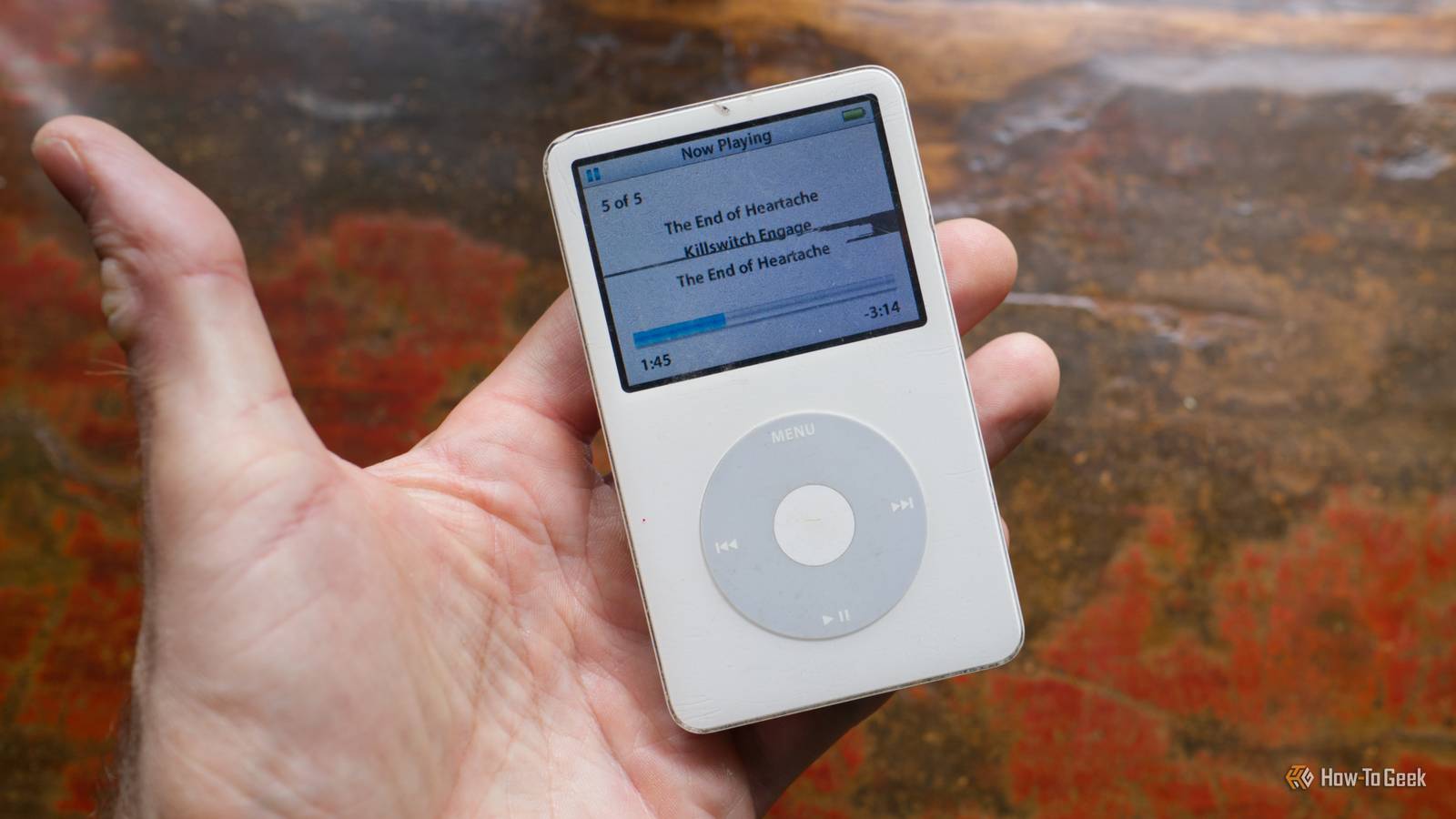
Published Sep 14, 2026, 10:00 AM EDT Adam has a degree in Engineering and has a life-long interest in technology. He has been writing for over a decade for various print and online publications, with a focus on consumer tech. He joined How-To Geek in 2024 while working at Pocket-lint. As well as being a long-term fan of Apple products, he also has a strong interest in smart home tech, running a Home Assistant server at home to automate all his smart home devices. He believes that the ideal smart home should work with minimal interaction from the user, with automations running as if by magic rather than requiring you to push buttons on a control panel. You can find more of his work on Muck Rack. It's always frustrating when you can no longer use a perfectly functional gadget because the company behind it shuts down the service or stops developing the software. Thankfully, the open-source community has found plenty of ways to keep using old devices that would otherwise become e-waste. Spotify Car Thing DeskThing makes Spotify's abandoned hardware useful again Credit: Spotify The ludicrously named Spotify Car Thing was a small touchscreen device you could mount in your car to give you physical controls for Spotify. It had a touchscreen, voice control, and a chunky rotary dial, but depended on Spotify's software and services. The product was discontinued, and Spotify advised owners to "safely dispose of your device following local electronic waste guidelines." The hardware is still useful, however. The open-source DeskThing project turns the Car Thing into a useful desktop controller. You can use it to control music playback, including Spotify and local audio. It can also control streaming apps, and you can even use it to keep tabs on your GitHub repositories. It's a great way to put an otherwise dead device back to use. Make the discontinued smart display part of your smart home Credit: Meta Meta tried to capitalize on the popularity of its apps such as WhatsApp and Facebook Messenger by releasing a range of touchscreen smart displays. These were primarily intended for making video calls but could do a lot more. Meta eventually discontinued the Portal line in 2022, and for a long time the devices remained locked down. In June 2026, Meta provided official documentation on how to unlock Android Debug Bridge (ADB) on the devices, and encouraged people to build their own applications for the Portal, which is exactly what happened. One of those applications is Portal HA Bridge. This lets you use a Portal device as a dedicated Home Assistant display, allowing you to display dashboards to control your smart home, control music playback, and more. A mostly useless device now has a genuine purpose again. Squeezebox Logitech loves to abandon perfectly good hardware Credit: Logitech Good old Logitech. The company absolutely loves creating a product that is genuinely useful and then completely abandoning it. Squeezebox is just one example. Squeezebox was a range of network music players, long before smart speakers ever became a thing. The music players were originally created by Slim Devices, which Logitech acquired in 2006. You could put Squeezebox players around your home and stream music to them, synchronized throughout your home. Logitech discontinued Squeezebox, but the hardware still lives on. That's thanks to the open-source community continuing the development of the software that powered the Squeezebox ecosystem. You can use the Lyrion Music Server software to keep getting use out of your Squeezebox hardware. iPod Rockbox lets you keep 1,000 songs in your pocket again Squeezebox players aren't the only audio hardware products that are worth hanging on to. If you have an old iPod, you might want to pull it out of the drawer and dust it off, because it may be able to do a lot more than you remember. Rockbox is open-source firmware that supports several of the older iPod models. It adds support for a wide range of audio formats, allows you to customize the interface, and adds features such as Last.fm scrobbling. There's also a wide range of plugins that can do everything from Game Boy emulation to playing videos. Not every iPod is supported; my fourth-generation iPod nano unfortunately isn't supported. For those that are, Rockbox can make your old MP3 player into something more than it ever was. Xbox Kinect A Kinect sensor can do a lot more than play rafting games Credit: doublelee/Shutterstock.com The Xbox Kinect was Microsoft's attempt to capture some of the huge popularity of the Nintendo Wii and its revolutionary control system. The Kinect never had the same impact as the Wii, but the hardware was impressive. Unlike the Wii, which required special controllers, the Kinect could track your body movements, so you could control games just by moving your body. The Kinect sensor is still incredibly useful. Open-source projects such as libfreenect let you connect your computer directly to a Kinect sensor without an Xbox. You then have access to its sensors, including the RGB camera and depth information, making it ideal for projects such as computer vision, motion tracking, robotics, and more. The Kinect sensor was one of the first things I used in my smart home. Using the onboard microphones and some free software, I was able to control smart home devices using my voice before the first Amazon Echo devices were released. Logitech Harmony Hub Bring your universal remote back to life Credit: Adam Davidson / How-To Geek Yep, it's Logitech again. This is one that really grinds my gears. I hated having to use a pile of what felt like 100 different remotes to control all the different AV gear in my living room. I had a remote for my TV, another for my set-top box, another for my surround sound, another for my Apple TV, and so on. I bought a Logitech Harmony Hub and a companion remote, and it allowed me to replace all of those remotes with just one. The Harmony app was clunky, but it did the job, and I could connect the Harmony Hub to Home Assistant and control my AV devices via automations and smart home dashboards. Since this was Logitech, the company stopped manufacturing its entire line of Harmony remotes just after the most-used button on my companion remote fell out. I could still use the Harmony Hub through Home Assistant, which was fine for a long time, but recently even connecting the app to the Hub has started to fail. Thankfully, projects let you root Harmony Hubs and install additional software to add features like a local web interface, IR learning, Bluetooth HID controls, and more. There may still be life in your Harmony setup yet. Your old gadgets don't need to become e-waste It really saddens me when companies such as Spotify actively tell people to dispose of products that have no physical issues at all but are merely no longer supported. Thankfully, the open-source community is great at finding ways to give these products long and productive lives.
6 old gadgets worth keeping because the open-source community found better uses for them
Full Article
Original Source
Read the full article at Howtogeek →KhanList aggregates and links to publicly available news content. We do not host full articles from third-party sources. Always verify important information with original sources.