
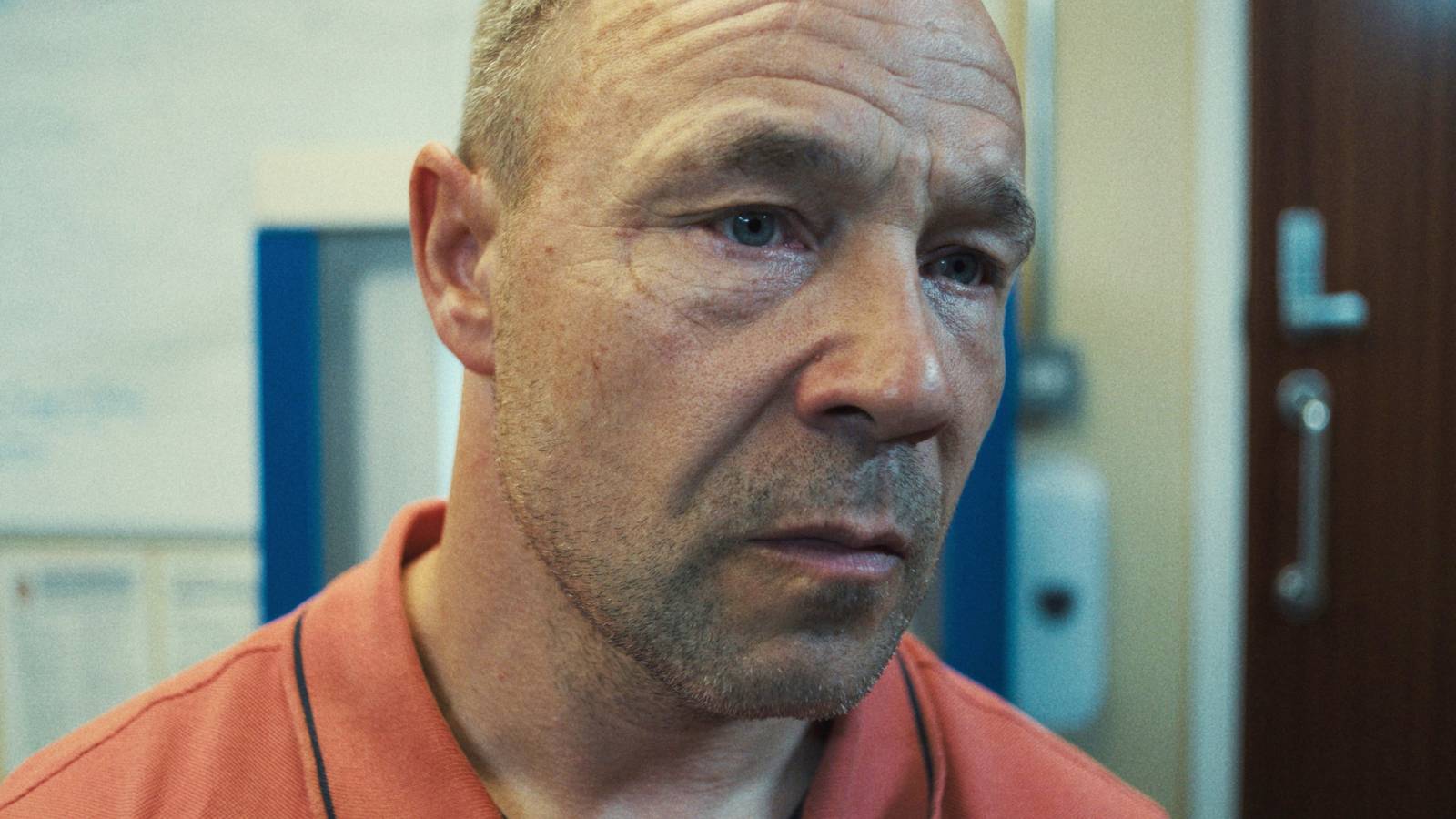
Netflix/ Courtesy Everett Collection Published Aug 23, 2026, 5:26 AM EDT Sign in to your Collider account Once Netflix started releasing original content, it was pretty much over for the competition. Other streamers and network TV had to act fast and raise their game because it only took Netflix a few years to completely change how people consumed shows. The streaming giant built its library around an audience that could watch an entire season in one sitting. That’s because the traditional formula where a 20-episode season could afford a few forgettable filler chapters just doesn’t work as well when the viewer can put on the next episode immediately. Every hour has to justify the click then. That pressure has produced some incredibly consistent television, and Netflix is obviously in the lead in that department. The platform’s content has evolved with its audience, to the point where Netflix has now perfected the art of pacing like no other. To prove that, here are binge-worthy shows on the streamer that did not have a single weak episode. 6 'American Vandal' (2017) Image via Netflix American Vandal sounds like a joke until it becomes one of the smartest mysteries Netflix has ever made. The mockumentary follows high school student Dylan Maxwell (Jimmy Tatro), who is expelled after being accused of spray-painting obscene images on 27 cars in the faculty parking lot. Everyone assumes Dylan is guilty because he already has a reputation for drawing the same image everywhere he goes, but sophomore Peter Maldonado (Tyler Alvarez) begins to notice that parts of the school’s case against him do not add up. Alongside his friend Sam Ecklund (Griffin Gluck), Peter starts filming his own documentary investigation, interviewing students, reconstructing timelines, and obsessing over tiny pieces of evidence in an attempt to figure out who actually vandalized the cars. The premise is absurd, but it works perfectly. The show copies the language of serious true-crime documentaries to treat cafeteria gossip and teenage drama with the same gravity as that of a murder investigation. The mystery itself is never taken lightly, though. Every episode introduces another suspect or piece of evidence. The deeper Peter digs, the more the case starts exposing lies throughout the school. Dylan also becomes much more complicated than the idiot everyone initially assumes him to be, which gives the audience a character to root for. This balance between comedy and genuine mystery is why the season never has a weak episode. The jokes keep the investigation entertaining, but the writing is disciplined enough that almost every interview or seemingly stupid detail eventually matters. 5 'The Haunting of Hill House' (2018) Image via Netflix The Haunting of Hill House redefined horror TV and proved that the genre could be so much more than jump scares. The series follows the Crain family across two timelines, first as children living in the mysterious Hill House and then decades later as adults still dealing with what happened there. Hugh (Henry Thomas and Timothy Hutton) and Olivia Crain (Carla Gugino) originally move into the mansion with their five children to renovate and sell it for a profit. However, the house has a weird supernatural energy that begins affecting every member of the family differently. Things hit a peak when one fateful night, Hugh leaves the home in the middle of the night with his children, which also happens to be the very night Olivia dies in the house. Years later, the estranged Crain siblings still don’t have all the answers. It’s only when another tragedy brings them back together that they begin confronting things they have been avoiding. The genius of The Haunting of Hill House is that nearly every haunting works on two levels. The ghosts are genuinely terrifying, but they also become manifestations of the grief and trauma that the Crains carry. The series constantly jumps between past and present to gradually reveal what happened during the family’s final night inside Hill House. Some details that initially seem insignificant become devastating once later episodes provide the missing context, which makes every episode feel intentional. The Haunting of Hill House uses horror as a vehicle for a tragic family drama. This emotional core is why the series remains one of Netflix’s strongest horror offerings. 4 'The Queen's Gambit' (2020) Image via Netflix The Queen’s Gambit is a miniseries that manages to tell a grand story in just seven episodes. It follows Beth Harmon (Anya Taylor-Joy), who is sent to an orphanage after losing her mother at a young age. There, she is introduced to chess by the building’s custodian, Mr. Shaibel (Bill Camp), and quickly learns that she has a natural talent for the game. As Beth grows older, she begins competing professionally. The series shows her working her way through increasingly difficult tournaments. However, that’s only one part of the story. Beth’s orphanage routinely gave the children tranquilizers, which results in Beth developing a dependence on pills at a very young age. The addiction follows her long after she leaves the orphanage and becomes Beth’s biggest opponent. Every episode in the series feels like the next stage of Beth’s development. Her career keeps reaching new heights, but she is always weighed down by her past trauma. The show doesn’t over-explain the mechanics of the game, but the chess sequences are shot to feel like pure adrenaline. The games never feel repetitive because the real suspense comes from what each match means to Beth. By the time she reaches the final tournament in Moscow, nearly every loss and lesson from the previous six episodes feeds directly into who she has become. That consistent progression of her character arc is exactly why The Queen’s Gambit doesn’t have a single weak episode. Collider Exclusive · Sci-Fi Survival Quiz Which Sci-Fi World Would You Survive? The Matrix · Mad Max · Blade Runner · Dune · Star Wars Five universes. Five completely different ways the future went wrong — or sideways, or up in flames. Only one of them is the world your instincts were built for. Eight questions will figure out which dystopia, galaxy, or desert wasteland you'd actually make it out of alive. 💊The Matrix 🔥Mad Max 🌧️Blade Runner 🏜️Dune 🚀Star Wars TEST YOUR SURVIVAL → 01 You sense something is deeply wrong with the world around you. What do you do? The first instinct is often the truest one. APull on every thread until I understand the system — then figure out how to break it. BStop asking questions and start stockpiling — food, fuel, weapons. Questions don't keep you alive. CKeep my head down, observe carefully, and trust no one until I know who's pulling the strings. DStudy the patterns. Every system has a rhythm — learn it, and you learn how to survive it. EFind the people fighting back and join them. You can't fix a broken galaxy alone. NEXT QUESTION → 02 In a world of scarcity, what resource do you guard most fiercely? What we protect reveals what we believe survival actually requires. AKnowledge. If you understand the system, you don't need resources — you can generate them. BFuel. Everything else — movement, power, escape — runs on it. CTrust. In a world of fakes and informants, a truly reliable ally is rarer than any commodity. DWater. And after water, information — the two things empires are truly built on. EShips and credits. The galaxy is big — you survive it by being able to move through it freely. NEXT QUESTION → 03 What kind of threat keeps you up at night? Fear is useful data — if you're honest about what you're actually afraid of. AThat reality itself is a lie — that everything I experience has been constructed to keep me compliant. BA raid. No warning, no mercy — just the roar of engines and then nothing left. CBeing identified. Once someone with power decides you're a problem, you're already out of time. DBeing outmanoeuvred — losing a political game I didn't even know I was playing. EThe Empire tightening its grip until there's nowhere left to run. NEXT QUESTION → 04 How do you deal with authority you don't trust? Every dystopia has a power structure. Your approach to it determines everything. ASubvert it from the inside — learn its rules well enough to weaponise them against it. BIgnore it and stay out of its reach. The further from any power structure, the better. CAppear to comply while doing exactly what I need to do. Visibility is the enemy. DManoeuvre within it carefully. You can't beat a system you refuse to understand. EResist openly when I have to. Some things are worth the risk of being seen. NEXT QUESTION → 05 Which environment could you actually endure long-term? Survival isn't just tactical — it's physical, psychological, and very much about where you are. AUnderground bunkers and server rooms — cramped, artificial, but with access to everything that matters. BOpen wasteland — brutal sun, no shelter, constant movement. At least the threat is honest. CA dense, rain-soaked city where you can disappear into the crowd and nobody asks questions. DMerciless desert — extreme heat, no water, and something enormous living beneath the sand. EThe fringe — backwater planets and busy spaceports where the Empire's attention rarely reaches. NEXT QUESTION → 06 Who do you want in your corner when things fall apart? The company you keep is the clearest signal of who you actually are. AA tight crew of believers who've seen behind the curtain and have nothing left to lose. BOne or two people I'd trust with my life. Any more than that and someone talks. CNobody, ideally. Alliances are liabilities. I work alone unless I have no choice. DA community bound by shared hardship and mutual survival — people who need each other to last. EA ragtag team with wildly different skills and total commitment when it counts. NEXT QUESTION → 07 Where do you draw the line — if you draw one at all? Every survivor eventually faces a moment that tests what they're actually made of. AI won't harm the innocent — even the ones who'd report me without hesitation. BI do what I have to to protect the people I've chosen. Everything else is negotiable. CThe line shifts depending on who's asking and what's at stake. DI draw a long-term line — nothing that compromises my people's future, even if it'd help now. ESome lines, once crossed, can't be uncrossed. I know which ones they are. NEXT QUESTION → 08 What would actually make survival worth it? Staying alive is one thing. Having a reason to is another. AWaking others up — dismantling the illusion so no one else has to live inside it. BFinding somewhere — or someone — worth protecting. A reason to keep moving. CAnswers. Understanding what I am, what any of this means, before time runs out. DLegacy — shaping the future in a way that outlasts me by generations. EFreedom — for myself, for others, for every world still living under someone else's boot. REVEAL MY WORLD → Your Fate Has Been Calculated You'd Survive In…Your answers point to the world your instincts were built for. This is the universe your temperament, your survival instincts, and your particular brand of stubbornness were made for. The MatrixYou took the red pill a long time ago — probably before anyone offered it to you. You're a systems thinker who can't help but notice the seams in things. You're drawn to understanding how the system works before figuring out how to break it. You'd find the Resistance, or it would find you — your instinct for spotting constructed realities is the machines' worst nightmare. You function best when you have access to information and the freedom to act on it. The Matrix built an airtight prison. You'd be the one probing the walls for the door. Mad MaxThe wasteland doesn't reward the clever or the well-connected — it rewards those who are hard to kill and harder to break. That's you. You don't need comfort, community, or a cause larger than the next horizon. You need a vehicle, a clear threat, and enough fuel to outrun it — and you're good at all three. You are unsentimental enough to survive that world, and decent enough — just barely — to be something more than another raider. In the wasteland, that distinction is everything. Blade RunnerYou'd survive here because you know how to exist in moral grey areas without losing yourself completely. You read people accurately, keep your circle small, and ask the questions others prefer not to answer. In a city where humanity is a legal designation rather than a feeling, you hold onto something that keeps you functional. You're not a hero. But you're not lost, either. In Blade Runner's world, that distinction is everything. DuneArrakis is the most hostile environment in the known universe — and you are precisely the kind of person it rewards. Patience, discipline, and political awareness are your core strengths — and on Arrakis, they're survival tools. You understand that the long game matters more than any single victory. Others come to Dune and are consumed by it. You'd learn its logic and earn its respect. In time, you wouldn't just survive Arrakis — you'd begin to reshape it. Star WarsThe galaxy far, far away is vast, loud, and in a constant state of violent political upheaval — and you wouldn't have it any other way. You find meaning in being part of something larger than yourself — a cause, a crew, a rebellion. You'd gravitate toward the Rebellion, or the fringes, or whatever pocket of the galaxy still believes the Empire's grip can be broken. You fight — not because you have to, but because standing aside isn't something you're capable of. In Star Wars, that willingness is what makes all the difference. ↻ RETAKE THE QUIZ 3 'Mindhunter' (2017–2019) Image via Netflix Mindhunter is easily one of the greatest, most fascinating thriller shows Netflix has ever produced, and it’s a shame that it had to end so soon. The series is set in the late 1970s and follows FBI agents Holden Ford (Jonathan Groff) and Bill Tench (Holt McCallany) as they begin interviewing imprisoned murderers alongside psychologist Wendy Carr (Anna Torv), in an attempt to understand how they think. The show covers the early days of criminal profiling during a time when even the idea of studying serial killers was unheard of. In Season 1, the team moves through different prisons to speak to fictionalized versions of real criminals, including Edmund Kemper (Cameron Britton), Richard Speck (Jack Erdie), and Charles Manson (Damon Herriman), while Season 2 also pulls the team into the Atlanta child murders investigation. Now, Mindhunter doesn’t feature traditional thriller tropes and violence. In fact, some of the show’s scariest scenes come from the FBI agents talking to these serial killers and realizing just how indifferent they are to the horrific crimes they have committed. The psychological tension in Mindhunter drives the narrative forward and keeps the show from ever losing momentum. Every interview helps Ford and Tench understand a little bit more of what goes on inside the mind of a killer. At the same time, though, this work starts affecting them personally, and that angle grounds the investigation with real stakes. Mindhunter had a short run, but the show truly made the most of it. 2 'Adolescence' (2025) Image via Netflix Adolescence only has four episodes, and every single one is a masterpiece in its own right. The miniseries begins when armed police storm the Miller family home and arrest 13-year-old Jamie (Owen Cooper) for the murder of one of his classmates. His parents, Eddie (Stephen Graham) and Manda (Christine Tremarco), are convinced there has been some terrible mistake, and Jamie himself insists that he is innocent. The first episode follows Jamie through the immediate aftermath of his arrest as he is processed at the police station, and then interrogated before the detectives finally reveal the evidence they have against him. By the end of that hour, the question isn’t whether Jamie has committed the crime, but what drove this seemingly ordinary teenager to do something so horrific. Each episode approaches that question from a completely different angle. The second follows Detective Inspector Luke Bascombe (Ashley Walters) through Jamie’s school as he starts uncovering the social pressures and online culture the students were participating in. The third is almost entirely built around a conversation between Jamie and clinical psychologist Briony Ariston (Erin Doherty), and reveals just how much anger, insecurity, and confusion he is hiding. The finale then moves forward in time and focuses on the damage left behind for Jamie’s family. What makes Adolescence even more impressive is that every episode is filmed as one continuous shot. That could easily have become a gimmick, but the technique makes the series feel almost suffocating because there is never a chance to escape the tension. The show progresses without any filler and tells this complicated, heartbreaking story with an incredible amount of tact and sensitivity. 1 'Dark' (2017–2020) Image via Netflix Dark is Netflix’s first German-language original series, but it’s remembered for way more than just that. The show begins in the small town of Winden, where teenager Jonas Kahnwald (Louis Hofmann) returns to school after spending months in psychiatric treatment following his father’s suicide. Around the same time, two local teenagers suddenly vanish without any possible explanation. Dark is not a missing-person mystery, though, because all of these events lead back to four families in Winden and their secrets that stretch across multiple generations. The most interesting twist is when the audience finds out that there is a time-travel portal located in the Winden caves that connects these families through three different time periods. This time travel element becomes central to the story and makes the audience constantly reconsider everything they thought they understood. There’s no denying that Dark is a complex show thanks to its intertwined storylines and changing cast, but all of that is deliberate. Every little moment in the show is building up to something, which keeps the audience wanting more. However, despite all this complexity, the science fiction mechanics never replace the emotional core of the story. Across three seasons and 26 episodes, Dark brilliantly expands its mythology and ties every loose end together to deliver a finale that remains unforgettable to this day. Dark Release Date 2017 - 2020-00-00 Network Netflix Cast Louis Hofmann Jonas Kahnwald Lisa Vicari Martha Nielsen
6 Netflix Shows With No Weak Episodes
Full Article
Original Source
Read the full article at Collider →KhanList aggregates and links to publicly available news content. We do not host full articles from third-party sources. Always verify important information with original sources.