
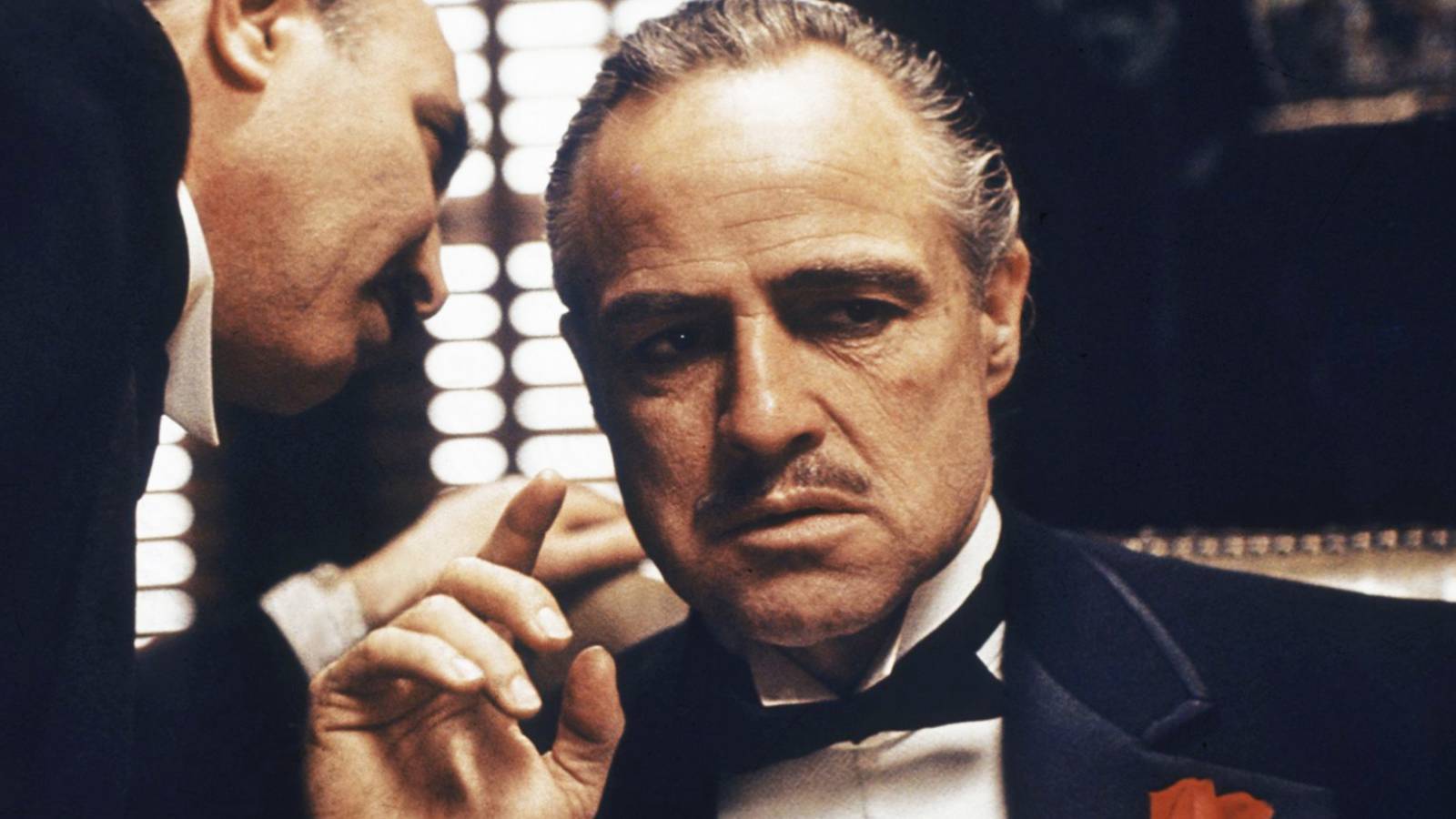
Image via Paramount Pictures Published Jul 21, 2026, 8:32 PM EDT Writing from the Chicagoland area in Illinois, Robert is an avid movie watcher and will take just about any excuse to find time to go to his local movie theaters. Robert graduated from Bradley University with degrees in Journalism and Game Design with a minor in Film Studies. Robert tries his best to keep up with all the latest movie releases, from those released in theaters to those released on streaming. While he doesn't always keep up with the latest TV shows, he makes it a goal to watch nearly every major new release possible. He has been honing his craft and following any and all movie news all his life, leading up to now, where he has a vast knowledge of film and film history. He also logs every movie that he watches on his Letterboxd page, and has hosted a weekly online movie night with his closest friends for over 6 years. Sign in to your Collider account Ever since its release in 1972, Francis Ford Coppola's gangster masterpiece The Godfather has been at the forefront of cinematic excellence, oftentimes being one of the first films that come to mind when considering the greatest films ever made. With over 50 years to build up and sustain its legacy as one of the all-time greats, it's no wonder that the film has become one of the most legendary cinematic achievements of all time. However, just because it's often the first film that comes to mind for the all-time greats doesn't mean that there aren't films that manage to be unironically better than the icon of perfection. There aren't very many, as it takes a great deal of exceptional filmmaking craft to be able to live-up to and surpass the quality of Coppola's legendary masterpiece. It certainly doesn't take away from the qualities of The Godfather, as many people still believe that the 1972 classic is the very best that cinema has to offer. However, it's also hard to ignore the similarly exceptional qualities inherent to these 6 films, who at the very least put up a close fight against The Godfather, if not directly surpassing it in quality. 6 'Parasite' (2019) Image via NEON It's exceptionally rare for a film in the 21st century to be able to amass a legacy and the levels of quality to live up to the countless classics of the previous generations, frankly due to just how much had already been explored within the medium by the time the new millennium started. However, one stark exception to the rule that has risen to massive heights as the icon of exceptional contemporary cinema is Bong Joon Ho's Parasite, a legendary story of class divide, thrills, and comedy that helped reinvigorate many audiences to the glory of international cinema. From exceptional performances to a powerful and timely message at its center, Parasite finds an exceptional balance between its grounded mature filmmaking and overwhelming charm in its execution. It's easily one of the most approachable and endlessly endearing arthouse film ever made, able to be equally enjoyed by general audiences and hardened cinephiles in its craft. It's easily the greatest cinematic achievement of the 21st century, and it will truly take something special for another film to be able to reach its level of overwhelming quality and legacy. 5 'Schindler's List' (1993) Image via Universal Pictures The magnum opus from one of the greatest filmmakers of all time, Schindler's List is a powerful exploration of emotional pain and dread that provides the full gravitas and pain of the Holocaust and continues to stand as Steven Spielberg's greatest achievement. It's one of the greatest examples of utilizing the medium of film to reflect upon and learn from one of the most painful atrocities in human history, with the film still being widely considered to be the height of World War II movies and Holocaust stories. Spielberg goes all out to maximize and amplify the emotional weight and impact of the characters and pain on-screen, creating an unforgettable tour-de-force that leaves a hole in the hearts of the audience. This brilliant work of art has only grown more celebrated and legendary with each passing year, as the shining beacon of quality among an entire filmography of legendary cinematic achievements. Everything that makes Spielberg’s distinct style of earnest, humanist filmmaking is in full force in this masterclass of emotion, amplifying his strengths to create a beautifully tragic work of cinematic artistry. Singular moments like the little girl in the red dress and the "I could have done more" scene still stand out as some of the biggest tearjerkers that cinema has to offer, feeling so palpable and raw in their emotional earnestness that they confound the mind. Collider Exclusive · Oscar Best Picture Quiz Which Oscar Best PictureIs Your Perfect Movie? Parasite · Everything Everywhere · Oppenheimer · Birdman · No Country Five Oscar Best Picture winners. Five completely different visions of what cinema can be — and what it can do to you. One of them is the film that was made for the way your mind works. Ten questions will figure out which one. 🪜Parasite 🌀Everything Everywhere ☢️Oppenheimer 🐦Birdman 🪙No Country for Old Men FIND YOUR FILM → 01 What kind of film experience do you actually want? The best movies don't just entertain — they leave something behind. ASomething that pulls the rug out — that makes me think I'm watching one kind of film and then reveals I'm watching another entirely. BSomething overwhelming — funny, sad, absurd, and genuinely moving, all at once. CSomething grand and weighty — a film that makes me feel the full scale of what I'm watching. DSomething formally daring — a film that pushes what cinema can even do. ESomething lean and relentless — pure tension with no wasted frame. NEXT QUESTION → 02 Which idea grabs you most in a film? Great films are driven by a central obsession. What's yours? AClass, inequality, and what people are willing to do when desperation meets opportunity. BIdentity, family, and the chaos of trying to hold your life together when everything is falling apart. CGenius, moral responsibility, and the catastrophic weight of a decision you can never take back. DEgo, legacy, and the terror of becoming irrelevant while you're still alive to watch it happen. EEvil, chance, and whether moral order actually exists or if we just tell ourselves it does. NEXT QUESTION → 03 How do you like your story told? Form is content. The way a story is shaped changes what it means. AGenre-twisting — I want it to start in one lane and migrate into something completely different. BMaximalist and genre-blending — comedy, action, drama, sci-fi, all in one ride. CEpic and non-linear — cutting between timelines, building a mosaic of cause and consequence. DA single unbroken flow — I want to feel like I'm living it in real time, no cuts to safety. ESpare and precise — every scene doing exactly what it needs to do and nothing more. NEXT QUESTION → 04 What makes a truly great antagonist? The opposition defines the protagonist. What kind of opposition fascinates you? AA system — invisible, structural, and almost impossible to fight because it has no single face. BThe self — the ways we sabotage, abandon, and fail the people we love most. CHistory — the unstoppable momentum of events that no single person can stop or redirect. DThe industry — the machinery of culture that chews up talent and spits out irrelevance. EPure, implacable evil — a force so certain of itself it becomes almost philosophical. NEXT QUESTION → 05 What do you want from a film's ending? The final note is the one that lingers. What do you want it to sound like? AShock and inevitability — a conclusion that recontextualises everything that came before it. BEarned emotion — I want to cry, laugh, and feel genuinely hopeful, even if the world is a mess. CDevastation and grandeur — an ending that makes me sit in silence for a few minutes after. DAmbiguity — something that leaves enough open that I'm still thinking about it days later. EBleakness — an honest refusal to pretend the world is tidier than it actually is. NEXT QUESTION → 06 Which setting pulls you in most? Where a film takes place shapes everything — mood, stakes, what's even possible. AA gleaming modern city with a hidden underside — beauty masking rot, wealth masking desperation. BA collapsing suburban life that opens onto something infinite — the multiverse of a single ordinary person. CThe corridors of power and science at a world-historical turning point — where decisions echo for decades. DThe grimy, alive chaos of New York and Hollywood — fame as both destination and trap. EVast, indifferent landscape — desert and highway where violence arrives without warning or reason. NEXT QUESTION → 07 What cinematic craft impresses you most? Every great film has a signature — a technical or artistic element that makes it unmistakable. AProduction design and mise-en-scène — every frame composed to carry meaning beneath the surface. BEditing and tonal control — the ability to move between registers without losing the audience. CScore and sound design — music that becomes inseparable from the dread and awe of what you're watching. DCinematography as performance — the camera not recording events but participating in them. ESilence and restraint — what's left unsaid and unshown doing more work than any dialogue could. NEXT QUESTION → 08 What kind of main character do you root for? The protagonist is the lens. Who you choose to follow says something about you. ASomeone smart and resourceful who makes increasingly dangerous decisions under pressure. BSomeone overwhelmed and ordinary who turns out to be capable of something extraordinary. CA brilliant, tortured figure whose gifts and flaws are inseparable from each other. DA self-destructive artist whose ego is both their superpower and their undoing. EA quiet, principled person trying to make sense of a world that has stopped making sense. NEXT QUESTION → 09 How do you feel about a film that takes its time? Pace is a choice. Some films sprint; others let tension accumulate slowly, deliberately. AI love a slow build when I know the payoff is going to be seismic — patience for a devastating reveal. BGive me relentless momentum — I want to feel breathless and emotionally spent by the end. CEpic runtime doesn't scare me — if the material demands three hours, give me three hours. DI want it to feel propulsive even when nothing is technically happening — restless energy throughout. EDeliberate and unhurried — I want dread to accumulate in the spaces between the action. NEXT QUESTION → 10 What do you want to feel walking out of the cinema? The best films leave a mark. What kind of mark do you want? AUnsettled — like I've just seen something I can't fully explain but can't stop thinking about. BMoved and energised — like the film reminded me what actually matters and gave me something to hold onto. CHumbled — like I've been in the presence of something genuinely important and overwhelming. DExhilarated — like I've just seen cinema doing something it's never quite done before. EHaunted — like a cold, quiet dread that stays with me for days. REVEAL MY FILM → The Academy Has Decided Your Perfect Film Is…Your answers have pointed to one Oscar Best Picture winner above all others. This is the film that was made for the way your mind works. ParasiteYou are drawn to films that operate on multiple levels simultaneously — that begin in one genre and quietly, brilliantly migrate into another. Bong Joon-ho's Parasite is a film about class, desire, and the architecture of inequality that manages to be darkly funny, deeply suspenseful, and genuinely shocking across a single extraordinary running time. Your instinct is for cinema that hides its true intentions until the moment it's ready to reveal them. Parasite is exactly that — a film that rewards close attention and punishes assumptions, right up to its devastating final image. Everything Everywhere All at OnceYou want it all — and this film gives you all of it. The Daniels' Everything Everywhere All at Once is one of the most maximalist films ever made: action comedy, multiverse sci-fi, family drama, existential crisis, and a genuinely earned emotional core that sneaks up on you amid the chaos. You are someone who responds to ambition, who doesn't want cinema to choose between being entertaining and being meaningful. This film refuses that choice entirely. It is overwhelming by design, and its overwhelming nature is precisely the point — because the feeling of being crushed by infinite possibility is exactly what it's about. OppenheimerYou are drawn to cinema on a grand scale — films that understand history not as a backdrop but as a force, and that place their characters inside that force and watch what happens. Christopher Nolan's Oppenheimer is a film about the terrifying gap between what we can do and what we should do, told with the full weight of one of the most consequential moments in human history behind it. You want your films to feel important without feeling self-important — to earn their ambition through sheer craft and the gravity of their subject. Oppenheimer does exactly that. It is enormous, complicated, and refuses easy comfort. BirdmanYou are drawn to films that foreground their own construction — that make the how of the filmmaking part of the what it's about. Alejandro González Iñárritu's Birdman, shot to appear as a single continuous take, is cinema examining itself through the cracked mirror of a fading actor's ego. You respond to formal daring, to the feeling that a film is doing something that probably shouldn't be possible. Michael Keaton's performance and Emmanuel Lubezki's restless camera create something genuinely unlike anything else — a film that is simultaneously about creativity, relevance, self-destruction, and the impossibility of ever truly knowing if your work means anything at all. No Country for Old MenYou are drawn to cinema that trusts silence, that refuses to explain itself, and that treats dread as a form of meaning. The Coen Brothers' No Country for Old Men is a film about the arrival of a new kind of evil — implacable, arbitrary, and utterly indifferent to the moral frameworks we use to make sense of the world. It is one of the most formally controlled films ever made, and its controlled restraint is what makes it so terrifying. You want your films to haunt you, not comfort you. You are not interested in resolution if resolution would be dishonest. No Country for Old Men is honest in a way that most cinema never dares to be. ↻ RETAKE THE QUIZ 4 'High and Low' (1963) Image via Toho While various western filmmakers will often come to mind when considering the most influential and important figures in cinematic history, it's hard to ignore the overwhelming craft and mastery within the line of work of legendary Japanese filmmaker Akira Kurosawa. Kurosawa arguably has more masterpieces to his name than any other filmmaker in history, and any number of these legendary films could have arguably earned a spot on this list. However, the one that distinctly stands out as his best is High and Low, his timeless police procedural that has gone on to directly influence a wide array of thrillers and crime films alike. While the film may not be as immediately recognizable as something like Seven Samurai, High and Low's endearing qualities and commentary on corporate morality and the psychology of post-war Japan makes it a deeply expressive and compelling experience. While Kurosawa is overwhelmingly associated with the various masterpieces within the samurai genre, his seamless style fits the world and energy of High and Low's then-contemporary Japan perfectly. While the film was largely looked over compared to Kurosawa's other work when it initially came out, time has been incredibly kind to its strengths, with it now being considered one of Kurosawa's best and one of the very best Japanese films ever made. 3 'The Shawshank Redemption' (1994) Image via Columbia Pictures Seeing as the author is similarly touted as one of the very best storytellers of the modern era, there have been many masterful Stephen King stories that have managed to make for equally if not even more impressive cinematic experiences. However, the largely unanimous decision for the best King adaptation is The Shawshank Redemption, with the film amassing such an overwhelming legacy that many consider it the greatest film of all time. This beautiful story of perseverance and hope in the face of institutionalized dread, there is a timeless passion and craft in not just adapting the strengths of King's classic, but providing its own distinct strengths to amplify these themes and elements. Arguably just as important to the film's legacy as King's masterful original story is the directing and style of director Frank Darabont, whose execution perfectly amplifies the emotional power and weight of the story. Shawshank Redemption's legacy as one of the very best cinematic experiences is arguably one of the only other films to live up to the stature of The Godfather. The film has even held the spot as the #1 highest rated movie on IMDb since 2008, where it ironically overtook The Godfather. Even without considering the wider opinion of one specific online userbase, there is a beauty and brilliance to the execution of The Shawshank Redemption that continues to make it an icon of what is possible with cinema. This timeless work of art has an outstanding legacy of greatness that only continues to grow with each passing year, as it will always be considered an icon of exceptional cinema. 2 '12 Angry Men' (1957) Image via United Artists 12 Angry Men stands tall as one of the best examples of how a film can be truly masterful in its execution without anything super flashy or over the top in its story or production. It's arguably one of the most simple bottle movie concepts imaginable, following a group of jury members debating with each other about the innocence of a man being tried for murdering his father. However, as they delve deeper into this seemingly open and shut case, it devolves into a back and forth of drama and intrigue as they begin to question everything about the case, tearing into the trial as well as each other in the process. Through its usage of masterful performances and a brilliant original story, 12 Angry Men stands to be one of the most exceptional original dramas that cinema as a medium has ever achieved. The brilliance of 12 Angry Men is that it's a story that could seemingly be told in any other medium, but whose strengths are distinctly amplified and thrived in the world of cinema. Each of these characters manage to be memorable and impactful in their own way, even without a real name for them outside their assigned number, and each of these men adds layers of depth and intricacies to the story and the mysterious crime at hand. Sidney Lumet's beautifully simplistic direction, utilizing pitch-perfect pacing and powerful emphasis on performances, proves to elevate and evolve the story to soaring heights. 1 'The Godfather Part II' (1974) Image via Paramount Pictures Is this cheating? Maybe. Do I really care? Honestly, no, because the vast majority of influence and stature that Coppola's legendary duology has received largely centers around the strengths and brilliance of the original film, despite the fact that the follow-up, The Godfather Part II, is genuinely a better film. This isn't to say that there isn't a lot of praise that is given to this legendary sequel, but so much of it is often eclipsed by the legacy and stature of the original film, in a way that at some points feels unjust. This darker combination of sequel and prequel elements builds upon the strengths of the original to create what is easily Coppola's very best film and the most striking, standout gangster movie experience of all time. Its two distinct stories both feel equally powerful and emotionally compelling, building off of one another with the pacing of the film to create a highly engaging, memorable experience that consistently outdoes the original film. Some may miss the iconic performance by Marlon Brando, but it's hard to complain too much when Al Pacino massively upgrades for an even greater central performance while Robert De Niro provides a masterful supporting performance that builds off of Brando's iconic character. Nearly everything that made the original film great is also present within this sequel, yet the sequel manages to squeeze out just a bit more brilliance to create that much more of an effective gangster movie experience. One can only hope that in due time, more and more people will begin to respect and appreciate this sequel as not just living up to the original, but actively being an improvement over the original. The Godfather Part II Release Date December 20, 1974 Runtime 202 minutes Cast Al Pacino Don Michael Corleone
6 Movies That Are Unironically Better Than 'The Godfather'
Full Article
Original Source
Read the full article at Collider →KhanList aggregates and links to publicly available news content. We do not host full articles from third-party sources. Always verify important information with original sources.