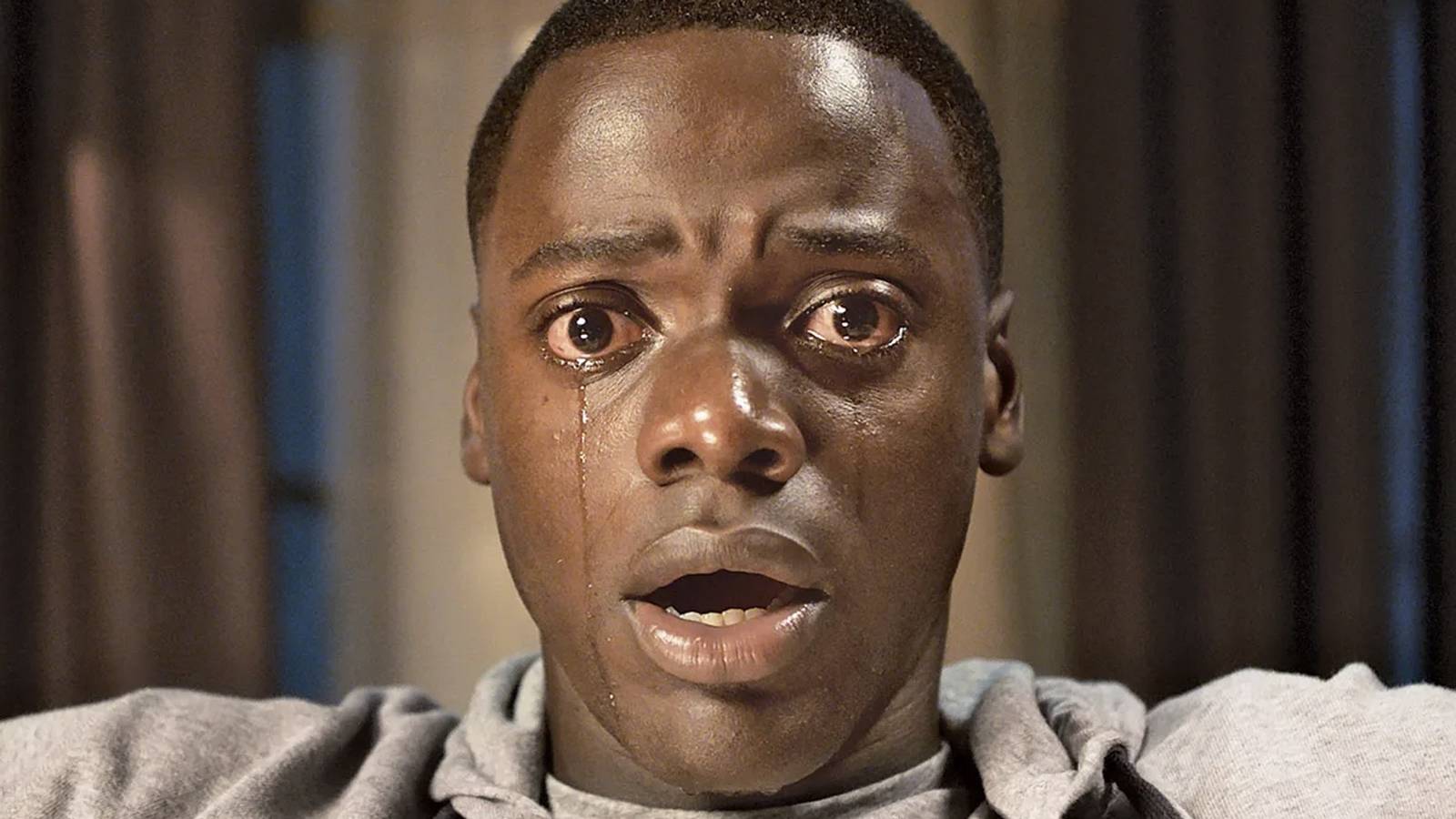
Image via Universal Pictures Published Jul 30, 2026, 8:11 PM EDT Michael Block is a 14 time GLAM Award nominated writer, producer, and host of the podcast Block Talk. Throughout his time in the entertainment industry, he has worked on and off Broadway as a stage manager, written several produced plays, critiqued hundreds of theatrical performances, drag and cabaret shows, and has produced events randing from drag competitoons to variety concerts! On Block Talk, he interviews nightlife personalities, covers the wide world of entertainment through features, ranking episodes, and recaps ALL of Drag Race, as well as Dragula and Survivor. He has interviewed hundreds of RuGirls that span the globe at DragCon NYC, DragCon LA, and DragCon UK. In his free time, he makes one-of-a-kind jewelry and gift baskets with his mom. He is a proud member of the LGBTQ+ community. Sign in to your Collider account We all love a good fright and scare from time to time. The ‘90s introduced the world to some of the best new horror franchises, so the bar was exponentially high for the 21st century. Fortunately, since 2000, there have been some extraordinary horror movies that have recalibrated the genre once again. The 2000s have had a bevy of brilliant horror films that have kept us excited to scream. In a quarter-century-plus, there have been some masterpieces, but the six that made this list are the most perfect of them all. From foreign frights to game-changing diversity and visibility, these six titles deserve to be celebrated as simply the best. While there are certainly other movies that came oh so close, these six are something special. 1 '28 Days Later' (2002) Image via Searchlight Pictures There has always been a preconceived notion as to how zombies operated. But then Danny Boyle introduced his iteration of the undead and the zombie genre was revitalized. 28 Days Later, written by Alex Garland, tells the story of a bicycle courier named Jim (Cillian Murphy) who wakes from a coma into an infected, post-apocalyptic London, finding the city completely deserted and overrun by fast-moving infected humans. Jim is rescued by survivors Selena (Naomie Harris) and Mark (Noah Huntley), who explain how society collapsed before he teams up with a cab driver named Frank (Brendan Gleeson) and his daughter, Hannah (Megan Burns). They embark on a perilous journey to a rogue military blockade run by the tyrannical Major Henry West (Christopher Eccleston). 28 Days Later reinvented a tired, slowly faltering genre by reflecting the norms for something newly enticing. In the past, zombie stories featured slow, shuffling corpses. 28 Days Later amplified that with terrifying, fast-moving humans infected by a "Rage" virus. Instead of mindless monsters, the threat sprints at Olympic speeds, making every encounter panic-inducing. It heightens the stakes, where no one is safe. As seen in barren London, this virus took everyone. The scarcity of humanity is a haunting visual, especially watching Jim walk through a completely deserted, silent Piccadilly Circus. It’s a striking image, especially with Boyle shooting on low-cost Canon XL1 mini-DV digital cameras. It provided a raw realism that made the film even more haunting. 28 Days Later argues that the true monster is not the infected, but surviving humans who use the collapse of society to exert power and control. Even with some early levity, by the time we reached the compound, any semblance of hope was destroyed. It posed the question of whether it was better to die than to live in the inhumane conditions. 28 Days Later captured the early 2000s anxieties surrounding viral outbreaks, biological warfare, and the extreme fragility of modern civilization. The film was such a masterpiece; it launched a franchise. 2 'Get Out' (2017) Image via Universal Pictures The 2000s introduced cinephiles to quite a few new players in the horror sphere. The quickest to rise to the top of the heap was comedian-turned-multi-hyphenate visionary Jordan Peele. In his directorial debut Get Out, Peele tells the story of a young Black photographer named Chris Washington (Daniel Kaluuya) who visits the isolated country estate of his white girlfriend, Rose Armitage (Allison Williams), to meet her parents, Dean and Missy (Bradley Whitfield and Catherine Keener). What begins as an uneasy weekend filled with microaggressions spirals into a horrifying realization that the family is part of a sinister cult harvesting Black bodies for brain transplants. Their consciousnesses are transported into a helpless, paralyzed void known as the "Sunken Place.” Chris must fight back and get out before he is next. Get Out fuses gripping psychological horror with sharp, insightful social commentary on modern, insidious racism, subverting traditional horror tropes in the process. Instead of overt hostility, the film targets the "progressive" microaggressions and conditional appropriation of Black culture by well-meaning liberals— the true monsters of the story. Written, produced, and directed by Peele, Get Out spends the first hour as a slow-burning thriller, steadily building an atmosphere of unease before exploding into a high-stakes climax. The Sunken Place operates as a profound metaphor for the silencing, marginalization, and loss of agency experienced by Black Americans. A visual wonder, Peele uses photography and sight play as active roles to showcase how observation and documentation tie into systemic awareness and entrapment. With a tour de force performance from Kaluuya and a masterful tone, the film is flawless. 3 'Let the Right One In' (2008) Image via Sandrew Metronome Straight out of Sweden comes a reinvention of the vampire story: Let the Right One In. The romantic horror story directed by Tomas Alfredson and written by John Ajvide Lindqvist from his 2004 novel follows Oskar (Kåre Hedebrant), a bullied, neglected 12-year-old boy living in a snowy Swedish suburb who spends his time fantasizing about revenge, and Eli (Lina Leandersson), a mysterious, peculiar child who only comes out at night and cannot survive without human blood. As it turns out, she is a centuries-old vampire. The two form a deep, protective, and empathetic bond as a wave of murders and disappearances plague the local community. Let the Right One In blends a tender, melancholic coming-of-age story with brutal realism through an accessible entry of a vampire film. Instead of relying on cheap scares, it uses a chilling Swedish winter to explore profound loneliness, bullying, and an unusual bond between children. As the vampire focus primarily serves as a backdrop, it operates as a subversion of the long-storied myth. The ancient vampire, Eli, is quiet, tragic, and reluctant to kill, while the human boy, Oskar, harbors violent, vengeful fantasies against his school bullies. It may be a twist you didn’t see coming, but it allows for a profound character study. The pacing of the film is unlike a typical horror movie, as Alfredson relies on precise framing and long moments of quiet instead. Let the Right One In operates as a metaphor for emotional vulnerability and love. The film is visually striking as the cold, sterile, freezing landscape of pure white snow allows for the splashes of blood to be viscerally punched up. Let the Right One In came at a time when commercial vampires ruled the era, becoming an anti-Twilight. It may not have been as massive as that film, but it provided an inch for something genuine, balancing a delicate emotional romance with visceral, raw, and unglamorous violence. The film was so good, it paved the way for an American remake, Let Me In. Collider Exclusive · Horror Survival Quiz Which Horror Villain Do You Have the Best Chance of Surviving? Jason Voorhees · Michael Myers · Freddy Krueger · Pennywise · Chucky Five killers. Five completely different ways to die — if you're not smart enough, fast enough, or self-aware enough to avoid it. Only one of them is the villain your particular set of instincts gives you a fighting chance against. Eight questions will figure out which one. 🏕️Jason 🔪Michael 💤Freddy 🎈Pennywise 🪆Chucky TEST YOUR SURVIVAL → 01 Something feels wrong. You can't explain it — you just know. What do you do? First instincts are the difference between the survivor and the first act casualty. ALeave immediately. I don't need to understand a threat to respect it. BStay quiet and observe. If I can see it, I can understand it. If I can understand it, I can avoid it. CStay awake. Whatever this is, I am not going to sleep until I feel safe again. DConfront it directly. Fear grows in the dark — I'd rather know what I'm dealing with. ECheck everything, trust nothing. The threat might be closer than I think — and smaller. NEXT QUESTION → 02 Where are you most likely to find yourself when things go wrong? Setting is everything in horror. Where you are determines which rules apply. ASomewhere remote — a cabin, a campsite, off the grid and away from people. BA quiet suburban neighbourhood where nothing ever happens. Except tonight. CIn my own head — the most dangerous place of all, depending on what's already in there. DWherever children are — because something about this place attracts the worst things. ESomewhere ordinary — a house, a toy store, a place where the last thing you'd expect is a threat. NEXT QUESTION → 03 What is your most reliable survival asset? Every survivor has a quality the villain didn't account for. What's yours? APhysical fitness — I can run, I can swim, I can outlast something that relies on brute persistence. BSpatial awareness — I always know the exits, the hiding spots, the fastest route out. CPsychological resilience — I've faced my worst fears before. They don't have the same power over me. DEmotional steadiness — I don't panic. Panic is what gets you caught. EScepticism — I don't underestimate threats because of how they look. Size is irrelevant. NEXT QUESTION → 04 What kind of fear is hardest for you to fight through? Knowing your weakness is the first step to not dying because of it. AThe unstoppable — something that will not stop, cannot be reasoned with, and is always getting closer. BThe invisible — a threat I can feel but can't locate, watching from somewhere I can't see. CThe psychological — something that uses my own mind and memories against me. DThe unknowable — something ancient, shapeless, that feeds on the fear itself. EThe mundane — a threat so ordinary-looking that no one will believe me until it's too late. NEXT QUESTION → 05 You're with a group when things start going wrong. What's your role? Horror movies are brutally clear about who survives group situations and who doesn't. AThe one who says "we need to leave" first — and means it, even when no one listens. BThe one who stays quiet, watches the others, and figures out the pattern before anyone else does. CThe one who holds the group together when panic sets in — because someone has to. DThe one who asks the questions nobody wants to ask — because ignoring them gets people killed. EThe one who takes the threat seriously when everyone else is laughing it off. NEXT QUESTION → 06 What's the horror movie mistake you're most likely to make? Honest self-assessment is a survival skill. Denial is not. AGoing back for someone — I know I shouldn't, but I can't leave them behind. BAssuming I'm safe once I've found a hiding spot. That's when it finds me. CFalling asleep when I absolutely cannot afford to. Exhaustion is its own enemy. DLetting my curiosity override my instincts — I always need to understand what I'm dealing with. EDismissing the threat because of how it looks. That's exactly what it wants. NEXT QUESTION → 07 What's your best weapon against something that can't be stopped by conventional means? Every horror villain has a weakness. The survivors are always the ones who find it. AThe environment itself — I use the terrain, the water, the geography against it. BPatience — I wait, I watch, and I strike at the one moment it doesn't expect. CLucidity — if I can stay in control of my own mind, it loses its primary weapon. DCourage — facing it directly, refusing to run, taking away the fear it feeds on. EImprovisation — I use whatever's at hand, however unconventional. Creativity over brute force. NEXT QUESTION → 08 It's the final scene. You're the last one standing. How did you make it? The final survivor always has a reason. What's yours? AI kept moving. I never stopped, never hid for too long, never let it corner me. BI figured out the pattern before anyone else did — and I used it against the thing following it. CI stayed awake, stayed lucid, and refused to give it the one thing it needed most. DI stopped being afraid of it. And the moment I did, everything changed. EI took it seriously from the start — and I never once made the mistake of underestimating it. REVEAL MY VILLAIN → Your Survival Odds Have Been Calculated Your Best Chance Is Against…Your instincts, your strengths, and your particular way of thinking under pressure point to one villain you actually have a fighting chance against. Everyone else — good luck. Jason VoorheesJason is relentless, but he is also predictable — and that is the gap you would exploit. He moves in straight lines toward his target. He doesn't strategise, doesn't adapt, doesn't outsmart. He simply pursues. Your ability to keep moving, use the environment, and resist the panic that freezes most victims gives you a genuine edge. The Crystal Lake survivors were always the ones who stopped running in circles and started thinking about terrain, water, and distance. You think like that. Which means Jason, for all his indestructibility, would face someone who simply refused to be where he expected. Michael MyersMichael watches before he moves. He is patient, methodical, and almost impossible to detect — until it's too late for anyone who isn't paying close enough attention. But you are paying attention. You notice the shape in the window, the car parked slightly wrong, the silence where there should be sound. Michael's power lies in the invisibility of ordinary suburbia — the fact that nothing ever looks wrong until it already is. Your spatial awareness and instinct to map every room, every exit, and every shadow before you need them is precisely the quality Laurie Strode had. You are not a victim waiting to happen. You are someone who already suspects something is wrong — and acts on it. Freddy KruegerFreddy wins by getting inside your head — using your own fears, your own memories, your own subconscious as weapons against you. That strategy requires a target who can be destabilised. You are harder to destabilise than most. You've faced uncomfortable truths about yourself and you haven't looked away. The survivors on Elm Street were always the ones who understood what was happening and chose to face it rather than flee from it. Freddy's greatest weakness is that his power evaporates in the presence of someone who refuses to give him the fear he feeds on. Your psychological resilience — the ability to stay grounded when reality itself becomes unreliable — is exactly the quality that keeps you alive here. PennywisePennywise is ancient, shapeshifting, and feeds on terror — but it has one critical vulnerability: it cannot function against someone who genuinely stops being afraid of it. The Losers Club didn't survive because they were braver than everyone else. They survived because they faced their fears together, and faced them honestly. You ask the questions others avoid. You look directly at what frightens you rather than turning away. That directness — the refusal to let fear fester in the dark — is Pennywise's worst nightmare. It chose the wrong target when it chose you. You are exactly the kind of person whose fear tastes like nothing at all. ChuckyChucky's greatest advantage is that nobody takes him seriously until it's already too late. He exploits the gap between how something looks and what it actually is. You don't have that gap. You take threats seriously regardless of how they present — and you never make the mistake of underestimating something because of its size or appearance. Chucky relies on surprise, on the delay between recognition and response. You close that delay faster than almost anyone. Your instinct to treat every unfamiliar thing with appropriate scepticism — rather than dismissing it because it seems absurd — is the exact quality that keeps you breathing. Against Chucky, not laughing is already winning. You are very good at not laughing. ↻ RETAKE THE QUIZ 4 'Sinners' (2025) Image via Warner Bros. Pictures First, he did it with superhero films, then he did it with the horror genre. Needless to say, Ryan Coogler’s visionary genius has allowed for Black stories to have a seat at the table in genres they’ve previously had a backseat to. In the masterpiece Sinners, set in 1932 during the Jim Crow era in the Mississippi Delta, twin brothers, Elijah "Smoke" Moore and Elias "Stack" Moore (played in a dual role by Michael B. Jordan), return to their hometown to open a juke joint and recruit local talent, family, and friends, including a young, highly gifted blues prodigy cousin named Sammie (Miles Caron). Sammie’s incredible musical performances do not just move the local crowd; they summon an otherworldly energy that attracts a group of vampires led by an Irish immigrant named Remmick (Jack O’Connell). Remmick and his followers attempt to infiltrate the juke joint, offering wealth and music, but the twins reject them, leading to a violent and desperate night of survival. Sinners profoundly uses vampire convention as an allegory for how authentic Black art and culture in America are historically preyed upon, drained of life, and appropriated by outside forces. Coogler’s subversive vampire horror thriller fired on all cylinders. Using historical parallels, it weaves in commentary on power structures, oppression, and the complex historical dynamics of immigrant assimilation versus marginalized communities. Sinners utilizes folklore and supernatural threats to mirror historical struggles against exploitation and cultural erasure in America. The vampire tropes hook you for a thoroughly entertaining romp that’s visually stunning and musically sublime. Music operates as a spiritual technology that bridges life, death, and heritage, setting up a rich conflict between the sacred and the profane. The ending beat may seem jarring, but it serves as a through line for the entire story. Sinners features a top-notch ensemble, led by a career-best Jordan. In the dual roles, he found the nuances of both men. Sinners is a richly crafted film that took the world by storm. It helped to once again remind the Academy that horror stories are worthy of praise. And it reminded the world that diversity and visibility in the genre were important now more than ever. 5 'The Babadook' (2014) Image via Umbrella Entertainment If there was one movie that had us all shook, it was The Babadook. In the Australian film written and directed by Jennifer Kent, Amelia Vanek (Essie Davis) is exhausted and raising her 6-year-old son, Samuel (Noah Wiseman). Her husband died in a car crash while driving her to the hospital to give birth to Sam. After Samuel finds a sinister pop-up book titled Mister Babadook on his shelf, the pair are terrorized by the top-hat-wearing monster. The film that launched a pop culture craze, The Babadook uses psychological horror and a terrifying top-hatted monster to explore the raw, heavy pain of grief, depression, and repressed maternal resentment. Through an emotionally complex story, The Babadook warns that ignoring the monster only makes it worse. Refusing to process trauma allows it to take over a home. Every so often, horror fans are introduced to a new creature or entity that refuels our obsession with horror. That monster was the Babadook. This was not a story set in sunny Australia. It was the antithesis of that. The film uses a muted, shadowy color palette and claustrophobic house settings to mirror the trapped feeling of deep depression. It utilized a German Expressionist horror with its hand-crafted creature design, dreary color grading, and unsettling, screeching sound design. The Babadook wasn’t just a powerful movie monster who rattled the protagonists; he operated as a representation for deep, heavy sadness and loss that a person tries to ignore. He represented the constant fear of losing your mind or dealing with hard inner demons. You never want a monster inside to triumph, so defeating the Babadook was a reflection of empowerment. Instead of defeating the monster with violence or exorcism, the climax concludes with a mature, chilling acknowledgment that inner darkness cannot be destroyed—it must simply be lived with and managed. Having a random and accidental connection to the queer community amplified the film to a wider audience, and we’re grateful it did. 6 'Under the Skin' (2013) Image via A24 Uniting the worlds of science fiction and horror is a truly underappreciated thriller, Under the Skin. Directed by Jonathan Glazer and written by Glazer and Walter Campbell, the film, based on Michael Faber’s novel, follows an alien disguised as an alluring human woman (Scarlett Johansson) who drives through Scotland. She seduces lonely men, luring them into a surreal, black-liquid void where they are harvested for reasons never fully explained. However, experiencing human life and sensory details and emotions of human existence begins to change her. It leads to an existential awakening and a tragic end that proves there would always be a disconnect from the world she tried to join. Under the Skin is a bold hybrid-genre film that explores the profound depth of what it means to be human. Under the Skin is a raw film in all senses of the word. It uses a chilling sci-fi horror premise with genuine realism, stripping away traditional Hollywood storytelling in favor of pure sensory and existential dread. Glazer filmed much of the movie on the streets of Scotland using concealed cameras inside a van. Most men who interacted with Johansson's character were everyday people, not professional actors, and did not realize they were in a movie until after the scene. In doing so, the method created an unscripted, deeply uneasy realism whenever the alien character preys on unsuspecting victims. The seduction scenes take place in a stark, hypnotic black void that feels ancient and incomprehensible. Paired with Mica Levi’s discordant, screeching string-heavy soundtrack, it builds an atmosphere of profound anxiety and alien menace. Under the Skin forces its viewers to re-evaluate ordinary human behavior, desire, and vulnerability through the eyes of an emotionless predator. Under the Skin is an immersive experience through pure dread and alienation. If that’s not the definition of horror, then I don’t know what is.
6 Most Perfect Horror Movies Released Since 2000
Full Article
Original Source
Read the full article at Collider →KhanList aggregates and links to publicly available news content. We do not host full articles from third-party sources. Always verify important information with original sources.