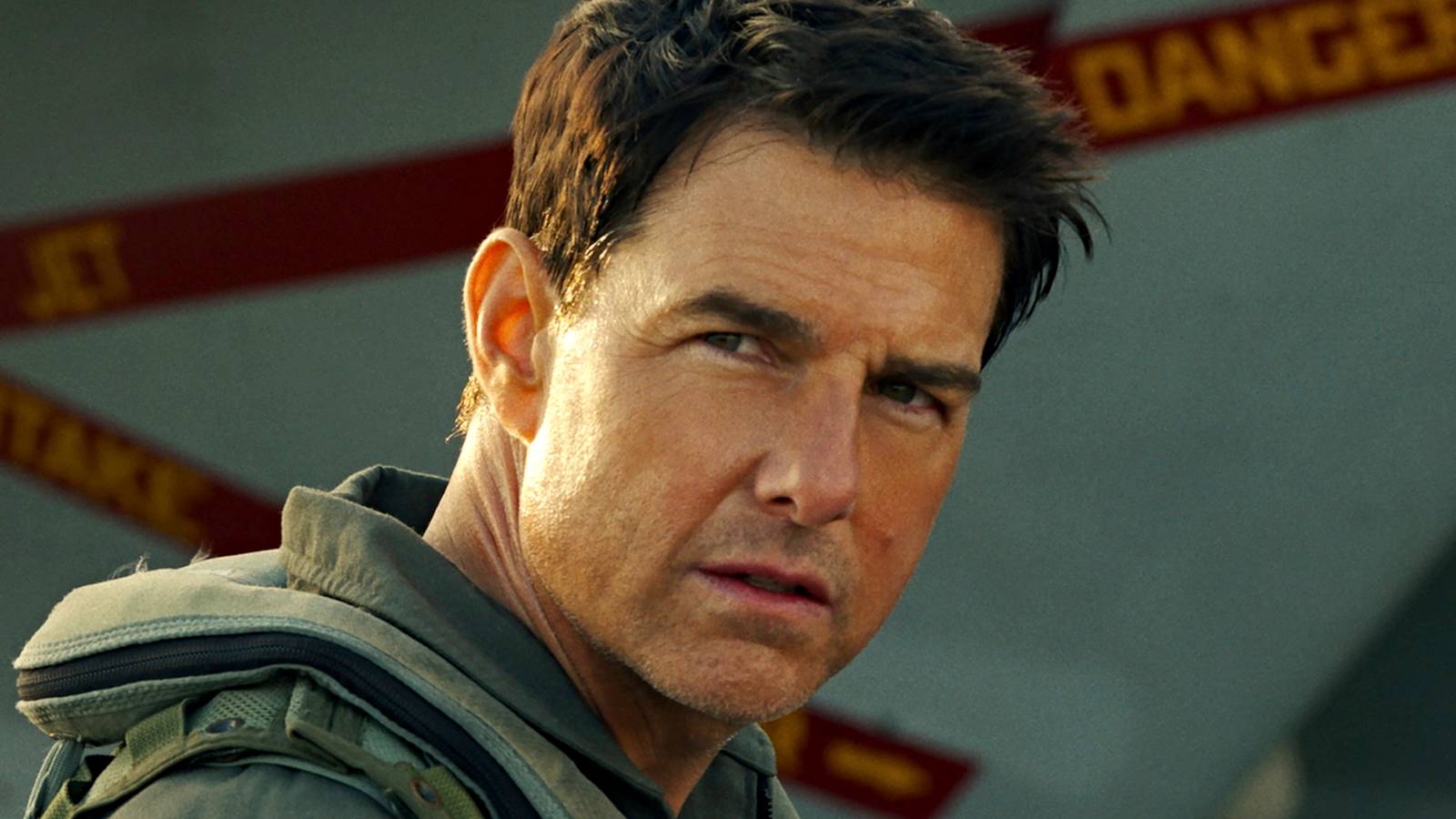
You can throw cars, guns, planes, fists, rooftops, and explosions at the screen all day and still end up with something dead if the pressure is too vague, if the body language feels fake, or if the stakes exist only in dialogue. That’s most action films for you. And people talk about them like movement is enough. It never is, though. The great ones solve that problem immediately. They make action feel physical, costly, emotional, and exact. The films on this list do that at a level most other movies do not touch. Every one of them understands where to place the camera, when to tighten the pressure, how to make exhaustion part of the storytelling, and how to attach all that movement to something human. That is why they still hold up after the adrenaline wears off. The 6 films below truly are perfect action movies for that particular reason. 6 'John Wick' (2014) Image via Lionsgate The reason John Wick hits so hard is that it starts from grief and stays there. That grief belongs to John Wick (Keanu Reeves), whose life has already narrowed down to silence, routine, and one fragile source of comfort, the beagle puppy left behind by his late wife. The movie gives that space real weight. Then, it tears through it in one night with a home invasion that is brutal because of how small and personal it is. They assault him, steal his Mustang, and kill the dog. From there, the film does not waste time pretending he needs a speech or a revelation. He knows exactly what has happened, and the audience does too. The part that seals the movie's brilliance is the process itself, the sledgehammer crashes through the basement floor, the hidden weapons come back into the light, and his posture transforms from hollowed-out widower to rigid professional. That shift says it all. That’s when the viewer feels that oh boy, Greyjoy (Alfie Allen) messed up bad again (GOT reference). As a result, the action that follows has discipline and total clarity. That balance between a raw emotional wound and perfectly controlled gun-fu is why this one feels so complete. 5 'Top Gun: Maverick' (2022) Image via Paramount Pictures Legacy sequels usually rely heavily on nostalgia. Yet, Top Gun: Maverick actually earns its place because it turns age, regret, and the passage of time into the movie’s actual engine. The story catches up with Capt. Pete “Maverick” Mitchell (Tom Cruise) out in the Mojave, still pushing an experimental plane to its absolute limit, desperate to outrun the silence of his own life. The dusty hangar, the Darkstar cockpit, the authority figures closing in again, all of it reveals an exile hiding from his history. He is completely alone. So, when he is ordered back to TOPGUN, the film ignores the standard tactical puzzle. The impossible mission simply acts as a trap to corner a pilot who has finally run out of sky and forces him to face his ghosts. That emotional reckoning only works because the movie refuses to let the danger float into abstraction. The breaths rattle over the comms. The G-force caves in the chest. The speed stretches the skin across older faces. These details anchor the spectacle in reality. In fact, they transform thirty years of grief into an actual physical weight inside the cockpit. And Rooster (Miles Teller) is the living embodiment of that weight. He acts as a constant, heavy reminder of the past whenever Maverick must teach instead of fly. Fundamentally, this deep human mess, the desperate need to save a son to make up for a father, proves why the movie works so well. It delivers the exact kind of soulful, melancholy blockbuster audiences desperately crave. 4 'The Bourne Ultimatum' (2007) Image via Universal Pictures If somebody wants to understand why grounded 21st-century spy action took over for a while, The Bourne Ultimatum is where the argument starts. The film follows Jason Bourne (Matt Damon), a ghost on the run who slips through public spaces and pieces together his fractured memory. However, his time in the shadows abruptly ends the moment a journalist exposes the Blackbriar program. Bourne steps back into the open to guide a civilian through a high-stakes transit hub extraction. That tense rescue perfectly captures the film’s paranoid rhythm, where every movement is a calculation, and every crowded room is a potential kill zone. Nowhere is truly safe. From the station onward, the film feeds you the truth in fragments. This approach works because Bourne’s goal evolves with every new piece of the puzzle. Mere escape no longer matters. As Bourne closes in on his origins, the film evolves from a simple survival story into a quest for moral accountability, which makes the constant motion feel earned and purposeful. Every single step matters. 3 'The Raid: Redemption' (2011) Image via PT Merantau Films Rama (Iko Uwais) kisses his pregnant wife goodbye. That brief moment does so much work for The Raid: Redemption because the film knows exactly how little time it has before everything goes bad. The plot kicks off when he heads out on what looks like a routine early-morning raid. The armored van ride, the arrival at the tenement building, the silent breach of the grimy ground floor, all of it follows standard police procedure. But, when the crime lord hits the intercom, locks the reinforced doors, and offers free rent to anyone who slaughters the trapped police, the tactical rulebook burns instantly. The movie does not need anything more complicated than that. The building transforms into a closed-loop death trap, and the squad must now earn every single floor with their bodies. Redemption then strips the story bare to focus entirely on the brutal mechanics of survival. That simplicity is brilliant. As the squad pushes upward, combat systematically degrades from rifles, to machetes, to bare knuckles. The architecture dictates the choreography. Narrow hallways trap the fighters in tight spaces. As a result, exhaustion becomes a measurable metric. You never lose track of the space, the stakes, or the stamina. That clarity is absolute. Rama must solve this brutal architectural puzzle to survive, and the film never abandons that strict parameter. That relentless focus is exactly what makes it a perfect modern action movie. 2 'Mission: Impossible - Fallout' (2018) Image via Paramount Pictures The setup for Mission: Impossible - Fallout (sixth installment in the MI franchise) appears standard on paper. Ethan Hunt (Tom Cruise) receives the objective, the package vanishes, and the world stands on the brink. Plenty of spy movies claim that premise. However, this film separates itself immediately because Ethan makes his ultimate choice in the very first scene. He surrenders the plutonium to save one teammate. That single decision dictates everything. He did what was morally right. But, the movie transforms the entire runtime into a brutal punishment for it. That is why, the film possesses a psychological pressure most giant spectacles lack. Cornered by his own mistakes, Ethan fights. He must regain control. You feel the relentless guilt in his body. That specific toll changes the action. The storm over Paris, the shattered ankle in London, the helicopter dive in Kashmir. All of it counts. Every frantic rooftop sprint showcases a desperate man fueled by fumes, pushed to his absolute limit to outrun the consequences of his own moral compass. Also, when Ilsa (Rebecca Ferguson) and Julia (Michelle Monaghan) return, the global threat feels real because the script links the apocalypse directly to Ethan’s past. The action is incredible. Yet, his punishing humanity is what truly powers this story. 1 'Mad Max: Fury Road' (2015) Image via Warner Bros. Pictures Mad Max: Fury Road is still the standard for action films going hardest at it. There is no polite way around that. This masterpiece drops Max Rockatansky (Tom Hardy) into a dystopian dusty world in a desert. The frame captures a half-feral survivor being used as a blood bag, and it trusts the audience enough to understand the world from texture, pressure, and instinct. The wasteland provides the dust, rust, and heat. The survivors provide the terrified eyes, blistered lips, and silver teeth. That absolute sensory overload works so well because it is entirely physical. The production hauled fully functional, roaring V8 war machines across the scorched Namib Desert, and you feel that genuine, suffocating heat in every frame. Then Imperator Furiosa (Charlize Theron) hijacks a supply run, and that single act of defiance detonates the film into constant motion. Still chained to a vehicle, Max must secure his own survival before an alliance even becomes possible. He has no choice.Everything after that is relentless, but never random. Every crash and explosion proves that momentum costs something. However, the film delivers a much deeper message beneath the carnage. The entire narrative explores who gets to exist as property and who gets to claim freedom.
6 Most Perfect Action Movies Released Since 2000
Full Article
Original Source
Read the full article at Collider →KhanList aggregates and links to publicly available news content. We do not host full articles from third-party sources. Always verify important information with original sources.