
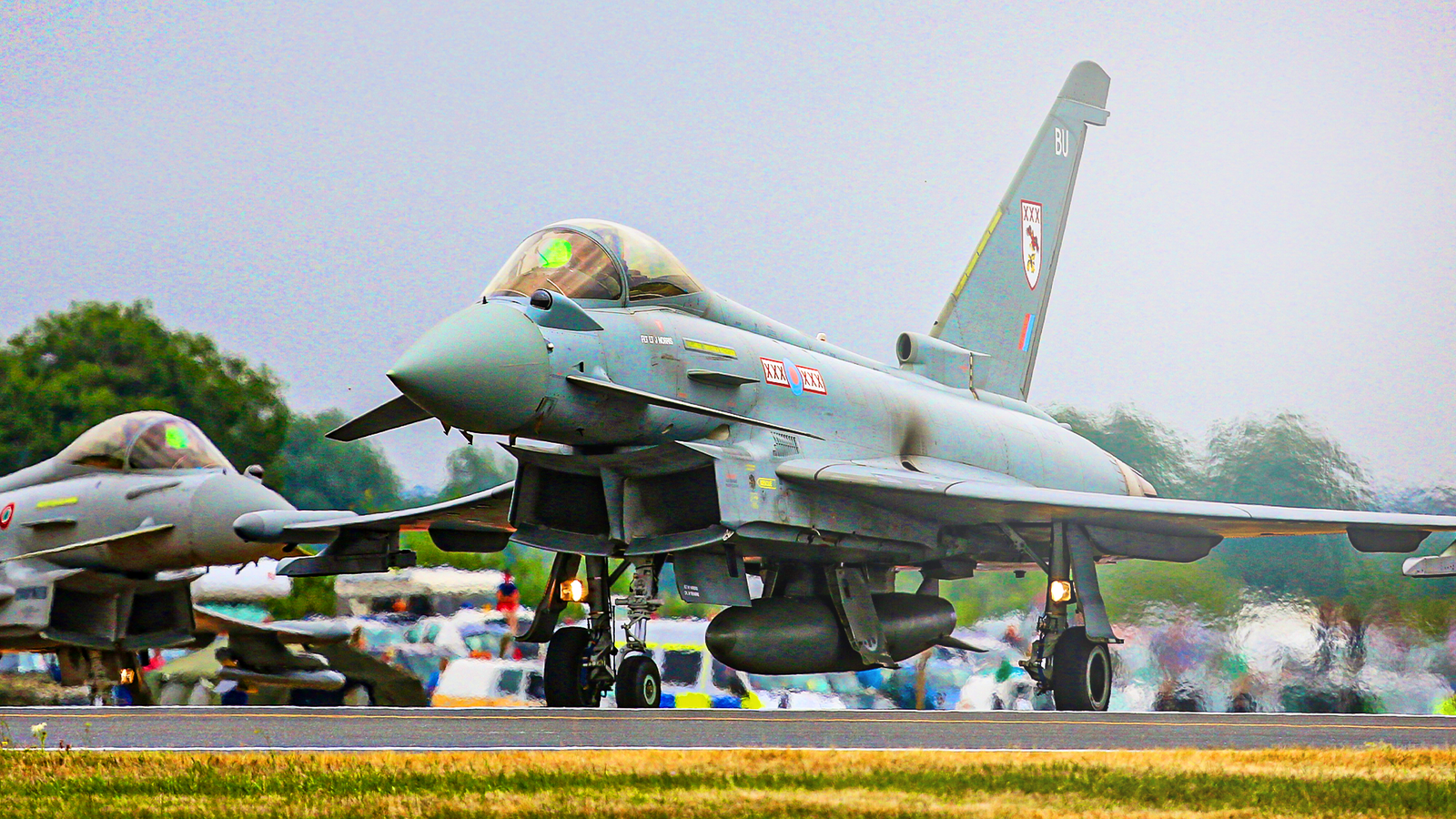
Published Aug 24, 2026, 2:15 PM EDT Aaron is an aviation enthusiast and world traveler with a deep interest in aerospace history and technology. He has traveled around the world numerous times, often incorporating visits to aviation museums and historic aircraft collections into his journeys. A native of New Zealand, he is an expert in aviation and maintains a broad interest in a variety of other subjects. The United Kingdom's 2026 four-year Defence Investment Plan (DIP) was sharply criticized as woefully insufficient for a country that has officially said it is on a "war footing" and that it needs to be ready for conflict with Russia by 2035. This was one of the final nails in the coffin that led to former Prime Minister Keir Starmer's resignation. But while much of this criticism is real, and it is much less (about half) than the British Ministry of Defence said it needed to plug funding gaps, there is some nuance, and it's not all bad. One of the notable wins for the Royal Air Force (RAF) is that it now includes provisions to upgrade all of the United Kingdom's remaining 107 Eurofighter Typhoons, instead of the 40 aircraft that had been slated for upgrades just six months prior. UK's January Plan To Upgrade 40 Typhoons Credit: RAF In a British government statement published in January, the government announced it would allocate "over £650 million [approx. $884 million] to upgrade the RAF's Typhoon fighter jet fleet, securing over 1,500 jobs across the UK." Of this, £453 million ($616 million) would go to manufacturing new, cutting-edge Eurofighter Typhoon European Common Radar System (ECRS) Mk2 radar systems. The radars are produced in Scotland, and the contract involves Leonardo UK, BAE Systems, and Parker Meggitt. The government noted, "The radar investment follows a £205 million [$279 million] contract announced earlier this week for the long-term provision of specialist Typhoon engineering support by QinetiQ to help upgrade the Typhoon weapon system and keep the aircraft safe and airworthy for years to come." This represented the combined £650 million ($884 million) investment into the Eurofighters. At the time, the UK said the investment would purchase 40 radars to upgrade 40 RAF Eurofighter Typhoons. These included 38 new systems and modifications to two test systems. The new ECRS Mk2 radars are intended to ensure that the Typhoons maintain an edge in contested environments, including against Russia. The radars provide high-powered jamming while engaging targets beyond the reach of threats. Importance Of Typhoons To The RAF Credit: Department of Defense Following the retirement of the Panavia Tornados and the Harrier Jump Jets and the introduction of the F-35B, the RAF has operated two types of frontline fighter jets. It has purchased a total of 137 Eurofighters and 48 F-35Bs. Of these, 26 early Tranche 1 Eurofighters have been retired, and one F-35B has been lost after falling off an aircraft carrier. The UK is gearing up to order another batch of 27 F-35s (both As and Bs). The Royal Navy and the Royal Air Force share the F-35 fleet. The Typhoon remains the backbone of Britain's combat air capability and is expected to remain in service until at least the 2040s, when it will be replaced by the sixth-generation GCAP/Tempest fighter jet currently under development (more below). Interestingly, the Typhoons are getting two types of upgrades of sorts. One is the new ECRS Mk2 radars, upgrades to weapon systems, and other upgrades to the aircraft themselves. While the other de facto upgrade is pairing them with new networked systems like the F-35B. The F-35B is not just another fighter; it is a force multiplier for fourth-generation fighter jets, providing a 'god's-eye view' of the battlespace. It boosts situational awareness for other fighters. The F-35 can penetrate enemy air defenses and provide targeting solutions to other fighters, like the Typhoon, without giving away its position. The UK's Future Eurofighter Typhoon Fleet Credit: Shutterstock As stated, the UK procured 137 Eurofighter Typhoons and has retired 26 of them. While there have been murmurings that the UK could order more Typhoons, it appears the government is not leaning that way. Instead, it seems to be working to sustain its existing fleet, develop Collaborative Combat Aircraft, purchase more F-35s (including F-35As), and develop its next-generation GCAP/Tempest replacement. In September 2025, in response to inquiries by Conservative MP Ben Obese-Jecty, Defence Minister Maria Eagle outlined the RAF's retirement plan for its Typhoons. It still has four of the original Tranche 1 Typhoons in service; these are based at RAF Mount Pleasant in the Falkland Islands, where they are expected to remain until 2027. As explained below, this Tranche 1 plan appears to have been superseded. The other jets include 67 Tranche 2 fighters and 40 Tranche 3 fighter jets, which are expected to serve until at least 2040. The Defence Investment Plan includes more funding for the Typhoons but does not explicitly say it covers all 107 jets. This comes from reporting by the UK Defence Journal in July 2026. If this reporting is correct, then it may signal a shift in the UK's plans to retire those four remaining Falklands-based Tranche 1 fighters. Alternatively, there may have been confusion, and the plan is to upgrade the 103 Tranche 2 and Tranche 3 jets. UK Confirms All 107 Jets To Be Upgraded Credit: RAF In July, the UK Defence Journal wrote, "Conservative MP Andrew Snowden, whose Fylde constituency includes BAE Systems’ Warton site where Typhoon is built, asked for a breakdown of the £5.4 billion Typhoon capability spend detailed on page 44 of the Defence Investment Plan." Minister for Defence Readiness and Industry Luke Pollard replied: "The £5.4 billion Typhoon spend detailed in the DIP comprises the planned spend to maintain and upgrade the UK’s 107 Typhoons." This will span the Typhoons based at RAF Coningsby and RAF Lossiemouth and the four Tranche 1 jets at RAF Mount Pleasant. He added that it includes radar, comms, software upgrades, new defensive aids systems, and improvements to weapon systems like the upgraded helmet-mounted sight. The Journal notes that the helmet-mounted sight allows pilots to cue weapons "simply by looking at a target." Separately, the Defence Investment Plan says that the RAF is rapidly upgrading its Typhoon fleet with Advanced Precision Kill Weapon System (APKWS). These are cheap, laser-guided rockets that let the jets shoot down one-way attack drones (e.g., Shahed-style drones) cost-effectively. The USAF initially rushed ARKWS to its F-15Es, F-16s, and A-10s in 2025, and other air forces (e.g., France) are now following suit. What The Defence Investment Plan Says Credit: Department of Defense The Defence Investment Plan allocates a total of £1.1 billion ($1.5 billion) of new investment to "upgrade and sustain the Typhoon force into the 2040s, of major benefit to the UK’s world leading aerospace sector, supporting UK jobs and providing significant investment to the UK economy, with significant export opportunities." It seems this is the increased figure from the earlier £650 million ($884 million) upgrade figure. It also says the UK will purchase more F-35s, noting the UK has an unusually large workshare in the jets. The plan outlines investment in Britain's development of Collaborative Combat Aircraft and the GCAP/Tempest fighter jet. That said, among the major programs funded over the next four years, the CCA is one of the smallest at £300 million ($408 million), or around 5% of the amount earmarked for the Tempest fighter jet. UK 2026 four-year Defence Investment Plan by major air program GCAP/Tempest £8.6 billion ($11.7 billion) Eurofighter Typhoons £5.4 billion ($7.4 billion) Airbus A330 MRTT "Voyager" £2.4 billion ($3.3 billion) F-35B/A £2.2 billion ($3 billion) Airbus A400M Atla £1.9 billion ($2.6 billion) In all, between Fiscal 2026/2027 and Fiscal 2029/2030, the plan allocates £8.6 billion ($11.7 billion) to the GCAP/Tempest program, £5.4 billion ($7.4 billion) to the Eurofighter Typhoons, £2.4 billion ($3.3 billion) to its Airbus A330 MRTT "Voyager" tanker fleet, £2.2 billion ($3 billion) to the F-35B/As, £1.9 billion ($2.6 billion) to its Airbus A400M Atlas fleet, and other amounts under one billion pounds to CCAs, Hawk trainers, C-17 Globemasters, E-7 Wedgetails, and others. Bridging The Gap Until GCAP/Tempest Credit: BAE Systems Like other air forces, the UK is struggling to find the funds to sustain and grow its air combat capability while also transitioning to the future of warfare. It is now fully committed to its high-end GCAP/Tempest sixth-generation fighter jet with Italy and Japan. In fact, the GCAP/Tempest is shaping up to be the best sixth-generation fighter jet on the export market, especially after its rival FCAS Franco-German-led program collapsed in mid-2026. GCAP/Tempest is not comparable to the USAF's Boeing F-47. The F-47 is a highly specialized air-dominance fighter designed specifically for USAF requirements to face China in the Eastern Pacific and to replace the F-22 Raptor. It is unclear how many air forces would need such a niche aircraft; the US' historically small planned purchase of just 185+ examples shows that niche. It is also unclear if the US will export the jet. Trump said it would, but in practice, that decision falls to later administrations. It is also unclear whether China would export jets like the J-36, or whether other air forces would require them. By contrast, the GCAP/Tempest is a multirole/air-superiority fighter designed for export and has attracted interest from Canada, Singapore, Australia, Poland, India, and Saudi Arabia. But until it enters service and matures, the RAF will have to continue to rely on its fleet of upgraded Eurofighter Typhoons.
6 Months Ago Britain Was Upgrading 40 Typhoons, Now It Is Upgrading All 107
Full Article
Original Source
Read the full article at Simpleflying →KhanList aggregates and links to publicly available news content. We do not host full articles from third-party sources. Always verify important information with original sources.