
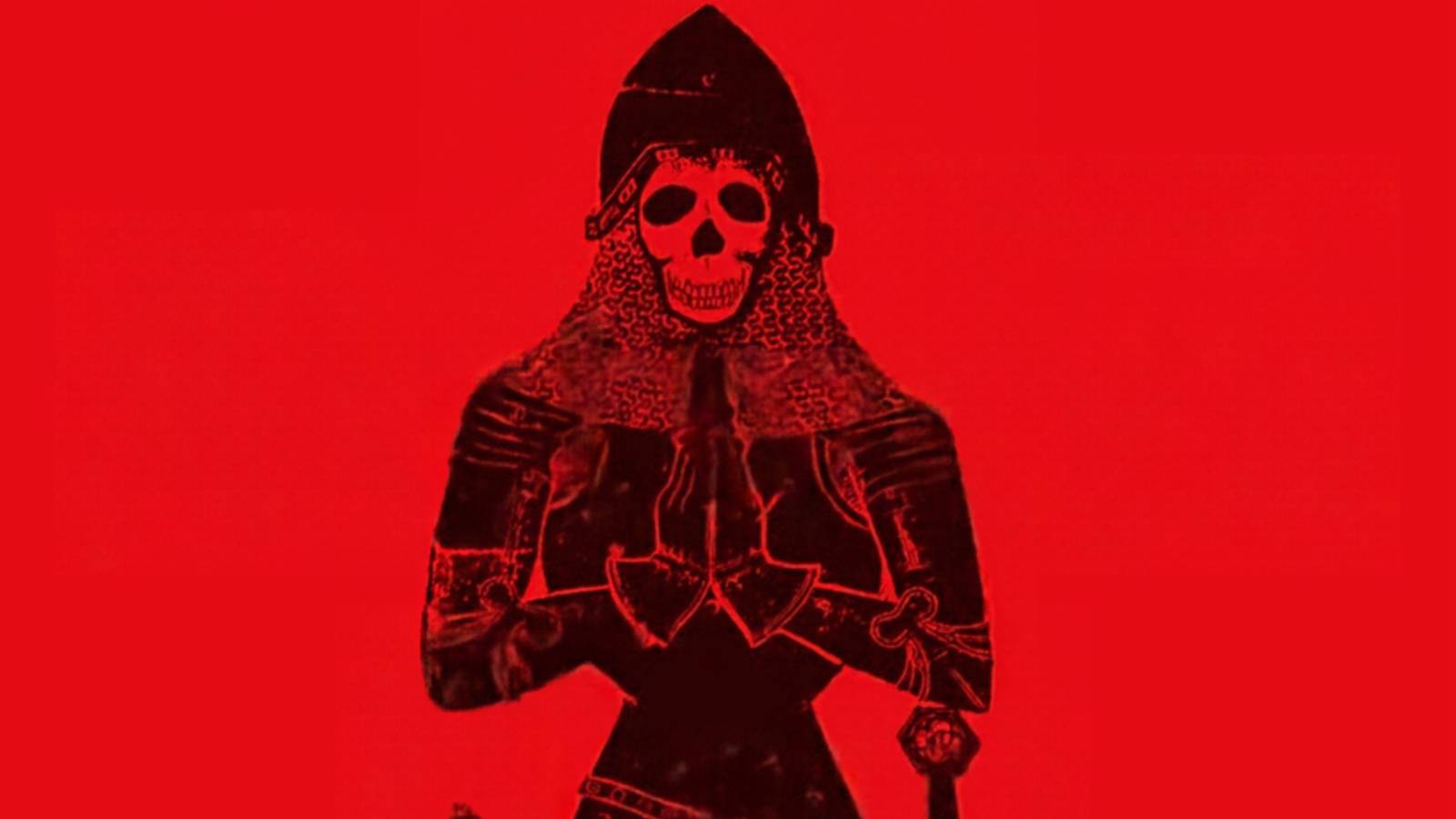
Image via Tor Nightfire Published Nov 10, 2026, 6:24 AM EST Sign in to your Collider account The Harry Potter series is widely considered one of the most groundbreaking and revolutionary of all time. Upon its debut in the 1990s, it exploded in popularity, attracting millions upon millions of fans and even spawning a multi-billion-dollar franchise. The books grew to develop an expanded universe, an upcoming TV adaptation, loads of official merchandise, and even a theme park at Universal Studios in Orlando. Needless to say, it became quite the cultural phenomenon. The series fits into a subgenre of fantasy called "low fantasy," which basically means that aspects of magic or monsters intersect with real life, and that the story is set on Earth, albeit in a version where the impossible and fantastical come to life. While the books and movies and pretty much everything else that came with them are super popular, they're not necessarily the best per se. In fact, plenty of other low fantasy books do things better than Potter. 'Jonathan Strange & Mr. Norrell' (2004) Image via Bloomsbury Suzanna Clarke's debut novel, Jonathan Strange & Mr. Norrell is a historical fantasy set at the turn of the 19th Century, during the onset of the Napoleonic Wars. In an alternate version of England, magic is a well-known practice that is one hundred percent genuine. The magical arts are an actual science, and not some farce involving misdirection, illusions, or seemingly impossible escapes — it's the real deal. Despite the fact that magic's existence is common knowledge, it is still looked down upon and treated as a social taboo. The two titular characters, Jonathan Strange and Mr. Norrell, are two magic users who spend most of their time running experiments on the art. One treats magic as a form of trial-and-error, believing no worthwhile discovery comes without risk, while the other is more cautious and treats magic analytically, involving calculations and exact measurements. This is such an interesting book because of how it handles magic. Unlike Harry Potter, magic isn't some super secret hidden world — it's just a part of life. 'Between Two Fires' (2012) Image via Macmillan Publishers Between Two Fires is set in the Middle Ages, more specifically during the Hundred Years' War between England and France. A contingent of French knights is travelling across the countryside when they come across a young girl all by herself. While some of the knights intend to commit unspeakable atrocities against her strictly for their own benefit, one of them goes against the others. He slays them and saves her, swearing to uphold his chivalric duty and see her to safety. The problem is, this is no ordinary war-torn landscape: there is a war raging between Heaven and Hell too, and demons prowl the wilds of France. Worse still, the Bubonic Plague is sweeping across Europe; a side effect of the divine conflict. Between Two Fires is a really dark story that teeters on the border of fantasy and horror and illustrates an extremely bleak world. Despite the fact that the book contains literal demons, it's actually a much more realistic look at Medieval times, shattering any images of romanticism and showing audiences how horrible it actually was to live during the period. Between Two Fires is a brutal, violent, yet deeply fascinating foray into history with monsters sprinkled into it. 'Charlie and the Chocolate Factory' (1964) Image via Scholastic Roald Dahl's Charlie and the Chocolate Factory is one of the most legendary children's novels out there and has received several movie adaptations. As many already know, the tale follows a poor young boy named Charlie, who wins one of five golden tickets to tour Willy Wonka's chocolate factory. It's far from an industrial wasteland, though — contained within are magical environments, small humanoids called Oompa-Loompas, and rooms that apparently defy all laws of physics. Willy Wonka himself is a tad eccentric, to put it mildly, but he is a fascinating character with a lot of mystery surrounding him. Sure, the book is written for kids, but it's one that adults occasionally return to as a bit of nostalgia. It lets the kid in everyone run free in imagining rooms made entirely of candy and reality-bending scientific experiments. Charlie and the Chocolate Factory isn't just adventurous — it's an important morality tale for children, one that emphasizes the importance of being selfless, kind, and grateful, attributes that can take one far in life. Collider Exclusive · 8 Questions · 2 Minutes What Fantasy World Do You Belong To? Middle-earth · Grand Line · The Continent · Camp Half-Blood Pick your magic, your crew, where you want to wake up and who you would rather be fighting, and we will tell you which world you actually belong in. Four are open to you: an ancient kingdom living through its last good age, an endless sea full of pirates, a continent that pays people to kill monsters, and a summer camp where the Greek gods are extremely real and mostly a nuisance. 💍Middle-earth(Rings of Power) 👒Grand Line(One Piece) 🐺The Continent(The Witcher) 🔱Camp Half-Blood(Percy Jackson) FIND YOUR WORLD → 01 What kind of power do you want? Every one of these worlds runs on a completely different sort of magic. ASomething ancient and half forgotten that came down through my family. BSomething completely ridiculous that works in a fight and gets a laugh. CNo magic at all, just training, potions and a very sharp sword. DSomething I inherited from a parent I have barely met. NEXT QUESTION → 02 Who is travelling with you? Nobody gets through any of these stories entirely on their own. AA fellowship drawn from every corner of the world who barely trust each other. BA crew I picked up one at a time, all of whom would die for me. CTwo or three people I would never describe out loud as friends. DTwo mates from school who are exactly as out of their depth as I am. NEXT QUESTION → 03 Where do you want to wake up tomorrow? The best fantasy is usually just somewhere you would genuinely like to live. AA high city of white stone with the sea somewhere far below. BA ship under sail, with an island ahead that nobody has mapped. CA rented room over a tavern, in a town I am leaving in the morning. DA cabin at a summer camp with everybody else already awake outside. NEXT QUESTION → 04 How are you making a living out there? Even in fantasy somebody has to pay for the horse. AI am not, because somebody far older than me decided this was my duty. BTreasure, and I am not always careful about whose it used to be. CI take contracts, since people will pay well for what they will not touch. DI am fifteen and this is all technically a school trip. NEXT QUESTION → 05 There is something in the woods. What do you do about it? All four of these worlds keep something unpleasant out there in the dark. ASend word to somebody who has seen this before, then hold the line. BWalk straight in, because it is interesting and possibly edible. CAsk what it has been eating and what the village is willing to pay. DWork out which myth it escaped from, then improvise very badly. NEXT QUESTION → 06 Who is the villain of your story? The enemy tells you far more about a world than the hero ever does. AAn ancient evil that has been patient for several thousand years. BA government that has spent a long time calling itself the good guys. CA man who turns out to be far worse than anything I hunt for money. DA god, or possibly my own family, and quite likely both at once. NEXT QUESTION → 07 What do you actually believe in out there? Every world hands its heroes one rule and asks them to hold onto it. ASome things are worth defending even when the odds are hopeless. BNobody gets to tell me where I can go or what I am allowed to want. CPick the lesser evil, and never pretend afterwards that it was not evil. DMy friends come before anything a prophecy has to say about it. NEXT QUESTION → 08 A thousand years from now, how are you remembered? Eight questions in, this is the one that decides your world. AIn a song, in a language hardly anybody still speaks. BAs the one who got there first and proved the whole thing was possible. CBarely, and mostly wrongly, in ballads I would absolutely hate. DOn a plaque at a camp, read by kids about to do the same thing. REVEAL MY WORLD → The Map Is Drawn Your World Is…Four worlds and four completely different ideas of what a good life looks like. This is where you belong, what it would ask of you, and what you would get back in return. Middle-earthYou belong somewhere old enough that the mountains have names and somebody can still tell you who gave them. Middle-earth is for people who think the right thing is worth doing even when it will not be finished in their lifetime. This is the only world on the list where doing good is understood as a very long defeat, fought anyway, by people who will never see how it ends. You are drawn to grandeur, to white cities and deep forges and the sense that almost everything you touch is older than your entire family line. The Rings of Power is set in the last good age before it all goes wrong, which gives every quiet scene in it a slightly unbearable weight. You would take the hard road, and you would take it on foot. The Grand LineYou want the sea, a crew, and absolutely nobody telling you where you are allowed to go. The Grand Line is the world for people whose main ambition in life is finding out what is over there. One Piece has run for decades on one very simple engine, which is a group of people who each want something impossible and have decided to go and get it together. You collect people. Your ideal crew is a set of misfits who were each written off somewhere else before you turned up and offered them a better idea. The world is enormous and deliberately ridiculous, and the emotional gut punches land harder because of that rather than in spite of it. You would set sail knowing the map runs out, which is more or less the entire point of it. The ContinentYou would rather be feared and useful than liked and useless. The Continent is a world where the monsters are the straightforward part of the job and the people are where it all gets complicated. Witchers get paid to do what nobody else will and resented for existing at all, which is a trade most people would refuse and you would probably accept. You have no real illusions about which side is the good one, largely because on the Continent that question tends to have a disappointing answer. The best of these stories are not about the fighting. They are about somebody with a rigid code being repeatedly cornered into caring about people. You would take the coin, finish the job properly, and be out of town before the story got told wrong. Camp Half-BloodYou want the myths to be real and loose in the actual world, and you want to find out at about thirteen that you were never anywhere near as ordinary as everybody kept telling you. Percy Jackson takes the oldest stories we have and drops them into car parks and diners, which makes the gods considerably funnier and a great deal worse. You would be the kid every school gave up on, who turns out to have been built for something nobody thought to test for. The series is genuinely about friendship rather than destiny, and it says so out loud every time a prophecy tries to get in the way. Camp Half-Blood is the real fantasy here: a place where the thing that made you difficult everywhere else is the thing that makes you belong. ↻ RETAKE THE QUIZ 'Pilgrim: A Medieval Horror' (2023) Image via Sentinel Creatives Pilgrim is a highly underrated fantasy/horror novel set in the Crusades. During a conquest of the Holy Land, a Teutonic Templar is preparing to come home after seven years at war. However, his progress is hindered by the fact that demons and djinn are real and begin assailing him and his companions as they seek to find peace. Pilgrim includes elements and beings from multiple cultures and mythologies, most prominently from Christian, Jewish, and Islamic texts for inspiration. On the surface, it seems like a story about knights and castles and war, but the demons add a whole new layer to things that makes it a lot more unsettling. Although hardly anyone has actually experienced it, this standalone novel is perfect for history buffs, or for people who like fantasy that involves religious beings like angels and demons. 'Miss Peregrine's Home for Peculiar Children' (2011) Image via Quirk Books Miss Peregrine's Home for Peculiar Children is the first in a series that blew up in the literary world, even spawning a so-so film adaptation. The main plot point of the story is the eponymous home, which is run by the enigmatic Miss Peregrine. The home, which acts as a foster home or orphanage, is specifically for children who have some sort of supernatural innate gift without really knowing what causes it. For example, one is invisible, one can hover above the ground, and another can reanimate dead bodies. The plot, of course, goes beyond that, involving a conspiracy against a teenage boy's grandfather, who formerly lived at the home, and the boy's quest to find answers. A lot of beats are similar to the Harry Potter series, but this one does it way better due to the fact that there are far fewer plot holes. While it might not be as groundbreaking, Miss Peregrine's Home for Peculiar Children is certainly popular and a thrilling ride from start to finish. 'The Princess Bride: S. Morgenstern's Classic Tale of True Love and High Adventure, the "Good Parts" Version' (1973) Image via Harper Collins The Princess Bride is famous for its stellar 1987 movie adaptation, but the book is quite different. See, it includes a lot of passages about the narrator's process of actually writing it, adding a significant layer of metatextual commentary. The movie couldn't really frame the story to be as meta as the book, so they opted to frame it as a grandfather telling the story to his sick grandson. In any event, the actual story itself is mostly the same: Princess Buttercup is betrothed to Prince Humperdinck, whom she despises. Instead, she falls for a stablehand named Westley, who becomes lost at sea. Years later, Buttercup and Westley reunite, and intend to free her from the oppressive clutches of her fiancé. The novel was written to be a satirical take on classic fairytales, so you can expect a lot of punchlines, situational irony, and absurdist moments, but that's precisely what makes it so brilliant. Despite taking place in the fictional realm of Florin, the story mentions places like Sicily and Australia, so it's implied to still be part of the real world. In any event, The Princess Bride is hilarious, witty, and brilliant pretty much all around.
6 Low Fantasy Books Better Than 'Harry Potter'
Full Article
Original Source
Read the full article at Collider →KhanList aggregates and links to publicly available news content. We do not host full articles from third-party sources. Always verify important information with original sources.