
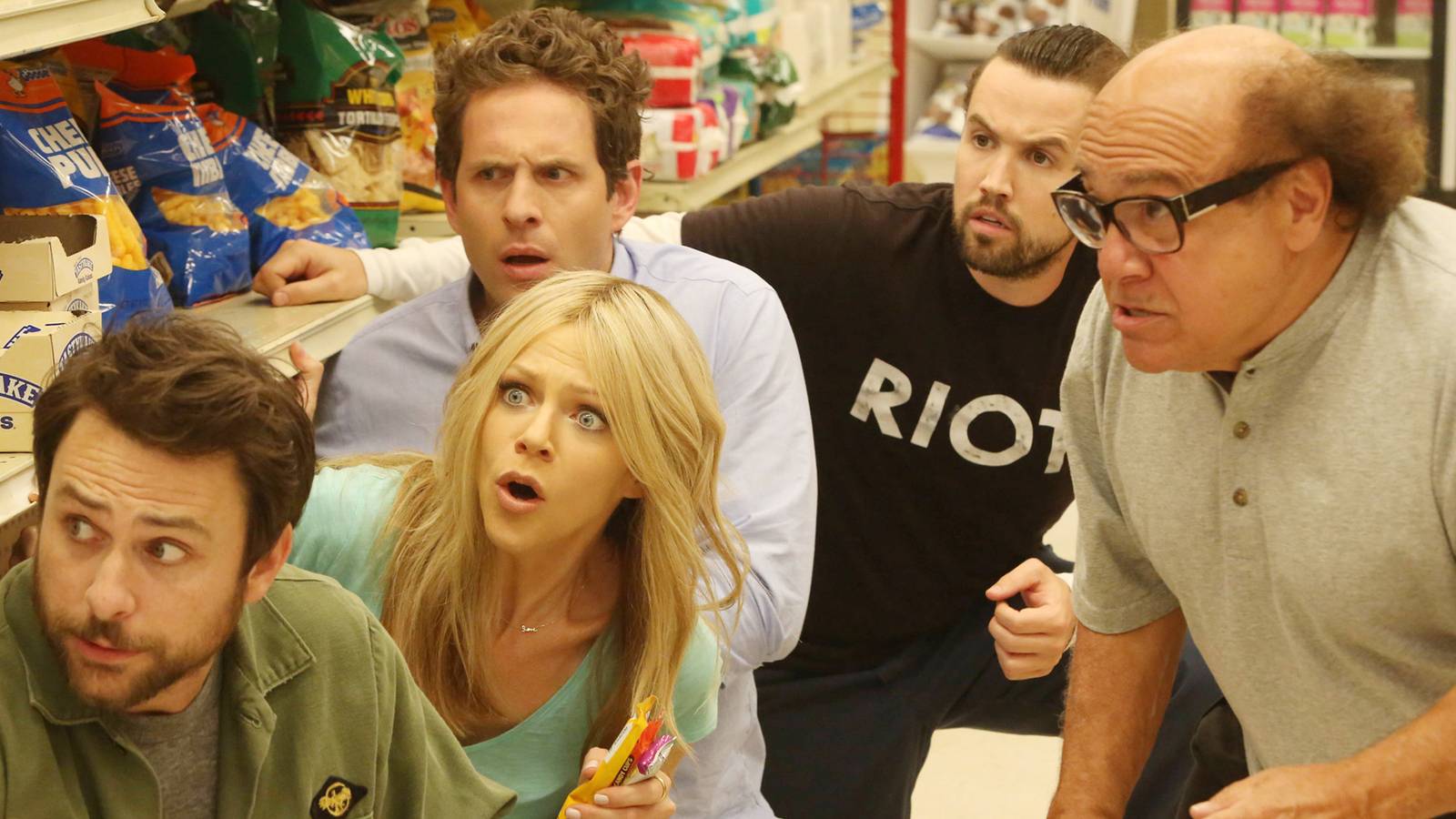
Image via Patrick McElhenney / ©FXX /Courtesy: Everett Collectionf Published Aug 29, 2026, 9:01 PM EDT Dyah (pronounced Dee-yah) is a Senior Author at Collider, responsible for both writing and transcription duties. She joined the website in 2022 as a Resource Writer before stepping into her current role in April 2023. As a Senior Author, she writes Features and Lists covering TV, music, and movies, making her a true Jill of all trades. In addition to her writing, Dyah also serves as an interview transcriber, primarily for events such as San Diego Comic-Con, the Toronto International Film Festival, and the Sundance Film Festival. Dyah graduated from Satya Wacana Christian University in October 2019 with a Bachelor's degree in English Literature, concentrating on Creative Writing. She is currently completing her Master's degree in English Literature Studies, with a thesis on intersectionality in postcolonial-feminist studies in Asian literary works, and is expected to graduate in 2026. Born and raised between Indonesia and Singapore, Dyah is no stranger to different cultures. She now resides in the small town of Kendal with her husband and four cats, where she spends her free time cooking or cycling. Sign in to your Collider account The best sitcoms are the ones that stand the test of time. Back in the heyday of cable television, sitcoms enjoyed the luxury of lengthy runs. These days, however, it’s much harder for shows to maintain that kind of longevity, particularly in the streaming era, where audiences have countless options and are less likely to commit to shows that require years of investment to keep up with an ongoing story or lore. That doesn’t mean long-running sitcoms have completely disappeared. Some shows have maintained massive followings since their early heyday and continue to attract audiences today, while newer sitcoms have shown plenty of promise through their continuous renewals. Together, they prove that there is still plenty of life left in the genre. These shows know how to keep the jokes coming without making them feel stale, all while staying true to the core of what made the series work in the first place. From a sitcom about a group of dedicated school staff to an American animated classic, here are long-running sitcoms that never run out of great ideas. 6 'Abbott Elementary' (2021–2026) Image via ABC It still feels like yesterday when Season 1 of Abbott Elementary was trying to find its audience on ABC. Yet, only five years into its run, Abbott is already gearing up for its Season 6 premiere in the fall, putting it on track to become a long-running sitcom. It’s not hard to see why audiences have grown to love the staff and students of Abbott Elementary. Public schools like Abbott are notorious for being underfunded and under-supported, but teachers like Janine Teagues (Quinta Brunson) wholeheartedly believe in the school’s potential and remain determined to make it a better place for their students. Much of Abbott Elementary’s humor also feels fresh because of how effortlessly it keeps up with current trends. From kids getting into silly and nonsensical TikTok challenges to Gen Z and Gen Alpha slang that leaves the older teachers completely confused, the show captures the generation gap in ways that are painfully funny yet surprisingly true to life. The teachers themselves are also playful caricatures of modern-day stereotypes, from Ava’s (Janelle James) obsession with popularity and influencer culture to Jacob’s (Chris Perfetti) performative progressivism. As the show continues to grow, so does its ability to absorb whatever is happening in online discourse and infuse it into its scripts, making the world of Abbott Elementary feel lived-in and reflective of the moment. 5 'The Simpsons' (1989–Present) Image via Fox America’s favorite animated family will always be an all-time classic. Whether you’ve been watching since the pilot or only tune in from time to time, it’s nearly impossible not to know who The Simpsons are. The pop culture phenomenon popularized the dysfunctional family trope without making it feel bleak, making the show relatable to audiences who don’t necessarily come from perfect families. There’s also a bittersweet comfort in watching a father like Homer Simpson (Dan Castellaneta), who, despite his lack of intellect and questionable behavior, almost always has good intentions when it comes to his family. The Simpsons initially caught on because of its ability to turn real-life events into sharp satire, and the show has continued that tradition by keeping up with current pop culture. In Season 37 alone, it spoofed the National Treasure film franchise with “Irrational Treasure” and featured a Severance-inspired episode titled “Seperence,” proving that The Simpsons rarely feels out of touch with the times. Still, perhaps the biggest reason the show continues to capture audiences is The Simpsons' ability to seemingly predict future events, a gag that has become almost as famous as the series itself. 4 'South Park' (1997–Present) Image via Paramount+ Leave it to South Park to stir up controversy. Nearly three decades and hundreds of episodes into its run, the crude animated series continues to find new generations of fans who appreciate its unhinged sense of humor. Much of South Park’s timelessness comes from embracing shock value and wondering about whose buttons its creators can push next. In its earlier seasons, the show was relentless, bringing up jokes considered deeply inappropriate even at the time, from religious satire involving the portrayal of the Prophet Muhammad to provocative jokes surrounding questionable language. These days, South Park has toned down some of its more extreme provocations, but its humor remains rooted in controversy, with politics now serving as one of its favorite targets. And the show certainly isn’t subtle about it. Season 27, for instance, features a cutout depiction of Donald Trump sleeping with the Devil, while other storylines tackle cultural anxieties surrounding AI, the controversial actions of ICE, and the Israel-Palestine conflict. To this day, South Park remains willing to tackle uncomfortable subjects that many people wouldn’t dare bring up at the dinner table. Collider Exclusive · TV Medicine Quiz Which Fictional Hospital Would You Work Best In? The Pitt · ER · Grey's Anatomy · House · Scrubs Five hospitals. Five completely different ways medicine goes sideways on television — brutal, chaotic, romantic, brilliant, and ridiculous. Only one of them is the ward your instincts were built for. Eight questions will figure out exactly where you belong. 🚨The Pitt 🏥ER 💉Grey's 🔬House 🩺Scrubs FIND YOUR HOSPITAL → 01 A critical patient comes through the door. What's your first instinct? Medicine under pressure reveals who you actually are. AStay completely present — block everything else out and work through it step by step, right now. BTriage fast and delegate — get the right people on the right problems immediately. CTrust my gut and move — I work best when I stop overthinking and just act. DAsk the question everyone else is ignoring — what's the thing that doesn't fit? ETake a breath, make a joke to cut the tension, and then get to work — panic helps no one. NEXT QUESTION → 02 Why did you go into medicine in the first place? The honest answer says more about you than the one you'd give in an interview. ABecause I wanted to be where it matters most — right at the edge, when someone's life is actually on the line. BBecause I wanted to help people — genuinely, one patient at a time, in a system that makes it hard. CBecause I was drawn to the intensity of it — the stakes, the drama, the feeling of being fully alive. DBecause medicine is the most interesting puzzle there is — and I needed a problem worth solving. EBecause I wanted to make a difference — and also, honestly, I didn't know what else to do with my life. NEXT QUESTION → 03 What do you actually want from the people you work with? Who you want beside you under pressure is who you are. ACompetence and calm — I need people who don't fall apart when things get bad. BTrust and reliability — I want to know that when I pass something off, it's handled. CConnection — I want colleagues who become family, even if that gets complicated. DIntelligence and the willingness to be challenged — I have no interest in people who just agree with me. EFriendship — people I actually like spending twelve hours a day with, because those hours are going to happen either way. NEXT QUESTION → 04 You lose a patient you fought hard to save. How do you carry it? Every doctor who's worked a long shift has had to answer this question. AI carry it. All of it. I don't look for ways to put it down — that weight is part of doing this work honestly. BI process it and move — you have to, or the next patient suffers for the one you just lost. CI feel it deeply and lean on the people around me — I don't think you're supposed to handle that alone. DI go back over every decision — not to punish myself, but because I need to understand what I missed. EI grieve it genuinely, find some way to laugh about something unrelated, and try to be kind to myself — imperfectly. NEXT QUESTION → 05 How would your colleagues describe the way you work? Your reputation on the floor is usually more accurate than your self-image. AIntense and completely present — no small talk during a shift, but exactly who you want there. BSteady and dependable — not the flashiest in the room but never the one who drops something. CPassionate and occasionally chaotic — brilliant on the hard cases, prone to drama everywhere else. DBrilliant and difficult — right more often than anyone else, and everyone knows it, including me. EWarm and self-deprecating — not the most intimidating presence, but genuinely good at this and easy to like. NEXT QUESTION → 06 How do you feel about hospital protocol and procedure? Every institution has rules. What you do with them is a choice. AProtocol is the floor, not the ceiling — I follow it until the patient needs something it can't provide. BI respect it — the system is broken in places, but the structure is there for a reason and I work within it. CI follow it until my instincts tell me not to — and my instincts are usually right, even when they cause problems. DRules are for people who haven't thought hard enough about when to break them. EI try to follow it and mostly do — with a few memorable exceptions that still come up in meetings. NEXT QUESTION → 07 What does this job cost you personally? Nobody works in medicine without paying a price. What's yours? AEverything outside these walls — I've given this job my full attention and the rest of my life has gone around it. BMy idealism, mostly — I came in believing the system could be fixed and I've made a complicated peace with that. CStability — my personal life has been as chaotic as the OR, and that's not entirely a coincidence. DMy relationships — I am not easy to know, and the people who've tried to would probably agree. EMy sense of gravity — I use humour as a coping mechanism, which not everyone appreciates in a hospital. NEXT QUESTION → 08 At the end of a long shift, what keeps you coming back? The answer to this question is the most honest thing about you. AThe fact that it's real — that nothing else I could be doing would matter this much, right now, today. BThe patients — individual human beings who needed something and got it because I was there. CThe people I work with — I have walked through impossible things with these people and I'd do it again. DThe next unsolved case — there's always another puzzle, and I'm not done yet. EBecause despite everything — the exhaustion, the loss, the absurdity — I actually love this job. REVEAL MY HOSPITAL → Your Assignment Has Been Made You Belong In…Your answers have pointed to one fictional hospital above all others. This is the ward your instincts, your temperament, and your particular brand of dysfunction were built for. The PittYou are built for the most unsparing version of emergency medicine television has ever shown — one that puts you inside a single fifteen-hour shift and doesn't let you look away. You need your work to be real, not romanticised — meaning over drama, honesty over aesthetics. You find purpose inside the work itself, not in the chaos surrounding it. You've made peace with the fact that this job takes from you constantly, and gives back in ways that are harder to name. Pittsburgh Trauma Medical Center demands exactly that kind of person — and you would not want to be anywhere else. ERYou are the person who keeps the whole floor running — not the most brilliant in the room, but possibly the most essential. You show up, do the work, absorb the losses, and come back the next day without needing the job to be anything other than what it is. You care about patients as individual human beings, not as cases to solve or dramas to live through. You believe in the system even when it fails you — and you understand that emergency medicine is about holding the line just long enough. ER is television about endurance. You have it. Grey's AnatomyYou came to medicine with your whole self — your ambition, your emotions, your relationships, your history — and you have never quite managed to leave any of it at the door. You feel things fully and form deep attachments to the people you work with. Your personal and professional lives are permanently, chaotically entangled — and that entanglement drives both your greatest disasters and your most remarkable saves. You understand that extraordinary medicine often happens at the intersection of clinical skill and profound human connection. It's messy at Grey Sloan. You would not have it any other way. HouseYou are drawn to the problem above everything else — the symptom that doesn't fit, the diagnosis hiding underneath the obvious one. You're not primarily motivated by the patient as a person — though you are capable of caring, even if you'd deny it. You work best when the stakes are highest and the standard answer is wrong. Princeton-Plainsboro exists to house one extraordinary, impossible mind — and everyone around that mind is there because they're smart enough to keep up. The only way forward here is to think harder than everyone else in the room. That is exactly what you do. ScrubsYou understand that medicine is tragic and absurd in almost equal measure — and that the only sane response is to hold both of those things at the same time. You are warm, self-aware, and funnier than most people in your field. You use humour to get through terrible moments — and at Sacred Heart, that's not a flaw, it's a survival strategy. You lean on the people around you and let them lean back. The laughter and the grief are genuinely inseparable here. Scrubs is a show about learning to become someone worthy of the job. You are still very much in the middle of that process — which is exactly right. ↻ RETAKE THE QUIZ 3 'It's Always Sunny in Philadelphia' (2005–Present) Image via FXX One would think that after 18 seasons, the Paddy’s Pub gang from It’s Always Sunny in Philadelphia would have learned something by now. Judging by the facial wrinkles and graying hair they’ve gained over the years, you’d think they had grown wiser with age. But the truth is, they’ve learned absolutely nothing. The gang remains just as arrogant, self-important, and impulsive as they were in their younger years. Somehow, though, watching their older selves get into the pettiest arguments and most ridiculous situations only proves that age has made them even funnier. In recent years, It’s Always Sunny in Philadelphia has tried to maintain a nice balance between its old shticks and newer hijinks, making it both familiar and fresh for different generations of fans. Season 17 kicked things off by collaborating with its Philly counterpart, the kid-friendly Abbott Elementary, bringing two complete opposites together in a bizarre situation where the Paddy’s gang volunteers at the school. Always Sunny Season 18 sees more tributes to old jokes, like Dennis (Glenn Howerton) and Dee’s (Kaitlin Olson) ADHD diagnosis, as well as another Gilligan’s Island parody. 2 'King of the Hill' (1997–Present) Image via Hulu King of the Hill ended its original run in 2010, but the beloved sitcom returned in 2025 with Season 14. Rather than simply picking up where it left off, the revival makes the smart choice to fast-forward several years in the lives of the Hills. After returning from Saudi Arabia, where Hank had been working, Hank (Mike Judge) and Peggy (Kathy Najimy) settle back into Arlen, Texas, as Hank prepares to enjoy retirement. Meanwhile, Bobby (Pamela Adlon) is no longer the timid and painfully awkward tween audiences remember. He’s all grown up and has finally found his calling in life: cooking. Both the original series and its revival are equally entertaining, largely because they understand how to evolve the Hill family without losing what made them so interesting in the first place. The original run often centered on Hank and Bobby struggling to understand one another, particularly because they are almost complete opposites. The revival, although still early in its run, offers a much-needed continuation that shows just how much the family has changed. Hank and Bobby still find themselves disagreeing, but their conflicts now carry a different weight because they’re both adults. 1 'Bob's Burgers' (2011–Present) Image via FOX On paper, a middle-class family doesn’t sound like the most exciting premise for a sitcom. But Bob’s Burgers takes The Simpsons’ dysfunctional family formula and turns it into something much more wholesome while keeping all the wackiness intact. There’s nothing particularly extraordinary about the Belcher family, except that its patriarch, Bob Belcher (H. Jon Benjamin), runs a struggling burger restaurant for a living. Yet, it’s this sense of ordinary, working-class life that makes the show feel surprisingly relevant even today. Much of the Belchers’ struggles are also things that ordinary audiences can relate to. Bob’s biggest concerns are keeping his restaurant afloat, paying the rent, and providing for his family, all of which inevitably pull the entire family into one ridiculous situation after another. In this economy, Bob’s struggles feel more relevant than ever. The difference is that Bob’s Burgers reminds us that you don’t have to face those challenges alone. With his outgoing wife and three eccentric children by his side, Bob has a family that genuinely cares about one another. That wholesome dynamic gives the show’s humor a more layered quality, finding humor in the mundane and stressful moments that make up everyday life. Release Date January 9, 2011 Network FOX Showrunner Loren Bouchard Cast John Roberts Linda Belcher (voice) Bob Belcher runs a struggling burger shop with his wife and three children.
6 Long-Running Sitcoms That Never Run Out of Great Ideas
Full Article
Original Source
Read the full article at Collider →KhanList aggregates and links to publicly available news content. We do not host full articles from third-party sources. Always verify important information with original sources.