
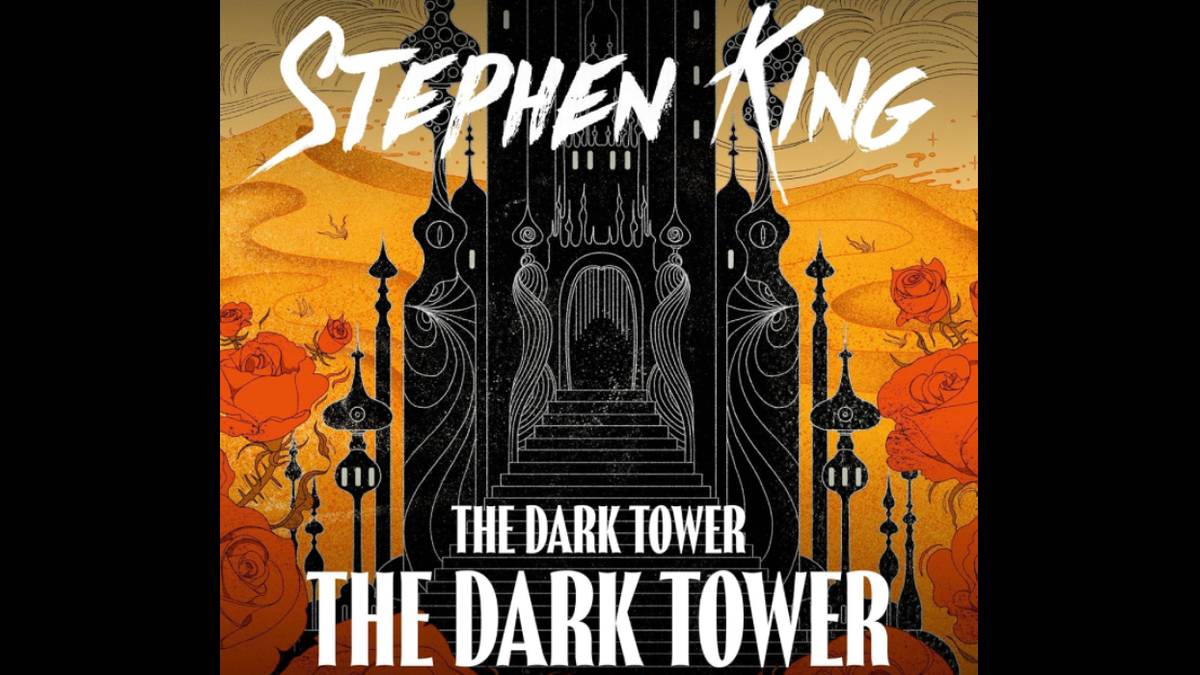
Image via Donald M. Grant, Publisher Published Jul 23, 2026, 3:52 PM EDT Sign in to your Collider account Horror doesn't need special effects to be terrifying. In fact, sometimes, all it takes is a writer who knows exactly how far the readers’ imagination can go. That’s why some of the greatest horror movies and TV shows ever made actually began as books. Literature has given birth to countless stories that continue to define the genre decades later, and that's no coincidence. Horror works so much better on the page. Instead of relying on loud jump scares or disturbing visuals, books force readers to imagine the terror for themselves, which makes everything feel far more personal. These stories linger in the back of the readers’ minds for a long time because they don’t just frighten people in the moment. Instead, they linger in the back of their minds long after the final chapter. These six series are the definitive examples of timeless horror storytelling that continue to influence the genre to this day. 6 ‘The Dark Tower’ Series Image via Donald M. Grant, Publisher, Inc. Stephen King's The Dark Tower is a definitive horror series that remains a major part of mainstream pop culture. The saga spans eight novels and follows the last Gunslinger, Roland Deschain, who is on an obsessive quest to reach the mysterious Dark Tower, the structure that stands at the center of all existence. The story follows Roland as he travels across the decaying Mid-World and assembles a ka-tet, a group of companions drawn from different versions of the real world. Together, the group battles monsters, demons, ancient technologies, and the sinister Man in Black, all while racing to stop the Crimson King from destroying reality itself. The deeper Roland ventures toward the Tower, the more the boundaries between worlds begin to collapse to reveal how several of King’s stories are connected by the same sprawling multiverse, which is the real highlight of The Dark Tower series. The books are horror by definition, but they also refuse to fit neatly into any one genre. The stories combine fantasy, science fiction, and adventure, and are filled with grotesque creatures, haunting imagery, and existential terror. Roland serves as the perfect protagonist to transport the audience into this intriguing, interconnected world where every installment expands the mythology in unexpected ways. No one else has been able to even attempt a level of storytelling this ambitious, which is why The Dark Tower remains King’s undisputed magnum opus. 5 ‘Fear Street’ Series Image via Simon Pulse/ Golden Books/ St. Martin's Press R.L. Stine's Fear Street books terrified an entire generation of readers. The series launched in 1989 and eventually grew to over 50 novels alongside plenty of spin-offs, including Fear Street Sagas, Ghosts of Fear Street, and Cheerleaders. The series is set in Shadyside, one of the most dangerous fictional towns ever created because of all the murders, disappearances, curses, and supernatural horrors it’s plagued by. Each novel introduces a group of new teenagers who quickly discover that surviving high school is the least of their problems. Some of the most iconic titles in the series include The New Girl, The Prom Queen, The Stepsister, and more. All of these titles have a unique, nostalgic quality to them. However, what made Fear Street so different from the countless teen horror books back in the day is that the scares were never just about ghosts or monsters. Stine understood that horror becomes far more unsettling when it's rooted in real-life occurrences such as jealous classmates, obsessive lovers, family secrets, and years of buried trauma. The series blends psychological tension and slasher-style suspense, and supernatural elements in a way that keeps the audience guessing until the very end. Stine’s writing style is fast-paced, which makes every book impossible to put down. Even decades later, Fear Street hasn't lost its appeal because it captures a kind of horror that never goes out of style. Collider Exclusive · Horror Survival Quiz Which Horror Villain Do You Have the Best Chance of Surviving? Jason Voorhees · Michael Myers · Freddy Krueger · Pennywise · Chucky Five killers. Five completely different ways to die — if you're not smart enough, fast enough, or self-aware enough to avoid it. Only one of them is the villain your particular set of instincts gives you a fighting chance against. Eight questions will figure out which one. 🏕️Jason 🔪Michael 💤Freddy 🎈Pennywise 🪆Chucky TEST YOUR SURVIVAL → 01 Something feels wrong. You can't explain it — you just know. What do you do? First instincts are the difference between the survivor and the first act casualty. ALeave immediately. I don't need to understand a threat to respect it. BStay quiet and observe. If I can see it, I can understand it. If I can understand it, I can avoid it. CStay awake. Whatever this is, I am not going to sleep until I feel safe again. DConfront it directly. Fear grows in the dark — I'd rather know what I'm dealing with. ECheck everything, trust nothing. The threat might be closer than I think — and smaller. NEXT QUESTION → 02 Where are you most likely to find yourself when things go wrong? Setting is everything in horror. Where you are determines which rules apply. ASomewhere remote — a cabin, a campsite, off the grid and away from people. BA quiet suburban neighbourhood where nothing ever happens. Except tonight. CIn my own head — the most dangerous place of all, depending on what's already in there. DWherever children are — because something about this place attracts the worst things. ESomewhere ordinary — a house, a toy store, a place where the last thing you'd expect is a threat. NEXT QUESTION → 03 What is your most reliable survival asset? Every survivor has a quality the villain didn't account for. What's yours? APhysical fitness — I can run, I can swim, I can outlast something that relies on brute persistence. BSpatial awareness — I always know the exits, the hiding spots, the fastest route out. CPsychological resilience — I've faced my worst fears before. They don't have the same power over me. DEmotional steadiness — I don't panic. Panic is what gets you caught. EScepticism — I don't underestimate threats because of how they look. Size is irrelevant. NEXT QUESTION → 04 What kind of fear is hardest for you to fight through? Knowing your weakness is the first step to not dying because of it. AThe unstoppable — something that will not stop, cannot be reasoned with, and is always getting closer. BThe invisible — a threat I can feel but can't locate, watching from somewhere I can't see. CThe psychological — something that uses my own mind and memories against me. DThe unknowable — something ancient, shapeless, that feeds on the fear itself. EThe mundane — a threat so ordinary-looking that no one will believe me until it's too late. NEXT QUESTION → 05 You're with a group when things start going wrong. What's your role? Horror movies are brutally clear about who survives group situations and who doesn't. AThe one who says "we need to leave" first — and means it, even when no one listens. BThe one who stays quiet, watches the others, and figures out the pattern before anyone else does. CThe one who holds the group together when panic sets in — because someone has to. DThe one who asks the questions nobody wants to ask — because ignoring them gets people killed. EThe one who takes the threat seriously when everyone else is laughing it off. NEXT QUESTION → 06 What's the horror movie mistake you're most likely to make? Honest self-assessment is a survival skill. Denial is not. AGoing back for someone — I know I shouldn't, but I can't leave them behind. BAssuming I'm safe once I've found a hiding spot. That's when it finds me. CFalling asleep when I absolutely cannot afford to. Exhaustion is its own enemy. DLetting my curiosity override my instincts — I always need to understand what I'm dealing with. EDismissing the threat because of how it looks. That's exactly what it wants. NEXT QUESTION → 07 What's your best weapon against something that can't be stopped by conventional means? Every horror villain has a weakness. The survivors are always the ones who find it. AThe environment itself — I use the terrain, the water, the geography against it. BPatience — I wait, I watch, and I strike at the one moment it doesn't expect. CLucidity — if I can stay in control of my own mind, it loses its primary weapon. DCourage — facing it directly, refusing to run, taking away the fear it feeds on. EImprovisation — I use whatever's at hand, however unconventional. Creativity over brute force. NEXT QUESTION → 08 It's the final scene. You're the last one standing. How did you make it? The final survivor always has a reason. What's yours? AI kept moving. I never stopped, never hid for too long, never let it corner me. BI figured out the pattern before anyone else did — and I used it against the thing following it. CI stayed awake, stayed lucid, and refused to give it the one thing it needed most. DI stopped being afraid of it. And the moment I did, everything changed. EI took it seriously from the start — and I never once made the mistake of underestimating it. REVEAL MY VILLAIN → Your Survival Odds Have Been Calculated Your Best Chance Is Against…Your instincts, your strengths, and your particular way of thinking under pressure point to one villain you actually have a fighting chance against. Everyone else — good luck. Jason VoorheesJason is relentless, but he is also predictable — and that is the gap you would exploit. He moves in straight lines toward his target. He doesn't strategise, doesn't adapt, doesn't outsmart. He simply pursues. Your ability to keep moving, use the environment, and resist the panic that freezes most victims gives you a genuine edge. The Crystal Lake survivors were always the ones who stopped running in circles and started thinking about terrain, water, and distance. You think like that. Which means Jason, for all his indestructibility, would face someone who simply refused to be where he expected. Michael MyersMichael watches before he moves. He is patient, methodical, and almost impossible to detect — until it's too late for anyone who isn't paying close enough attention. But you are paying attention. You notice the shape in the window, the car parked slightly wrong, the silence where there should be sound. Michael's power lies in the invisibility of ordinary suburbia — the fact that nothing ever looks wrong until it already is. Your spatial awareness and instinct to map every room, every exit, and every shadow before you need them is precisely the quality Laurie Strode had. You are not a victim waiting to happen. You are someone who already suspects something is wrong — and acts on it. Freddy KruegerFreddy wins by getting inside your head — using your own fears, your own memories, your own subconscious as weapons against you. That strategy requires a target who can be destabilised. You are harder to destabilise than most. You've faced uncomfortable truths about yourself and you haven't looked away. The survivors on Elm Street were always the ones who understood what was happening and chose to face it rather than flee from it. Freddy's greatest weakness is that his power evaporates in the presence of someone who refuses to give him the fear he feeds on. Your psychological resilience — the ability to stay grounded when reality itself becomes unreliable — is exactly the quality that keeps you alive here. PennywisePennywise is ancient, shapeshifting, and feeds on terror — but it has one critical vulnerability: it cannot function against someone who genuinely stops being afraid of it. The Losers Club didn't survive because they were braver than everyone else. They survived because they faced their fears together, and faced them honestly. You ask the questions others avoid. You look directly at what frightens you rather than turning away. That directness — the refusal to let fear fester in the dark — is Pennywise's worst nightmare. It chose the wrong target when it chose you. You are exactly the kind of person whose fear tastes like nothing at all. ChuckyChucky's greatest advantage is that nobody takes him seriously until it's already too late. He exploits the gap between how something looks and what it actually is. You don't have that gap. You take threats seriously regardless of how they present — and you never make the mistake of underestimating something because of its size or appearance. Chucky relies on surprise, on the delay between recognition and response. You close that delay faster than almost anyone. Your instinct to treat every unfamiliar thing with appropriate scepticism — rather than dismissing it because it seems absurd — is the exact quality that keeps you breathing. Against Chucky, not laughing is already winning. You are very good at not laughing. ↻ RETAKE THE QUIZ 4 ‘Books of Blood’ Series Image via Sphere Books Clive Barker has a very different approach to the horror genre and shows just how beautiful it can be. His series, first published between 1984 and 1985, is a collection of six volumes containing more than 30 short stories, all linked together by one unforgettable premise. The anthology opens with a fraudulent psychic named Simon McNeal, who is attacked by countless restless spirits. They carve their stories into his flesh and transform his body into the titular "Books of Blood." From there, Barker invites readers into one nightmare after another, each exploring a completely different corner of the supernatural while sharing the same underlying mythology of pain, death, and the unknown. What makes Books of Blood so compelling is that the series is impossible to predict. The author doesn’t rely on familiar tropes, but creates truly unsettling worlds where ordinary people deal with hidden dimensions, forgotten gods, cursed cities, and creatures whose motives are beyond human understanding. The books aren’t trying to deliver surface-level scares. Instead, they intend to disturb the readers on a psychological level and make them question everything they know. The imagination Barker brings to the genre is unlike anything else, and that’s why Books of Blood is a must-read for all horror fanatics. 3 ‘The Strain’ Trilogy Image via William Morrow The Strain puts a spin on the vampire genre and makes the very familiar monster feel terrifying in a completely different way. Guillermo del Toro and Chuck Hogan’s trilogy features three books: The Strain (2009), The Fall (2010), and The Night Eternal (2011). The story begins when a Boeing 777 lands at New York’s JFK Airport and suddenly goes completely silent on the runway. Almost everyone onboard is found dead, which leads CDC epidemiologist Dr. Ephraim “Eph” Goodweather to investigate what initially appears to be a mysterious biological attack. However, the bodies soon begin disappearing from morgues, the few survivors undergo horrifying physical changes, and Eph discovers that New York is facing something far older and more dangerous than any known disease. His search for answers brings him to Abraham Setrakian, an elderly Holocaust survivor who has spent decades preparing for the return of an ancient vampire known as the Master. Del Toro and Hogan reimagine the mythological creatures as grotesque hosts for parasitic worms that destroy the body, erase individuality, and transform victims into extensions of a larger hive mind. That biological detail makes the horror feel disturbingly plausible, while the Master’s ancient mythology ensures the series never becomes a predictable outbreak thriller. The Strain places modern science against a form of evil that predates every system designed to understand it. This tension between scientific certainty and ancient belief gives the trilogy its identity, and keeps the readers hooked till the very last page. 2 ‘Blackwater: The Complete Saga’ Image via Pedro Oyarbide/ Valancourt Books Blackwater initially feels more like a Southern family saga than a horror series. However, the horror it finds in generational feuds, business deals, and rivalries is more unsettling than one might think. Michael McDowell's books, published in 1983 as six serialized novels, follow the wealthy Caskey family in the small Alabama town of Perdido across more than 50 years. Everything changes after a devastating flood when Oscar Caskey rescues the mysterious Elinor Dammert from the top floor of a submerged hotel. Elinor soon marries into the family, but no one knows that she is hiding a terrifying secret that is deeply connected to the dark waters surrounding Perdido. The Blackwater books patiently build up to every single scare. McDowell spends a lot of time developing family dynamics and small-town politics alongside the supernatural. The readers are fully invested in the Caskeys long before the horror fully reveals itself. This results in a unique, Southern Gothic story where horror is something that seeps into everyday life until the two become impossible to separate. The Blackwater saga never rushes toward the next big shock, but gives the reader room to sit with a constant sense of dread that gives weight to every revelation. 1 ‘Hannibal Lecter’ Series Image via St. Martin's Press Thomas Harris's Hannibal Lecter novels changed horror forever and gave the world one of the most iconic antagonists of all time. The series consists of four novels and follows the brilliant psychiatrist Dr. Hannibal Lecter, who also happens to be a cannibalistic serial killer. Now, Lecter remains the thread connecting the books, but each novel introduces a different protagonist. Former FBI profiler Will Graham hunts the "Tooth Fairy" killer in Red Dragon, trainee Clarice Starling investigates the gruesome Buffalo Bill murders in The Silence of the Lambs, and later finds herself caught in Lecter's increasingly dangerous orbit as he resurfaces years later. Together, the series forms one of literature's most unforgettable explorations of pure evil. Of course, Lecter is far from a conventional villain, not because of his violence, but because of how intelligent he is. He studies people with unsettling precision and targets their deepest fears and weaknesses long before he ever threatens them physically. This tension transforms the books into unsettling explorations of manipulation, obsession, and trauma, instead of just operating as crime thrillers. As horrific as Lecter is, the readers just can’t get enough of him, and that is a testament to Harris’s compelling writing.
6 Greatest Horror Book Series of All Time, Ranked
Full Article
Original Source
Read the full article at Collider →KhanList aggregates and links to publicly available news content. We do not host full articles from third-party sources. Always verify important information with original sources.