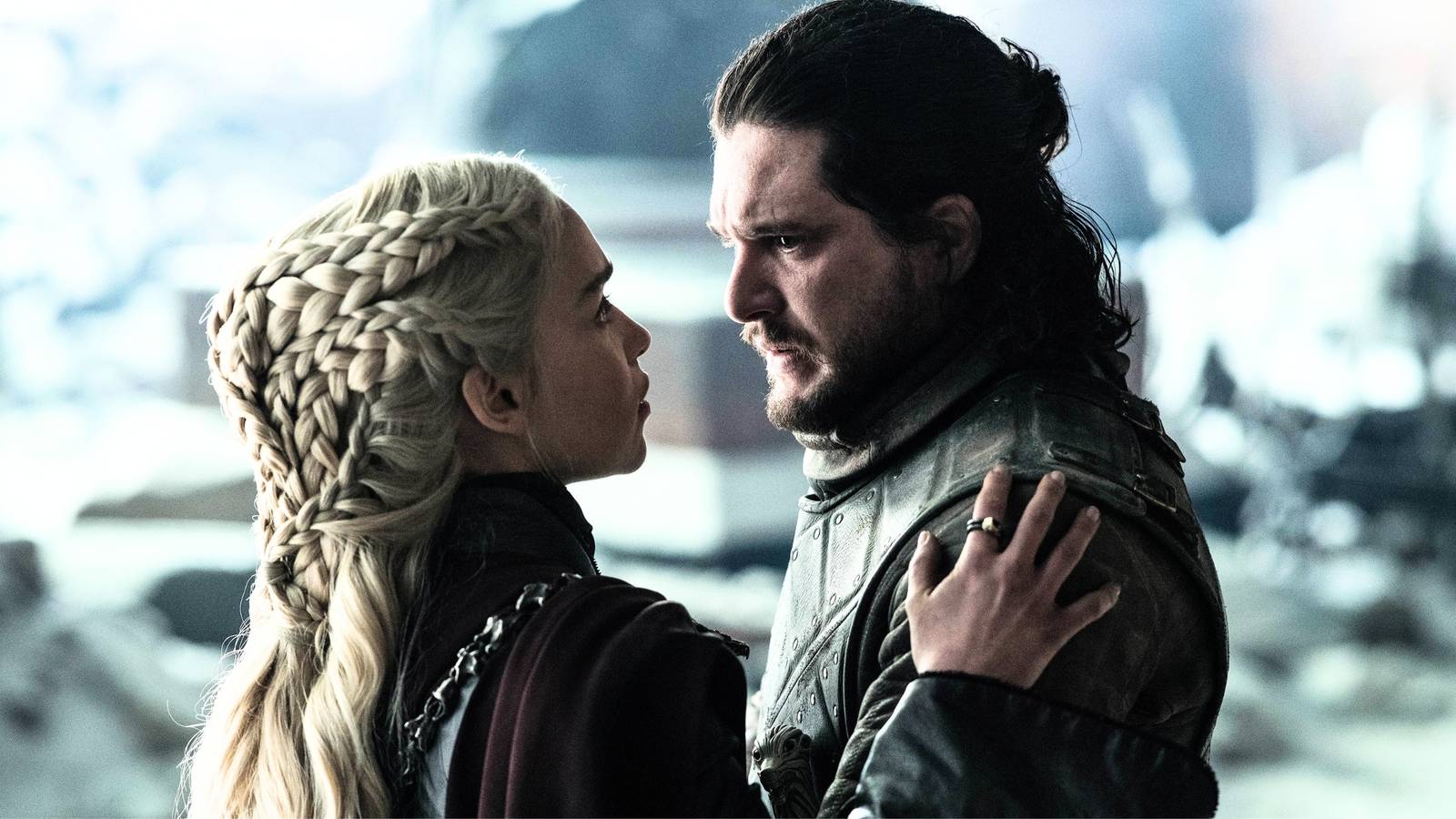
Published Jul 30, 2026, 6:30 PM EDT Tom is a Senior Staff Writer at Screen Rant, with expertise covering everything from hilarious sitcoms to jaw-dropping sci-fi epics. Initially he was an Updates writer, though before long he found his way to the TV and movies team. He now spends his days keeping Screen Rant readers informed about the TV shows of yesteryear, whether it's recommending hidden gems that may have been missed by genre fans or deep diving into ways your favorite shows have (or haven't) stood the test of time. Tom is based in the UK and when he's not writing about TV shows, he's watching them. He's also an avid horror fiction writer, gamer, and has a Dungeons and Dragons habit that he tries (and fails) to keep in check. HBO’s Game of Thrones was and will always be considered a fantasy TV triumph. However, even the most devout fans would find it difficult to argue that it was consistent. It’s almost universally accepted that Game of Thrones finished on a much weaker note than it started, and this is apparent nowhere else as clearly as in the downward trajectory of some of its once-strongest characters. The true tragedy of Game of Thrones is that many of its most beloved and fascinating characters suffered unmistakable falls from grace by the time season 8 arrived. Whether through the gradual erosion of the qualities that originally made them compelling or baffling creative decisions that completely altered their arcs, several fan favorites transformed from endlessly watchable figures into frustrating or bewildering versions of themselves by the time the credits rolled on the divisive GoT finale. Jon Snow (Kit Harington) Kit Harington’s Jon Snow spent the first six seasons developing into one of Game of Thrones' most complete heroes. His time at the Wall shaped him into a capable commander who earned loyalty through integrity rather than ambition. From leading the Night's Watch to reclaiming Winterfell in "Battle of the Bastards," Jon consistently balanced compassion with pragmatism. Even when he made mistakes, they reflected his deeply held principles instead of poor judgment, making him one of Game of Thrones’ most believable leaders. Unfortunately, later Game of Thrones seasons steadily stripped away that complexity. Once his true parentage became central to the story, Jon became increasingly defined by repetitive declarations of loyalty and remarkably passive decision-making. His dialogue became notoriously limited, and by the time he killed Daenerys, the moment felt less like the culmination of years of character development and more like an obligation imposed by the plot. A protagonist who once drove the plot of Game of Thrones instead became one of the series' least impactful presences. Varys (Conleth Hill) When Game of Thrones began, Varys (Conleth Hill) was established as perhaps the realm's greatest political mastermind. The Master of Whisperers possessed a near-unmatched intelligence and consistently stayed several moves ahead of everyone else. His motivations remained intriguingly ambiguous, yet his commitment to serving the realm above any individual or house gave him moral depth rarely found in Game of Thrones characters. Every scene with Varys carried tension because he always seemed to know more than anyone else in the room. Sadly, that carefully cultivated mystique gradually disappeared as Game of Thrones rolled into its later seasons. Instead of manipulating events from the shadows, Varys began making astonishingly careless decisions in full view of his enemies. His attempt to undermine Daenerys openly was the complete opposite of the subtle strategist audiences were introduced to. Rather than dying because he was outsmarted, Varys effectively exposed himself through uncharacteristically reckless behavior. His eventual execution felt less like the downfall of a master manipulator and more like the writers simply abandoning the intelligence that once defined him. Tyrion Lannister (Peter Dinklage) While not as immediately apparent as some other jarring 180s of GoT characters, the gradual downfall of Tyrion Lannister (Peter Dinklage) was still painful. Whether surviving King's Landing through wit, serving as Hand of the King, or expertly navigating impossible political situations, Tyrion consistently demonstrated exceptional intelligence in earlier Game of Thrones seasons. Even after killing Tywin and escaping Westeros, he remained one of the show's most watchable characters because every scene showcased his remarkable strategic instincts. This made it frustrating when, after joining Daenerys (Emilia Clarke), Tyrion’s cunning and wit seemed to disappear. From repeatedly trusting Cersei (Lena Headey) to endorsing disastrous military strategies, Tyrion was responsible for one catastrophic decision after another. His role increasingly shifted from brilliant strategist to overwhelmed advisor whose plans invariably failed. The show's insistence that Tyrion remained a genius clashed with what viewers actually saw on screen. This culminated in the finale, when Tyrion selected Bran (Isaac Hempstead Wright) as king with a speech many fans found deeply unconvincing, completing one of Game of Thrones’ most infuriating declines. Petyr "Littlefinger" Baelish (Aidan Gillen) Another former mastermind that the Game of Thrones writers gradually eroded like Varys and Tyrion was Littlefinger (Aidan Gillen). He was introduced as a man who’d spent years orchestrating chaos while staying comfortably beyond suspicion, quietly climbing the political ladder through deception rather than military strength. A psychological genius, Petyr Baelish understood people better than almost anyone else and consistently anticipated how ambition, fear, and pride would shape their choices. His unpredictable schemes made him one of Game of Thrones' most entertaining antagonists, but it sadly wasn’t to last. The final stretch of his story on Game of Thrones abandoned nearly everything that made him effective. Instead of operating with his trademark subtlety, Littlefinger began making obvious mistakes and relying on implausibly transparent manipulation. His attempts to turn Arya (Maisie Williams) against Sansa (Sophie Turner) lacked the sophistication that had previously defined him. His eventual death was far less satisfying than it should have been, especially since it arguably only happened because the writers made late-stage Littlefinger far less intelligent than the calculating mastermind audiences had known since GoT season 1. Jaime Lannister (Nikolaj Coster-Waldau) Few characters in TV history had a better redemption arc than Jaime Lannister (Nikolaj Coster-Waldau). After pushing Bran Stark from a tower in the Game of Thrones pilot, Jaime slowly revealed layers of honor, guilt, and vulnerability beneath his arrogant exterior. His relationship with Brienne of Tarth (Gwendoline Christie) was easily one of GoT’s best, while revelations about the Mad King completely reframed him from one of Westeros' most infamous villains to a man driven to despair by an incredibly difficult choice. By season 7, Jaime had evolved into a genuinely sympathetic figure seeking redemption. With this in mind, few things angered Game of Thrones fans quite like how the final season undid all that extraordinary development. After finally rejecting Cersei and seemingly embracing the better man he had become, Jaime abruptly returned to King's Landing, declaring that he never truly cared about innocent people. The statement directly contradicted years of carefully constructed characterization, including the very reason he killed the Mad King in the first place. His death alongside Cersei was emotionally powerful in isolation, but it came at the expense of one of Game of Thrones’ richest and most satisfying long-term character arcs. Daenerys Targaryen (Emilia Clarke) It’s hard to argue that any character’s narrative destination angered GoT fans quite like that of Daenerys. While she always possessed a ruthless streak, her Targaryen impulses were always carefully balanced with compassion and a genuine desire to build a better world. She liberated slaves, inspired fierce loyalty, and repeatedly chose justice over personal gain. Her flaws made her more interesting because they were obstacles she consistently overcame in her quest to undo the damage caused by previous generations of her family. Then came Game of Thrones season 8, which transformed Daenerys into the story's final antagonist with whiplash-inducing speed. The ingredients for her downfall certainly existed, but the show compressed what should have been a gradual moral collapse into just a handful of episodes. Her decision to destroy King's Landing after the city's surrender remains one of TV’s most controversial moments because it felt completely disconnected from the character audiences had followed for years. Rather than completing a tragic arc organically, Game of Thrones sacrificed Daenerys' complexity in pursuit of a shocking ending. Release Date 2011 - 2019-00-00 Showrunner David Benioff, D.B. Weiss Directors David Nutter, Alan Taylor, D.B. Weiss, David Benioff Cast Isaac Hempstead Wright Brandon Bran Stark
6 Game Of Thrones Characters Who Get Worse & Worse
Full Article
Original Source
Read the full article at Screenrant →KhanList aggregates and links to publicly available news content. We do not host full articles from third-party sources. Always verify important information with original sources.