
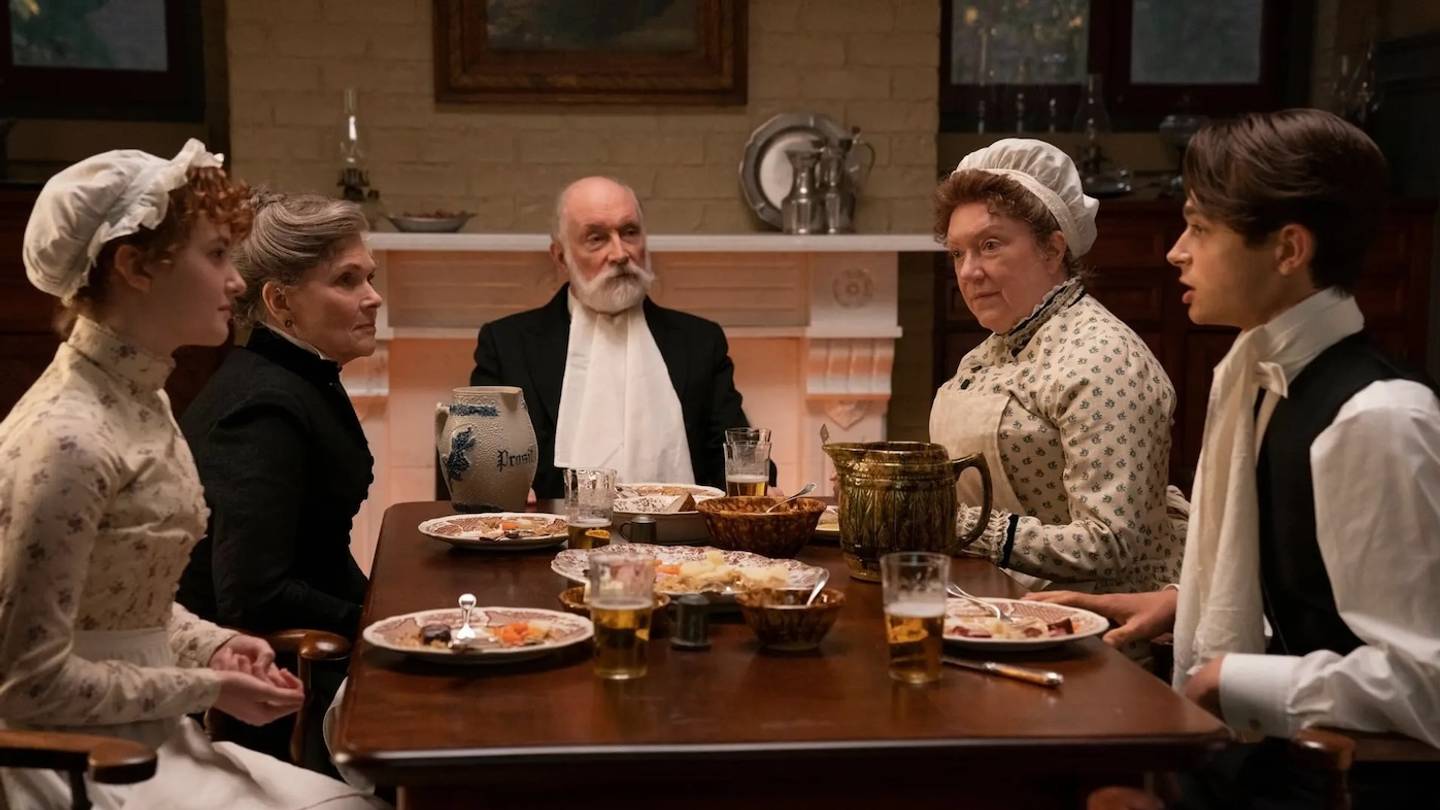
If "you are what you eat," then you might want to rethink "eating the rich." From our history books to the HBO series The Gilded Age, records and recreations show that the wealthiest Americans often ate foods that would make a poor man's plate look a lot more appealing.The Gilded Age shows that not everything that glitters is gold. This flashy period between the 1870s and 1900 was fueled by new money at the hands of tycoons like Vanderbilt and Carnegie—fortunes that embossed New York's Fifth Avenue and Newport, Rhode Island, in glitz and gold leaf. The era was a snapshot of America's elite that included clifftop "cottages," lavish balls, and… tureens of turtle soup?That's just one of the delicacies that graced Gilded Age tables. While the servants and working class—like the show's Mrs. Bauer and Jack Trotter—ate far simpler fare and leftovers, the upper crust's menu was a lot more eclectic.From oysters on the half shell to meat jelly, here are five foods families really ate during the Gilded Age that you may or may not see on season 4 of HBO's namesake show.CeleryA 19th-century blown-molded crystal celery vase, used by wealthy hosts to show off fresh celery at formal dinner tables. | Sepia Times/GettyImagesToday, we see celery as nothing more than the free side given with chicken wings. But back in the Gilded Age, this crunchy, watery vegetable was the centerpiece of the meal—literally. 19th-century aristocrats even had decorative glass "celery vases" made to hold the hard-to-grow stalks, displaying the unlikely status symbols upright for all to see. As celery production increased and its price decreased, Gilded Age chefs began experimenting with the vegetable in the kitchen—braising it, dressing it in mayo, and more.OystersOysters Rockefeller, a decadent baked oyster dish created in 1899 and named after Gilded Age tycoon John D. Rockefeller. | LauriPatterson/GettyImagesNo trip to Newport is complete without stopping by Midtown Oyster Bar for a dozen on the half shell, and back in the Gilded Age, high society was just as obsessed. Much like lobster, oysters had a humble beginning as a working-class staple across 19th-century coastal cities. They were shucked and slurped down by maritimers on the streets of New York long before becoming an elegant appetizer on Gilded Age menus. From raw oysters on sparkling beds of crushed ice to decadent baked preparations like Oysters Rockefeller, the modest mollusk underwent one of the greatest glow-ups in culinary history.Turtle SoupA late-19th-century print ad promoting Bellis's Real Turtle Soup in glass flacons and tins for Gilded Age hostesses. | Universal History Archive/GettyImagesOn The Gilded Age, most meals start with the clink of silver spoons against porcelain bowls. Menus from Gilded Age establishments like Delmonico's and period etiquette magazines back up this soup starter standard. An excerpt from Godey's Lady's Book on how to throw a proper dinner party goes as follows: "Commence dinner with raw oysters, then a choice of one or two soups."The soup du jour wasn't always lobster bisque or cream of celery, though. A luxury at the time—and a dish rarely seen today due to strict conservation protections—turtle soup was all the rage in the Gilded Age. Chefs favored the diamondback terrapin, a turtle found from Cape Cod down the Gulf Coast. Whether eating out at a fine dining establishment in the city or hosting an intimate dinner party, these turtles were boiled, chopped, and finished with a swish of sherry before landing on high-society tables in the 1880s and '90s. That is, until overhunting almost wiped the creature out by the 1910s, sending prices soaring and pushing the dish off most menus.AspicAn elaborate 19th-century illustration of a molded aspic tower, a high-status centerpiece at Gilded Age banquets. | API/GettyImagesBefore 1950s housewives discovered Jell-O molds, Gilded Age kitchens were constructing towering aspics that served as equal parts savory centerpiece and sign of a master chef. These edible gelatinous sculptures—which migrated from Europe and were made from boiled animal bones before powdered gelatin was popularized in the late 1800s—contained meat, fish, produce, and eggs suspended in translucent broth like an edible display case. Served midway through formal multi-course banquets, colorful aspic creations were more of an art form than the cold course they were presented as.Charlotte RusseA Charlotte Russe cake, surrounded by ladyfingers and topped with fresh raspberries. | manyakotic/GettyImagesYou might recognize the name from the popular 2000s women's clothing store, but unlike the store, this sweet, berry-topped cake wasn't always made for the masses. Concocted by French chefs in the late 18th century and said to be named in honor of Queen Charlotte, Charlotte Russe cake—a tower of ladyfingers surrounding cold Bavarian cream or custard and berries—was the creme de la creme of Gilded Age dessert spreads. While the nouveau riche enjoyed decadent riffs, sometimes even decked out with a decorative ribbon, the treat eventually evolved past wedding breakfasts and banquets of the elite. Decades later in the 20th century, the spongy sweet shifted from the white tablecloths of Delmonico's to the streets of Brooklyn, where pushcart vendors served simplified versions out of cardboard cups to working-class New Yorkers.Read More:
6 Foods Families Really Ate During the Gilded Age
Full Article
Original Source
Read the full article at Mentalfloss →KhanList aggregates and links to publicly available news content. We do not host full articles from third-party sources. Always verify important information with original sources.