
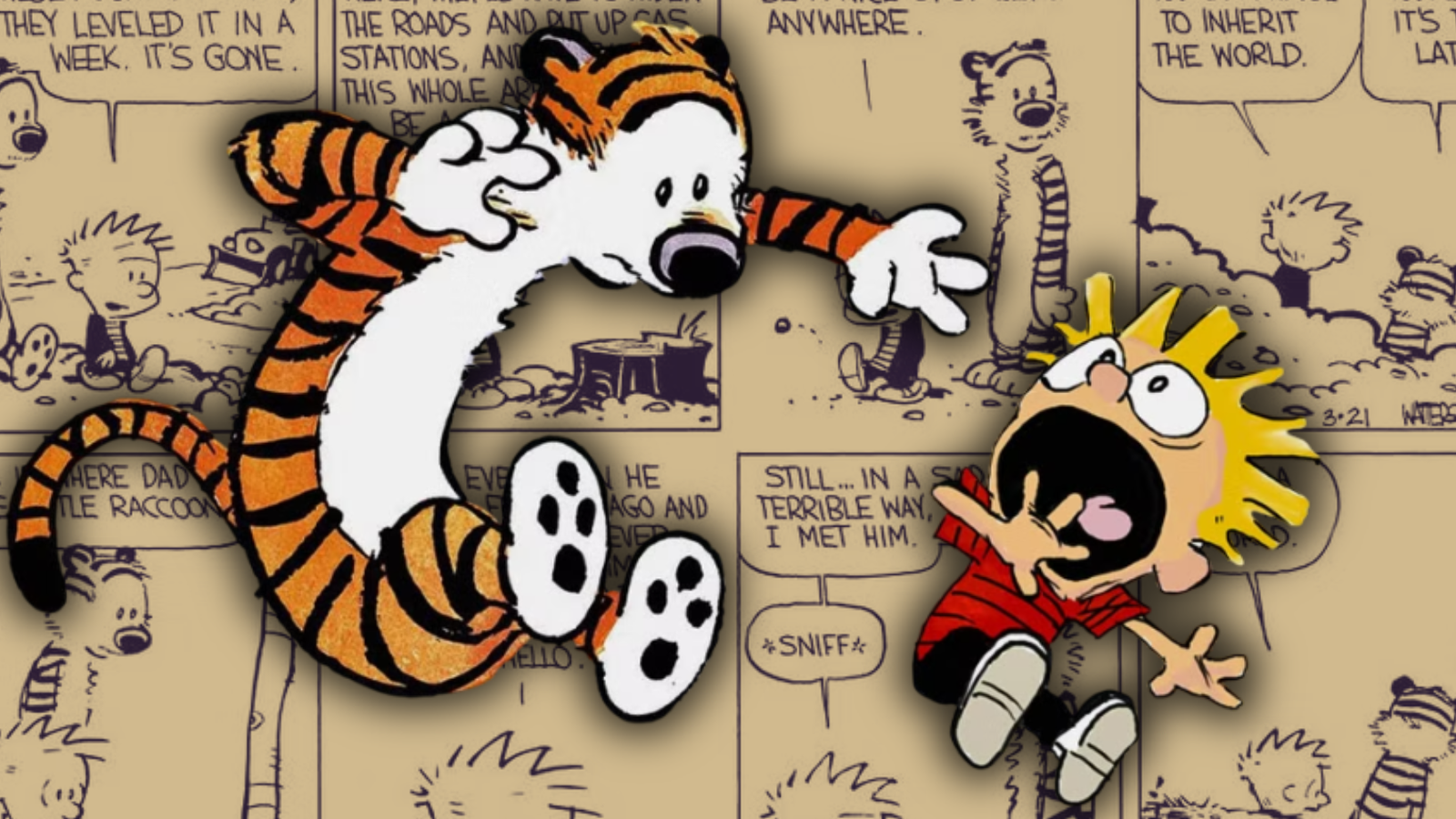
Published Sep 2, 2026, 7:00 PM EDT Hannah is a senior writer and self-publisher at ScreenRant. There, she focuses on writing news, features, and list-style articles about all things comics, books, anime, and manga. She works as a freelance writer in the entertainment industry, focusing on video games, anime, and literature. Her published works can be found on Screen Rant, FinanceBuzz, She Reads, and She Writes. For a comic strip starring a six-year-old boy and his stuffed tiger, Calvin and Hobbes was remarkably willing to confront subjects that most newspaper comics avoided. Bill Watterson regularly used Calvin’s imagination to explore loneliness, mortality, environmental destruction, and humanity’s place in an enormous universe. That contrast is what makes the strip so enduring. Watterson could turn a backyard conversation into a philosophical debate without making Calvin sound like an adult in disguise. Some of the strip’s funniest-looking moments also contain surprisingly bleak ideas, revealing just how much Watterson trusted his readers. 6 Calvin Faces An Infinite Universe Published on October 14, 1993, this memorable strip reduces Calvin to an almost microscopic figure against the immensity of space. Calvin looks toward the night sky and insists upon his importance, only for the final image to undercut his declaration by presenting him as a tiny speck within an incomprehensibly vast universe. The joke works because Calvin’s argument is both ridiculous and completely understandable. Children often experience themselves as the center of their immediate world, while adults spend years discovering how little control they possess. Watterson transforms that ordinary realization into cosmic existentialism, making Calvin’s desperate insistence funny while quietly suggesting something genuinely unsettling. Visually, the strip is especially effective because Watterson allows the darkness surrounding Calvin to become part of the joke. There is no elaborate science-fiction setting or fantastic creature required. The emptiness of the sky does the work. Calvin’s tiny presence against it creates an image of insignificance that feels considerably larger than the newspaper page. Yet the strip never simply mocks Calvin for wanting to matter. His desire is fundamentally human. Everyone wants their existence to mean something, regardless of how enormous the universe becomes. Watterson therefore turns a child’s exaggerated confidence into a question adults recognize immediately: if the universe is unimaginably large, where exactly does that leave an individual person? 5 Uncle Max’s Surprisingly Bleak Take On Friendship Uncle Max appears during a January 1988 story arc and ultimately makes only one appearance in Calvin and Hobbes. On January 19, he talks with Calvin’s mother about Hobbes, who Calvin carries everywhere. When she asks whether Max ever had an imaginary friend, his response suddenly transforms the conversation into something much sadder. Max jokes that he sometimes thinks all his friends have been imaginary. The line is funny because it arrives unexpectedly, but its implications are much darker than the setup suggests. Unlike Calvin, Max is an adult. His remark sounds less like childhood fantasy and more like a weary admission about loneliness, isolation, and relationships that failed to become meaningful. That distinction makes the strip especially clever. Watterson does not explain Max’s life or provide a dramatic backstory. Readers receive one sentence and are left to imagine everything behind it. Max is unmarried, living a lifestyle noticeably different from Calvin’s parents, and disappears from the strip almost immediately afterward, making his brief moment of vulnerability feel strangely poignant. The humor also depends on the relationship between Calvin and Hobbes. Calvin’s tiger represents companionship, imagination, and emotional security, regardless of whether other characters perceive Hobbes as real. Max’s comment introduces the uncomfortable possibility that adults may lose the imaginative connections that make childhood feel less lonely. The punchline is an unexpectedly mature observation. 4 When the Deer Turn The Tables On Humanity On February 26, 1995, Watterson published one of the most startling Calvin and Hobbes Sunday strips. The story opens with an ordinary office worker named Frank heading out for coffee. Suddenly, deer burst into the workplace, shoot him, celebrate the kill, and photograph themselves beside his body. The immediate shock comes from reversing the familiar hunting dynamic. Humans normally pursue deer, but Watterson imagines a world where the animals have adopted the same behavior toward people. The deer even discuss Frank as though he were game, turning something recognizable into something horrifying through a single change in perspective. The strip becomes even darker when Calvin explains the supposed reasoning behind the hunt. Humanity’s population has doubled in two generations to nearly six billion, so, in his telling, thinning the human herd has become necessary to prevent starvation. The absurd justification deliberately echoes arguments humans have historically made about controlling animal populations. Watterson also refuses to soften the premise with an elaborate fantasy explanation. The deer look almost ordinary, which makes their sudden violence more disturbing. The final joke returns to Calvin’s everyday world, but the image of the murdered office worker lingers. It is a perfect example of Watterson using absurdity to expose the logic behind human behavior. 3 The World Calvin Never Had A Choice About In a March 21, 1987, strip, Calvin surveys a landscape being rapidly transformed by development. He remembers that the woods took hundreds of years to grow but were destroyed in roughly a week. He then imagines roads, houses, gas stations, and commercial development gradually eliminating every remaining peaceful place. Calvin’s concern is environmental, but Watterson makes the issue personal rather than turning the strip into a lecture. Calvin is not discussing abstract statistics. He is looking at a familiar place disappearing before him. That makes the destruction emotionally understandable, particularly because he recognizes that adults created the process. The most devastating moment arrives when Calvin wonders whether he can refuse to inherit the world being created around him. Hobbes answers that if Calvin was born, it is already too late. The response is funny in its bluntness, but it also captures the uncomfortable reality that children inherit environmental decisions they never made. That idea gives the strip an unusual sense of generational helplessness. Calvin cannot stop development, reverse the bulldozers, or choose a different planet. He can only observe what is happening and wonder why people accept it. Watterson manages to make a six-year-old’s complaint about losing the woods feel like a serious indictment of shortsightedness. 2 A Dead Bird Forces Calvin To Think About Life On September 19, 1993, Calvin and Hobbes encounter a dead bird. Calvin initially notices its delicate beauty, then begins thinking about what its death reveals about existence. The discovery sends him into an unexpectedly serious meditation on how fragile, temporary, and valuable life becomes once people recognize that it has ended. The brilliance comes from Calvin reaching a profound idea without fully understanding it. He recognizes that people often appreciate life more intensely after it disappears, yet he cannot understand why everyone continues behaving as though existence were permanent. His confusion feels authentic because children frequently encounter mortality before possessing the vocabulary to process it. Watterson also gives Hobbes a remarkably restrained role. Rather than delivering an adult explanation, the tiger mostly allows Calvin to talk. That choice keeps the strip centered on Calvin’s developing thoughts instead of turning the conversation into a lesson. The silence makes his observations feel more personal and, consequently, more uncomfortable. The final joke is especially effective because Calvin assumes adulthood will eventually provide answers. He suggests that everything will make sense when he grows up, while Hobbes dryly agrees. Adults reading the strip know better. Growing older does not necessarily explain mortality or make the world less confusing, making the seemingly innocent ending quietly devastating. 1 Calvin Learns That Death Is Unfair The dying-raccoon storyline is among the most emotionally devastating sequences in Calvin and Hobbes. In March 1987, Calvin and Hobbes discover a sick baby raccoon and try to help it. Calvin immediately trusts his mother to fix the problem because, in his experience, parents are supposed to make terrible situations better. The raccoon dies despite the family’s efforts, forcing Calvin to confront something he cannot solve through imagination. His father explains that they did everything possible and that the animal died warm and safe. Calvin understands the explanation intellectually, but his grief remains. The experience becomes one of the strip’s earliest serious explorations of irreversible loss. What makes the storyline especially powerful is Calvin’s belief that his mother can fix anything. Her inability to save the raccoon represents a painful break from the security of childhood. For once, Calvin encounters a problem that no parent, superhero fantasy, or imaginative escape can defeat. Watterson treats that realization with remarkable emotional honesty. The story eventually produces one of Calvin’s most memorable observations, because he is devastated that the raccoon existed only briefly in his life, yet he is also grateful that they met. His final frustration with the world captures childhood’s first confrontation with meaningless tragedy. The Calvin and Hobbes life sentiment is bleak, but Watterson leaves room for love and memory to exist alongside grief. Writer Bill Watterson Colorist Bill Watterson Publisher Andrews McMeel Publishing
6 Darkest Calvin and Hobbes Comics That Prove Bill Waterson's Genius
Full Article
Original Source
Read the full article at Screenrant →KhanList aggregates and links to publicly available news content. We do not host full articles from third-party sources. Always verify important information with original sources.