
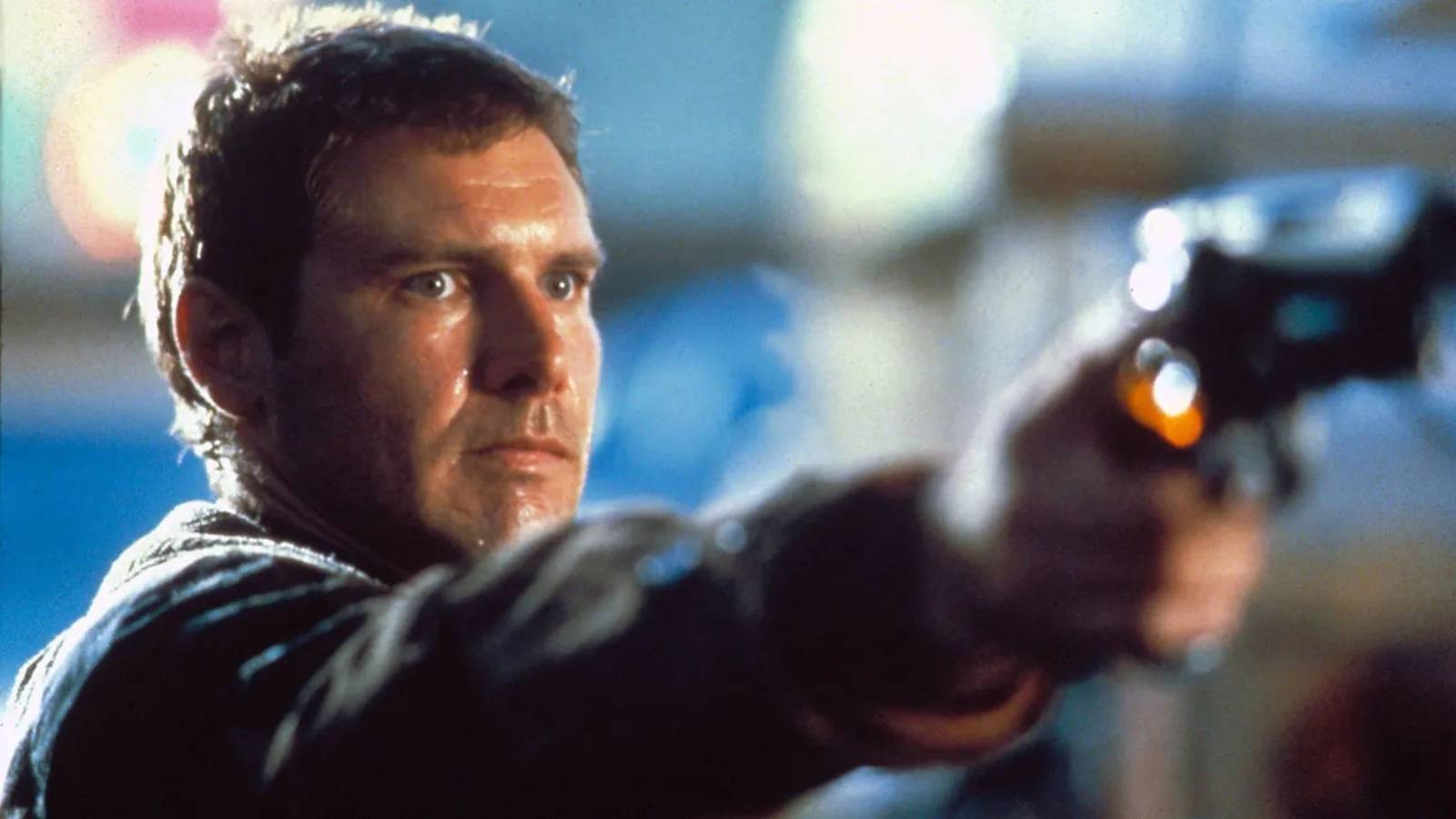
Published Aug 10, 2026, 9:20 AM EDT Dalton is a freelance writer, novelist, and filmmaker from Orlando Florida. He currently lives in Charlotte, North Carolina, and pursues writing full-time. He is an avid reader, film buff, and amateur historian who also publishes novels on the side. Dalton graduated from the University of Central Florida with a BFA in Film and he often applies his industry-specific knowledge when writing about film and television. Along with his blog, Dalton's critical essays on film have been published in various places online. Sign in to your ScreenRant account 1982 was the pinnacle for science fiction movies, and these six classics are proof that the genre peaked that year. The '80s was perhaps the best overall decade for sci-fi, and the greatest filmmakers of that era brought their distinct visions to the genre. No longer relegated to drive-in movies and late-night shows, science fiction was finally taken seriously as an art form. Along with the explosion of the genre's popularity came a diversification of the types of stories being told onscreen. In 1982 alone, there were heartwarming family adventures, hair-raising horrors, and a wide variety of other narratives that fit within the larger science fiction sphere. Unlike earlier decades, the '80s offered something for everyone with its sci-fi movies. That's not to say every classic science fiction film from 1982 was a hit. In fact, some were tragically overlooked. The genre topped the box office that year, but it also produced more than a few cult classics that have gone on to become beloved gems. There was so much to choose from in such a short period, that many of the best sci-fi films from that era overshadowed each other. In the span of two months, six all-time classic science fiction films were released into theaters in 1982. The summer of that glorious year for cinema set a new gold standard for sci-fi, and reached a height that has yet to be matched in the years since. These six movies aren't just the best films released that year, but they are proof positive that moviegoers never had it better. Collider Exclusive · Sci-Fi Personality Quiz Which Sci-Fi Hero Are You Most Like? Paul Atreides · Captain Kirk · Princess Leia · Ellen Ripley · Max Rockatansky Five iconic heroes. Five completely different ways of facing an impossible universe. One of them shares your instincts, your values, and your particular way of refusing to back down. Eight questions will tell you which one. 🏜️Paul Atreides 🖖Capt. Kirk ✊Princess Leia 🔦Ellen Ripley 🔥Max Rockatansky FIND YOUR HERO → 01 How do you lead when the stakes couldn't be higher? The way you lead under pressure is the most honest thing about you. AI absorb everything — every variable, every pattern — and move only when I know the path forward. BI read the room, make the call, and own the consequences. Hesitation costs more than mistakes. CI rally people. A cause needs a voice, and I refuse to let fear be louder than conviction. DI assess the threat, establish what needs doing, and get it done without waiting for permission. EI don't lead. I act. Others can follow or not — I'm already moving. NEXT QUESTION → 02 What is your greatest strength in a crisis? The quality that keeps you alive when everything else fails. APrescience — the ability to see further ahead than anyone else and plan accordingly. BImprovisation — I'm at my best when the plan falls apart and I have to invent a new one. CConviction — I know what I'm fighting for, and that certainty doesn't waver under fire. DComposure — I stay functional when everyone around me is falling apart. Panic is a luxury. EEndurance — I outlast things. I take the hit and keep moving long after others have stopped. NEXT QUESTION → 03 What is the thing you'd sacrifice everything else for? Your deepest motivation is your truest compass. AThe survival and dignity of my people — even if I have to become something frightening to ensure it. BThe safety of my crew — every single one of them. No one gets left behind. CFreedom — for my people, for every world still crushed under the weight of an empire. DThe truth — what actually happened, what's actually out there, whether anyone believes me or not. EThe one person — or the one memory — that still makes any of this worth surviving for. NEXT QUESTION → 04 How do you relate to the people around you? Who you are to others under pressure is who you really are. AWith intensity and distance — I care deeply, but the weight I carry makes closeness complicated. BWith warmth and irreverence — I take the mission seriously, not myself. CWith directness and trust — I say what I mean, and I expect the people I work with to rise to it. DWith professional care but clear limits — I'll protect you, but I won't pretend we're family. EWith wariness that slowly becomes loyalty — I don't trust easily, but when I do, it holds. NEXT QUESTION → 05 You're facing a threat that no one else believes is real. What do you do? How you respond when you're the only one who sees it defines everything. APrepare in silence. If they won't listen, I'll be ready when they finally have to. BKeep pushing until someone listens — and if no one does, handle it myself. CBuild the case, find the allies, and make the threat impossible to ignore. DDocument everything. The truth matters even if no one believes it yet. EStop trying to convince anyone. Survive it. That's the only argument that counts. NEXT QUESTION → 06 What has your heroism cost you personally? Every hero pays. The question is what — and whether they'd pay it again. AMy innocence — I've seen what I'm capable of, and I can't unsee it. BPeople I loved — the command chair has a view, but it's a lonely one. CA normal life — I gave up everything ordinary the moment I chose the cause. DMy sense of safety — I know exactly what's out there now, and I can't pretend otherwise. EAlmost everything — and I'm still not sure what I'm carrying it all for. But I keep going. NEXT QUESTION → 07 How do you feel about the rules of the world you're in? Every hero has a relationship with the system. What's yours? AI understand them deeply — and I know exactly which ones must be broken, and why. BI respect the spirit of them and bend the letter when the situation demands it. CThe system is the problem. I'm not here to work within it — I'm here to dismantle it. DI follow protocol until protocol stops being useful. Then I make the call myself. EThe rules collapsed a long time ago. What's left is instinct, and mine are reliable. NEXT QUESTION → 08 When everything is on the line, what keeps you going? The answer is the most honest thing about you. ADestiny — or something that feels so much like it that the difference no longer matters. BThe people on my ship — their faces, their trust, the fact that they're counting on me. CThe belief that what we're fighting for is worth every sacrifice, including this one. DSheer refusal to let it win — whatever it is. I don't stop. That's just who I am. EI'm not sure anymore. But the road is still there, and I'm still on it. REVEAL MY HERO → Your Hero Has Been Identified Your Sci-Fi Hero Is…Your answers point to the iconic sci-fi hero who shares your instincts, your values, and your particular way of facing the impossible. Paul AtreidesYou carry a weight most people would crumble under — the knowledge of what you're capable of, and the burden of what you might have to become. You see further ahead than others and you plan accordingly, even when the vision frightens you. You are driven by loyalty to your people and a sense of destiny you didn't ask for but can't escape. Paul Atreides is not simply a hero — he is someone who understands the cost of power and chooses to bear it anyway. That gravity, that willingness to carry what others won't, is exactly you. Captain KirkYou lead with instinct, warmth, and an absolute refusal to accept a no-win scenario — because you've always believed there's a third option nobody else has thought of yet. You take the mission seriously without ever taking yourself too seriously. Your crew would follow you anywhere, not because you demand it, but because you've earned it. Kirk's genius isn't tactical — it's human. He reads people, bends rules with purpose, and wills outcomes into existence through sheer conviction. That combination of warmth, audacity, and relentless optimism is unmistakably yours. Princess LeiaYou are the kind of person who holds the line when everyone else is losing faith — not because you're fearless, but because giving up simply isn't something you're capable of. You lead through conviction. Your voice carries because your belief is unshakeable. You gave up everything ordinary the moment you chose the cause, and you've never looked back. Leia is not a supporting character in her own story — she is the moral centre of the entire rebellion. That same fierce, principled, unbreakable core is what defines you. Ellen RipleyYou are not reckless, not grandiose, and not particularly interested in being anyone's hero — you just refuse to stop when it matters. You see threats clearly, you document the truth even when no one listens, and when the time comes you handle it yourself. Ripley's heroism is earned, not performed. She doesn't have a speech — she has a flamethrower and a plan. You share her composure under the worst possible pressure, and her refusal to pretend the monster isn't there. When it counts, you don't flinch. That's everything. Max RockatanskyYou have been through fire that would break most people — and what came out the other side is something the world underestimates at its peril. You don't ask for help, don't need validation, and don't wait for anyone to tell you the rules no longer apply. Your loyalty, when it finally arrives, is absolute — but it's earned in silence and tested in action, not in words. Max is not a nihilist. He is someone who lost everything and found, against his will, that he still has something worth protecting. That bruised, stubborn, ultimately human core is exactly yours. ↻ RETAKE THE QUIZ 6 The Road Warrior (1982) Coming just a few years after George Miller's Mad Max, The Road Warrior turned the post-apocalyptic action series into a bona fide franchise with what is arguably its best installment. The Road Warrior ups the ante with bigger action sequences and a richer world. It's really where the Mad Max series hits its stride, establishing the tone and style of Miller's beloved franchise. In the film, Max reluctantly joins a peaceful civilization and agrees to help them fight off the advances of the dastardly gang leader, Humungus. Without sacrificing the cynicism and grit of the original, The Road Warrior has more production value and a larger scale. It spawned a legion of imitators that blatantly ripped it off, though no one could find the right balance of action, humor, and post-apocalyptic sleaze. The film was released as The Road Warrior in the United States, though it was released as Mad Max 2 everywhere else. The film had a complex release in the United States, and was not a huge hit like it was in its native Australia. Nevertheless, The Road Warrior found its audience and is recognized as a classic of the post-apocalyptic science fiction subgenre. Subsequent sequels help to grow the mythos of the Mad Max franchise, and now it is one of cinema's most universally beloved series. 5 Star Trek II: The Wrath Of Khan (1982) MovieStillsDB Star Trek: The Motion Picture was something of a disappointment, but Paramount decided to give the franchise one more go with Star Trek II: The Wrath of Khan. Eschewing Gene Roddenberry's overly ambitious ideas for a streamlined story of revenge, The Wrath of Khan delivered an adventure on the final frontier that actually did the classic TV series justice. Admiral Kirk is struggling with the fact that he's growing older, and the return of an old foe from the distant past forces the intrepid space cowboy to finally reckon with mortality. Without sacrificing any of the excitement and intrigue of the Star Trek franchise, The Wrath of Khan weaves a narrative with rich, literary themes, and actually evolves the characters nearly two decades after their debuts. It's safe to say that Star Trek II is one of the greatest sequels of all time, because it does exactly what a sequel should do. It gives the viewer more to see and think about, and justifies its own existence by making bold choices that actually pay off. The Star Trek franchise peaked with the 1982 masterpiece, and has been chasing that high on the big screen ever since. The science fiction genre had always portrayed alien visitors as fierce conquerors or dangerous monsters, but E.T. the Extra-Terrestrial took an entirely different approach. Steven Spielberg quickly became the voice of a new generation of blockbuster filmmakers, and movies like Jaws and Close Encounters of the Third Kind proved he was no stranger to genre cinema. E.T. showed Spielberg at the height of his powers. A lonely young boy discovers a cute little alien that was recently stranded on Earth, and decides to help the E.T. find his way back home. Not only does E.T. reinvent the concept of alien visitors, but it tells an absolutely heartwarming story about growing up. The family film has all the excitement and thrills of blockbuster cinema, with a very human narrative that speaks to the latchkey kid generation. None of the other classic science fiction films from 1982 feel as grounded as E.T., and the movie is very much a time capsule to the early 1980s. The economic uncertainty of entering a new era is reflected in the narrative, but it's filtered through the vivid imagination of its young hero. It isn't just a perfect science fiction film, it's also one of the best family movies ever made. 3 The Thing (1982) Though it is now accepted as one of the greats among sci-fi horror films, there was a time when The Thing was tragically overlooked. John Carpenter's paranoid and claustrophobic flick was a remake of the 1950s B-movie gem, but it updated the story with a few terrifying twists and special effects that are literally out of this world. Unfortunately, it was all a bit too much for audiences in 1982. A remote research base in Antarctica becomes an alien nightmare when a shapeshifting monster begins to assume the form of the various crew members working at the station. The Thing works on two levels as a sci-fi horror story, and both are equally effective. One level is the extreme gross-out effects and shocking scares, and the other is the gripping thrills of its paranoid narrative. It creates an unbearable tension before slamming the viewer with some of the silver screen's most extreme effects. With so many sci-fi movies coming out in the summer of 1982, The Thing was simply bowled over by the competition. Audiences wanted something a bit more cheery, and Carpenter's exquisitely-crafted alien terror was resoundingly rejected. In the decades since, the cult classic has grown into a phenomenon, and is widely accepted as the director's other magnum opus (after Halloween). 2 Blade Runner (1982) Like The Thing, Blade Runner was simply way too far ahead of its time. The unique sci-fi vision combined noir visuals with a dystopian futuristic city, so it had flashes of the familiar among the heady storytelling. Ridley Scott had previously reinvented sci-fi with 1979's Alien, and he did it again a few years later with Blade Runner. A series of factors held the movie back, not the least of which was a confusing edit and poorly-timed release. A cop is forced to return to duty as a replicant hunter, and he is tasked with eliminating fugitives who have escaped from the colonies and returned to Earth. The pensive and moody flick is all about the loss of identity, and how the modern world is completely dehumanizing. The film introduces a much larger world, but the story's narrow focus only allows the audience to get brief glimpses. Blade Runner did not do well in theaters, and was mostly ignored. However, it quickly found an audience on home video where its reputation as a classic began to grow. Subsequent cuts of the film have fixed a lot of the theatrical release's problems, though every version has an air of mystery that adds to the ambiance. Blade Runner shows that sci-fi is capable of being the smartest genre in the cinema. 1 Tron (1982) Just as modern technology was changing the daily lives of millions of people, so too was it causing an evolution in the science fiction genre. Tron was one of the first films to tackle the burgeoning world of computers, though it did so with quite a bit of classic 1980s cheese. The Disney release may have been popular at the time, but the studio still saw it as a financial disappointment back in 1982. A computer wiz finds out his boss is stealing his work, and his efforts to hack the system land him in a dangerous digital world. Melding video game aesthetics with an extremely imaginative approach to sci-fi, Tron is one of the more unique offerings from the 1980s. It has groundbreaking effects (for the time) and is the predecessor to many other sci-fi flicks that involve computers and cyberspace. Tron is like a window into the past, and offers a glimpse at what many creators thought the future had in store. There's a playful idealism to the film that has long since been abandoned in modern movies, and even Tron's sequels are distinctly cynical. More so than any of 1982's other classic science fiction movies, Tron lives up to the lofty ambitions of the earliest pioneers of the genre.
6 Classic Sci-Fi Movies From 1982 That Prove It's The Genre's Greatest Year Ever
Full Article
Original Source
Read the full article at Screenrant →KhanList aggregates and links to publicly available news content. We do not host full articles from third-party sources. Always verify important information with original sources.