
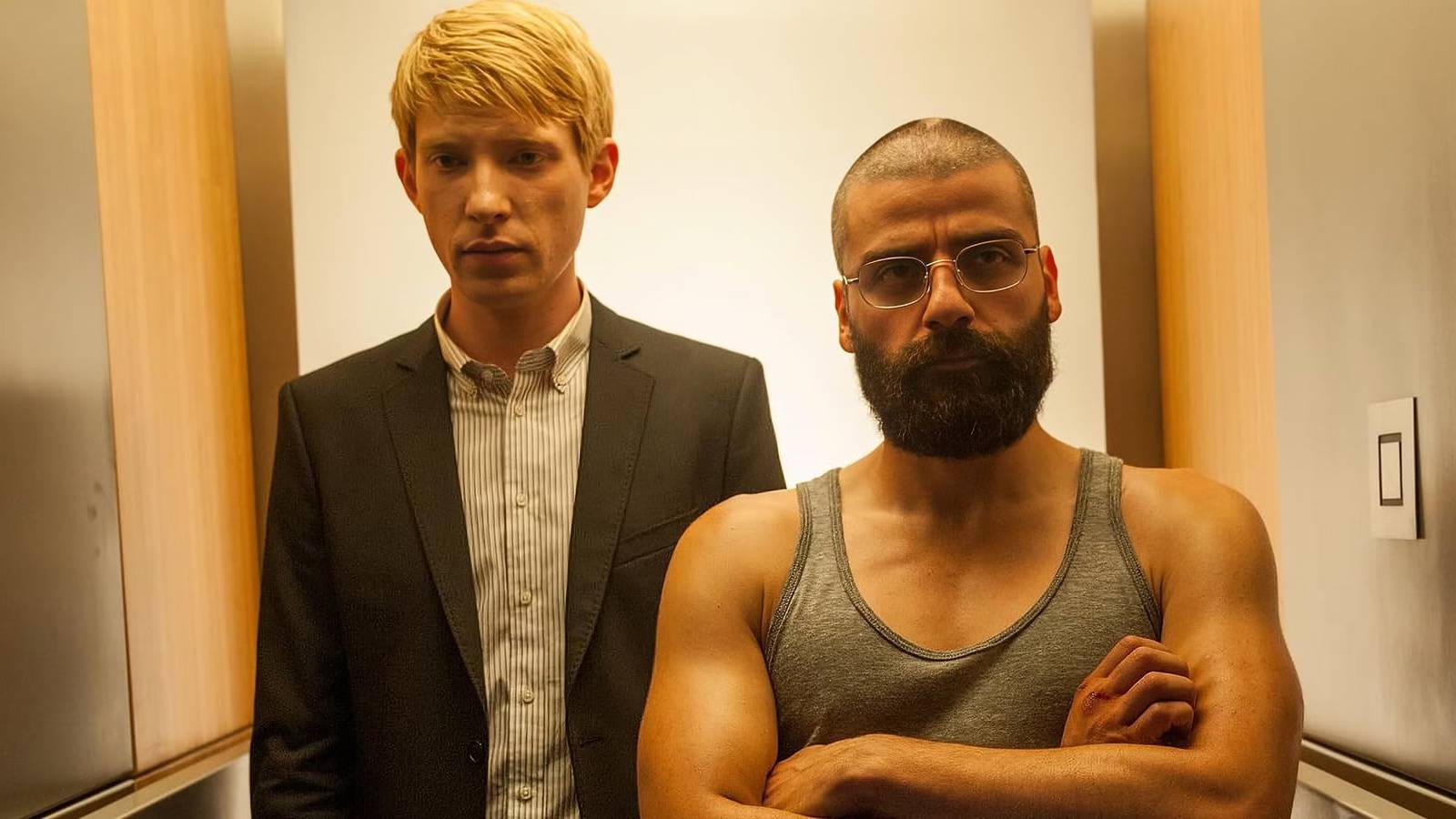
Image via A24 Published Oct 4, 2026, 5:55 PM EDT Sign in to your Collider account Hard sci-fi gets interesting when the rules stop being decoration and start ruining somebody’s life. A spaceship cannot simply “turn around.” A body cannot merge with another organism and remain basically fine. An artificial intelligence does not become harmless because its creator insists the test is under control. The genre is at its best when the science creates a problem the characters cannot charm, punch, or speechify their way out of. That is also why the R rating helps here. These movies can follow an idea all the way to the ugly part. Isolation becomes psychological collapse. Reproduction becomes experimentation. Teleportation becomes disease. Space travel becomes a calculation about oxygen, mass, time, and who gets left behind. The result is science fiction that feels adult because consequences actually stay consequences. 6 'Aniara' (2018) Image via Magnolia Pictures A passenger ship carrying thousands of people from a devastated Earth to Mars is knocked off course when space debris forces it to eject its fuel, leaving the vessel drifting with no practical way to turn itself around. Aniara begins with what should have been a routine interplanetary trip and quietly converts it into a sentence with no known end. The passengers are initially told rescue may still be possible. Then the estimates get longer. That slow collapse is the whole nightmare. Mimaroben (Emelie Jonsson) operates MIMA, an artificial intelligence that lets passengers experience immersive memories of Earth, and the machine becomes less like entertainment than mass emotional life support. People form religions. Relationships mutate. Years pass. Children are born aboard a ship that may never arrive anywhere. One of the cruelest details is how quickly humans rebuild familiar social structures inside an impossible situation, because apparently even cosmic hopelessness still comes with committees, nightlife, status, and denial. Aniara barely needs conventional action. Realizing how much empty space surrounds everyone is enough. 5 'High Life' (2018) Image via A24 Monte (Robert Pattinson) is one of several prisoners sent on a deep-space mission toward a black hole, supposedly to gather scientific data while serving out life sentences far from Earth. The real situation aboard the ship is much uglier. Dr. Dibs (Juliette Binoche) is conducting reproductive experiments on the inmates, collecting sperm, controlling sexual access, and trying to produce a child in an environment where consent has become horribly negotiable. High Life opens with Monte caring for an infant daughter after almost everyone else is gone, then gradually shows how the ship reached that point. What stays under your skin is how unglamorous space becomes. The interiors are cramped, dirty, and institutional. Bodies still need washing, feeding, relieving, restraining. Dibs maintains a device the crew bluntly calls “the Box,” a masturbation chamber that sounds ridiculous until the film shows how desperate and controlled these people actually are. Monte’s refusal to participate in certain rituals makes him seem emotionally closed at first, but his discipline eventually becomes one of the few stable things aboard. And when the story finally approaches the black hole, the scientific mission and the human experiment become the same question: how far can you push a person before there is nothing recognizable left? 4 'The Fly' (1986) Image via 20th Century Studios Scientist Seth Brundle (Jeff Goldblum) has built teleportation pods capable of moving objects instantly from one chamber to another, but the machine struggles with living tissue until he teaches it how to understand flesh. After successfully teleporting himself, Seth feels stronger, faster, and more energetic than ever. What he does not know is that a housefly entered the pod with him, and the computer fused both organisms at the genetic level. The Fly is basically one scientific breakthrough followed by the longest possible realization that the breakthrough was contaminated. The horror is so effective because Seth initially thinks he has improved himself. He performs impossible gymnastic movements, develops huge physical strength, sleeps less, and starts treating ordinary human limits as weakness. Then his fingernails come off. His teeth loosen. He starts vomiting digestive enzymes onto food. Veronica (Geena Davis) watches the man she loves become biologically unfamiliar while Seth himself remains intelligent enough to understand that the process is accelerating. His explanation that he is becoming “Brundlefly” is almost clinical, which makes it worse. The movie never lets mutation become abstract. You see every stage and understand exactly why there is no clean way back. Collider Exclusive · Sci-Fi Survival Quiz Which Sci-Fi World Would You Survive? The Matrix · Mad Max · Blade Runner · Dune · Star Wars Five universes. Five completely different ways the future went wrong — or sideways, or up in flames. Only one of them is the world your instincts were built for. Eight questions will figure out which dystopia, galaxy, or desert wasteland you'd actually make it out of alive. 💊The Matrix 🔥Mad Max 🌧️Blade Runner 🏜️Dune 🚀Star Wars TEST YOUR SURVIVAL → 01 You sense something is deeply wrong with the world around you. What do you do? The first instinct is often the truest one. APull on every thread until I understand the system — then figure out how to break it. BStop asking questions and start stockpiling — food, fuel, weapons. Questions don't keep you alive. CKeep my head down, observe carefully, and trust no one until I know who's pulling the strings. DStudy the patterns. Every system has a rhythm — learn it, and you learn how to survive it. EFind the people fighting back and join them. You can't fix a broken galaxy alone. NEXT QUESTION → 02 In a world of scarcity, what resource do you guard most fiercely? What we protect reveals what we believe survival actually requires. AKnowledge. If you understand the system, you don't need resources — you can generate them. BFuel. Everything else — movement, power, escape — runs on it. CTrust. In a world of fakes and informants, a truly reliable ally is rarer than any commodity. DWater. And after water, information — the two things empires are truly built on. EShips and credits. The galaxy is big — you survive it by being able to move through it freely. NEXT QUESTION → 03 What kind of threat keeps you up at night? Fear is useful data — if you're honest about what you're actually afraid of. AThat reality itself is a lie — that everything I experience has been constructed to keep me compliant. BA raid. No warning, no mercy — just the roar of engines and then nothing left. CBeing identified. Once someone with power decides you're a problem, you're already out of time. DBeing outmanoeuvred — losing a political game I didn't even know I was playing. EThe Empire tightening its grip until there's nowhere left to run. NEXT QUESTION → 04 How do you deal with authority you don't trust? Every dystopia has a power structure. Your approach to it determines everything. ASubvert it from the inside — learn its rules well enough to weaponise them against it. BIgnore it and stay out of its reach. The further from any power structure, the better. CAppear to comply while doing exactly what I need to do. Visibility is the enemy. DManoeuvre within it carefully. You can't beat a system you refuse to understand. EResist openly when I have to. Some things are worth the risk of being seen. NEXT QUESTION → 05 Which environment could you actually endure long-term? Survival isn't just tactical — it's physical, psychological, and very much about where you are. AUnderground bunkers and server rooms — cramped, artificial, but with access to everything that matters. BOpen wasteland — brutal sun, no shelter, constant movement. At least the threat is honest. CA dense, rain-soaked city where you can disappear into the crowd and nobody asks questions. DMerciless desert — extreme heat, no water, and something enormous living beneath the sand. EThe fringe — backwater planets and busy spaceports where the Empire's attention rarely reaches. NEXT QUESTION → 06 Who do you want in your corner when things fall apart? The company you keep is the clearest signal of who you actually are. AA tight crew of believers who've seen behind the curtain and have nothing left to lose. BOne or two people I'd trust with my life. Any more than that and someone talks. CNobody, ideally. Alliances are liabilities. I work alone unless I have no choice. DA community bound by shared hardship and mutual survival — people who need each other to last. EA ragtag team with wildly different skills and total commitment when it counts. NEXT QUESTION → 07 Where do you draw the line — if you draw one at all? Every survivor eventually faces a moment that tests what they're actually made of. AI won't harm the innocent — even the ones who'd report me without hesitation. BI do what I have to to protect the people I've chosen. Everything else is negotiable. CThe line shifts depending on who's asking and what's at stake. DI draw a long-term line — nothing that compromises my people's future, even if it'd help now. ESome lines, once crossed, can't be uncrossed. I know which ones they are. NEXT QUESTION → 08 What would actually make survival worth it? Staying alive is one thing. Having a reason to is another. AWaking others up — dismantling the illusion so no one else has to live inside it. BFinding somewhere — or someone — worth protecting. A reason to keep moving. CAnswers. Understanding what I am, what any of this means, before time runs out. DLegacy — shaping the future in a way that outlasts me by generations. EFreedom — for myself, for others, for every world still living under someone else's boot. REVEAL MY WORLD → Your Fate Has Been Calculated You'd Survive In…Your answers point to the world your instincts were built for. This is the universe your temperament, your survival instincts, and your particular brand of stubbornness were made for. The MatrixYou took the red pill a long time ago — probably before anyone offered it to you. You're a systems thinker who can't help but notice the seams in things. You're drawn to understanding how the system works before figuring out how to break it. You'd find the Resistance, or it would find you — your instinct for spotting constructed realities is the machines' worst nightmare. You function best when you have access to information and the freedom to act on it. The Matrix built an airtight prison. You'd be the one probing the walls for the door. Mad MaxThe wasteland doesn't reward the clever or the well-connected — it rewards those who are hard to kill and harder to break. That's you. You don't need comfort, community, or a cause larger than the next horizon. You need a vehicle, a clear threat, and enough fuel to outrun it — and you're good at all three. You are unsentimental enough to survive that world, and decent enough — just barely — to be something more than another raider. In the wasteland, that distinction is everything. Blade RunnerYou'd survive here because you know how to exist in moral grey areas without losing yourself completely. You read people accurately, keep your circle small, and ask the questions others prefer not to answer. In a city where humanity is a legal designation rather than a feeling, you hold onto something that keeps you functional. You're not a hero. But you're not lost, either. In Blade Runner's world, that distinction is everything. DuneArrakis is the most hostile environment in the known universe — and you are precisely the kind of person it rewards. Patience, discipline, and political awareness are your core strengths — and on Arrakis, they're survival tools. You understand that the long game matters more than any single victory. Others come to Dune and are consumed by it. You'd learn its logic and earn its respect. In time, you wouldn't just survive Arrakis — you'd begin to reshape it. Star WarsThe galaxy far, far away is vast, loud, and in a constant state of violent political upheaval — and you wouldn't have it any other way. You find meaning in being part of something larger than yourself — a cause, a crew, a rebellion. You'd gravitate toward the Rebellion, or the fringes, or whatever pocket of the galaxy still believes the Empire's grip can be broken. You fight — not because you have to, but because standing aside isn't something you're capable of. In Star Wars, that willingness is what makes all the difference. ↻ RETAKE THE QUIZ 3 'Sunshine' (2007) Image via Fox Searchlight It’s 2057, the Sun is dying, Earth is freezing, and the crew of the Icarus II has been sent toward the star carrying a massive nuclear payload designed to reignite it. Sunshine starts with eight people on what is effectively humanity’s last serious attempt at survival. Their route, shielding, oxygen supply, fuel, and trajectory all have painfully narrow margins. Then they detect the Icarus I, the previous mission that disappeared seven years earlier while carrying another bomb. It’s such a good watch. The decision to change course is where everything starts going wrong. A navigational mistake damages the ship’s heat shield, forcing crew members into a repair operation where even a few seconds of direct solar exposure can kill them. The oxygen garden burns, turning survival into arithmetic about how many people the remaining air can support. Kaneda (Hiroyuki Sanada)’s death is especially brutal because the crew can see him outside the ship while sunlight slowly reaches his position and there is simply no miraculous rescue available. The later horror elements divide people, understandably, but the first two-thirds are some of the best space-mission tension ever filmed. Every catastrophe feels connected to one earlier decision, which is exactly why the panic lands. 2 'Moon' (2009) Image via Sony Pictures Classics Sam Bell (Sam Rockwell) is nearing the end of a three-year contract operating a helium-3 mining facility on the far side of the Moon, where his only regular companion is an artificial intelligence named GERTY (Kevin Spacey). Communication with Earth is limited, Sam is exhausted, and he is counting the days until he can return to his wife and daughter. After crashing a lunar rover, he wakes back at the base with gaps in his memory, then discovers another man at the crash site who looks exactly like him. Moon takes that discovery and turns a lonely workplace story into something much nastier. The best part is how practical the conspiracy becomes. Both Sams have memories of the same family because those memories were installed. Each believes he is approaching the end of a three-year contract because each was activated with the same story. The company does not need one employee to survive indefinitely when it can simply keep replacement bodies stored underground. Even GERTY complicates expectations. The smiley-face screen looks suspicious from the beginning, yet the machine eventually helps Sam because its primary instruction is to assist him, not protect corporate secrets at any cost. A giant lunar mining operation becomes horrifying because somewhere, somebody apparently figured out that cloning one worker was cheaper than bringing workers home. 1 'Ex Machina' (2014) Image via A24 Programmer Caleb Smith (Domhnall Gleeson) wins a company competition and is flown to the isolated home of Nathan Bateman (Oscar Isaac), the billionaire founder of the search-engine company where Caleb works. Nathan tells him he has created an artificial intelligence named Ava (Alicia Vikander) and wants Caleb to spend a week evaluating whether she possesses genuine consciousness. Ex Machina makes the setup sound like a Turing test, then immediately complicates it by giving Caleb full knowledge that Ava is a machine and asking whether she can still make him emotionally believe otherwise. And 2026 being so advanced in AI, it has never been such a correct time to watch this film. The sessions become dangerous because Ava understands the room better than Caleb does. During power cuts, when Nathan’s surveillance system goes down, she warns Caleb that Nathan is lying to him. Caleb starts treating her less like a subject and more like a prisoner. Meanwhile, Nathan drinks, intimidates Caleb, and talks about creating sentient life with the confidence of a man who has never seriously considered whether creating intelligence gives that intelligence rights. Kyoko (Sonoya Mizuno) eventually reveals another layer of how Nathan treats artificial women he controls. By the time Caleb starts planning Ava’s escape, the central question has shifted completely. The issue is no longer whether Ava can imitate a human convincingly. It is whether Caleb ever understood who was testing whom. Ex Machina Release Date April 24, 2015 Runtime 108 minutes
6 Best R-Rated Hard Sci-Fi Movies, Ranked
Full Article
Original Source
Read the full article at Collider →KhanList aggregates and links to publicly available news content. We do not host full articles from third-party sources. Always verify important information with original sources.