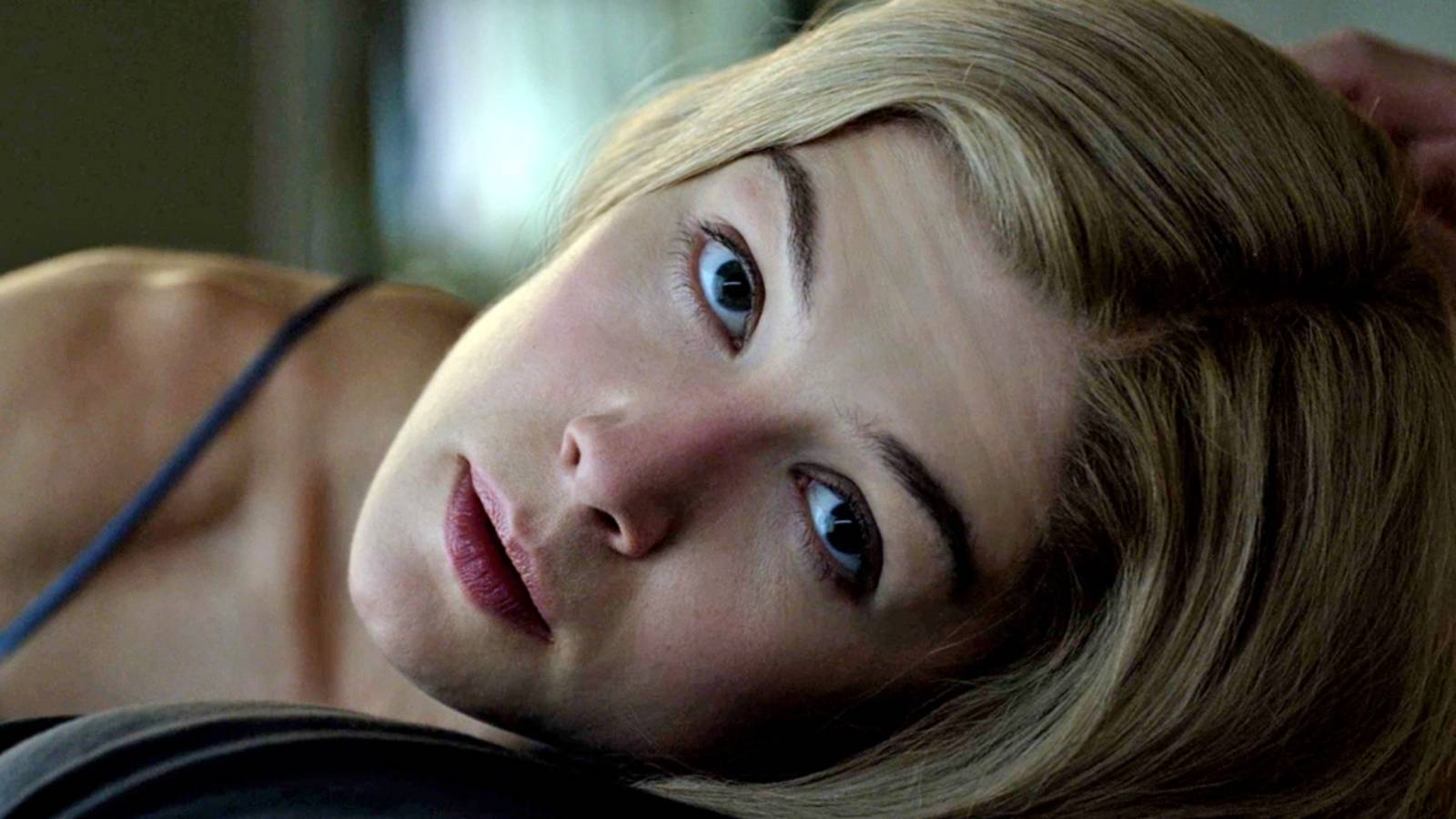
Image via 20th Century Studios Published Jul 28, 2026, 5:23 PM EDT Andrea M. Ciriaco is a long-time script reader and former entertainment editor who specializes in classic movies and Hollywood history. She was a student film critic at Kent State University for three years and worked at Warner Bros Studio in Burbank and The Safran Company for several years. Based on her vast taste and range of knowledge, many consider Andrea to be a walking IMDb who knows dozens of underrated movies and is a vital assesst to any trivia night. While movies are her expertise, Andrea is also a diehard fan of iconic shows including The Sopranos, Boardwalk Empire, Rod Serling's The Twilight Zone, Will & Grace and South Park. Some of her favorite filmmakers are Walt Disney,John Huston, Fritz Lang, Alfred Hitchcock, John Ford, Mel Brooks, Quentin Tarantino, Martin Scorsese and Howard Hawks. Sign in to your Collider account The psychological thriller was originally popularized by the Master of Suspense, Alfred Hitchcock, who captivated audiences with classics such as Rear Window, Vertigo, and Psycho, and has since become one of cinema's most compelling and intellectually engaging film genres of all time. Whether inspired by crime, mystery, or horror, the majority of modern psychological thrillers have moved beyond traditional tactics and explore the complexities of the human mind through unreliable narrators, questionable characters, and shocking plot twists that keep audiences questioning reality until the very end. Since 2000, there has been a slew of notable psychological thrillers that have struck gold with both audiences and the box office, but there are a few exceptions, such as The Prestige starring Hugh Jackman and Christian Bale and Martin Scorsese's Shutter Island, that stand out as some of the best contributions to the genre for their gripping storytelling, unpredictability, and memorable performances. From the underrated legal thriller, Fracture, starring Anthony Hopkins and Ryan Gosling, to Christopher Nolan's Memento, these are the six best psychological thrillers released since 2000, ranked! 6 'Fracture' (2007) Image via New Line Cinema Ryan Gosling stars in the legal psychological thriller Fracture as a deputy district attorney, William Beachum, who is tasked with prosecuting a prominent aeronautical engineer, Ted Crawford (Anthony Hopkins), for the attempted murder of his wife. Initially, Beachum believes he has an open-and-shut case, but when his adversary proves to be more cunning than he expected, the case turns into an intense battle of the minds that could end with a guilty man walking free. Compared with many post-2000 thrillers that emphasize violence or elaborate plot twists, Fracture succeeds because its tension comes from conversation and mental strategy, making it a masterclass in psychological warfare. It demonstrates that two people in a room, armed only with intelligence and patience, can create suspense every bit as compelling as elaborate action sequences. Its enduring appeal lies in its combination of sharp writing, memorable performances, and a carefully constructed cat-and-mouse game that never loses its spark of intrigue, making Fracture one of the defining psychological thrillers of its era. 5 'Black Swan' (2010) Image via Searchlight Pictures Darren Aronofsky's Black Swan is a perfect psychological horror thriller that gives audiences a glimpse into the intense world of professional dance and transforms an intimate character study into a relentless descent into obsession, paranoia, and psychological collapse. Natalie Portman stars as a perfectionist ballerina, Nina Sayers, who is in the running to play the lead in the New York City Ballet's opening production of Swan Lake, but while Sayers is the perfect fit for the White Swan, she fails to embody the Black Swan, leading her dark side to slowly emerge and eventually take center stage. Compared to other horror thrillers, Black Swan prioritizes atmosphere over action, creating dread through claustrophobic cinematography, unsettling sound design, and an increasingly distorted perspective, rather than through the traditional use of smoke and mirrors. Aronofsky's bold direction intentionally blurs the boundary between reality and hallucination and forces audiences to constantly question what is real, creating sustained tension without relying on conventional twists. Black Swan became one of the best films of 2010 and earned several Academy Award nominations, including Best Picture and Best Director, and went on to win for Best Actress for Portman. Collider Exclusive · Oscar Best Picture Quiz Which Oscar Best PictureIs Your Perfect Movie? Parasite · Everything Everywhere · Oppenheimer · Birdman · No Country Five Oscar Best Picture winners. Five completely different visions of what cinema can be — and what it can do to you. One of them is the film that was made for the way your mind works. Ten questions will figure out which one. 🪜Parasite 🌀Everything Everywhere ☢️Oppenheimer 🐦Birdman 🪙No Country for Old Men FIND YOUR FILM → 01 What kind of film experience do you actually want? The best movies don't just entertain — they leave something behind. ASomething that pulls the rug out — that makes me think I'm watching one kind of film and then reveals I'm watching another entirely. BSomething overwhelming — funny, sad, absurd, and genuinely moving, all at once. CSomething grand and weighty — a film that makes me feel the full scale of what I'm watching. DSomething formally daring — a film that pushes what cinema can even do. ESomething lean and relentless — pure tension with no wasted frame. NEXT QUESTION → 02 Which idea grabs you most in a film? Great films are driven by a central obsession. What's yours? AClass, inequality, and what people are willing to do when desperation meets opportunity. BIdentity, family, and the chaos of trying to hold your life together when everything is falling apart. CGenius, moral responsibility, and the catastrophic weight of a decision you can never take back. DEgo, legacy, and the terror of becoming irrelevant while you're still alive to watch it happen. EEvil, chance, and whether moral order actually exists or if we just tell ourselves it does. NEXT QUESTION → 03 How do you like your story told? Form is content. The way a story is shaped changes what it means. AGenre-twisting — I want it to start in one lane and migrate into something completely different. BMaximalist and genre-blending — comedy, action, drama, sci-fi, all in one ride. CEpic and non-linear — cutting between timelines, building a mosaic of cause and consequence. DA single unbroken flow — I want to feel like I'm living it in real time, no cuts to safety. ESpare and precise — every scene doing exactly what it needs to do and nothing more. NEXT QUESTION → 04 What makes a truly great antagonist? The opposition defines the protagonist. What kind of opposition fascinates you? AA system — invisible, structural, and almost impossible to fight because it has no single face. BThe self — the ways we sabotage, abandon, and fail the people we love most. CHistory — the unstoppable momentum of events that no single person can stop or redirect. DThe industry — the machinery of culture that chews up talent and spits out irrelevance. EPure, implacable evil — a force so certain of itself it becomes almost philosophical. NEXT QUESTION → 05 What do you want from a film's ending? The final note is the one that lingers. What do you want it to sound like? AShock and inevitability — a conclusion that recontextualises everything that came before it. BEarned emotion — I want to cry, laugh, and feel genuinely hopeful, even if the world is a mess. CDevastation and grandeur — an ending that makes me sit in silence for a few minutes after. DAmbiguity — something that leaves enough open that I'm still thinking about it days later. EBleakness — an honest refusal to pretend the world is tidier than it actually is. NEXT QUESTION → 06 Which setting pulls you in most? Where a film takes place shapes everything — mood, stakes, what's even possible. AA gleaming modern city with a hidden underside — beauty masking rot, wealth masking desperation. BA collapsing suburban life that opens onto something infinite — the multiverse of a single ordinary person. CThe corridors of power and science at a world-historical turning point — where decisions echo for decades. DThe grimy, alive chaos of New York and Hollywood — fame as both destination and trap. EVast, indifferent landscape — desert and highway where violence arrives without warning or reason. NEXT QUESTION → 07 What cinematic craft impresses you most? Every great film has a signature — a technical or artistic element that makes it unmistakable. AProduction design and mise-en-scène — every frame composed to carry meaning beneath the surface. BEditing and tonal control — the ability to move between registers without losing the audience. CScore and sound design — music that becomes inseparable from the dread and awe of what you're watching. DCinematography as performance — the camera not recording events but participating in them. ESilence and restraint — what's left unsaid and unshown doing more work than any dialogue could. NEXT QUESTION → 08 What kind of main character do you root for? The protagonist is the lens. Who you choose to follow says something about you. ASomeone smart and resourceful who makes increasingly dangerous decisions under pressure. BSomeone overwhelmed and ordinary who turns out to be capable of something extraordinary. CA brilliant, tortured figure whose gifts and flaws are inseparable from each other. DA self-destructive artist whose ego is both their superpower and their undoing. EA quiet, principled person trying to make sense of a world that has stopped making sense. NEXT QUESTION → 09 How do you feel about a film that takes its time? Pace is a choice. Some films sprint; others let tension accumulate slowly, deliberately. AI love a slow build when I know the payoff is going to be seismic — patience for a devastating reveal. BGive me relentless momentum — I want to feel breathless and emotionally spent by the end. CEpic runtime doesn't scare me — if the material demands three hours, give me three hours. DI want it to feel propulsive even when nothing is technically happening — restless energy throughout. EDeliberate and unhurried — I want dread to accumulate in the spaces between the action. NEXT QUESTION → 10 What do you want to feel walking out of the cinema? The best films leave a mark. What kind of mark do you want? AUnsettled — like I've just seen something I can't fully explain but can't stop thinking about. BMoved and energised — like the film reminded me what actually matters and gave me something to hold onto. CHumbled — like I've been in the presence of something genuinely important and overwhelming. DExhilarated — like I've just seen cinema doing something it's never quite done before. EHaunted — like a cold, quiet dread that stays with me for days. REVEAL MY FILM → The Academy Has Decided Your Perfect Film Is…Your answers have pointed to one Oscar Best Picture winner above all others. This is the film that was made for the way your mind works. ParasiteYou are drawn to films that operate on multiple levels simultaneously — that begin in one genre and quietly, brilliantly migrate into another. Bong Joon-ho's Parasite is a film about class, desire, and the architecture of inequality that manages to be darkly funny, deeply suspenseful, and genuinely shocking across a single extraordinary running time. Your instinct is for cinema that hides its true intentions until the moment it's ready to reveal them. Parasite is exactly that — a film that rewards close attention and punishes assumptions, right up to its devastating final image. Everything Everywhere All at OnceYou want it all — and this film gives you all of it. The Daniels' Everything Everywhere All at Once is one of the most maximalist films ever made: action comedy, multiverse sci-fi, family drama, existential crisis, and a genuinely earned emotional core that sneaks up on you amid the chaos. You are someone who responds to ambition, who doesn't want cinema to choose between being entertaining and being meaningful. This film refuses that choice entirely. It is overwhelming by design, and its overwhelming nature is precisely the point — because the feeling of being crushed by infinite possibility is exactly what it's about. OppenheimerYou are drawn to cinema on a grand scale — films that understand history not as a backdrop but as a force, and that place their characters inside that force and watch what happens. Christopher Nolan's Oppenheimer is a film about the terrifying gap between what we can do and what we should do, told with the full weight of one of the most consequential moments in human history behind it. You want your films to feel important without feeling self-important — to earn their ambition through sheer craft and the gravity of their subject. Oppenheimer does exactly that. It is enormous, complicated, and refuses easy comfort. BirdmanYou are drawn to films that foreground their own construction — that make the how of the filmmaking part of the what it's about. Alejandro González Iñárritu's Birdman, shot to appear as a single continuous take, is cinema examining itself through the cracked mirror of a fading actor's ego. You respond to formal daring, to the feeling that a film is doing something that probably shouldn't be possible. Michael Keaton's performance and Emmanuel Lubezki's restless camera create something genuinely unlike anything else — a film that is simultaneously about creativity, relevance, self-destruction, and the impossibility of ever truly knowing if your work means anything at all. No Country for Old MenYou are drawn to cinema that trusts silence, that refuses to explain itself, and that treats dread as a form of meaning. The Coen Brothers' No Country for Old Men is a film about the arrival of a new kind of evil — implacable, arbitrary, and utterly indifferent to the moral frameworks we use to make sense of the world. It is one of the most formally controlled films ever made, and its controlled restraint is what makes it so terrifying. You want your films to haunt you, not comfort you. You are not interested in resolution if resolution would be dishonest. No Country for Old Men is honest in a way that most cinema never dares to be. ↻ RETAKE THE QUIZ 4 'Gone Girl' (2014) Gone Girl is an unnerving adaptation of Gillian Flynn's best-selling novel of the same name and combines razor-sharp social commentary with a meticulously constructed mystery that will leave audiences on edge from the first scene. Directed by David Fincher, the Oscar-nominated psychological thriller tells the story of a young wife, Amy Dunne (Rosamund Pike), whose husband, Nick (Ben Affleck), becomes the prime suspect in her sudden disappearance, but what initially appears to be the tragic result of a marriage gone wrong slowly begins to unravel, revealing the extreme lengths a woman scorned will go to. One of the film's strongest elements is its unique narrative structure, which constantly shifts the audience's assumptions through its dual perspectives and carefully timed revelations. Beyond its mystery, the film examines how the media, public opinion, and carefully crafted narratives can shape perceptions of guilt and innocence and essentially critiques the pressures of maintaining idealized identities within relationships, which sets Gone Girl apart from other similar films. With its outstanding performances, intelligent screenplay, and Fincher's masterful direction, Gone Girl remains one of the most influential and acclaimed psychological thrillers released since 2000, rightfully earning a place on this exclusive list. 3 'The Prestige' (2006) Image via Buena Vista Pictures Christopher Nolan's The Prestige is a twisty and unpredictable psychological thriller based on the 1995 novel of the same name written by Christopher Priest and is celebrated for combining an intricate narrative with deep psychological conflict and moral ambiguity that ends with a powerful emotional payoff. Set in London during the 1890s, Hugh Jackman and Christian Bale star as stage magicians, Robert Angier and Alfred Borden, who, after a tragic accident, go their separate ways, but when Borden achieves the illusion of teleportation, Angier tries to create a superior trick, leading them both down a path of obsession, envy, and madness. At its core, The Prestige is less about magic and more about obsession as the escalating rivalry between two magicians gradually erodes their humanity, illustrating how revenge, envy, and ambition can become self-destructive. What distinguishes The Prestige from many psychological thrillers released since 2000 is its balance of intellectual complexity and emotional resonance. It functions simultaneously as a mystery, a character study, and a meditation on obsession, ensuring that its twists deepen the story's themes rather than simply shocking the audience. The result is a timeless film that continues to inspire analysis and discussion years after its release, with each viewing revealing new layers of meaning, making The Prestige one of the greatest modern contributions to the film genre. 2 'Shutter Island' (2010) Image via Paramount Pictures Based on Dennis Lehane's 2003 novel, Shutter Island is an unsettling psychological thriller starring Leonardo DiCaprio as a U.S. Marshal, Teddy Daniels, who, along with his new partner (Mark Ruffalo), investigates the recent escape of a patient from an insane asylum located on a remote island but as Daniels begins to learn more about the patients and the facility, the more he realizes that there's more to this case than what meets the eye. The movie is an alluring blend of mystery and psychological tension that, rather than focusing solely on solving the crime at hand, brazenly explores the devastating effects of trauma, guilt, and denial, making it one of the best psychological thrillers of the 21st century. DiCaprio delivers one of his most emotionally layered performances in Shutter Island, effectively conveying a man whose determination and unwavering will gradually give way to fear, confusion, and vulnerability, while director Martin Scorsese carefully counterbalances suspense, visual symbolism, and character drama, creating a movie-going experience that becomes increasingly unsettling as clues blur the line between reality and delusion. Scorsese's ability to combine an engaging mystery with profound emotional and psychological themes is ultimately what sets Shutter Island apart from other psychological thrillers of its time. Its intricate storytelling, haunting atmosphere, and thought-provoking conclusion make it a psychological mystery that rewards repeat viewings, with each watch revealing new details and deeper insight into its characters and central ideas. 1 'Memento' (2000) Image via Newmarket Films Guy Pearce stars in Christopher Nolan's mind-bending psychological thriller, Memento, as a man suffering from anterograde amnesia, Leonard Shelby, who uses a system of photos, notes, and tattoos to try and find the person who not only murdered his wife but is also responsible for causing him to sustain his current mental condition. Memento is widely regarded as one of the greatest psychological thrillers of the 21st century because it transforms memory itself into the central mystery. The shifting visual style and its groundbreaking non-linear narrative are what ultimately elevate Memento beyond a traditional psychological thriller. Its unconventional storytelling isn't a gimmick, but actually mirrors the protagonist's psychological condition, allowing the audience to experience the mystery rather than simply observe it. Pearce gives a nuanced performance and effectively conveys a man caught in an endless cycle of confusion and determination, which keeps the audience emotionally invested even as the narrative becomes increasingly complex. The movie earned two Academy Award nominations for Best Film Editing and Best Original Screenplay for Nolan and his brother, Jonathan Nolan, marking a major milestone in both of their careers. Combined with its exploration of memory, identity, and self-deception, Memento remains one of the most innovative, intellectually engaging, and emotionally resonant thrillers of the modern era, solidifying it as the best psychological thrillers released since 2000. Memento Release Date October 11, 2000 Runtime 113 minutes
6 Best Psychological Thrillers Released Since 2000
Full Article
Original Source
Read the full article at Collider →KhanList aggregates and links to publicly available news content. We do not host full articles from third-party sources. Always verify important information with original sources.