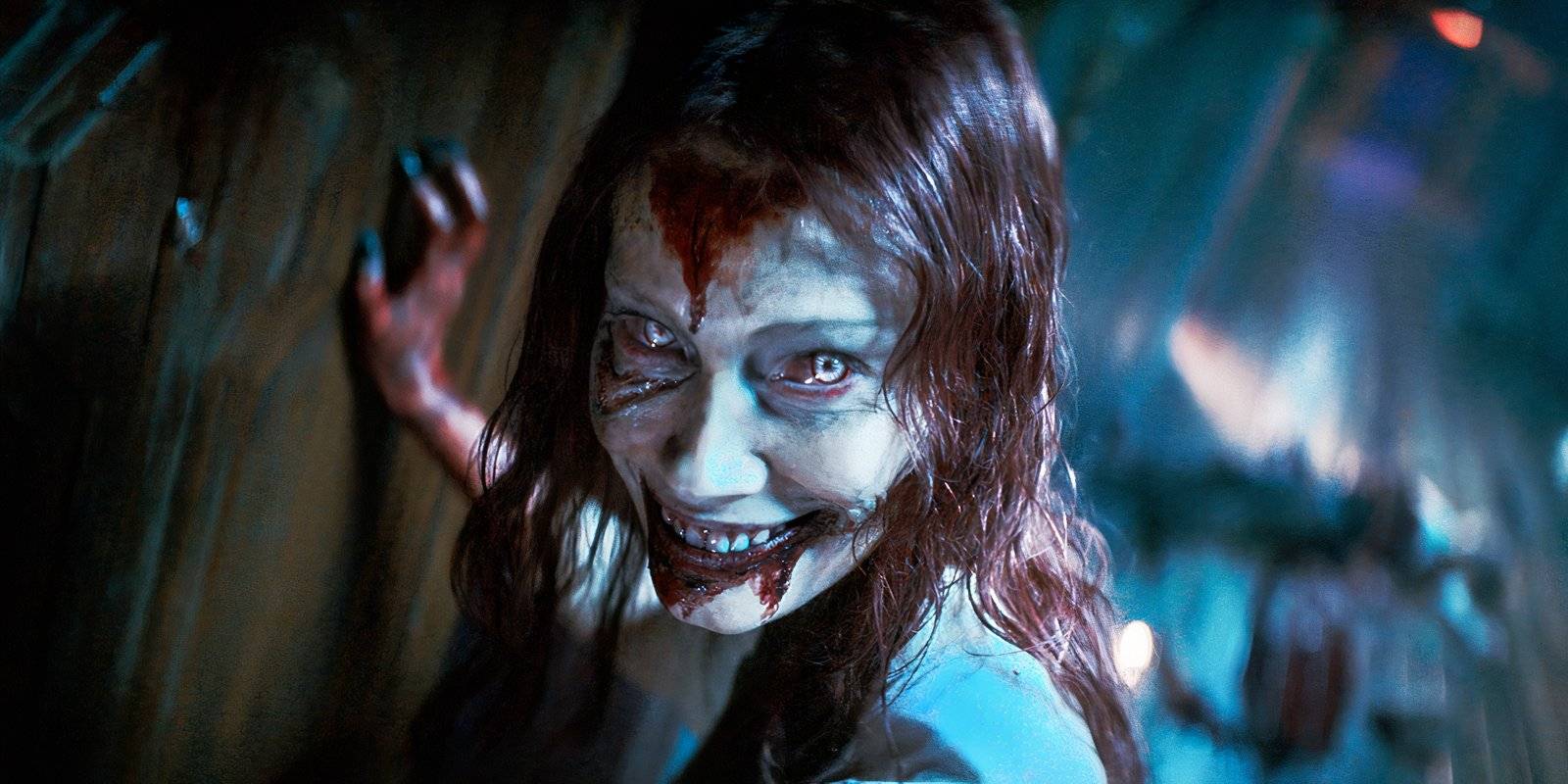
Image via Warner Bros. Pictures. Published Aug 11, 2026, 7:03 AM EDT A New York native, Joe graduated from an avant-garde theater school upstate, where he was obsessed with sketch comedy. There, he and his lunatic friends founded The Sketchies — which still lives on at Skidmore College today. Living in New York City, a screenwriter friend of his then taught him how to write for film. This awakened a new passion in Joe. Since then his scripts have garnered over 200 festival selections, nominations, and wins all over the globe (including the BlueCat Best Feature award). Several of his screenplays have been made into feature films — some of them not that bad! Overall, he loves to create unique, hilarious, touching, and bizarre stories. Sign in to your Collider account The horror…the horror… Yes, that’s what a ton of top-notch filmmakers have been focusing on over the last sweet(-ly sickening) sixteen years. The moviegoing public has been blessed with basically every sub-genre under the moon, from zombies to creature features to body horror slashers. To put it bluntly, there’s been an embarrassment of revolting riches. Truly terrifying and bone-chilling masterpieces have consistently been released, and the horrid hits keep coming, all vying for the top scary spot. Here is a horrifically awesome assemblage of the best pure horror movies released since 2010. While there have been a haunting host of stellar (and in some cases, Academy Award-winning) films that are hybrids of horror and other genres, such as Sinners (historical drama), Obsession (dark comedy), Midsommer (folk legend), and A Quiet Place (sci-fi thriller), the films that made this list are unadulterated horror masterpieces. So turn the lights way down, grab your favorite comfort snack, and get ready to be scared witless. 6 'Evil Dead Rise' (2023) Image via Warner Bros. Pictures. Sometimes a reboot of a classic is completely justified — and in some rare cases, the sequel to that reboot is superior. This is just what happened when screenwriter/director Lee Cronin put pen to paper and developed Evil Dead Rise. Spring-boarding off the first film, Evil Dead (2013), the second installment in the revised franchise wasn’t so much a continuation of the first one as a whole new imagining of the terrible tale altogether. The Necronomicon (book of the dead) may not have been edited in hundreds of years, but this update is dastardly delicious. The story begins with a transition teaser that links Evil Dead to the sequel, and it’s a harrowing humdinger of a sequence. The gist is that the demonic entity who plagued the characters in the first film zips through the ether and ends up being summoned into a run-down apartment complex in L.A. — after one of those pesky California earthquakes basically traps everyone inside. Ellie (the stunningly versatile Alyssa Sutherland) is a single mom raising three kids in one of the units. Luckily for the tykes, Ellie’s scrappy sister Beth (the formidable Lily Sullivan) got caught there too while visiting. When Ellie’s body is taken over by the evil spirit, man oh man, does she ever transform into one of the scariest possessed moms in cinema history (her smile with haunt your dreams, trust). Beth finds an inner fortitude and fights with all her might to protect her nephew and nieces (at least some of them make it out). Each set piece in this film is scarier than the last, with direction that is as sharp as it is horrifying. 5 'The Sadness' (2021) Image via Shudder Not everyone has heard of director Rob Jabbaz’s morose, shocking blast of a film, The Sadness, and that may be the saddest thing of all. This take on the zombie sub-genre is one of the most creative and, frankly, best ever. The walkers here are fully aware of their compulsions, and appear to take gruesome glee in their urges. Combining body horror, plague horror, and torture horror, this film has it all (for lovers of the savagely sick, that is). Jabbaz weaves all these atrocious aspects together into a brilliant display of terror that is not for the faint of heart. Released a year after the coronavirus ravaged the planet, the film is stacked with incisive commentary on the way we treat diseases as a society, and is a stark reflection on human nature in general. The story starts out simple enough: there’s a new infection spreading throughout Taipei, Taiwan (the “Alvin” virus) that causes the infected to act bonkers and, naturally, unfathomably violent. Victims seem to give wholly in to their ids, as no desire is repressed and every deranged thought is mercilessly acted out. Of course, the government does little to quell this at the onset, downplaying the whole thing — as many in power, and the public, claim all the hubbub is just a “hoax” (they're in the midst of an election cycle, so there’s that…). As the contagion spreads, we learn more about the main characters’ situations; Jim (Berant Zhu) and Kat (Regina Lei), an in-love couple who become separated during the chaos. Jim is an earnest guy who will stop at nothing to be reunited with his woman. Kat is a wholesome person too, who demonstrates a relentless drive to stay alive and find her man. The Sadness is a rather bleak film, but if you haven’t seen it, set aside some time and some mental headspace; this is one doozy of a revolting, frightening flick. 4 'Weapons' (2025) Image via Warner Bros. Pictures There’s just something so cool about seeing the same story from different perspectives. Not in the Rashomon Effect manner, where the perspectives contradict one another — rather, where each one simply shows a different viewpoint of the same (often confounding) events. This is the precise technique that writer-director Zach Cregger employed in the sleeper hit Weapons. While the protagonist of the story is Justine Gandy (the always hyper-committed Julia Garner…here with the same initials as her character…hmm), and a large portion of the story is seen through her eyes, there are five other characters that are given their chance at POV portions — which really enriches the overall storytelling. Now, enough with all the artsy story-crafting mechanisms…and on to the horror… The tale begins with a rather simple, yet highly unique, premise. One night, at exactly 2:17 in the morning, an entire classroom worth of kids ran from their homes (with arms weirdly splayed out), and went missing. Save one kid from the class, Alex (Cary Christopher). The parents of the absent little boogers naturally become quite upset, with one in particular, Archer Graff (Josh Brolin), acting out violently and placing blame on the teacher of the class, Justine. Once the perspective shifts to Alex, the audience finally understands what happened: his “eccentric” Aunt Gladys (the industry beloved Amy Madigan, in her Oscar-winning turn) came to visit. With a little witchcraft voodoo magic, she summoned the kids to the family basement to drain them of their youthful power, in order to heal her ailments. Now, amidst all of this mystery, there are some truly frightening, jaw-dropping, and disturbing moments. Cregger uses each different perspective to showcase a different form of fear; each segment utilizes a familiar horror trope (ominous sounds and vibes, jump scares, things oozing out of the shadows that eventually reveal their gruesome selves) with fantastic flair. It’s a modern folkloric tale about witchcraft that definitely deserves its spot on this lurid list (that being said, it just barely beat out Robert Eggers’ The Witch). At the end of the (dark) day, Weapons is one of the most intricately designed horrors to come by in a while, and its razor-sharp, weapon-like nature really shows. Collider Exclusive · Horror Survival Quiz Which Horror Villain Do You Have the Best Chance of Surviving? Jason Voorhees · Michael Myers · Freddy Krueger · Pennywise · Chucky Five killers. Five completely different ways to die — if you're not smart enough, fast enough, or self-aware enough to avoid it. Only one of them is the villain your particular set of instincts gives you a fighting chance against. Eight questions will figure out which one. 🏕️Jason 🔪Michael 💤Freddy 🎈Pennywise 🪆Chucky TEST YOUR SURVIVAL → 01 Something feels wrong. You can't explain it — you just know. What do you do? First instincts are the difference between the survivor and the first act casualty. ALeave immediately. I don't need to understand a threat to respect it. BStay quiet and observe. If I can see it, I can understand it. If I can understand it, I can avoid it. CStay awake. Whatever this is, I am not going to sleep until I feel safe again. DConfront it directly. Fear grows in the dark — I'd rather know what I'm dealing with. ECheck everything, trust nothing. The threat might be closer than I think — and smaller. NEXT QUESTION → 02 Where are you most likely to find yourself when things go wrong? Setting is everything in horror. Where you are determines which rules apply. ASomewhere remote — a cabin, a campsite, off the grid and away from people. BA quiet suburban neighbourhood where nothing ever happens. Except tonight. CIn my own head — the most dangerous place of all, depending on what's already in there. DWherever children are — because something about this place attracts the worst things. ESomewhere ordinary — a house, a toy store, a place where the last thing you'd expect is a threat. NEXT QUESTION → 03 What is your most reliable survival asset? Every survivor has a quality the villain didn't account for. What's yours? APhysical fitness — I can run, I can swim, I can outlast something that relies on brute persistence. BSpatial awareness — I always know the exits, the hiding spots, the fastest route out. CPsychological resilience — I've faced my worst fears before. They don't have the same power over me. DEmotional steadiness — I don't panic. Panic is what gets you caught. EScepticism — I don't underestimate threats because of how they look. Size is irrelevant. NEXT QUESTION → 04 What kind of fear is hardest for you to fight through? Knowing your weakness is the first step to not dying because of it. AThe unstoppable — something that will not stop, cannot be reasoned with, and is always getting closer. BThe invisible — a threat I can feel but can't locate, watching from somewhere I can't see. CThe psychological — something that uses my own mind and memories against me. DThe unknowable — something ancient, shapeless, that feeds on the fear itself. EThe mundane — a threat so ordinary-looking that no one will believe me until it's too late. NEXT QUESTION → 05 You're with a group when things start going wrong. What's your role? Horror movies are brutally clear about who survives group situations and who doesn't. AThe one who says "we need to leave" first — and means it, even when no one listens. BThe one who stays quiet, watches the others, and figures out the pattern before anyone else does. CThe one who holds the group together when panic sets in — because someone has to. DThe one who asks the questions nobody wants to ask — because ignoring them gets people killed. EThe one who takes the threat seriously when everyone else is laughing it off. NEXT QUESTION → 06 What's the horror movie mistake you're most likely to make? Honest self-assessment is a survival skill. Denial is not. AGoing back for someone — I know I shouldn't, but I can't leave them behind. BAssuming I'm safe once I've found a hiding spot. That's when it finds me. CFalling asleep when I absolutely cannot afford to. Exhaustion is its own enemy. DLetting my curiosity override my instincts — I always need to understand what I'm dealing with. EDismissing the threat because of how it looks. That's exactly what it wants. NEXT QUESTION → 07 What's your best weapon against something that can't be stopped by conventional means? Every horror villain has a weakness. The survivors are always the ones who find it. AThe environment itself — I use the terrain, the water, the geography against it. BPatience — I wait, I watch, and I strike at the one moment it doesn't expect. CLucidity — if I can stay in control of my own mind, it loses its primary weapon. DCourage — facing it directly, refusing to run, taking away the fear it feeds on. EImprovisation — I use whatever's at hand, however unconventional. Creativity over brute force. NEXT QUESTION → 08 It's the final scene. You're the last one standing. How did you make it? The final survivor always has a reason. What's yours? AI kept moving. I never stopped, never hid for too long, never let it corner me. BI figured out the pattern before anyone else did — and I used it against the thing following it. CI stayed awake, stayed lucid, and refused to give it the one thing it needed most. DI stopped being afraid of it. And the moment I did, everything changed. EI took it seriously from the start — and I never once made the mistake of underestimating it. REVEAL MY VILLAIN → Your Survival Odds Have Been Calculated Your Best Chance Is Against…Your instincts, your strengths, and your particular way of thinking under pressure point to one villain you actually have a fighting chance against. Everyone else — good luck. Jason VoorheesJason is relentless, but he is also predictable — and that is the gap you would exploit. He moves in straight lines toward his target. He doesn't strategise, doesn't adapt, doesn't outsmart. He simply pursues. Your ability to keep moving, use the environment, and resist the panic that freezes most victims gives you a genuine edge. The Crystal Lake survivors were always the ones who stopped running in circles and started thinking about terrain, water, and distance. You think like that. Which means Jason, for all his indestructibility, would face someone who simply refused to be where he expected. Michael MyersMichael watches before he moves. He is patient, methodical, and almost impossible to detect — until it's too late for anyone who isn't paying close enough attention. But you are paying attention. You notice the shape in the window, the car parked slightly wrong, the silence where there should be sound. Michael's power lies in the invisibility of ordinary suburbia — the fact that nothing ever looks wrong until it already is. Your spatial awareness and instinct to map every room, every exit, and every shadow before you need them is precisely the quality Laurie Strode had. You are not a victim waiting to happen. You are someone who already suspects something is wrong — and acts on it. Freddy KruegerFreddy wins by getting inside your head — using your own fears, your own memories, your own subconscious as weapons against you. That strategy requires a target who can be destabilised. You are harder to destabilise than most. You've faced uncomfortable truths about yourself and you haven't looked away. The survivors on Elm Street were always the ones who understood what was happening and chose to face it rather than flee from it. Freddy's greatest weakness is that his power evaporates in the presence of someone who refuses to give him the fear he feeds on. Your psychological resilience — the ability to stay grounded when reality itself becomes unreliable — is exactly the quality that keeps you alive here. PennywisePennywise is ancient, shapeshifting, and feeds on terror — but it has one critical vulnerability: it cannot function against someone who genuinely stops being afraid of it. The Losers Club didn't survive because they were braver than everyone else. They survived because they faced their fears together, and faced them honestly. You ask the questions others avoid. You look directly at what frightens you rather than turning away. That directness — the refusal to let fear fester in the dark — is Pennywise's worst nightmare. It chose the wrong target when it chose you. You are exactly the kind of person whose fear tastes like nothing at all. ChuckyChucky's greatest advantage is that nobody takes him seriously until it's already too late. He exploits the gap between how something looks and what it actually is. You don't have that gap. You take threats seriously regardless of how they present — and you never make the mistake of underestimating something because of its size or appearance. Chucky relies on surprise, on the delay between recognition and response. You close that delay faster than almost anyone. Your instinct to treat every unfamiliar thing with appropriate scepticism — rather than dismissing it because it seems absurd — is the exact quality that keeps you breathing. Against Chucky, not laughing is already winning. You are very good at not laughing. ↻ RETAKE THE QUIZ 3 'Sinister' (2012) Image via Lionsgate Co-writer/director Scott Derrickson’s aptly titled Sinister opens with one of the most haunting, disturbing sequences in horror, and it doesn’t let up from there. The imagery here is unforgettable (even if you really want to expel the devious visuals from your brain). The story is a cautionary tale about pride and ambition, and it sure does hit home. Struggling crime writer Ellison Oswalt (Ethan Hawke) has just moved into a new abode with his family. Apparently their realtor wasn’t inclined to disclose that the previous homeowners also died there on their lawn, at the hands of their kiddos (Ellison, however, was privy to this information and moved the fam there anyway, as a way to “inspire” his writing). No bother, as Ellison goes about his business of penning the morbid tale. Then, the darnedest thing happens: Ellison discovers some old 8mm film reels in the attic, and what’s contained within them reveals a lot about what really happened to the past family. Ellison learns about a malevolent force in the house, known as Bughuul (pronounced: ohmygodthatthingisscary), that has a real way with kids (he gets them to commit murder). The undaunted Ellison becomes a tad obsessed with uncovering all the details of the gruesome story, and, well, you can usually guess what happens to characters who put their ambition before their family’s safety. Darkness is used very effectively in Sinister to inspire anxiety and terror — and every one of the scary scenes indelibly sears the viewer’s mind with festering, frightful images (just like your uncle’s 8mm vacation videos). 2 'The Babadook' (2014) Image via Umbrella Entertainment Childhood fears can take a long time to recover from. The trauma of hiding from a monster in the closet is just one of the things that can plague a young mind for years. The grief of losing a parent, though, can take a lifetime. Highly skilled director Jennifer Kent uses both of these unpleasant circumstances in The Babadook, which resulted in one of the best horror movies of the 21st century. The whole film feels like torn-out pages of a child’s storybook brought to life — which bring the viewer right back to those fretful moments one had as a tyke, hiding under the covers. The story is primarily set in a dark Victorian house in South Australia. Amelia Vanek (Essie Davis) is a newly widowed woman, trying to raise her sometimes cute, sometimes annoying-as-all-hell kid, Samuel (Noah Wiseman). When Samuel begins seeing a monster emerge from the dusky corners of his room (that he charmingly calls The Babadook), Amelia dismisses this as the product of his overactive and troubled imagination. Sigh. Parents just don’t understand. Of course, the Babadook is real (in his adorable little top hat), and he’s a lot more dangerous than he initially appears to be. Even in this seemingly quaint storybook format, Kent finds an endless supply of eerie and terrifying moments. Amelia even transforms into a monster herself, and her scenes as the maternal chimera are absolutely, off the chain horrifying. The Babadook may have achieved cult status for a variety of fun reasons, but, ultimately, this is a very scary and well-made film. 1 'Hereditary' (2018) Image via A24 Believing in a higher power can be a real thing of comfort during trying times. It’s just that, for some people, said higher power may be in the form of one of Hell’s darkest demons. Such is the case in Ari Aster’s renowned work of sheer horror, Hereditary. There are so many different cases of truly chilling segments in this movie, it’s hard to count them all. Utilizing everything in the director’s big book of scary tricks (possessed people clinging to ceilings, unexpected decapitations, sudden self-mutilation, bird decapitations), Aster knows what scares us the most, and jubilantly unfurls each nightmare-spawning sequence. Annie Graham (Toni Collete, in one of her best roles ever) is an artist. She makes little miniature structures, like houses (in another, less sophisticated era, they’d be labeled “doll houses”). She’s got one somewhat kooky kid, Peter (Alex Wolff), and one other kid, Charlie (Milly Shapiro), who is off the charts weird. Also, she’s got a husband, Steve (Gabriel Byrne), who can best be described as ineffectual (and that’s being kind). So, when Annie’s bizarre mom kicks the bucket, a host of peculiar things besiege the Graham household. After people start losing their heads, the truth seeps out that grandma was an occultist and belonged to a crew of demon worshipers (including the always perfectly cloying Ann Dowd, as Joan). Annie is stuck with quite the conundrum: expel the demonic presence from their home and extricate herself from this lethal group of demon acolytes or face certain doom. Basically every scene in this masterpiece oozes unrestrained, skin-crawling horror. Horror of the unknown, of unbridled grief, of the things that live in the dark, and actual darkness itself. Bizarre traits may be passed down from one generation to the next, but it’s fairly safe to say that the Graham bloodline simply needs to just end. Hereditary Release Date June 8, 2018 Runtime 2h 7m
6 Best Horror Movies Released Since 2010
Full Article
Original Source
Read the full article at Collider →KhanList aggregates and links to publicly available news content. We do not host full articles from third-party sources. Always verify important information with original sources.