
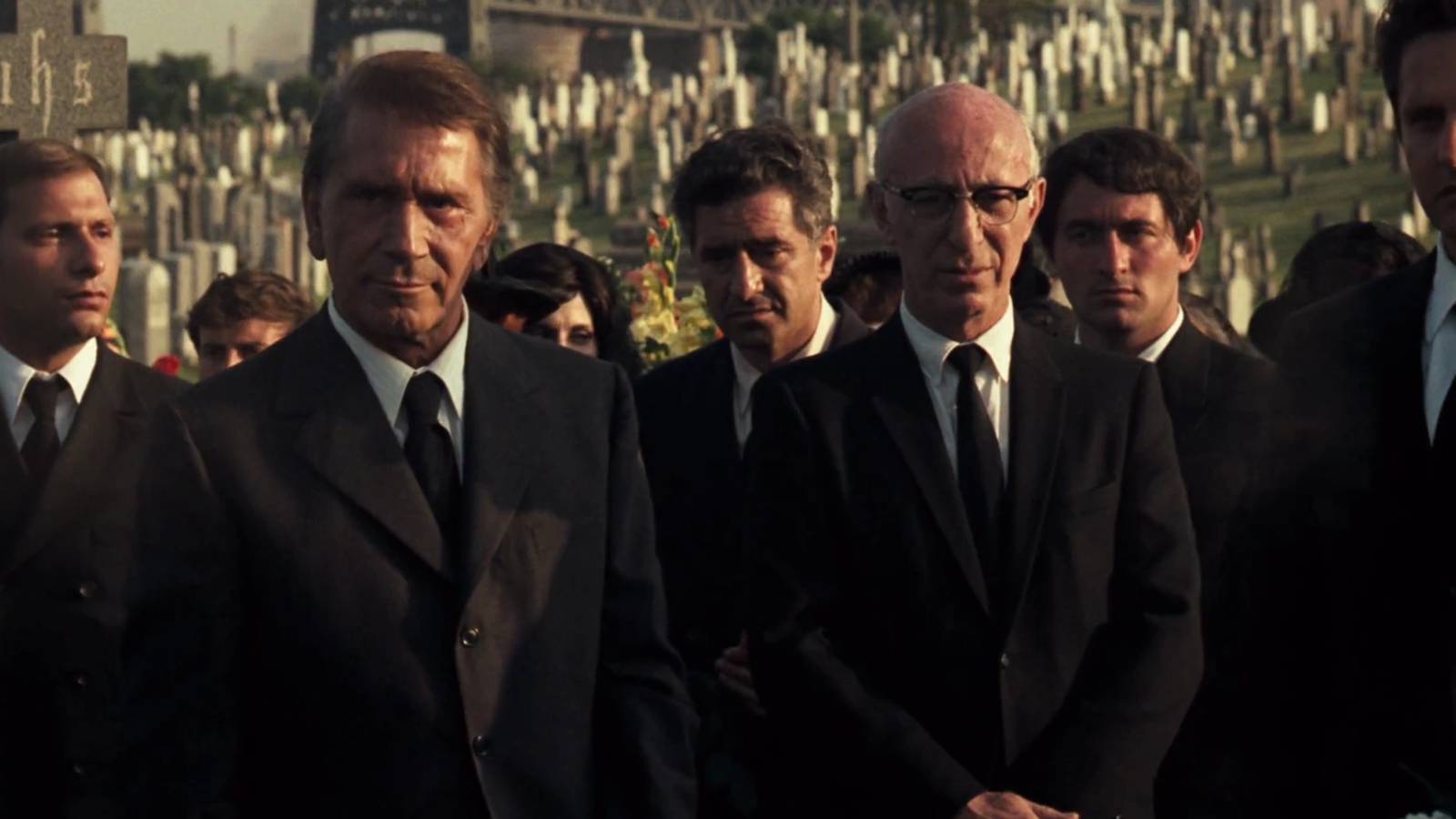
Published Nov 28, 2026, 8:30 AM EST Zoë Miskelly is an editor and second in command for Screen Rant's Movies team, having covered the entertainment industry for almost 10 years now. Zoë's love of superheroes and all things Marvel & DC started out in childhood, and has blossomed into a career getting to talk about some of the biggest and best movies and shows of all time, having previously focused on comics while working at WhatCulture. The Godfather movies hinge upon the strengths of the performances and characterizations of the figures within it - and while this focuses predominately on the Corleone family, there are plenty of iconic allies and enemies outside of the Corleones. Since The Godfather trilogy centers around whoever holds the Don Corleone title and their various exploits, it makes sense the movies tend to have most of their casts be either part of the blood Corleone family, or the Corleone crime family and its various roles. With that said, though, The Godfather movies would also be far less engaging if we only ever saw characters from these two factions and nobody else. Indeed, almost all of the most memorable moments in The Godfather films revolve around the Corleones interacting with outside parties, be that allies they seek advice and aid from, or enemies they threaten and have to deal with in an assortment of ways over the course of the overarching story. In the end, a story is often only as good as its supporting cast. This is very much something that holds true for all The Godfather films, in that they're arguably as strong as they are because of the detail and nuance put into a wide range of figures, which allows you to get invested in everyone, from the most central protagonists to those in far smaller roles. Don Tommasino While the Don of the Tommasino family is often overlooked in the wider scheme of The Godfather series, the character does serve as a useful way for the wider series to have more connective tissue, since he appears in all three films, and is a friend to the Corleone family throughout the narrative. Tommasino begins his story as an ally for Vito Corleone during his younger years, with the two working together in the olive oil business, and to kill Don Ciccio. This proves a crucial moment for both men, as while Vito gets the revenge he spent his youth craving, this event leads Tommasino to become a Don, succeeding Ciccio, and also to him using a wheelchair for the rest of his life, as a result of the injury he took in the resulting shootout after Don Ciccio's murder. More than just being plot relevant, though, the character serves as a symbol of the "old ways" of the mafia families, which is key in terms of his guidance for Michael once the young Corleone takes over, and because Tommasino has a unique place in the wider world of the story due to his history with Vito and place within his own family. Cardinal Lamberto Though The Godfather III is generally not as beloved as its two predecessors, the way in which the film is inspired by the real-life Papal 80s banking scandal is undeniably fascinating, and a salient direction to take the wider story in. While Cardinal Lamberto significance in the story is somewhat overshadowed by how over-the-top some moments of the movie's narrative subsequently are - like the scene wherein a helicopter shoots up a room full of gangsters - there's a strong sense of intrigue that comes from seeing how the Catholic priest deals with Michael Corleone and his regrets. The scene wherein Lamberto has Michael confess his sins and talks with the hardened crime family head about the prospect of redemption is all the more powerful because Lamberto is under no illusion about what kind of man he's dealing with, and the viewer is left in a tense situation where it seems everything could go wrong in a wide assortment of ways between the two. Despite all the justifiable criticisms of The Godfather III, the way in which the Vatican bank storyline and Cardinal Lamberto's story are able to seamlessly integrate with Michael's personal arc - and his concerns about whether he can make amends with his loved ones - is a strength of the film, and one unique to the final chapter of the trilogy. Senator Pat Geary Geary is one of the more unusual figures in the span of The Godfather trilogy, as he highlights the way in which politics and crime intersect throughout the series in a different and more direct manner. Pat Geary's introduction ends up initially almost making him look more corrupt than the mafia, as he attempts to blackmail Michael into giving him a bribe shortly after giving a somewhat hollow-ringing endorsement of the Corleone family, wherein he pronounces more than one name wrong. While Pat doesn't exactly come across as likable, his unpleasantness serves a dual purpose in the story. It's an early reminder in The Godfather II of the challenges the Corleone family face - serving as foreshadowing for Michael's later court case - but also sets up another way for Michael and his crew to show how they deal with their opposition, and makes Geary unpleasant enough some viewers will find themselves hoping for his downfall from this part of the sequel onward. In the end, the Corleones stage things so it looks like the Senator killed a sex worker, and then "save" Geary from the situation they created, showing another display of the kind of cunning that gives the family an edge over their enemies throughout the franchise. Emilio Barzini Barzini is a sublime antagonist for the Corleone family to go up against in The Godfather, both because he's ostensibly got as much power behind him as Don Corleone as another head of one of the Five Families of New York, and because he's calculating and absolutely ruthless, albeit in a way that roughly follows the rules of the business of sorts he finds himself in. The dynamic between Emilio and Vito is one of the most fascinating parts of The Godfather. Vito has control over more in terms of the courts and judges, and in some ways holds more power, but Emilio knows how to play the game to the degree he ends up being invited to the wedding of Vito's daughter, even though the head of the Corleones knows that Barzini tried to assassinate him not long before that. It's this kind of nuanced conflict that gives a lot of the first movie its depth - and it doesn't hurt that Richard Conte plays Barzini with a kind of energy and oozing charisma that makes him compelling even for those who are hoping for his untimely death from his on-screen debut. Virgil Sollozzo Sollozzo has a whole lot of the best lines in The Godfather, with his delivery of the likes of "Blood is a big expense" and "I need, Don Corleone, those politicians you carry in your pocket, like so many nickels and dimes" being golden parts of the script, and quips that show the tactical and subtle nature of the character in great fashion. It also helps that Sollozzo is tied to some of the most central moments in the entirety of The Godfather series, as it's the threat he poses - and his efforts to hurt the Corleone family - that take Michael from being a civilian who refuses to get involved in family business, to someone willing to kill two people (those being Sollozzo and corrupt police chief McCluskey) to get vengeance. The subsequent tense "truce" scene between Michael, Sollozzo and Captain McCluskey is a huge part of what makes The Godfather a classic, with the simultaneously imposing and unnerved performance Al Lettieri gives as Sollozzo helping ensure the film is considered an unforgettable piece of cinema even decades later. Hyman Roth A good portion of the reason that The Godfather II is able to hold up compared to the iconic original film revolves around Hyman Roth. Of course, this is firstly in that Hyman kicks off the upping of the ante by taking the story to Cuba midway through the Cuban Revolution, which shows the scale of the power being wielded by the cast, and the international webs they can weave. More than just that, though, Roth is a compelling antagonist force in every sense. He's been in the game for so long because he's willing to play the long game and outmanoeuvre anyone who threatens him - and is good at it - but this extended career has given him a jaded perspective on how to operate that means he appears to care little for anything but amassing more and more power, even though this itself doesn't seem to truly fulfill him. As such, Hyman Roth is both a true threat, and a prime example of the kind of power someone who's willing to forgo their bonds and emotions to run gang matters like a ruthless business can achieve. On the other side of things, he also serves as a preemptive warning that the money and influence that Michael is amassing for the Corleone family may not end up feeling like enough, since for both Roth and Michael, their success seems to leave them feeling hollow all the same. This sets up The Godfather III nicely, but also ties into the wider themes of the series efficiently, and reiterates much of the wider commentary around ideas of honor and success that ensure The Godfather movies are still endlessly compelling and rewatchable today. The Godfather
6 Best Characters In The Godfather Movies (Who Aren't Part Of The Corleone Family), Ranked
Full Article
Original Source
Read the full article at Screenrant →KhanList aggregates and links to publicly available news content. We do not host full articles from third-party sources. Always verify important information with original sources.