
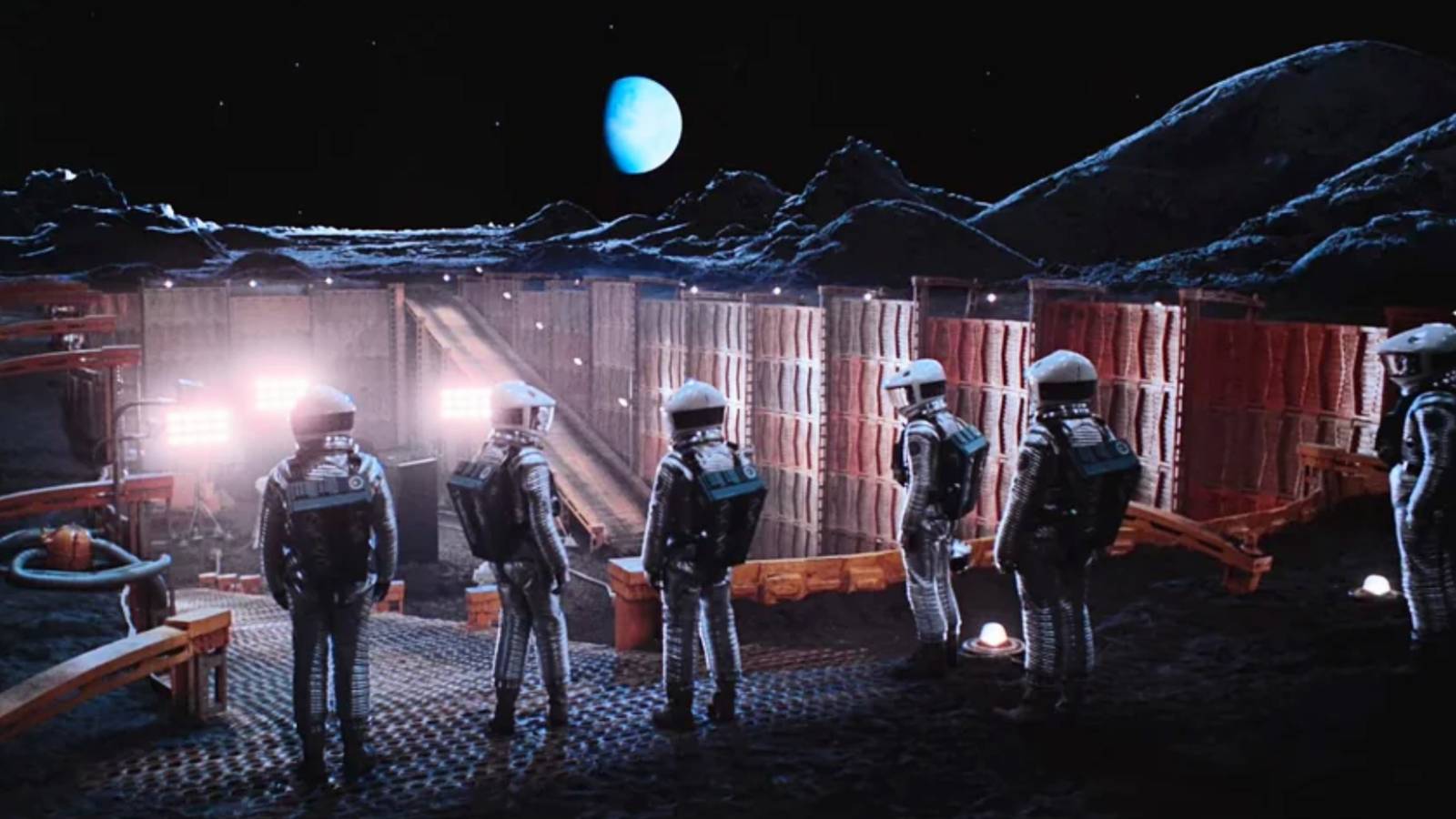
Published Aug 18, 2026, 3:23 PM EDT Jeremy has more than 2700 published articles on Collider to his name, and has been writing for the site since February 2022. He's an omnivore when it comes to his movie-watching diet, so will gladly watch and write about almost anything, from old Godzilla films to gangster flicks to samurai movies to classic musicals to the French New Wave to the MCU... well, maybe not the Disney+ shows. His favorite directors include Martin Scorsese, Sergio Leone, Akira Kurosawa, Quentin Tarantino, Werner Herzog, John Woo, Bob Fosse, Fritz Lang, Guillermo del Toro, and Yoji Yamada. He's also very proud of the fact that he's seen every single Nicolas Cage movie released before 2022, even though doing so often felt like a tremendous waste of time. He's plagued by the question of whether or not The Room is genuinely terrible or some kind of accidental masterpiece, and has been for more than 12 years (and a similar number of viewings). When he's not writing lists - and the occasional feature article - for Collider, he also likes to upload film reviews to his Letterboxd profile (username: Jeremy Urquhart) and Instagram account. He has achieved his 2025 goal of reading all 13,467 novels written by Stephen King, and plans to spend the next year or two getting through the author's 82,756 short stories and 105,433 novellas. One of the things about science fiction, as a genre, is obviously how it looks to the future or investigates technology in one way or another. It doesn’t have to be futuristic, but it often is, or it’s about something that could impact humanity and the way societies might function once enough time has passed. There are also sci-fi stories that take place in alternate timelines, yet that’s a whole other thing. For now, what about sci-fi movies about the future, albeit not just about the future? And movies about the future that are now only partly about the future, compared to how they might've been viewable upon release? Enter 2001: A Space Odyssey. It was made in 1968. It begins in prehistoric times. Some of it’s set around the titular year, and then some parts go even further into the future. It’s a movie that’s out of time, of its time in some regards, and then ahead of its time in a few other ways. It was a movie first and then a book, technically, rather than the other way around. No rules were played by here. The movie’s its own thing. Stanley Kubrick is at his most Kubrickian. But… there is one aspect of the film that feels particularly relevant right now, and that’s the part that deals with an artificial-intelligence character named HAL 9000 (voiced by Douglas Rain). HAL 9000 has always been terrifying. But in the 2020s, when he says “I'm sorry, Dave. I'm afraid I can't do that,” that’s a little scarier in a world where people ask – and rely on – artificial intelligence more and more. The Story of '2001: A Space Odyssey' Image via Metro-Goldwyn-Mayer You don’t have to, of course. 2001: A Space Odyssey depicts a future (a future in 1968) where the astronauts Dr. David Bowman (Keir Dullea) and Dr. Frank Poole (Gary Lockwood) have to, but they're in space, and HAL 9000 is built into the Discovery spacecraft they're on itself. The stretch of the film with HAL 9000 in it involves the two humans disagreeing with HAL 9000 on a way to conduct their whole mission to Jupiter, and HAL putting them in jeopardy for the mission. It all unfolds slowly and methodically (even compared to something like the next decade’s Alien), but still, this third of approximately four parts of 2001: A Space Odyssey is its most thrilling, and perhaps its most frightening. There’s a monolith, and that prompts the mission to Jupiter right near the start of the 21st century. The fourth part… well, the fourth part gets weird. Before then, you’ve got prehistoric hominins seeming to use tools for the first time, and particularly, using tools to commit violence and enforce power. Then, there’s a discovery on the moon countless years later, right at the end of the 20th century. There’s a monolith, and that prompts the mission to Jupiter right near the start of the 21st century. The fourth part… well, the fourth part gets weird. And it’s not super relevant to the AI stuff in 2001: A Space Odyssey. It’s cool, though. And it’s visually exciting in a way that really benefits watching the whole film on the literal biggest screen you can possibly find. What '2001: A Space Odyssey' Has To Say About AI Not the person writing this, in a million years, but some people use, you know, AI for tasks. It do be everywhere. There is a way to get AI to summarize the article you're reading, or skimming. The writer does not ask for this. The writer writes. But there is AI, and it summarizes. If you're Googling things, and you're not specifically using the “Web” option on Google, then you're probably getting AI summaries in your search results. And this is to say nothing of people (you don’t have to confirm or deny; this ain't a court) who might want to use ChatGPT to write a difficult email, or write a speech (actually, if it’s a family event, like a funeral or wedding, straight up do not do this; write something bad but sincere instead), or even write other content. It might happen, on more Wild West-type sites like this one. You'll also never see someone whose name rhymes with Peremy Snurquhart doing it. You’re in some hands, now. Safe ones. But then some AI, at some point, being all HAL 9000, and refusing to do some kind of command, be it minor, or major, or somewhere in between? It can happen, and it can reflect 2001: A Space Odyssey. News stories do sometimes fret about AI losing control (more of a Terminator situation than a 2001: A Space Odyssey one) or refusing some kind of task given by a human, but a disaster of a Terminator or 2001 level doesn’t seem to have hit yet. Yet there returns the idea of science fiction being speculative. HAL 9000 dramatically shut Dave down years (and counting) before a similar AI has done something similar, but with the future being unknowable and all, maybe soon. Hopefully not soon. Though still… maybe… The Other Ways '2001: A Space Odyssey' Holds Up Incredibly Well Image via MGM There are other reasons why 2001: A Space Odyssey remains a classic, obviously. It could be revealed to feel like the most inaccurate thing about AI ever, should massive laws come into place, or the capabilities of AI genuinely get reached, or something else happens that gets people focused on other things. There is no guarantee things here will come true, but what’s important, for now, is that some of the parts of the movie that are particularly HAL 9000-heavy feel a little extra creepy in the 2020s, compared to how they might've felt in the late 1960s or throughout the 1970s. You’ve also got something like Her if you want a slightly sunnier (though not without its bittersweet moments) movie about AI. And then 2001: A Space Odyssey looks at space travel and going throughout the Solar System more generally (and maybe even beyond), which feels frightening in its own manner, but also kind of cool and mind-expanding to think about. You get a lot here, about AI and other things, but of course you do, because 2001: A Space Odyssey really is well and truly as classic as classic science fiction gets. 2001: A Space Odyssey Release Date April 10, 1968 Runtime 149 minutes Cast Keir Dullea Dr. David Bowman Gary Lockwood Dr. Frank Poole
58 Years Later, the Greatest Sci-Fi Quote of All Time Hits Even Harder
Full Article
Original Source
Read the full article at Collider →KhanList aggregates and links to publicly available news content. We do not host full articles from third-party sources. Always verify important information with original sources.