
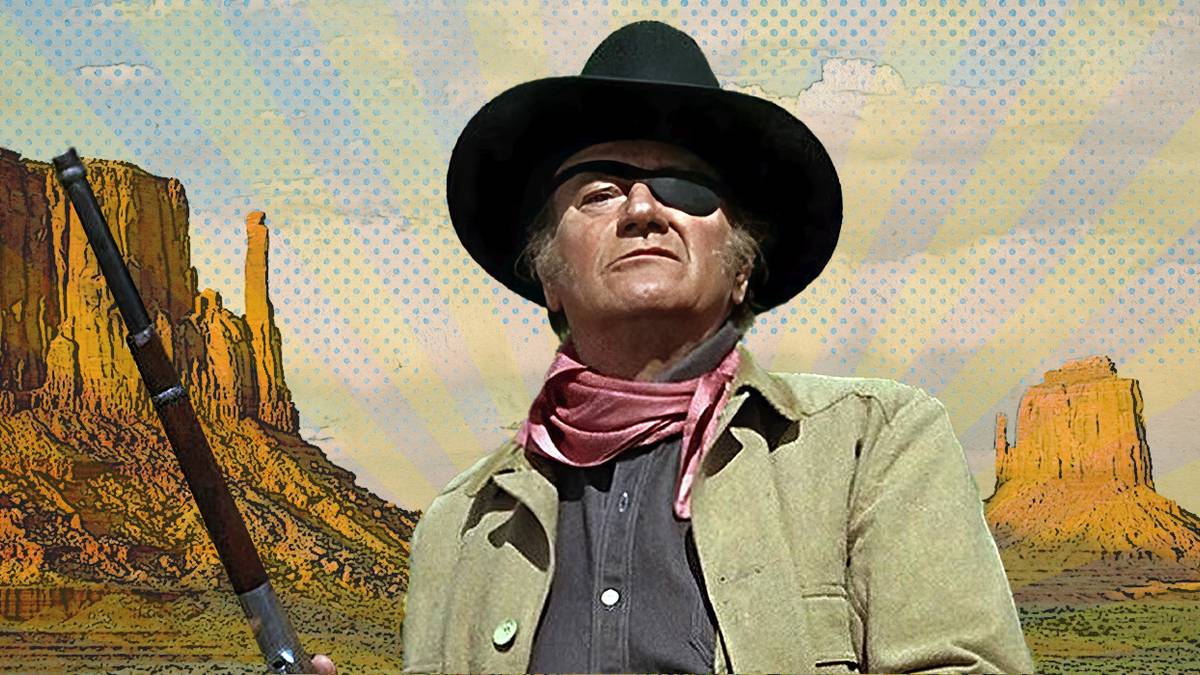
Published Nov 4, 2026, 6:05 AM EST John Wayne was a giant of cinema – a Western icon the likes of which had never been seen before or since. You can’t talk about the genre without mentioning his many classic movies such as The Searchers, Rio Bravo, or 1969’s True Grit. As that film's Rooster Cogburn, he was far from the square-jawed hero of his past movies, but his rugged authenticity made it one of his most beloved performances. It also gave us perhaps his best closing line — not because of its profundity, but because it seemed to sum up the tough, eternal icon in one off-the-cuff remark. ‘True Grit’ Ends with a Memorable Joke True Grit ends on a happy note, with Mattie (Kim Darby), the young girl who hired Rooster Cogburn (Wayne) to hunt down her father’s killer, alive and safe on her family ranch. Cogburn has fulfilled his obligation, and the pair part ways, with both struggling to express their affection for one another (other than Mattie offering Rooster a spot on her family’s burial plot for when his time comes). As Cogburn rides away, she teases him that he is “too old and fat to be jumpin’ horses." “Well,” replies Cogburn, “come see a old fat man sometime!” before riding off on his horse, jumping a fence to tease Mattie back. It’s a happy moment, one that diverges from both the original ending of the source novel by Charles Portis, as well as the 2010 adaptation by The Coen Brothers. However, this hopeful parting is symbolic of what John Wayne means to his audience, and the Western genre in general. It’s not in what’s said, but the meaning behind it, that gives the moment its power. ‘True Grit’s’ Best Line Works Because It Captures the Character Image via Paramount Pictures “Come see a fat old man sometime” is the perfect send-off for Rooster Cogburn, a character who became a Western hero because he subverted so many of its tropes. He demythologizes the cowboy figure – he’s overweight, drunk, and repeatedly breaks the protocol of a U.S. Marshal. Sporting an eye patch and using profanity more than once, he goes against the very icon he created – stoic, wise, and playing by the rules in order to bring people to justice. Yet, it’s because of these flaws that he becomes so lovable, and that’s exemplified in his final parting with Mattie. Describing himself as a “fat old man”, and leaping a fence to make a point, are a world away from the expected departure of a Western hero, leaving on his horse, or quietly riding into the sunset. It’s also a happy ending, because there’s a sense that we might see him again, or that if we don’t, he will be out there somewhere, getting into trouble. John Wayne’s Flippant Farewell Defines the Emotion of the Western John Wayne wasn’t an actor known for long, emotional speeches. His characters were blunt, forthright, and preferred deeds instead of words. While Rooster Cogburn was a character who diverted from the Western tradition in many ways, his joking farewell is in keeping with the heroes of the genre. These were masculine men who didn’t have the words or the temperament to vocalize how they felt, and so either said nothing or uttered a line brimming with subtext. Think of the ending of Wayne’s all-time great, 1956’s The Searchers. His character, Ethan Edwards, rescues his niece and returns her home to her family. While the others rejoice, the hero of the hour chooses to quietly watch on, before wordlessly walking away with little fuss. Wayne’s final movie, 1976’s The Shootist, ends with him being killed as his character, a dying outlaw, goes out in a gunfight rather than succumb to his illness. However, even his departure from the big screen requires no grand speeches or poignant remarks. Instead, he smiles and nods to Gillom (Ron Howard), a young man who idolizes him but chooses not to follow in his footsteps.Both these endings, and the final line of True Grit, define the Western genre, as well as its greatest star. These are characters who would prefer to leave some things unsaid, letting the meaning exist in their demeanor and in their deeds. Rooster Cogburn leaves the screen with a joke and a flourish, explaining in his own way that he will always be there for Mattie, and for people who loved the movie. Both Mattie and those watching, will know exactly what he means. Release Date June 11, 1969 Runtime 128 minutes Director Henry Hathaway Writers Charles Portis, Marguerite Roberts
57 Years Later, This John Wayne Final Line Still Officially Defines the Western Genre
Full Article
Original Source
Read the full article at Collider →KhanList aggregates and links to publicly available news content. We do not host full articles from third-party sources. Always verify important information with original sources.