
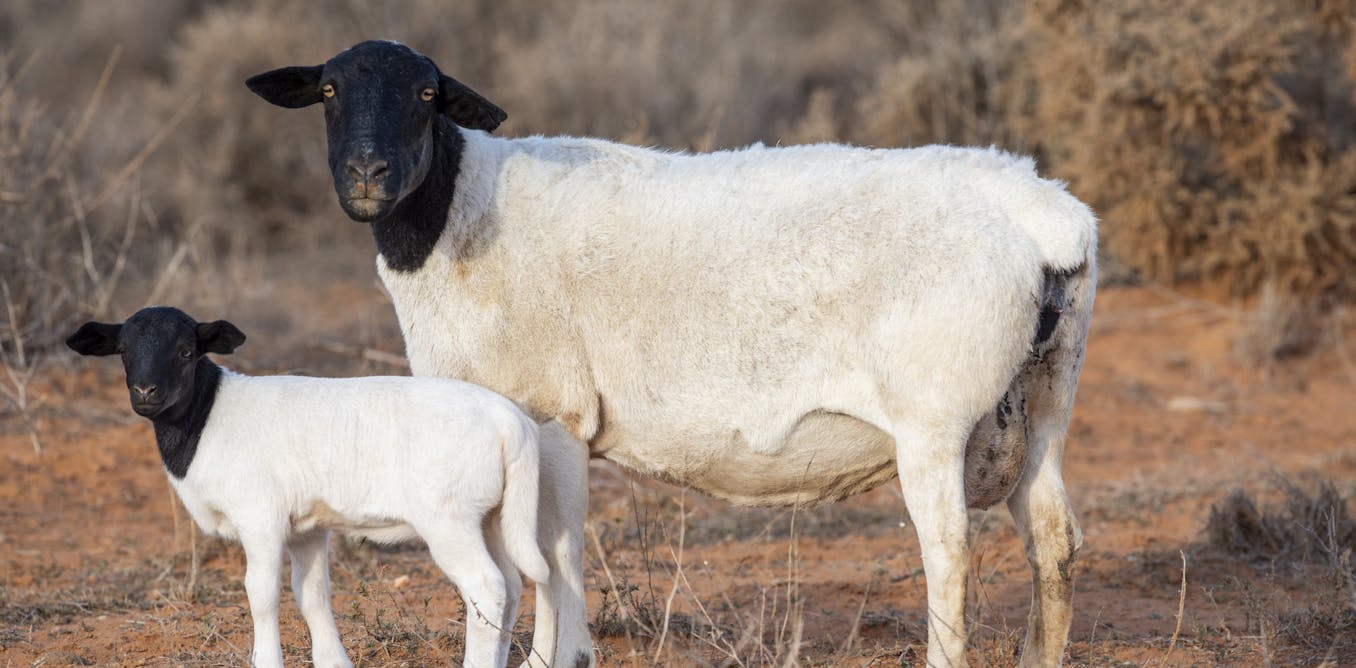
It is hard to imagine 5,500 sheep going missing. Yet, police believe this many ewes and rams, worth an estimated A$1.7 million, were stolen from a property near Blackall in central west Queensland between February and May. At this scale, it is easy to picture a highly organised operation. But it would be unwise to jump to any conclusions while police carry out their investigations. While the alleged theft of valuable Dorper sheep from near Blackall is exceptional in scale, it is not an isolated example. Understanding these thefts means looking beyond the farm gate to why so much farm crime remains hidden and what police and technology can realistically change. From small thefts to the whole flock Recently, our team at the Centre for Rural Criminology undertook a National Farm Crime Survey, the first study of its kind in 20 years. We found across Australia, the sophistication and coordination of stock theft varies. At one end of the scale are smaller thefts by people with local access – such as a neighbour, employee or contractor. At the other are sophisticated thefts involving several people, trucks, machinery, tools and hundreds or even thousands of animals. In 2025, a farmer at Lexton in western Victoria reported more than 1,700 sheep stolen across three incidents in two years. Police described the thefts as “carefully coordinated”. Read more: As livestock theft becomes a growing problem in rural Australia, new technologies offer hope Fewer ‘eyes in the paddock’ Rural and remote environments shape both the opportunity to commit stock theft and the capacity to respond. Our research with rural police in Australia, France and the United Kingdom found geography, isolation and limited resources all affect police engagement with rural communities. At the farm level, low population density means fewer “eyes in the paddock”, sparse police coverage, slower response times and numerous access points. Locks, lighting, cameras and secure gates, often referred to collectively as target-hardening, are also harder and more expensive to install across thousands of hectares. Valuable stock and machinery may therefore sit in isolated places with little in the way of security. This can offer offenders a potentially high reward with a relatively low risk of detection. The same geography creates an evidence problem after a theft. As stock are often only counted periodically, a farmer may be unable to tell police whether the animals disappeared yesterday or several weeks earlier. That wide time window makes it harder to identify suspicious vehicles, preserve camera footage or other forensic evidence, find witnesses or trace the animals before they are mixed with other stock or moved through the supply chain. Unreported and undercounted So, is farm crime increasing? The honest answer is that we cannot say with confidence. Australia has no consistent national data set tracking stock theft over time and police figures include only offences that are reported and recorded. Herein lies a key problem: our research shows that over 90% of farmers have experienced crimes including trespass, theft or illegal hunting on their farm, yet only about 30% of livestock-theft victims actually reported to police. Farmers tell us several practical reasons for not reporting. These include that the crime may be discovered late, evidence may be limited, or victims may doubt that reporting will produce a meaningful response. This contributes to a vicious cycle. When incidents are not reported, they are not recorded. This leaves farm crime under counted in official statistics and less visible in decisions about police resourcing, specialist officers and prevention funding. Read more: Crime is rife on farms, yet reporting remains stubbornly low. Here’s how new initiatives are making progress What can we do to stop farm crime? So, what can we do? Specialist policing is one response. Queensland has a dedicated Rural and Stock Crime Squad. In New South Wales, the Rural Crime Prevention Team investigates cases, trains other officers and works directly with farmers. Importantly, our survey research found farmers who knew about the team, and especially those who had dealt with it, were more satisfied with police and more likely to report farm crime. Electronic identification is the biggest recent policy change. While these tags are not tracking devices, and the scheme was introduced mainly for biosecurity, they give each animal a unique identity and record its movements. In the unlikely event thieves don’t remove a stolen animal’s tag, a later scan may flag it. Other technologies can detect theft earlier. Remote cameras, including systems such as Land Watch, can monitor gates, yards and sheds and provide images for police. Satellite-connected “smart” tags can raise an alert when livestock move unexpectedly or breach certain boundaries. In our staged theft of 20 sheep to test these tags, an alert arrived within 12 minutes and police tracked the animals for more than 110 kilometres. From 2027, in most states and territories, all sheep and goats leaving a property will need to be fitted with an electronic identification (eID) tag. Amy Boyle/Getty Why fixing this matters Farm crime has a significant impact on farmers and rural communities, and this extends well beyond financial loss. Such theft can erase breeding potential and significantly interrupt production, but it also has shown to be a serious mental-health stressor in a demographic already struggling. The alleged theft of thousands of sheep in Queensland exposes familiar weaknesses. Effective prevention means detecting theft earlier, producing better evidence and giving farmers good reason to report it.
5,500 sheep were stolen from a remote farm. But most farm crime remains hidden
Full Article
Original Source
Read the full article at Theconversation →KhanList aggregates and links to publicly available news content. We do not host full articles from third-party sources. Always verify important information with original sources.