
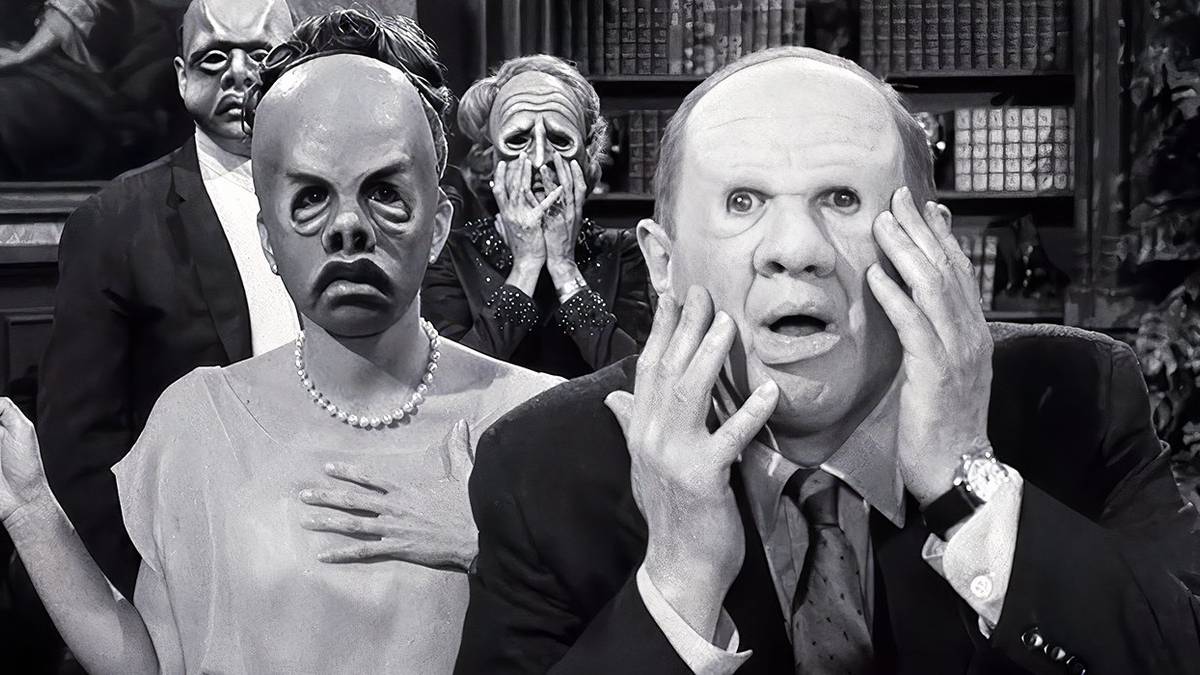
Image via CBS Published Sep 2, 2026, 12:59 PM EDT Sam is a Senior Writer for Collider. His love for movies, TV shows, and books stretches back to his early childhood and has grown exponentially with every passing year. Lucky for him, this love grew into a career in writing. Whether he's rambling for the umpteenth time about the works of Sam Raimi and Stephen King, or he's writing about the latest and greatest low-budget movies, you better believe that with every word, Sam feels a profound joy in his work. Aside from being a movie fan, Sam has also made a few of his own. His love for movies has vomited itself back out and onto the screen in the form of his own independent films, including the comedic genre-benders At Sundown I Shoot Your Spurs and Night of the Pizza Demons. Sam has spent the last few years practicing his hand at screenwriting but is currently gearing up to shoot his next project. Outside of movies, Sam loves playing guitar, jamming with his band, spinning records, reading, jogging, and whipping up new recipes in his kitchen. He resides in Little Rock, Arkansas. Sign in to your Collider account More than 55 years after Rod Serling returned to television following The Twilight Zone, his other genre anthology still deserves far more attention. Across three seasons and 43 episodes, NBC's Night Gallery took Serling's fascination with the strange and supernatural into darker territory, trading much of The Twilight Zone's science-fiction edge for horror, fantasy, and macabre suspense. For anyone who has already exhausted Serling's most famous creation, Night Gallery remains one of the most natural follow-ups — and one of the most fascinating dark fantasy series of its era. Where The Twilight Zone frequently used aliens, strange technology, and otherworldly phenomena to Trojan-horse social commentary into its stories, Night Gallery leaned much more heavily into nightmares. Serling's seminal television program was already an extremely thoughtful and ideologically relevant series that continues to resonate with audiences today, but Night Gallery gave him the opportunity to explore a different corner of genre storytelling. The result isn't as consistently brilliant as The Twilight Zone, but it shows Serling experimenting with a darker brand of television that remains an intriguing companion to his most famous work. 'Night Gallery' Is More Horror Than Serling's 'Twilight Zone' That's what makes Serling's shift to the late '60s so interesting. He would continue to tell politically relevant stories after the cancelation of The Twilight Zone in movies like Planet of the Apes, but as he made a return to anthology storytelling on the small screen, the world around him had become much more socially charged. Instead of simply recreating what he had masterminded years earlier, Night Gallery allowed Serling to move further into horror and the supernatural. For the first time, Rod Serling's television work would be almost exclusively genre... but that wasn't entirely his choice. (More on that later, though.) Collider Exclusive · Sci-Fi Survival Quiz Which Sci-Fi World Would You Survive? The Matrix · Mad Max · Blade Runner · Dune · Star Wars Five universes. Five completely different ways the future went wrong — or sideways, or up in flames. Only one of them is the world your instincts were built for. Eight questions will figure out which dystopia, galaxy, or desert wasteland you'd actually make it out of alive. 💊The Matrix 🔥Mad Max 🌧️Blade Runner 🏜️Dune 🚀Star Wars TEST YOUR SURVIVAL → 01 You sense something is deeply wrong with the world around you. What do you do? The first instinct is often the truest one. APull on every thread until I understand the system — then figure out how to break it. BStop asking questions and start stockpiling — food, fuel, weapons. Questions don't keep you alive. CKeep my head down, observe carefully, and trust no one until I know who's pulling the strings. DStudy the patterns. Every system has a rhythm — learn it, and you learn how to survive it. EFind the people fighting back and join them. You can't fix a broken galaxy alone. NEXT QUESTION → 02 In a world of scarcity, what resource do you guard most fiercely? What we protect reveals what we believe survival actually requires. AKnowledge. If you understand the system, you don't need resources — you can generate them. BFuel. Everything else — movement, power, escape — runs on it. CTrust. In a world of fakes and informants, a truly reliable ally is rarer than any commodity. DWater. And after water, information — the two things empires are truly built on. EShips and credits. The galaxy is big — you survive it by being able to move through it freely. NEXT QUESTION → 03 What kind of threat keeps you up at night? Fear is useful data — if you're honest about what you're actually afraid of. AThat reality itself is a lie — that everything I experience has been constructed to keep me compliant. BA raid. No warning, no mercy — just the roar of engines and then nothing left. CBeing identified. Once someone with power decides you're a problem, you're already out of time. DBeing outmanoeuvred — losing a political game I didn't even know I was playing. EThe Empire tightening its grip until there's nowhere left to run. NEXT QUESTION → 04 How do you deal with authority you don't trust? Every dystopia has a power structure. Your approach to it determines everything. ASubvert it from the inside — learn its rules well enough to weaponise them against it. BIgnore it and stay out of its reach. The further from any power structure, the better. CAppear to comply while doing exactly what I need to do. Visibility is the enemy. DManoeuvre within it carefully. You can't beat a system you refuse to understand. EResist openly when I have to. Some things are worth the risk of being seen. NEXT QUESTION → 05 Which environment could you actually endure long-term? Survival isn't just tactical — it's physical, psychological, and very much about where you are. AUnderground bunkers and server rooms — cramped, artificial, but with access to everything that matters. BOpen wasteland — brutal sun, no shelter, constant movement. At least the threat is honest. CA dense, rain-soaked city where you can disappear into the crowd and nobody asks questions. DMerciless desert — extreme heat, no water, and something enormous living beneath the sand. EThe fringe — backwater planets and busy spaceports where the Empire's attention rarely reaches. NEXT QUESTION → 06 Who do you want in your corner when things fall apart? The company you keep is the clearest signal of who you actually are. AA tight crew of believers who've seen behind the curtain and have nothing left to lose. BOne or two people I'd trust with my life. Any more than that and someone talks. CNobody, ideally. Alliances are liabilities. I work alone unless I have no choice. DA community bound by shared hardship and mutual survival — people who need each other to last. EA ragtag team with wildly different skills and total commitment when it counts. NEXT QUESTION → 07 Where do you draw the line — if you draw one at all? Every survivor eventually faces a moment that tests what they're actually made of. AI won't harm the innocent — even the ones who'd report me without hesitation. BI do what I have to to protect the people I've chosen. Everything else is negotiable. CThe line shifts depending on who's asking and what's at stake. DI draw a long-term line — nothing that compromises my people's future, even if it'd help now. ESome lines, once crossed, can't be uncrossed. I know which ones they are. NEXT QUESTION → 08 What would actually make survival worth it? Staying alive is one thing. Having a reason to is another. AWaking others up — dismantling the illusion so no one else has to live inside it. BFinding somewhere — or someone — worth protecting. A reason to keep moving. CAnswers. Understanding what I am, what any of this means, before time runs out. DLegacy — shaping the future in a way that outlasts me by generations. EFreedom — for myself, for others, for every world still living under someone else's boot. REVEAL MY WORLD → Your Fate Has Been Calculated You'd Survive In…Your answers point to the world your instincts were built for. This is the universe your temperament, your survival instincts, and your particular brand of stubbornness were made for. The MatrixYou took the red pill a long time ago — probably before anyone offered it to you. You're a systems thinker who can't help but notice the seams in things. You're drawn to understanding how the system works before figuring out how to break it. You'd find the Resistance, or it would find you — your instinct for spotting constructed realities is the machines' worst nightmare. You function best when you have access to information and the freedom to act on it. The Matrix built an airtight prison. You'd be the one probing the walls for the door. Mad MaxThe wasteland doesn't reward the clever or the well-connected — it rewards those who are hard to kill and harder to break. That's you. You don't need comfort, community, or a cause larger than the next horizon. You need a vehicle, a clear threat, and enough fuel to outrun it — and you're good at all three. You are unsentimental enough to survive that world, and decent enough — just barely — to be something more than another raider. In the wasteland, that distinction is everything. Blade RunnerYou'd survive here because you know how to exist in moral grey areas without losing yourself completely. You read people accurately, keep your circle small, and ask the questions others prefer not to answer. In a city where humanity is a legal designation rather than a feeling, you hold onto something that keeps you functional. You're not a hero. But you're not lost, either. In Blade Runner's world, that distinction is everything. DuneArrakis is the most hostile environment in the known universe — and you are precisely the kind of person it rewards. Patience, discipline, and political awareness are your core strengths — and on Arrakis, they're survival tools. You understand that the long game matters more than any single victory. Others come to Dune and are consumed by it. You'd learn its logic and earn its respect. In time, you wouldn't just survive Arrakis — you'd begin to reshape it. Star WarsThe galaxy far, far away is vast, loud, and in a constant state of violent political upheaval — and you wouldn't have it any other way. You find meaning in being part of something larger than yourself — a cause, a crew, a rebellion. You'd gravitate toward the Rebellion, or the fringes, or whatever pocket of the galaxy still believes the Empire's grip can be broken. You fight — not because you have to, but because standing aside isn't something you're capable of. In Star Wars, that willingness is what makes all the difference. ↻ RETAKE THE QUIZ If you've seen all of The Twilight Zone and still want more, then Night Gallery feels like an obvious extension of that show. The series aired its pilot on November 8, 1969, but officially premiered as a full-blown series a little over a year later, on December 16, 1970, and would run until May 27, 1973. Like The Twilight Zone, Night Gallery is an anthology series that tells new stories every episode. Every episode opens with Serling in a darkly lit art gallery, informing us that the paintings we are about to see are "suspended in time and space, a frozen moment of a nightmare," and that they're being viewed for the first time. Cue the eerie music, and we're off. Sounds familiar, right? Even though he isn't exactly popping up into the locations of the show as he does at the beginning of every Twilight Zone episode, more than ever, Serling seems to be the omnipresent force behind these tales. As stated earlier, Night Gallery leans more into horror than Serling's previous anthology, but it's also a show that explores various genres. Aside from horror, Night Gallery explores fantasy, drama, crime, mystery, and even comedy. Another thing that differentiates the series is that instead of keeping each episode constricted to one story and a half-hour format, these episodes ran for hour-long blocks and, most of the time, told multiple different stories every week. You wouldn't tune into Night Gallery just to watch something like "Nightmare at 20,000 Feet"; you would tune in to catch episodes like "The Caterpillar/Little Girl Lost," or "A Fear of Spiders/Junior/Marmalade Wine/The Academy," as well as your occasional solo outing into the gallery. You'll also feel a severe lack of Bernard Herrmann's music in Night Gallery, but the various composers who fill his void still bring a suitably spooky atmosphere. 'Night Gallery's Pilot Perfectly Sets the Horror Tone Night Gallery really is a horror show at its core, though. A lot of the time, it's weirdly a little bit too simple in its approach to horror, considering the genius behind the show. That being said, there's nothing wrong with a good, cut-and-dry horror story. The pilot itself aired with three different tales, the first of which, "The Cemetery," is the most rooted in classic horror, as well as one of the best episodes in general. If you're looking to get into this show, seriously, run straight for the pilot. "The Cemetery" kicks things off wonderfully. This story follows a man who kills his rich uncle and inherits his estate, only for a painting of the family cemetery to keep changing, showing his uncle rising from the grave. It's a short set in a large house next to an eerie cemetery, covered in shadows and boasting some wonderfully chilling haunted-house imagery that would make the Universal and Hammer horror pictures shudder. Go to the pilot for "The Cemetery," but stick around for "Eyes," an episode directed by a very green Steven Spielberg. This series wasn't always rooted in Serling, though. Even though he wrote many episodes for the show, others would often come in and contribute stories and scripts. Classic TV writers like Jack Laird and Malcolm Marmorstein would occasionally come on to help; meanwhile, sci-fi and genre fiction legends like Richard Matheson and Robert Bloch also wrote episodes. There's even an episode that's a direct adaptation of the H.P. Lovecraft short story "Pickman's Model," as well as "A Matter of Semantics," an episode that was neither written by Serling nor features a main character invented by him — Count Dracula (Cesar Romero)! It's a very odd show, but its variety in story types and commitment to horror and dark fantasy makes it refreshing. The Creative Differences Behind 'Night Gallery' Frustrated Rod Serling Image via NBC That being said, even though Night Gallery is great, it's actually a little bit too outside of Serling's wheelhouse for the acclaimed writer's taste. For one, Serling found his own writing to be altered so much to the point where he no longer wanted his name to be part of the show's brand. In an appearance on The Dick Cavett Show, Serling expressed disappointment in the series' overt lack of science fiction and fantasy. The show ended up veering more into action filmmaking to compete with other shows at the time, as opposed to sporting Serling's interests in the cerebral. While it was supposed to fall into horror, it wasn't supposed to break out of that box more often than it ended up doing. You can also tell that the series' eventual short comedy sketches came from a place that couldn't have been Serling. While his works do occasionally play for a laugh, you'd never be fooled into thinking he was a comedian. These little sketches are so oddly juxtaposed with the show's otherwise pitch-black tone. It just doesn't make very much sense and feels like the ham-fisted move of a corporation, rather than a thoughtful artist like Serling. That being said, once you're a few minutes out from these comedic moments, you'll find yourself quickly immersed in the world where Night Gallery operates best. The conflict of interests behind the scenes of Night Gallery led to the series eventually being canceled. While it is a strong show, its tonally disjointed nature always hits like whiplash, creating a series that feels nowhere near as singular as The Twilight Zone. Still, if you're a fan of Rod Serling and wondering what he got up to in the late '60s and early '70s, then he'll always be ready to meet you in the Night Gallery. At the time of writing, Night Gallery is not available through a U.S. subscription streaming service, though all three seasons are available to purchase digitally. Night Gallery Release Date 1970 - 1973-00-00 Network NBC Cast Joanna Pettet Elaine Latimer / Rhona Warwick Alan Napier Cousin Zachariah Ogilvy / Doctor Jack Laird Igor / Laboratory Assistant / Second Demon
55 Years Later, NBC’s 43-Episode Dark Fantasy Is the Perfect ‘Twilight Zone’ Follow-Up
Full Article
Original Source
Read the full article at Collider →KhanList aggregates and links to publicly available news content. We do not host full articles from third-party sources. Always verify important information with original sources.