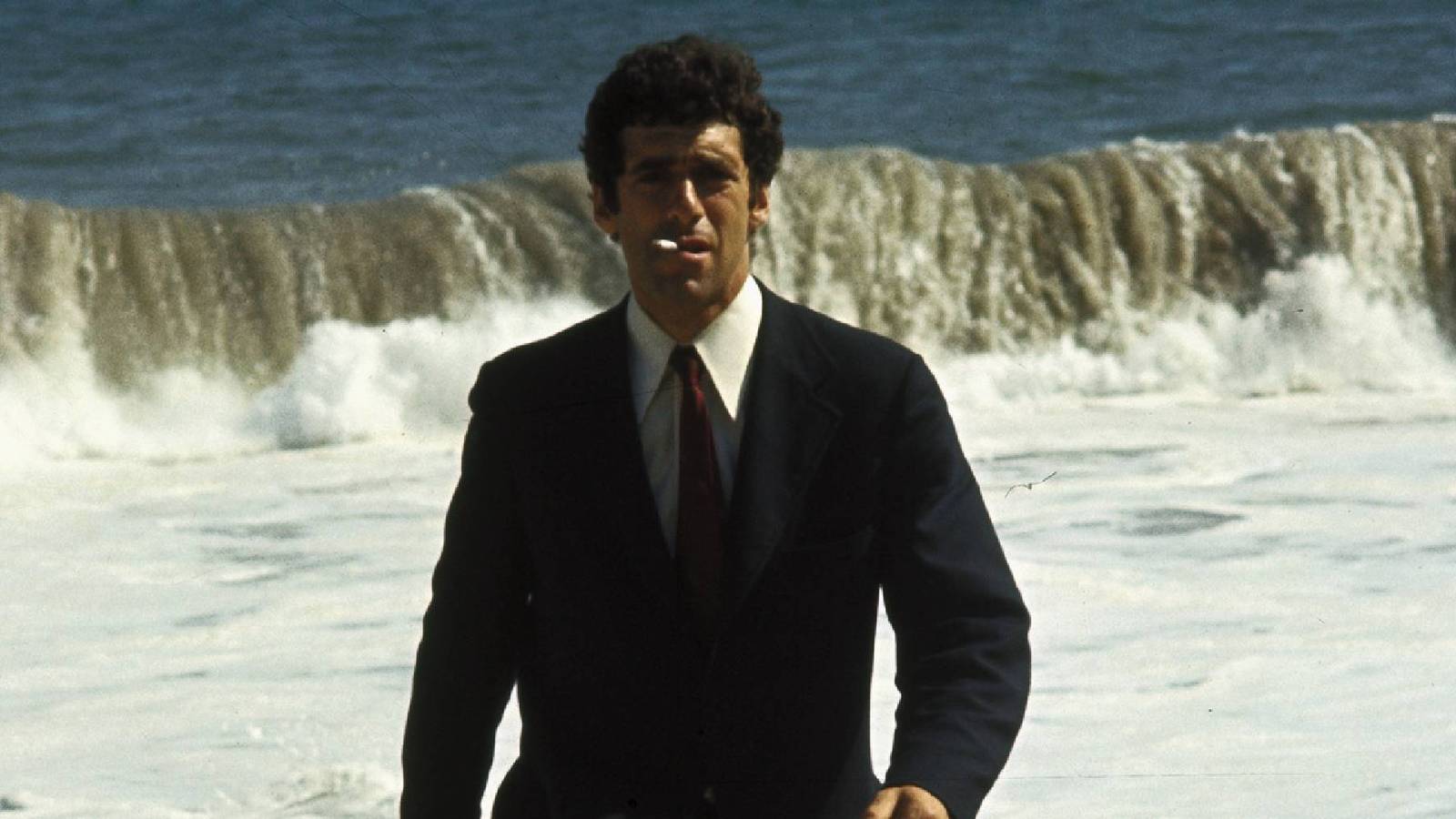
Published Jul 24, 2026, 5:35 PM EDT Thomas Butt is a senior writer. An avid film connoisseur, Thomas actively logs his film consumption on Letterboxd and vows to connect with many more cinephiles through the platform. He is immensely passionate about the work of Martin Scorsese, John Ford, and Albert Brooks. His work can be read on Collider and Taste of Cinema. He also writes for his own blog, The Empty Theater, on Substack. He is also a big fan of courtroom dramas and DVD commentary tracks. For Thomas, movie theaters are a second home. A native of Wakefield, MA, he is often found scrolling through the scheduled programming on Turner Classic Movies and making more room for his physical media collection. Thomas habitually increases his watchlist and jumps down a YouTube rabbit hole of archived interviews with directors and actors. He is inspired to write about film to uphold the medium's artistic value and to express his undying love for the art form. Thomas looks to cinema as an outlet to better understand the world, human emotions, and himself. No director embodied the countercultural spirit of 1970s cinema quite like Robert Altman. The legendary director, known for his sweeping ensemble films filled with interconnected characters and overlapping dialogue, upended all preconceived notions of classic Hollywood genres. Simply put, no one has made movies with the same visual and narrative uniqueness as Altman, and he was unafraid to extend into almost every genre, putting his indelible stamp on the comedy with M*A*S*H and the Western with McCabe and Mrs. Miller. His ability to subvert these genres was especially on display for his 1973 film The Long Goodbye. Although Humphrey Bogart's portrait of Philip Marlowe is classic, Elliott Gould's turn as Raymond Chandler's famous detective protagonist is one of a kind. Altman's loose adaptation of Chandler's novel, now streaming for free on Tubi, is a noir for the hippie age and a cynical commentary on life in a hard-boiled world. 'The Long Goodbye' is a Shaggy Take on the Hard-Boiled Detective Mystery Image via United Artists In hindsight, The Long Goodbye is the only kind of detective noir that could've existed during New Hollywood's peak in the early 1970s: Anti-establishment, comedic in its harshest moments and melancholy in its most unassuming scenes, and led by an unconventional leading man. Robert Altman was more than familiar with the hallmarks of American cinema in this period, and if he was going to adapt any classic gumshoe private eye novel, Raymond Chandler's The Long Goodbye, which saw Philip Marlowe at his most weathered and downbeat, was the only choice. Still, Altman and screenwriter Leigh Brackett thought Chandler's text needed a touch-up in narrative construction and characterization, and the film ultimately deviated heavily from the novel, darkening the fate of its characters. While the novel has a gentler ending, in the film, Marlowe kills his best friend, Terry Lennox, and the tortured novelist Roger Wade (Sterling Hayden) dies by suicide. Even by New Hollywood's standards, The Long Goodbye has an incredibly shaggy narrative flow. The story, much like the wandering and foggy mindset of Marlowe, meanders at its own pace, sometimes languid and sometimes frantic. Signaling what the protagonist's true priorities are, the movie can't even get started until Marlowe finds the right cat food for his domestic feline to consume. From there on out, we follow Marlowe as he becomes entangled in multiple cases involving murders, disappearances, affairs, and mobsters. Altman takes the viewer on a strange odyssey through the sun-baked streets and dingy buildings of Los Angeles, and following the plot is secondary to embracing the cool yet unsettling atmosphere of this world. All the character archetypes—the hard-boiled private eye, the alluring femme fatale, the wild card, and the vicious gangster—are all slightly off-kilter and speak to an imbalance of American life. 'The Long Goodbye' is a Darkly Comic, Melancholic Reflection of America in the 1970s No actor represented Altman's countercultural and oddball sensibilities more than Elliott Gould, who gives a career-best performance as the jaded Philip Marlowe in The Long Goodbye, one that shatters the steely image of the character crafted by Humphrey Bogart. Gould's constant puttering and murmuring are quintessential to the moody adaptation of Chandler's mystery, as it suggests that Marlowe, despite his expertise, is as clueless as the viewer at home. More than anything, Marlowe appears to be in dire need of a good nap throughout The Long Goodbye, and his chain-smoking and five o'clock shadow perfectly complement the burned-out nature of the entire film. Even at his most aloof, Marlowe's shrewd intelligence is never in doubt, and Gould supplies the character with the conviction of a hero who does care, but just feels too powerless. The film also stars Nina van Pallandt, director Mark Rydell, professional baseball player Jim Bouton, and a shocking uncredited cameo by a young Arnold Schwarzenegger as a bodyguard. The 1970s were a time of perpetual angst and radical upheaval, and The Long Goodbye is what washed up on the shore following those tumultuous days. Marlowe's heart is noble, but he can't escape a sense of prevailing doom and futile justice that prohibits any detective from solving a consequential case. The film ends with Marlowe shooting down his former friend after being deceived throughout the entire runtime, and he walks off with a sense of resignation that his work is done, even if we are left with more confusion rather than closure. Marlowe is a man of simple pleasures and values, but he wanders through this murky underworld of Los Angeles as a stranger in a strange land, and his upstanding principles make him an outcast. Both soulful and cynical about the state of the world, The Long Goodbye is an elegiac homage to the end of an ideal kind of hero who died in the '70s.
53 Years Later, This Neo-Noir Masterpiece Has Aged Like Fine Wine
Full Article
Original Source
Read the full article at Collider →KhanList aggregates and links to publicly available news content. We do not host full articles from third-party sources. Always verify important information with original sources.