
Published Aug 20, 2026, 6:00 PM EDT Luke Diaz is a freelance military writer with experience with active duty experience in the US Navy as well as defense and industrial engineering. He is a former Naval Flight Officer who performed tactical air control on the carrier-based E-2 Hawkeye. Crafted by the Skunk Works division of Lockheed under the leadership of legendary aerospace engineer Kelly Johnson, the SR-71 Blackbird has never been dethroned as the world champion of airspeed. Tail number 61-7958 set the world absolute speed record at 2,193 mph (3,529 km/h) at Beale Air Force Base in July, 1976, a record that still stands in 2026. The Imperial War Museum Duxford, home to the only SR-71 outside the United States, gathered veteran Blackbird crew together on July 25. The museum cares for tail number 61-7962, which set a record for sustained high altitude that also remains unbroken. The museum held a 'Legends of the SR-71 Weekend' to honor the semi-centennial anniversary of the historic flight completed by its own Blackbird in the same month as the 1976 speed record. The famous SR-71 is well known for its unique titanium construction; the extreme demands of its mission also necessitated that Skunk Works think outside the box in virtually every aspect of the plane's design. Not only was the exotic alloy skin of the SR-71 loosely joined and corrugated to allow for heat expansion, but it was also coated in 'indigo blue' high-heat-emissive paint. Its tires even had powdered aluminum in the rubber to survive Mach 3.2 flights. SR-71: An Uncontested Reign After Five Decades Credit: The National Archives Catalog It had already been a decade since the Blackbird entered service when the two SR-71s set both the world speed and altitude records in the same month. The decision to demonstrate the incredible performance of the spyplanes was a response to the Soviet Union's new Mikoyan-Gurevich MiG-25 Foxbat, which had just claimed the record. After dethroning the new Soviet supersonic jet, Major George Morgan, who had been aboard 61-7958, later remarked that they had not even achieved the jet's true top speed. Morgan recounted the events of the flight and described a minor compressor stall which momentarily reduced the power output of one of its Pratt & Whitney J58 jet engines. This dropped the overall airspeed of the Blackbird below its full potential. More than that, he elaborated that the US Air Force (USAF) wanted the record to be set 'very carefully' to avoid revealing exactly what the jet's performance limits really were. Since Major Morgan and Captain Eldon Joersz made history with their high-speed run, no other crewed airplane has been developed that could match the Blackbird's stunning performance. The fleet was retired in 1990, and while NASA briefly pulled one airframe from the Boneyard, none of the 32 Blackbirds that were built are airworthy today. A dozen SR-71s were lost in accidents over the years, leaving the 20 examples preserved at museums like Duxford as precious monuments to aviation history. The Secret Of The Not-So-Black Bird Credit: The National Archives Catalog Skunk Works literally had to invent a new branch of metallurgy in order to work with the titanium that took the SR-71 off the drawing board and made it a reality. Notoriously, the exceptionally high-quality alloy was even smuggled out of the Soviet Union through shell companies set up by the Central Intelligence Agency. But once the exotic airframe of the Blackbird was constructed, every small part and piece inside of it also had to survive the brutal conditions at Mach 3.2 for the plane to work. Despite the aircraft's name, it is not actually painted black but rather a very dark shade of deep indigo blue. This was chosen by Lockheed after the first prototype A-12s were flown in bare metal. The friction of the air as the plane flew at high speed brought the temperature of its skin to over 600 degrees Fahrenheit. Engineers concluded that using a paint scheme which would act as a kind of 'radiator' to transfer heat from inside the fuselage could make a valuable improvement in temperature regulation. The dark livery served a secondary purpose as well: camouflage. Cruising at 85,000 feet, the SR-71 soared near the edge of the atmosphere where the sky is a deep, dark shade of blue. Its shiny metallic materials made it harder for Soviet pilots or powerful ground-based camera systems to spot the Blackbird in flight. This also complemented its early form of radar-evading stealth technology, and its 'iron ball' paint had mild radar-absorbing properties along with its heat-emitting characteristics. The SR-71's Inflammable, Unmeltable Tires Credit: The National Archives Catalog Skunk Works collaborated with Goodyear to make a unique set of tires for the Blackbird that would be able to endure conditions that would vaporize the rubber on aircraft standard landing gear. The unique blend of synthetic rubber included powdered aluminum added to the mixture before molding. These particles gave it a distinctive metallic finish and acted as a heat shield for operations above Mach 3. The extremely heat-tolerant tires were also made in a 22-ply density to handle the heavy airframe weight of the SR-71 and safely land after being baked at over 600 °F (315.56 °C). The tires were then filled with pure nitrogen gas to help manage heat and prevent an explosion while they were stowed inside the gear bays. The tires had no tread with a completely smooth finish to maximize surface grip during landings. The main landing gear tires had to be inflated to 415 PSI to withstand the 152,000 pounds (68,946 kg) load of the SR-71 when it landed at 155 knots (287 km/h). While lower, the nose gear still had to be pumped up to 225 PSI as well. Blackbirds would regularly shed layers of rubber every single time they touched down and only lasted an average of 15 to 20 sorties before being replaced. These complex, high-maintenance items proved to be among the highest ongoing costs of the SR-71 program. Keeping The Crew In Action At Mach 3+ Credit: The National Archives Catalog It was a marvel of engineering to make the systems of the SR-71 function in the brutal conditions of flying at three times the speed of sound at the edge of the atmosphere, and it was an equally impressive feat of technology to keep the crew safe inside while performing their mission. The flight deck of an SR-71 consisted of two separate pods for the pilot and the reconnaissance systems officer, which looked more like a spaceship than an airplane. The flight gear of the crew was the David Clark S1030 full-pressure suit, which was nearly identical to the suits worn by astronauts later on NASA Space Shuttles. The aircrew breathed 100% pure oxygen for 30 minutes before takeoff to get the nitrogen out of their blood. Air & Space Forces Magazine describes how the rapid ascent and descent could cause decompression sickness like that experienced by scuba divers, also known as 'the bends.' To shield the crew's faces from unfiltered solar radiation at high altitudes, their helmet visors were blended with 24-karat gold. Meanwhile, the cockpit canopy glass was constructed from three-ply high-silica quartz rather than glass. The panels were fused directly into the titanium airframe using a novel ultrasonic technique, as any other form of installation would disintegrate at over Mach 3. Then came the challenge of keeping the two humans inside the Blackbird alive as the airframe around them cooked at several hundred degrees. The Skunk Works solution was to pump the freezing-cold JP7 fuel, a uniquely engineered jet fuel developed specifically for the SR-71, around the cockpit to act as a kind of heat exchanger. That was just extended to other parts of the plane, like the avionics bay, and even served as a preheating function before the fuel was then injected into the ramjet engines. The Legend Lives On At IWM Duxford Credit: The National Archives Catalog To preserve the living legacy of these incredible machines, IWM Duxford held a special event to mark the 50th anniversary of the speed and altitude record. The Legends of the SR-71 Weekend kicked off on the same day as the historic run, July 25. The museum brought together crew members who were all a part of the USAF Blackbird community during its operational years. The guests included SR-71 pilots, RSOs, engineers, and ground crew who shared firsthand accounts of their experience with the world's fastest airplanes. Steve Justice, who worked at Skunk Works on the SR-71, made these remarks on the jet's continued significance to the BBC during the event at Duxford. "The thing that makes the Blackbird so unique and special is the fact that it flies at a place where no other aeroplane flies. It's flying at 2,200 miles per hour (3,540 km) at two and a half times the altitude that a commercial airliner flies." Only 85 pilots were ever qualified to fly the Blackbird in the 25 years that it was operational with the USAF. Former SR-71 pilot Buz Carpenter also commented to the BBC: "I didn't wear a sign that said, 'This guy flew the SR-71' - but it really changed your life." Guest speakers gave 90-minute presentations detailing the secretive development and demanding operations of the SR-71 fleet. Held at the museum's Marshall Auditorium, the lectures were followed by informal opportunities for Q&A with members of one of the smallest circles in the aerospace world.
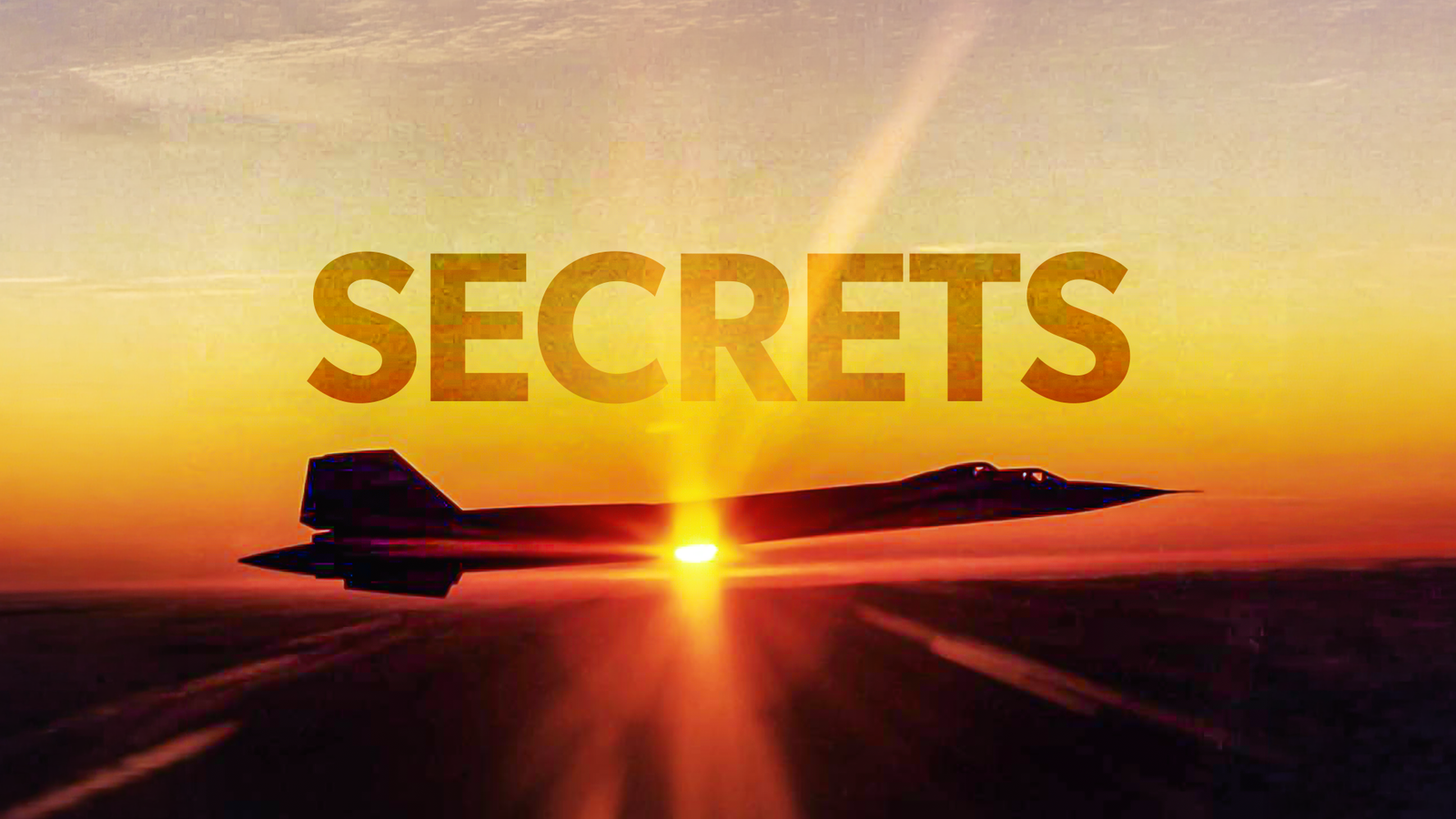
50 Years After The SR-71's Unbroken Record, Its Strangest Engineering Secrets Still Stand Out
Full Article
Original Source
Read the full article at Simpleflying →KhanList aggregates and links to publicly available news content. We do not host full articles from third-party sources. Always verify important information with original sources.