
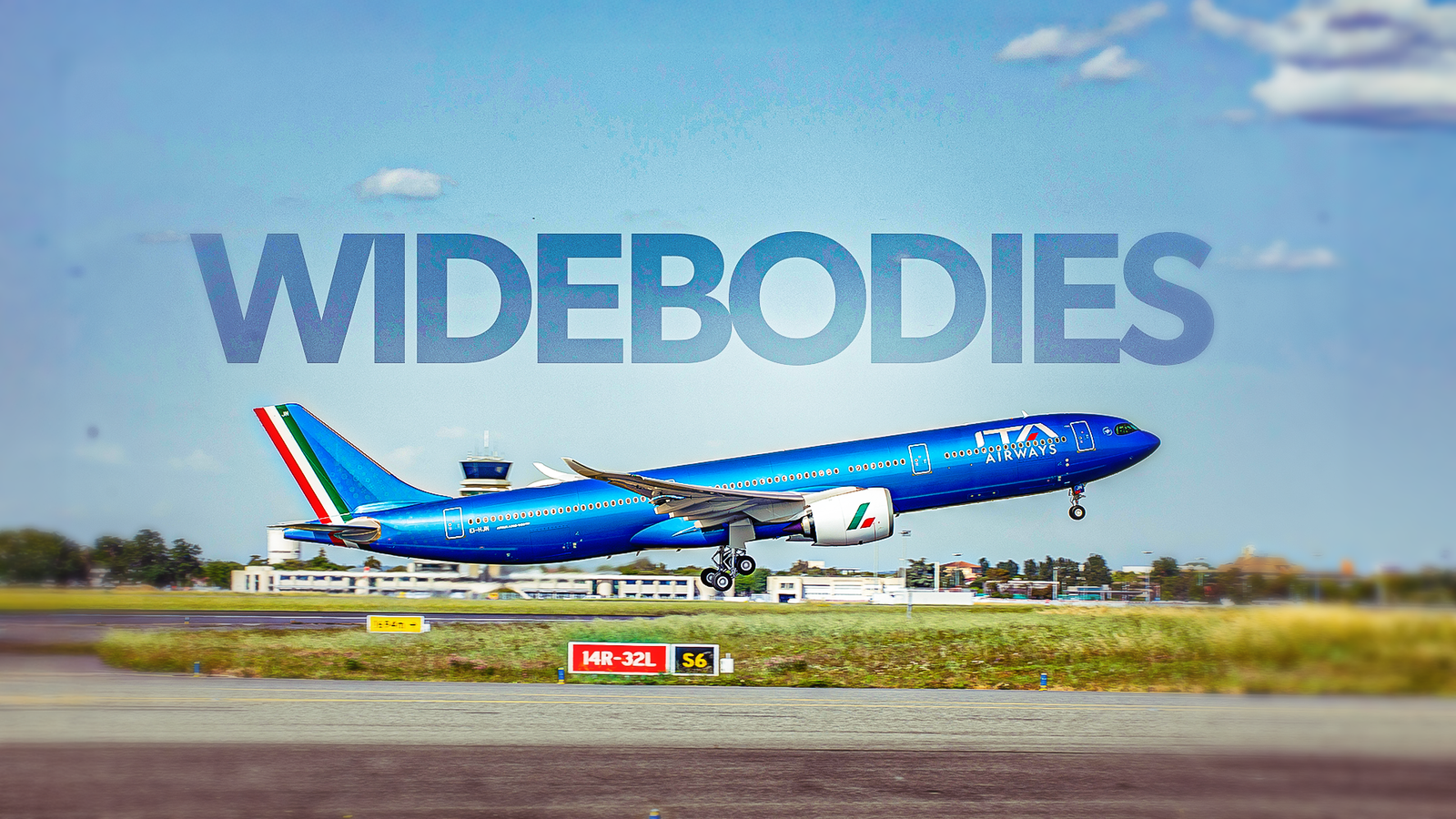
Published Nov 23, 2026, 7:00 PM EST Based in Maastricht, the Netherlands, Nick joined Simple Flying in October 2025 and has a strong passion for travel and tourism, and in particular, the aviation industry, for as long as he can remember. Nick's focus is on aviation economics, airline strategy, and digital innovation. Before joining Simple Flying, he gained industry experience in ground handling and in a leading European airline group. Academically, Nick holds a Bachelor's degree in Aviation Management and is currently pursuing a Master's degree in Strategy & Innovation. The Boeing 787 Dreamliner and Airbus A350 are becoming the backbone of long-haul aviation; however, they are far from the only widebody aircraft shaping the industry in 2026. While Boeing continues to prepare its delayed 777X for entry into service, airlines are ordering more Airbus A330neos and investing heavily in aircraft that were once expected to disappear from their fleets, including the Airbus A380. Emirates alone has 270 Boeing 777Xs on order, yet expects to operate some A380s until around 2041. These five aircraft families therefore serve very different markets, from thinner nonstop routes to congested hubs where airlines need more than 500 seats per flight. Purchase prices, delivery availability, capacity, and route networks are therefore just as important as technology. Here are five widebody families that illustrate those decisions in 2026. 5 Airbus A380 Emirates plans to keep its Superjumbos flying into the 2040s Credit: Emirates The A380 is the only aircraft on this list no longer in production. Airbus delivered the final example in 2021 as airlines increasingly favored smaller twin-engine widebodies. Its capacity and four engines make it difficult to operate profitably on thinner routes, but more attractive where airport slots are limited and demand is high. At congested hubs, airlines cannot simply add departures when demand grows. Emirates is by far the largest A380 operator, with a fleet of 116 aircraft, while British Airways, Singapore Airlines, Qantas, and several other carriers continue using the type. In spring 2026, roughly 190 A380s were in airline fleets worldwide, meaning Emirates alone accounted for well over half of the total. Many operators of the A380 have found that their existing superjumbos retain their value and replacing an A380 with a smaller jet reduces available seats unless airlines secure more slots. Its upper deck accommodates large business class cabins and an onboard lounge, while the first class showers remain a distinctive feature. Emirates has committed billions of dollars to refurbishing its existing fleet, including fitting Premium Economy cabins on the A380. In July, the airline announced that its wider retrofit program had reached 100 aircraft across the A380 and 777 fleets, including 47 A380s. It is also converting two-class A380s into three-class aircraft with Premium Economy. Qantas plans to begin retiring its remaining superjumbos from 2028 as its long-haul fleet expands. Emirates, in contrast, expects to operate some aircraft until around 2041, as its massive global network continues to support the A380's capacity. With no direct replacement for a 500-seat double-decker currently in production, the airline will have to balance rising maintenance costs against the value of keeping that capacity available at slot-constrained airports. 4 Airbus A330neo Lower acquisition costs and fleet commonality are major advantages Credit: Airbus The A330neo has attracted fewer orders than the 787 or A350, but offers a combination the newer aircraft cannot always match: relatively low acquisition costs, substantial capacity, and an established airframe. The A330-900 is powered by Rolls-Royce Trent 7000 engines and features aerodynamic improvements, including larger composite winglets. Airbus says it burns 14% less fuel per seat than the previous-generation A330. According to aviation consultancy Visual Approach, new A330-900s were being delivered at prices around $120 million in late 2025, compared with more than $160 million for a Boeing 787-9 and over $170 million for an A350. These market estimates, rather than list prices, help explain its appeal on routes that do not need the performance of a more expensive aircraft. Lower ownership costs can be particularly valuable for leisure airlines and operators with seasonal demand. When an A350’s additional range goes unused, its higher purchase price can be difficult to justify. The Five Largest A330-900neo Operators In November 2026 Rank Airline Aircraft In Fleet 1 Delta Air Lines 39 2 TAP Air Portugal 19 3 Condor 18 4 ITA Airways 17 5 Cebu Pacific 15 Planespotters.net Airbus says the A330neo shares up to 95% of its airframe spare parts by part number with the older A330ceo, reducing investments in spares, tooling, and technical training. Airlines such as Delta, TAP Air Portugal, and Condor have demonstrated the aircraft's versatility across different long-haul business models. However, the Trent 7000 has also faced durability challenges, with engine time on wing becoming a concern for operators and a factor in the aircraft’s overall economics. Moreover, seating density and flight length also influence whether its economics compare favorably with newer designs. The aircraft's position has strengthened further through several orders in 2026. Delta ordered another 16 A330-900s in January, Scandinavian Airlines (SAS) committed to 18 in June, and leasing company Avolon placed an order for 35 in October. 3 Boeing 777 The delayed 777X will eventually replace older high-capacity twinjets Credit: Vytautas Kielaitis | Shutterstock More than 30 years after entering service, the 777 remains important for long-haul passenger and cargo operations. The 777-300ER combines high capacity with enough range for most major intercontinental routes. Emirates continues to operate the world's largest 777 fleet, and the type remains central to its Dubai-based connecting network alongside the Airbus A380. Unlike the larger superjumbo, the 777 serves markets that cannot fill 500 seats per departure while still providing premium and cargo capacity. In November 2025, Emirates ordered another 65 Boeing 777-9s, bringing its total 777X commitment to 270 aircraft. The commitment underscores the role of high-capacity twinjets in its future fleet. The 777-9 will be the world’s largest twin-engine passenger jet, combining additional capacity with more efficient engines and a new composite wing. However, the program has suffered repeated delays, and Boeing's latest October 2026 update still targets first delivery in 2027. However, German flag-carrier Lufthansa, the type's launch customer, has already been planning its summer 2027 schedule without relying on the type. Existing older 777s will therefore remain important longer than anticipated. Emirates, for example, is refurbishing its cabins with updated business class and premium economy products, maintaining their commercial appeal while replacement aircraft are delayed. Refurbishing aircraft also postpones the expense of buying replacements. 2 Airbus A350 New ultra-long-haul and freighter variants are expanding its role Credit: Ridha Arianta | Shutterstock The A350 is becoming the flagship of airlines across Asia, Europe, and the Middle East. Its composite structure and modern engines deliver lower fuel consumption than many older widebodies. The larger A350-1000 also competes directly with the Boeing 777-300ER and upcoming 777-9. Its Rolls-Royce Trent XWB-97 engines and higher capacity make it particularly suitable for airlines replacing older large widebodies while maintaining a premium-heavy cabin. Lufthansa took delivery of its first A350-1000 on November 10, with a 300-seat configuration featuring its Allegris cabin. Delta Air Lines, Air Canada, and Riyadh Air have also committed to the variant. The A350 family had secured more than 1,620 orders by the end of August, according to Airbus. The delayed 777X has made the A350-1000 an available alternative, although other factors also influence fleet decisions. The A350's capabilities are particularly visible in Qantas' Project Sunrise program. The airline is preparing 12 specially modified A350-1000ULRs to operate nonstop flights from Sydney to London, beginning in October 2027, followed by New York in 2028. They will feature just 238 seats across four classes, a particularly low density for the type. The additional fuel capacity needed for these 20-hour-plus flights means that Qantas is prioritizing range and passenger comfort over the much higher seating capacity the aircraft could otherwise offer. In November, a Project Sunrise test aircraft completed a record-breaking 24-hour, 24-minute flight from Melbourne to Toulouse. 1 Boeing 787 Dreamliner More than 530 new nonstop routes since entering service Credit: Craig Russell | Shutterstock The 787 Dreamliner combines relatively modest capacity with the range needed to connect smaller long-haul markets. According to Boeing, the aircraft family has enabled airlines to open more than 530 previously unserved nonstop routes, including flights where a larger widebody might struggle to fill enough seats. This allows network carriers to launch services that previously required a connecting flight through another hub. It is particularly valuable when demand is spread across many destinations rather than a few trunk routes. The 787-8 serves smaller markets, the 787-9 balances capacity and range, and the 787-10 provides more seats where its shorter range is sufficient. The largest operators include All Nippon Airways (ANA), United Airlines, American Airlines, and Qatar Airways. Its composite fuselage also allows lower cabin altitude and higher humidity than traditional aluminum aircraft. These improvements contribute to the Dreamliner’s passenger appeal. Additional MTOW Potential additional range Boeing 787-9 Dreamliner 10,000 lb (4,540 kg) More than 300 nautical miles (560 km) Boeing 787-10 Dreamliner 14,000 lb (6,350 kg) More than 400 nautical miles (740 km) In March, the Federal Aviation Administration (FAA) approved higher maximum takeoff weights for the 787-9 and 787-10. According to Boeing, the upgrade gives the 787-9 approximately 10,000 lb (4,540 kg) of additional takeoff weight, allowing it to carry more payload or fly over 300 nautical miles (560 km) farther. The larger 787-10 gains around 14,000 lb (6,350 kg), potentially extending its range by more than 400 nautical miles (740 km).
5 Widebody Aircraft That Define Commercial Aviation In 2026
Full Article
Original Source
Read the full article at Simpleflying →KhanList aggregates and links to publicly available news content. We do not host full articles from third-party sources. Always verify important information with original sources.