
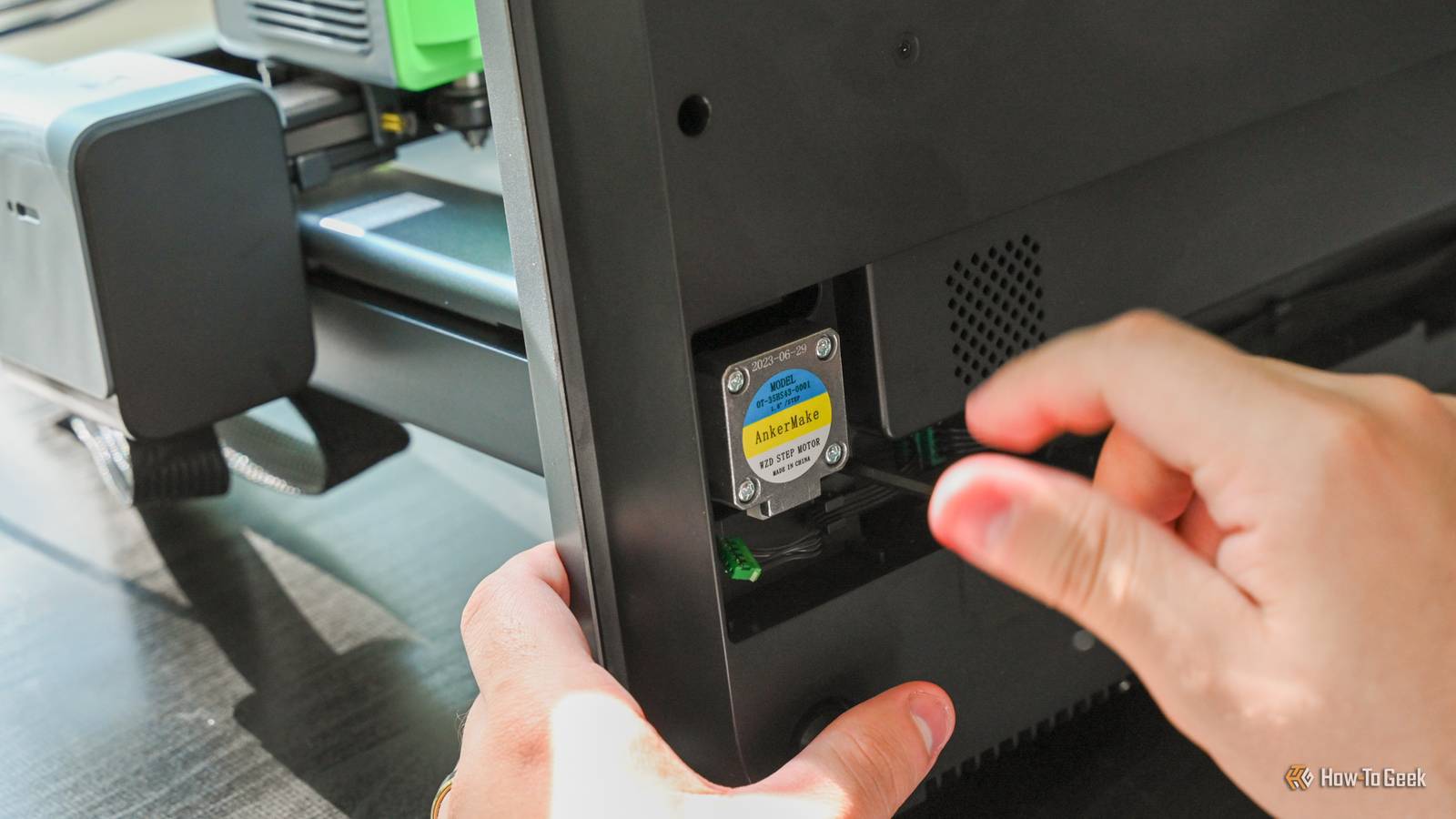
Published Aug 22, 2026, 12:30 PM EDT Sydney Butler is a technology writer with over 20 years of experience as a freelance PC technician and system builder and over a decade as a professional writer. He's worked for more than a decade in user education. On How-To Geek, he writes commerce content, guides, opinions, and specializes in editing hardware and cutting edge technology articles. Sydney started working as a freelance computer technician around the age of 13, before which he was in charge of running the computer center for his school. (He also ran LAN gaming tournaments when the teachers weren't looking!) His interests include VR, PC, Mac, gaming, 3D printing, consumer electronics, the web, and privacy. He holds a Master of Arts degree in Research Psychology with a minor in media and technology studies. His masters dissertation examined the potential for social media to spread misinformation. Outside of How-To Geek, he hosts the Online Tech Tips YouTube Channel, and writes for Online Tech Tips, Switching to Mac, and Helpdesk Geek. Sydney also writes for Expert Reviews UK. He also has bylines at 9to5Mac, 9to5Google, 9to5Toys, Tom's Hardware, MakeTechEasier, and Laptop Mag. 3D printers are hardworking machines, and it's also an area that's moving ahead so quickly that even relatively new machines can feel obsolete quickly. So, if you have a broken 3D printer, or one you just don't need anymore, taking up space in your house, there are a few things you can do with it other than just getting its scrap value. Turn the frame into a completely different machine There is no rule that says a printer can't be something else Credit: Patrick Campanale / How-To Geek In the end, a 3D printer is just a specialized type of robot. The end effector happens to be a plastic extrusion head, but it could have been a laser, or a mill, or anything. It's a system to move an end effector precisely within a 3D volume, when you get right down to it. So why not repurpose an old 3D printer to be something else? If you change the end-effector and software, you could have a jury-rigged CNC machine or laser engraver, or pen-plotter. The Woodgineer posted a 3D printer CNC conversion process on Instructables where the end result worked, but you can tell this was more about trying a fun project than making a useful machine. Still, if you have an otherwise functional printer that's just too obsolete to be worth anything as a 3D printer, this could be the path for you. It would certainly teach you lots of useful things, and maybe you could have a useful device at the end. These days you can buy 3D printers that also have milling or laser-cutting features, but they are incredibly expensive, so if you have lots of free time and patience, why not? Give the stepper motors a second life It could be a step in a whole new direction Credit: Vladyslav Horoshevych/Shutterstock.com One of the reasons 3D printers can be so affordable is through the clever use of stepper motors. These electric motors don't just spin continuously, but move in small, precise increments. They don't usually need special sensors to report what position they're in either, so they're a great match for the positioning capabilities a 3D printer needs. However, this also makes them great for numerous other projects. You can build robots, create automated sliding or rotating devices, create custom camera rigs, and really there's an endless series of applications. If you're going to throw the printer away or scrap it, the stepper motors are probably the one thing most people should save. Turn it into a filament dryer Cheaper than printing with wet filament This is mostly applicable to enclosed 3D printers, and if you need a model with a heated bed. The idea is to place your filament spool separated by some cardboard stand or even the filament's own box with vent holes cut in on top of the heated bed. Then you manually set the heated bed to something like 50C or 65C, depending on what the filament needs for drying, and leave it in there for five or six hours. If you have an enclosed printer with an exhaust fan, you can also usually manually peg it at a low speed, so that the moisture released in the chamber is removed. You might be thinking that you can do this with a 3D printer that isn't old and no longer useful, and you'd be right! However, if you're using your printer to dry filament, you're not printing. So why not just use a dedicated dryer? Well, apart from this being a (admittedly small) additional cost, printer chambers are big enough that you can dry several rolls at once, so converting your old printer into a filament dryer might actually make economic sense. Save the fancy electronics and scrap the rest There's gold in there if you know where to look Credit: Mike_shots/Shutterstock.com The stepper motors are the most universally useful part to keep, but your 3D printer is full of parts that could be resold individually or used in your own projects going ahead. Fans, switches, control boards, screens, connectors, sensors, and the rest are all often standard off-the-shelf components. So, if you have an Arduino or Rapberry Pi, you can likely make something cool using these parts. The rest of the printer, like the frame or other simple metal components that you won't necessarily still have scrap metal value if you really can't think of something to do with them. However, before you throw those bits away, put them up for sale as spares online. You never know when someone out there is still using the model you think isn't worth fixing, and they might be happy to pay a reasonable price. Combine it with another broken model and make a new working printer Two wrongs can make a right Credit: Sobrevolando Patagonia/Shutterstock.com Which brings me neatly to my last point. If your printer is broken, but would still be useful to you if it wasn't broken, consider buying another broken unit for cheap. You might be able to piece together one working unit with years of life left in it, and you can keep the rest as spare parts, or for projects as described earlier.
5 ways to repurpose your old or broken 3D printer
Full Article
Original Source
Read the full article at Howtogeek →KhanList aggregates and links to publicly available news content. We do not host full articles from third-party sources. Always verify important information with original sources.