
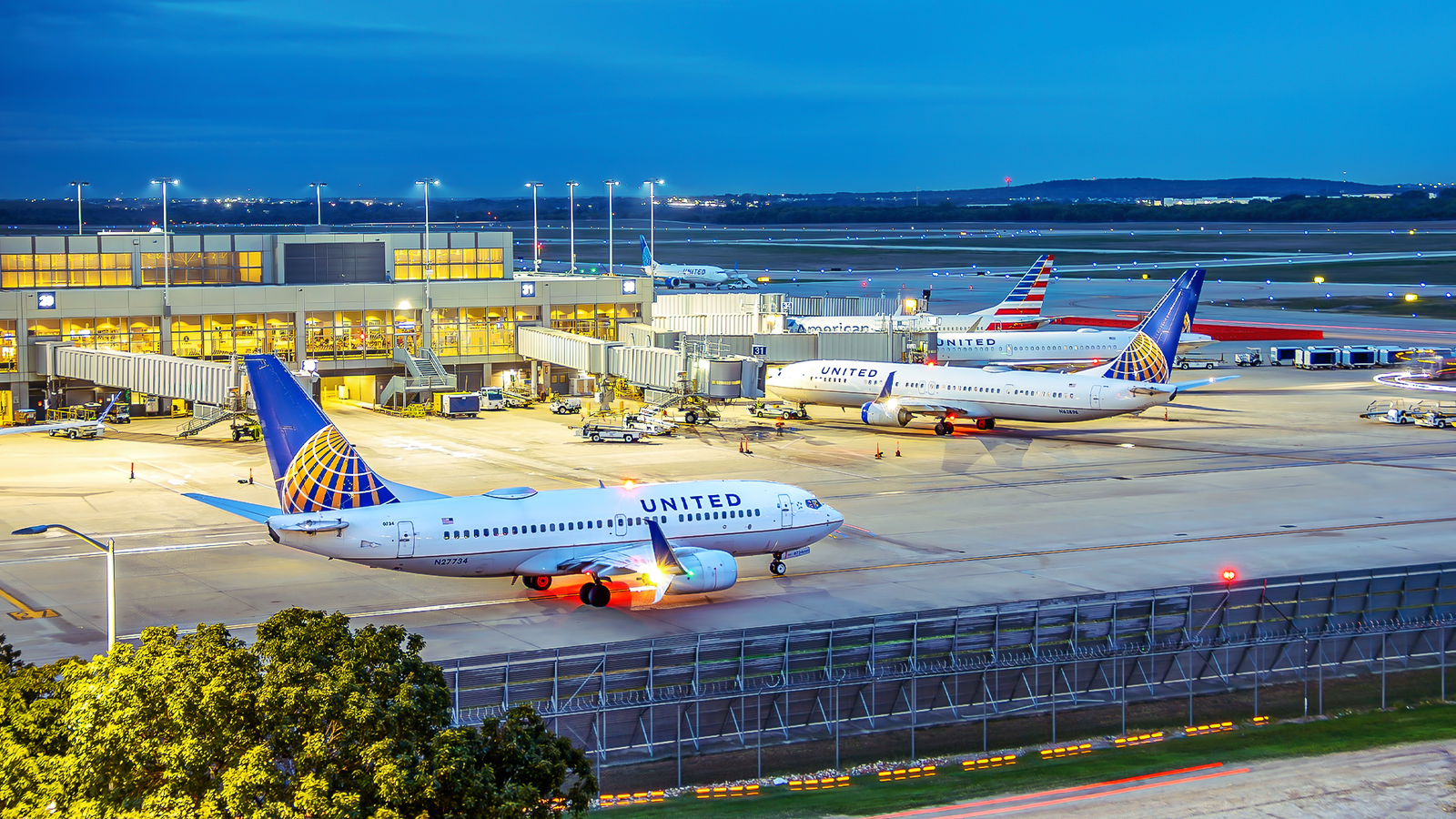
Published Aug 20, 2026, 10:00 AM EDT Journalist - Steven has a varied background in communications, and it was this passion for writing combined with his in-depth knowledge of the aviation industry that led him to Simple Flying. A keen linguist, he also has experience in translation and interpreting. Based in Palma, Spain Commercial aviation in the US has rebounded strongly in recent years, placing renewed pressure on airport terminals that were designed for a much smaller traveling public. While many airports have announced ambitious redevelopment projects, several of today's busiest terminals continue to accommodate passenger volumes that far exceed what planners originally expected when those buildings first opened. Some airports have responded with phased expansions and temporary improvements, while others have committed to complete terminal replacements after years of operating beyond their intended capacity. The expansion of these five US airport terminals illustrates how decades-old forecasts have been overtaken by sustained passenger growth and changing airline networks. 5 Southwest Florida International Airport 11.1 million passengers Southwest Florida International Airport (RSW) serves one of the fastest-growing regions in the US, and its single passenger terminal has gradually become one of the busiest facilities of its kind. Opened in 1983, the terminal has supported steady increases in leisure travel to Fort Myers, Naples, and surrounding Gulf Coast destinations, particularly during the winter season when visitors arrive from across North America. The busiest route from the airport last year was to Hartsfield-Jackson Atlanta International Airport (ATL). This was according to data from the US Bureau of Transportation Statistics, whose figures are detailed in the table below. The airport has repeatedly broken annual passenger records in recent years, handling more than 11.15 million travelers during 2025 alone. Ranking Destination Passengers 1 Hartsfield-Jackson Atlanta International Airport (ATL) 498,000 2 Chicago O'Hare International Airport (ORD) 390,000 3 Minneapolis/St. Paul International Airport (MSP) 338,000 4 Detroit Wayne County Metropolitan Airport (DTW) 321,000 5 Boston Logan International Airport (BOS) 304,000 Those numbers have stretched the terminal well beyond what its original designers anticipated more than four decades ago, especially as airlines have expanded domestic schedules and introduced additional seasonal routes. Although operational improvements have helped reduce congestion, the existing building has increasingly struggled to provide enough gate space and passenger amenities during peak travel periods. To accommodate future demand, airport officials are constructing the new Concourse E as part of a terminal expansion valued at approximately $1.1 billion. The project will significantly increase gate capacity while modernizing passenger facilities, although completion has shifted toward 2028. Until then, the original terminal continues handling record passenger volumes despite being built for a much smaller airport than the one operating today. 4 Austin Bergstrom International Airport 21.6 million passengers Credit: Shutterstock Austin Bergstrom International Airport (AUS) presents perhaps the clearest example of a modern terminal dramatically exceeding its intended capacity. The Barbara Jordan Terminal opened in 1999 with a design capable of serving approximately 11 million annual passengers, reflecting the size of Austin's commercial aviation market at the end of the twentieth century. Even after later improvements increased practical capacity to roughly 15 million passengers, demand continued rising at an extraordinary pace. The airport now handles more than 21 million annual passengers through the same primary terminal, placing enormous strain on ticketing areas, security checkpoints, gate lounges, baggage systems, and curbside roadways. Ranking Destination Passengers 1 Hartsfield-Jackson Atlanta International Airport (ATL) 628,000 2 Denver International Airport (DEN) 627,000 3 Dallas/Fort Worth International Airport (DFW) 572,000 4 Los Angeles International Airport (LAX) 434,000 5 Phoenix Sky Harbor International Airport (PHX) 419,000 Austin's explosive population growth, combined with expanding technology companies and increasing airline competition, has rapidly transformed the airport into one of the nation's busiest medium-sized hubs without the terminal infrastructure originally needed to support such traffic. The busiest destinations from the airport last year are detailed in the table above. Airport officials have responded with a series of phased expansion projects rather than an immediate replacement. An $865 million Arrivals and Departures Hall is expected to improve passenger processing before the end of the decade, while a much larger Concourse B will eventually provide significant additional gate capacity during the 2030s. Until those projects are completed, however, the Barbara Jordan Terminal continues serving nearly twice the number of passengers envisioned when it first opened. 3 San Diego International Airport 25.3 million passengers Credit: San Diego International Airport The original Terminal 1 at San Diego International Airport (SAN) became one of the most visible examples of a terminal being pushed far beyond its intended lifespan. When the facility opened in 1967, it was designed for an era when air travel volumes were dramatically lower, with an expected capacity of approximately 2.5 million passengers annually Over the following decades, tourism growth, regional development, and expanding airline schedules transformed the terminal into a facility handling several times more passengers than its creators had anticipated. A key driver has been the increasing number of international services. By the time plans were finalized for a replacement, the aging terminal was processing roughly 12 million passengers each year. Ranking Destination Passengers 1 San Francisco International Airport (SFO) 848,000 2 Denver International Airport (DEN) 751,000 3 Las Vegas Harry Reid International Airport (LAS) 727,000 4 Phoenix Sky Harbor International Airport (PHX) 654,000 5 Seattle-Tacoma International Airport (SEA) 596,000 The building had received various upgrades over the years, but its original layout created challenges for modern airport operations, including limited passenger circulation, outdated amenities, and constraints caused by increasing security and airline requirements. Unlike some airports that attempted to extend the life of older terminals through continuous additions, San Diego International Airport ultimately decided that a complete replacement was the most effective long-term solution. The new Terminal 1 opened in September 2025 as part of a major redevelopment designed to create a more efficient gateway for the region. The project replaced a terminal that had operated for nearly six decades and represents a significant shift from incremental improvements toward a modern airport environment. San Diego’s approach highlights how some terminals eventually reach a point where expansion alone cannot solve capacity issues, requiring a complete transformation to support future passenger growth. 2 Nashville International Airport 25.7 million passengers Credit: Metropolitan Nashville Airport Authority Nashville International Airport (BNA) has transformed from a primarily regional facility into one of America's fastest-growing airports, driven by rapid population growth, tourism, and the city's expanding business sector. Passenger demand has accelerated well beyond the expectations established when the airport introduced its long-term BNA Vision development program during the previous decade. When the master plan was unveiled in 2016, airport leaders projected annual passenger traffic would reach approximately 20 million by 2035. Instead, that milestone arrived more than a decade ahead of schedule, with the airport surpassing 20 million passengers during 2023 before establishing another record of more than 25 million passengers in 2025. Such rapid growth has placed increasing pressure on the terminal's central processing areas despite previous expansion projects. Ranking Destination Passengers 1 Hartsfield-Jackson Atlanta International Airport (ATL) 517,000 2 Denver International Airport (DEN) 513,000 3 Dallas/Fort Worth International Airport (DFW) 438,000 4 Orlando International Airport (MCO) 422,000 5 Chicago O'Hare International Airport (ORD) 411,000 The two largest carriers at Nashville International Airport in 2025 were Southwest Airlines and American Airlines. Atlanta was also the airport's busiest destination last year, followed by Denver International Airport (DEN), as detailed in the table above. Rather than simply extending the existing facilities, Nashville International Airport has revised its long-term planning assumptions to accommodate approximately 40 million annual passengers. One of the latest projects focuses on rebuilding the terminal's Central Core, including substantially increasing the number of escalators and improving passenger circulation. The investment reflects how quickly original traffic forecasts became outdated as Nashville emerged as one of the country's strongest aviation growth markets. 1 Chicago O’Hare International Airport 84.5 million passengers Credit: Shutterstock Chicago O'Hare International Airport (ORD) represents the largest expansion project among the terminals facing capacity challenges on this list. Unlike airports dealing with a single overcrowded facility, the airport's redevelopment is part of a broader effort to reshape one of the world’s busiest aviation centers. The airport’s existing Terminal 2, which has served passengers for decades, is being replaced by a new Global Terminal designed to support future international and domestic operations. The planned Global Terminal will be more than twice the size of the current Terminal 2, creating a larger and more flexible facility capable of handling significantly higher passenger volumes. The project forms part of Chicago O’Hare’s wider modernization program, which has already included runway improvements and terminal upgrades intended to maintain the airport’s position as a major global connection point. Ranking Destination Passengers 1 LaGuardia Airport (LGA) 1,380,000 2 Los Angeles International Airport (LAX) 1,157,000 3 Denver International Airport (DEN) 1,010,000 4 Orlando International Airport (MCO) 982,000 5 San Francisco International Airport (SFO) 980,000 Construction is expected to begin in late 2026, marking one of the most ambitious terminal projects ever undertaken in the US. Last year, LaGuardia Airport (LGA) was the busiest destination from the airport, followed by Los Angeles International Airport (LAX), both of which saw more than one million passengers. Chicago O’Hare International Airport’s expansion reflects a broader trend across US aviation. Specifically, airports are increasingly replacing older terminals rather than relying solely on small-scale improvements. Passenger expectations, airline strategies, and security requirements have changed considerably since many existing terminals were first built, meaning that facilities designed decades ago often lack the space and flexibility required today. The Global Terminal is intended to address those limitations by creating a larger, more connected passenger environment for future generations of travelers.
5 US Airport Terminals Serving More Passengers Than Originally Planned
Full Article
Original Source
Read the full article at Simpleflying →KhanList aggregates and links to publicly available news content. We do not host full articles from third-party sources. Always verify important information with original sources.