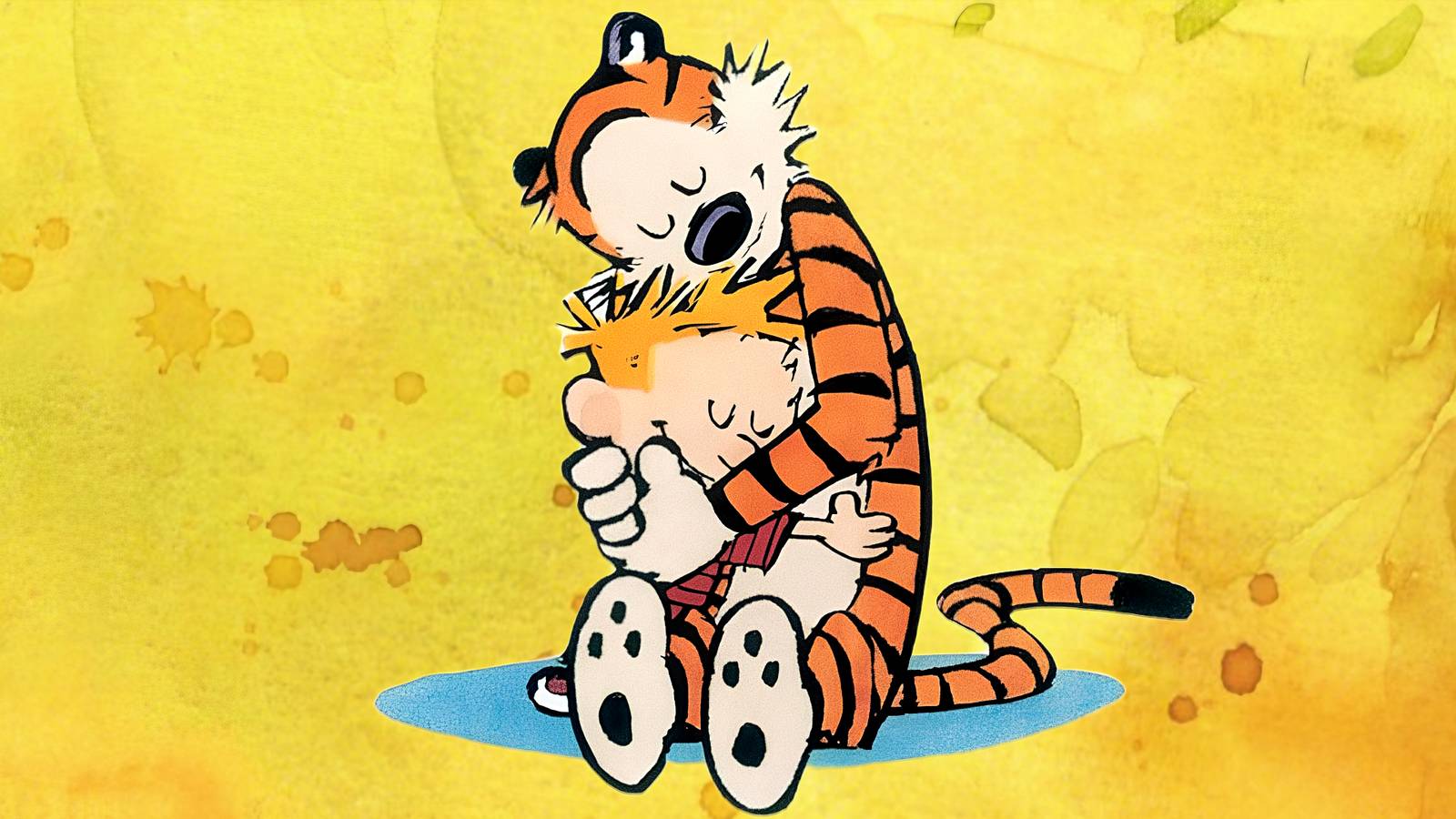
Published Aug 13, 2026, 9:00 AM EDT Nicolas Ayala is a Senior Writer for the Comics team at ScreenRant, with over five years of experience writing about Superhero media, action movies, and TV shows. While Bill Watterson's Calvin and Hobbes is known for the titular characters' sense of humor, some lines provide unexpected nuggets of life wisdom. Calvin and Hobbes' personalities create the perfect engine for adventure and comedy. Calvin's endless imagination and Hobbes' patience transform simple afternoons into unforgettable memories, sprinkled with a few lighthearted conflicts and frustrations, which inevitably help the two strengthen their bond and come out of every adventure a little bit wiser than before. The uncertainty surrounding Hobbes' status as either a living tiger or Calvin's imaginary companion adds another layer, since their conversations work perfectly under either interpretation. Calvin and Hobbes' clashing personalities have created countless funny moments across more than four decades. Calvin's observations about school are often miniature attacks on adult authority, such as his suspicion that education exists primarily to prevent children from having fun. Hobbes supplies a different kind of humor through his dry reactions and his willingness to expose the absurdity of Calvin's confidence. Calvin's grand schemes also contain their own punchlines: his transmogrifier, duplicator, and cardboard-box inventions give him limitless possibilities, but his plans usually collapse under the weight of his own imagination. Their childlike innocence ties all of this together. Calvin and Hobbes' conversations about life, school, food, and the future can begin as jokes and suddenly become surprisingly perceptive. 5 "There's Never Enough Time To Do All The Nothing You Want." The Best Pleasures In Life Often Have No Deeper Meaning For Calvin and Hobbes, “nothing” is hardly empty. It can mean lying on the grass, talking with each other, staring at the clouds, inventing elaborate games, or simply allowing their imagination to wander wherever it wants. Adults tend to measure a day through productivity and obligations, where Calvin sees responsibilities as an obstacle to his curiosity. Calvin's complaint about a lack of available time sounds like a joke from a child who would rather avoid homework, but it also contains a surprisingly mature observation about how easily people surrender their free time to demands that may have little connection to genuine happiness. This line also captures the innocence of Calvin and Hobbes' friendship. Their greatest adventures usually begin doing nothing important. Their idea of “nothing” suggests the ability to enjoy life without turning it into a project or trying to participate in activities with practical purpose. Calvin and Hobbes' best memories are all experiences worth having precisely when they accomplish nothing, ones that an imaginative child can recognize how precious they truly are. 4 "If People Could Put Rainbows In Zoos, They'd Do It" Nature Is Beautiful Because It's Free In his innocence, Calvin believes catching a butterfly will allow him to admire it whenever he wants. However, Hobbes perfectly explains why the act of catching it defeats the purpose of his admiration. Humans have historically stripped animals of their natural freedom to transform something wild and independent into something people can observe at their convenience. The same applies to other parts of nature, like beautiful landscapes that gradually wither away, or ecosystems that lose their delicate balance due to human intervention. Hobbes' response also serves as a reminder that people often respond to beauty by trying to own it or turn it into an attraction. Indeed, if humans found a way to replicate full-size, natural-looking rainbows in specific environments, it could easily become a profitable attraction. Preserving something beautiful doesn't require enclosing it; preservation means allowing it to exist according to its own nature. Luckily, Calvin instinctively recognizes the value of leaving some things beyond human control. 3 "I Already Know More Than I Want To! I Liked Things Better When I Didn't Understand Them" Childhood Ignorance Is Bliss Calvin's complaint captures a key chapter of childhood, the precise moment where knowledge of the adult world starts to help the world make sense, yet also much harder to enjoy. As a child, Calvin approaches almost everything through blissful ignorance. Once he learns how something actually works, mystery disappears, and it's replaced with the frustrating coldness of boring, hard truths. This quote also carries a deeper irony, since Calvin is an intensely curious child who constantly asks questions and invents theories. He wants knowledge when ignorance frustrates him, but he also discovers that knowledge imposes limits on imagination. Growing older often means replacing possibilities with explanations. Everything from science and history to relationships and politics can become easier to understand with experience, even though greater knowledge removes comforting assumptions. While an adult often knows enough to recognize how complicated the truth can be, a child can withstand the discomfort of not knowing through sheer imagination. Calvin and Hobbes understands this conflict especially well, as Calvin's imagination allows him to transform ordinary life into larger-than-life adventures, whereas the adults around him tend to see the same world through practical explanations. 2 "Given The Pace Of Technology, I Propose We Leave Math To The Machines And Go Play Outside" Technological Advancement Shouldn't Be The End Goal Of Humanity Calvin's proposal sounds like another attempt to escape homework, but its underlying argument has become remarkably relevant in an era when machines can perform tasks that once required substantial human expertise. Calvin's joke imagines a future in which technology handles calculation so efficiently that people can redirect their energy toward activities technology can't replace. Calvin instinctively understands that certain human activities have value beyond efficiency, especially as technology becomes better at solving problems that aren't worth solving manually anymore. Calvin's complaint feels even more prescient in the age of artificial intelligence and machine learning. Ideally, artificial intelligence and machine learning should have started solving issues that required objective effort so human beings could better enjoy creative endeavors like art and entertainment. Yet, the rise of AI started precisely in these areas. But while artificial intelligence can generate an image or solve an equation in seconds, a machine completing a task doesn't make the human experience of discovering and creating obsolete. Calvin's joke gains its modern relevance from the possibility that technological progress could make society more efficient, so the parts of life people pursue for their own sake are easier to enjoy. 1 "This Is The Kind Of Thing That Happens To Someone Else. But We’re All “Someone Else” To Someone Else" Empathy Is Knowing It Can Happen To You Too Within the span of only two panels, Calvin's parents summarize the unsettling truth that tragedy often feels distant until it eventually reaches us personally. People can look at an accident, an illness, a death, or some other disaster and instinctively place it in a category that belongs to other people. However, every person who experiences a tragedy once belonged to somebody else's idea of “someone else.” From every individual's own perspective, they are the central character of their life, but from another person's perspective, they are another stranger whose life-changing experiences stay in the background. This might be one of the bleakest quotes to come out of Calvin and Hobbes' forty-one-year history. It doesn't deliver a comedic punchline, but it certainly provides a lesson in empathy. If everyone can become “someone else” from another person's point of view, then other people's suffering deserves the same attention that we would want for our own. Every person believes their own life is distinct and protected, yet everyone lives under the same uncertainty. A remarkably simple distinction between a tragedy striking “me” and “someone else” is often a matter of randomness. What's your favorite Calvin and Hobbes quote or strip? Writer Bill Watterson Colorist Bill Watterson Publisher Andrews McMeel Publishing
5 Surprisingly Deep Calvin And Hobbes Quotes
Full Article
Original Source
Read the full article at Screenrant →KhanList aggregates and links to publicly available news content. We do not host full articles from third-party sources. Always verify important information with original sources.