
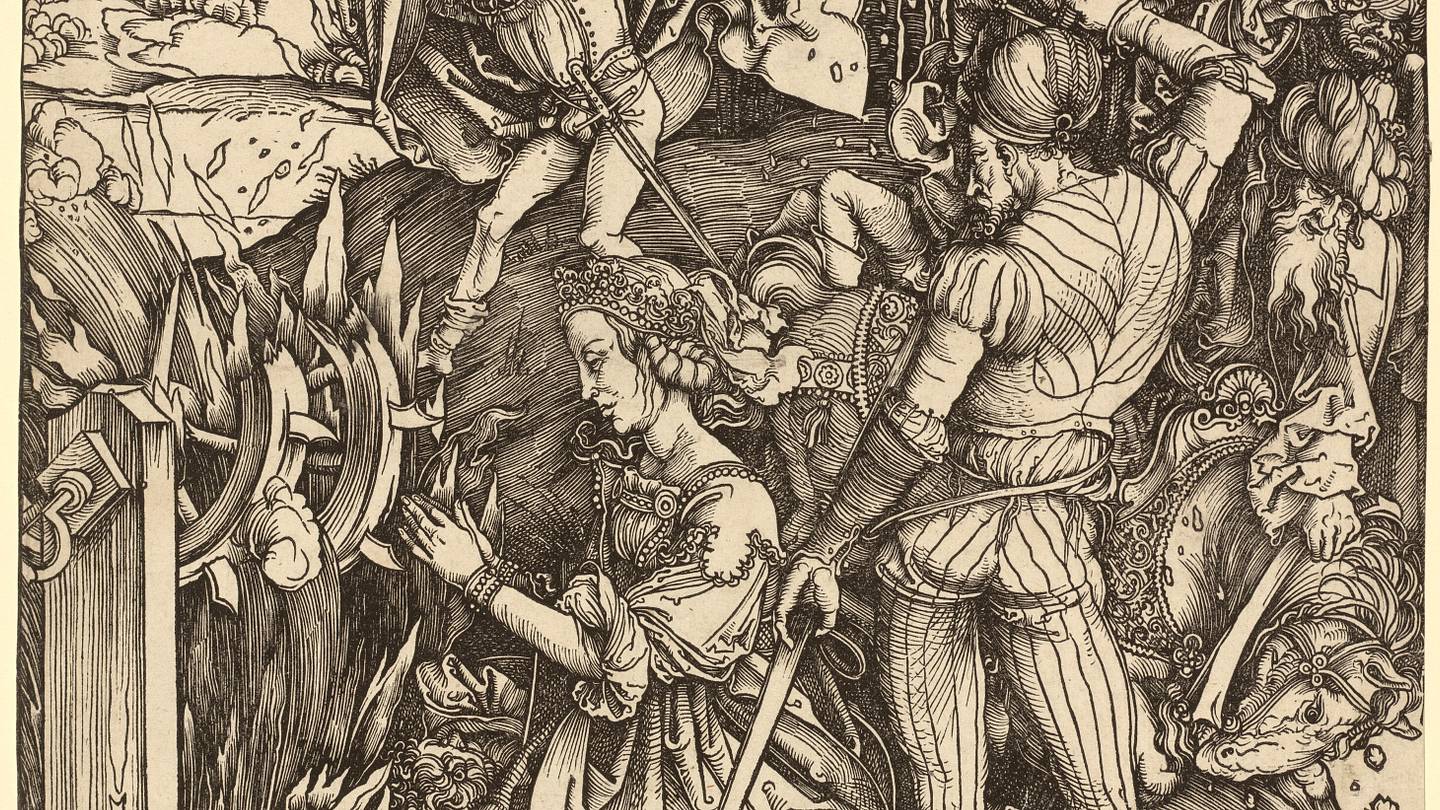
Humans have experimented with a lot of different execution methods over the years, with the most commonly used these days being lethal injection, electrocution, and hanging. But in the past there were many more ways of carrying out lethal punishment—some of which are as strange as they are horrifying. Historians actually now doubt that some of the most brutal methods of execution attributed to centuries past were real. For instance, the brazen bull (which involved someone being placed inside of a hollow bronze bull and then a fire being lit underneath it) and the blood eagle (cutting open a person’s back and pulling their lungs out to create wings) both fall into the likely-fictional category. But there are other gruesomely creative execution methods from history that were definitely real—including the five examples below. Boiling in a VolcanoDeath by ElephantKeelhaulingSchwedentrunkThe Breaking WheelBoiling in a VolcanoLava at Mount Etna | Anadolu/GettyImagesVolcanoes have caused thousands of accidental deaths throughout history, with pyroclastic flows and explosive blasts being the most common ways people are killed by them. But from the early 17th century to the early 19th century, Mount Unzen in Japan was also deliberately used to brutally execute people.During Japan’s Edo period, the Tokugawa shogunate feared the spread of Christianity and so essentially put the country under lockdown. Any Christians who were discovered were tortured and ordered to abandon their religion, and anyone who refused was executed in a rather unusual—and very painful—way. They would be taken to Mount Unzen, a volcano located at the western tip of Japan, and thrown into its bubbling hot springs. Although it was a fairly fast death—no one could survive long in the acidic boiling water—it would have been agonizing.Death by ElephantMan sitting atop elephant in depiction of execution | Pictures from History/GettyImagesFor hundreds of years, elephants were trained to carry out public executions in South and Southeast Asia. The huge animals would place one of their massive feet on the condemned person’s head or torso to quickly crush them to death. But there were a few other—far crueler—ways that elephants could carry out the death penalty. In 1850, British diplomat Henry Charles Sirr described elephants in Sri Lanka “being taught to prolong the agony of the wretched sufferers by crushing the limbs, avoiding the vital parts.” The huge animals could also tear a person limb from limb with the aid of their trunk, or they could cut a person to death with the aid of blades that were fitted onto their tusks or feet. The practice of execution by elephant started dying out during the 17th and 18th centuries, when European countries began colonizing South and Southeast Asia.KeelhaulingThe Keelhauling of the Ship'ss Surgeon of Admiral Jan van Nes - painting | Sepia Times/GettyImagesIt’s often thought that people were executed at sea by being made to walk the plank, but this punishment was surprisingly used very rarely, and the reality was actually much worse. Some sailors were subjected to the horrors of keelhauling, which was invented by the Dutch and was used from around the mid-1600s to the mid-1800s. A line of rope would be looped around the ship’s keel, and the victim would be tied to one end and then dropped into the sea. Those on deck would then pull the other end, dragging the poor person across the keel—where they would be cut and bludgeoned by barnacles, ringbolts, and chains. This process would often be repeated multiple times; according to William Falconer’s An Universal Dictionary of the Marine (1780), “it is continued till the culprit is almost suffocated for want of air, benumbed with the cold of water, or stunned with the blows his head received by striking the ship’s bottom.” Although not always intended to be fatal, in practice the punishment would often end in death. A particularly gruesome account of keelhauling, which occurred aboard the Egyptian vessel the Mehemet Ali, was described in 1882. Two sailors were subjected to the punishment and the news correspondent aboard wrote that “the nose of one wretch was torn almost away, one ear was gone, and the shreds of the clothing he had worn clung to him only where they were held by his bonds. He was blood literally from head to foot. His companion’s condition was equally horrible.” Both men were unconscious and the reporter assumed they were dead. SchwedentrunkSchwedentrunk - drawing | ullstein bild Dtl./GettyImagesDuring Thirty Years’ War—which lasted from 1618 to 1648—Swedish soldiers gained a reputation for a particularly disgusting way of killing their German enemies: Schwedentrunk, which in German translates to “Swedish drink.” A funnel would be forced into the victim’s mouth and then a huge quantity of foul liquid (which was also sometimes boiling hot) was poured down their throat. Liquids used included dirty water, urine, and manure. As you can imagine, schwedentrunk was an incredibly painful way to die, with the person’s intestines usually being filled to bursting. If they didn’t burst, then bacterial infection was likely to finish the person off. “So growing sicke, and their bellies swelling like a Tun, they have died by leysure with the greater torment,” wrote Philip Vincent in The Lamentations of Germany (1638).The Breaking WheelSaint Catherine Delivered From The Wheel | Heritage Images/GettyImagesThe wheel is one of humanity’s most important inventions, but it’s not only been used for good. The breaking wheel was a torture and execution device that dates back to Ancient Rome and was still sometimes used up until the 19th century. There were a variety of ways in which the wheel could be used to kill someone. Some executioners would drop the wheel itself onto a victim to break their bones, but most often the condemned person was tied to the wheel—either across the spokes or bent around the rim. From there they were usually beaten to death with a cudgel or hammer, and sometimes a fire was also lit beneath them. Someone tied to the breaking wheel could be put out of their misery with just one or two blows, but some people suffered many more than that. In 1581, German serial killer Peter Niers—who was convicted of a staggering 544 murders—was subjected to a deliberately prolonged death, receiving 42 blows over the course of two days. The breaking wheel is also known as the Wheel of Catherine—named after Saint Catherine of Alexandria, who at the start of the 4th century was sentenced to die on the wheel. It broke when she touched it, though, which was believed by some to be an act of divine intervention, and she was beheaded instead.
5 Strange and Brutal Methods of Execution Throughout History
Full Article
Original Source
Read the full article at Mentalfloss →KhanList aggregates and links to publicly available news content. We do not host full articles from third-party sources. Always verify important information with original sources.