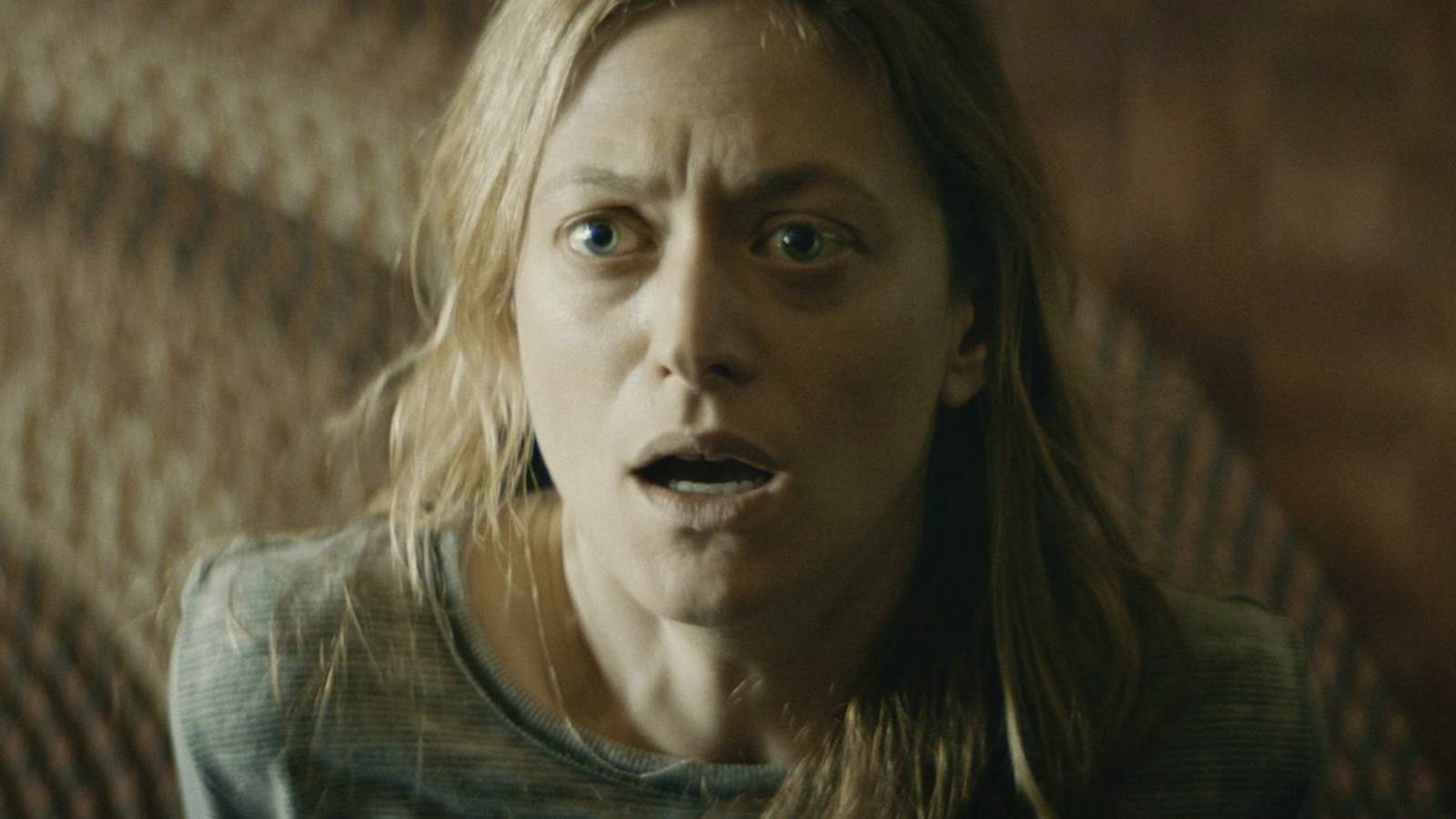
Image via RLJE Films Published Jul 31, 2026, 7:25 PM EDT A New York native, Joe graduated from an avant-garde theater school upstate, where he was obsessed with sketch comedy. There, he and his lunatic friends founded The Sketchies — which still lives on at Skidmore College today. Living in New York City, a screenwriter friend of his then taught him how to write for film. This awakened a new passion in Joe. Since then his scripts have garnered over 200 festival selections, nominations, and wins all over the globe (including the BlueCat Best Feature award). Several of his screenplays have been made into feature films — some of them not that bad! Overall, he loves to create unique, hilarious, touching, and bizarre stories. Sign in to your Collider account Why do we like being scared? Watching horror movies potentially gives viewers the adrenaline-boosting thrill of danger…without actually being in danger. Ergo, scary movies have always had a special place in the dark hearts of a certain breed of movie goer — and they’ve only increased in popularity over the decades. Since 2010, there’s been an undeniably creepy conglomerate of horror films released. Luckily for fans of the gruesome genre, these moving pictures have only gotten more moving…and decidedly scarier. Here are the absolute, sleep-with-the-lights-on scariest horror movies produced since 2010. With only five on this list, some true horror bangers had to be left off, including The Babadook, Talk to Me, Longlegs, and Obsession; so the films that made the creepy cut are not just well-made movies but truly terrifying ones. Some of these are more cerebral and psychologically disturbing than gory, like Creep, whereas others on this list inevitably scare with sheer haunting imagery and heart-stopping jump scare tactics galore, such as The Dark and the Wicked. However they get it done, each masterwork of horror in this spine-tingling selection will satisfy your horrid hunger for being scared witless. 5 'Creep' (2014) Image via The Orchard Sometimes simplicity speaks volumes — and in this case, it’s speaking in as creepy a tone as imaginable. Actor/co-writer/director Patrick Brice took a stab at the found footage sub-genre (which was already getting pretty played out) and not only reinvigorated, but reshaped it in a truly spooky fashion. Brice fully embraces the found footage format and utilizes the very aspect of it that is scary in the first place: the fact that what the viewer is witnessing feels real. Laden with some of the most unsettling sequences of the new millennium, Creep is the kind of movie that will keep freelancers from ever answering an online ad again. Aaron (Brice) is a chill dude with a camera. He’s a videographer, always on the lookout for new work. He sees a gig on Craigslist (first red flag) and applies, then accepts it (it’s only for one night: what could go wrong?). The job takes him to a cabin deep in the woods; this is where the subject of his “film” resides. The guy’s name is Josef (co-writer Mark Duplass, showcasing the lesser-seen menacing side of his acting persona) and he “claims” to have a terminal disease and wants to leave a video testament for his unborn baby. Uh, okay. Josef’s requests become increasingly weirder as the night progresses, leaving Aaron to question if any of what Josef has proposed is factual, and if Josef is, in fact, a total nut-bag. Then, the wolf mask gets broken out, and things go completely off the rails. Brice (and really, Duplass, too) create so much tension and anxiety with just Josef’s creepy face and words — with not even a hint of gore (save the final scene…) that it's truly astounding how much they did with so little. With a message about trust, obsession, and what we can accept as reality, this creepy film is oh so true to its name. 4 'Smile' (2022) Image via Paramount Pictures While the hyper-stylized sequel to Smile (Smile 2) was very well-received, both by critics and audiences all over the place, the original film was simply profoundly scarier. The concept of people smiling eerily obviously isn’t a new one in horror, but it’s given such a splendidly devious makeover here — and the smiles aren’t even the most chilling parts of this supremely well-executed film. Writer-director Parker Finn has a real knack for setting up moments of quiet tension, then relieving that tension for a moment — causing the audience to put their guards down — and then hitting them with either a jump scare powerful enough to make you spit out your popcorn or a visual so eerie that it will haunt your dreams for weeks. Rose Cotter (Sosie Bacon, in the role that proved to the world that she is way more than just Kevin Bacon and Kyra Sedgwick’s kid) is a sensitive woman with a nice position as a psychiatrist. She’s got an ostensibly loving, attractive boyfriend, Trevor (Jessie T. Usher, the infamous “A-Train”)…at least until the going gets tough. When Rose encounters a patient that gives her the signature smirk and then offs herself in the most disturbing of ways, the “smile” curse is passed on to Rose. She’s now destined to replicate the actions of the patient (ie, kill herself) in front of someone else, and then pass the nasty little, invisible demonic grinning entity to another unsuspecting victim. But there’s got to be a way to stop it, right? Rose spends the rest of the film trying to do just that — with the help of her cop ex, Joel (Kyle Gallner, who has probably the best scene in the sequel…). Each set piece contains its very own awful, memorable scare, and they just keep escalating. If you love scary stuff, this film will definitely have you smiling… And if you don’t…you just may end up grinning evilly as well (y’know, like the cursed people). 3 'It Follows' (2014) Image via RADiUS-TWC What we can’t see is often far scarier than what is actually revealed. This notion of “fear of the unknown” being the most terrifying aspect of the human condition was eloquently framed by famed phantasmagorical author H.P. Lovecraft, and then given new life in It Follows. Writer-director David Robert Mitchell capitalizes on the unknown, hidden corners of the entire setting, along with the dark corners of the mind (aided by a sound editing team that is worth their weight in gold and a pulsating synth score that sets the mounting-terror mood all too perfectly). Now, that being said, this film does open with one of the most disturbing, frightening shots of all time, but still, it’s the mysterious elements of this movie that consistently raise the hairs on the back of any viewer’s neck. Jay Height (horror queen of the moment, Maika Monroe) is a beautiful yet relatively normal girl living in suburbia. When she meets a handsome stranger, “Hugh” (Jake Weary), and agrees to go on a date with him, well, that’s when things get a little sticky. After having intercourse with her (the lesson here, kids, is never have sex), he ties her up so that an unseen, evil force can be transferred from him to her, and he can live on. Clearly a metaphor for the dangers of being intimate with someone, the unspoken anxiety here is relatable. The fear anyone in the dating scene has of contracting an STD (or STI, for the modern folk out there) is automatically embedded in the viewer’s brain. Regardless, the tangible fear here comes from the “people” that then pursue Jay, with each spectral person getting creepier by the minute. Loaded with nail-biting sequences (and a pretty creative one at a pool), this film scares on a variety of deeply satisfying levels. So check it out, like, comment, and follow. Collider Exclusive · Horror Survival Quiz Which Horror Villain Do You Have the Best Chance of Surviving? Jason Voorhees · Michael Myers · Freddy Krueger · Pennywise · Chucky Five killers. Five completely different ways to die — if you're not smart enough, fast enough, or self-aware enough to avoid it. Only one of them is the villain your particular set of instincts gives you a fighting chance against. Eight questions will figure out which one. 🏕️Jason 🔪Michael 💤Freddy 🎈Pennywise 🪆Chucky TEST YOUR SURVIVAL → 01 Something feels wrong. You can't explain it — you just know. What do you do? First instincts are the difference between the survivor and the first act casualty. ALeave immediately. I don't need to understand a threat to respect it. BStay quiet and observe. If I can see it, I can understand it. If I can understand it, I can avoid it. CStay awake. Whatever this is, I am not going to sleep until I feel safe again. DConfront it directly. Fear grows in the dark — I'd rather know what I'm dealing with. ECheck everything, trust nothing. The threat might be closer than I think — and smaller. NEXT QUESTION → 02 Where are you most likely to find yourself when things go wrong? Setting is everything in horror. Where you are determines which rules apply. ASomewhere remote — a cabin, a campsite, off the grid and away from people. BA quiet suburban neighbourhood where nothing ever happens. Except tonight. CIn my own head — the most dangerous place of all, depending on what's already in there. DWherever children are — because something about this place attracts the worst things. ESomewhere ordinary — a house, a toy store, a place where the last thing you'd expect is a threat. NEXT QUESTION → 03 What is your most reliable survival asset? Every survivor has a quality the villain didn't account for. What's yours? APhysical fitness — I can run, I can swim, I can outlast something that relies on brute persistence. BSpatial awareness — I always know the exits, the hiding spots, the fastest route out. CPsychological resilience — I've faced my worst fears before. They don't have the same power over me. DEmotional steadiness — I don't panic. Panic is what gets you caught. EScepticism — I don't underestimate threats because of how they look. Size is irrelevant. NEXT QUESTION → 04 What kind of fear is hardest for you to fight through? Knowing your weakness is the first step to not dying because of it. AThe unstoppable — something that will not stop, cannot be reasoned with, and is always getting closer. BThe invisible — a threat I can feel but can't locate, watching from somewhere I can't see. CThe psychological — something that uses my own mind and memories against me. DThe unknowable — something ancient, shapeless, that feeds on the fear itself. EThe mundane — a threat so ordinary-looking that no one will believe me until it's too late. NEXT QUESTION → 05 You're with a group when things start going wrong. What's your role? Horror movies are brutally clear about who survives group situations and who doesn't. AThe one who says "we need to leave" first — and means it, even when no one listens. BThe one who stays quiet, watches the others, and figures out the pattern before anyone else does. CThe one who holds the group together when panic sets in — because someone has to. DThe one who asks the questions nobody wants to ask — because ignoring them gets people killed. EThe one who takes the threat seriously when everyone else is laughing it off. NEXT QUESTION → 06 What's the horror movie mistake you're most likely to make? Honest self-assessment is a survival skill. Denial is not. AGoing back for someone — I know I shouldn't, but I can't leave them behind. BAssuming I'm safe once I've found a hiding spot. That's when it finds me. CFalling asleep when I absolutely cannot afford to. Exhaustion is its own enemy. DLetting my curiosity override my instincts — I always need to understand what I'm dealing with. EDismissing the threat because of how it looks. That's exactly what it wants. NEXT QUESTION → 07 What's your best weapon against something that can't be stopped by conventional means? Every horror villain has a weakness. The survivors are always the ones who find it. AThe environment itself — I use the terrain, the water, the geography against it. BPatience — I wait, I watch, and I strike at the one moment it doesn't expect. CLucidity — if I can stay in control of my own mind, it loses its primary weapon. DCourage — facing it directly, refusing to run, taking away the fear it feeds on. EImprovisation — I use whatever's at hand, however unconventional. Creativity over brute force. NEXT QUESTION → 08 It's the final scene. You're the last one standing. How did you make it? The final survivor always has a reason. What's yours? AI kept moving. I never stopped, never hid for too long, never let it corner me. BI figured out the pattern before anyone else did — and I used it against the thing following it. CI stayed awake, stayed lucid, and refused to give it the one thing it needed most. DI stopped being afraid of it. And the moment I did, everything changed. EI took it seriously from the start — and I never once made the mistake of underestimating it. REVEAL MY VILLAIN → Your Survival Odds Have Been Calculated Your Best Chance Is Against…Your instincts, your strengths, and your particular way of thinking under pressure point to one villain you actually have a fighting chance against. Everyone else — good luck. Jason VoorheesJason is relentless, but he is also predictable — and that is the gap you would exploit. He moves in straight lines toward his target. He doesn't strategise, doesn't adapt, doesn't outsmart. He simply pursues. Your ability to keep moving, use the environment, and resist the panic that freezes most victims gives you a genuine edge. The Crystal Lake survivors were always the ones who stopped running in circles and started thinking about terrain, water, and distance. You think like that. Which means Jason, for all his indestructibility, would face someone who simply refused to be where he expected. Michael MyersMichael watches before he moves. He is patient, methodical, and almost impossible to detect — until it's too late for anyone who isn't paying close enough attention. But you are paying attention. You notice the shape in the window, the car parked slightly wrong, the silence where there should be sound. Michael's power lies in the invisibility of ordinary suburbia — the fact that nothing ever looks wrong until it already is. Your spatial awareness and instinct to map every room, every exit, and every shadow before you need them is precisely the quality Laurie Strode had. You are not a victim waiting to happen. You are someone who already suspects something is wrong — and acts on it. Freddy KruegerFreddy wins by getting inside your head — using your own fears, your own memories, your own subconscious as weapons against you. That strategy requires a target who can be destabilised. You are harder to destabilise than most. You've faced uncomfortable truths about yourself and you haven't looked away. The survivors on Elm Street were always the ones who understood what was happening and chose to face it rather than flee from it. Freddy's greatest weakness is that his power evaporates in the presence of someone who refuses to give him the fear he feeds on. Your psychological resilience — the ability to stay grounded when reality itself becomes unreliable — is exactly the quality that keeps you alive here. PennywisePennywise is ancient, shapeshifting, and feeds on terror — but it has one critical vulnerability: it cannot function against someone who genuinely stops being afraid of it. The Losers Club didn't survive because they were braver than everyone else. They survived because they faced their fears together, and faced them honestly. You ask the questions others avoid. You look directly at what frightens you rather than turning away. That directness — the refusal to let fear fester in the dark — is Pennywise's worst nightmare. It chose the wrong target when it chose you. You are exactly the kind of person whose fear tastes like nothing at all. ChuckyChucky's greatest advantage is that nobody takes him seriously until it's already too late. He exploits the gap between how something looks and what it actually is. You don't have that gap. You take threats seriously regardless of how they present — and you never make the mistake of underestimating something because of its size or appearance. Chucky relies on surprise, on the delay between recognition and response. You close that delay faster than almost anyone. Your instinct to treat every unfamiliar thing with appropriate scepticism — rather than dismissing it because it seems absurd — is the exact quality that keeps you breathing. Against Chucky, not laughing is already winning. You are very good at not laughing. ↻ RETAKE THE QUIZ 2 'The Dark and the Wicked' (2020) Image via RLJE Films How can a filmmaker scare you? Let us count the ways. There is the good old-fashioned jump scare, the smiling-dead-person slowly encroaching, the demonic figure hidden in the shadows that barely moves, the little kid with a creepy smile, the deceased relative beckoning you nearer, and…many more. Guess what? The Dark and the Wicked has all these, and way, way more. Intimate horror writer-director Bryan Bertino knows a thing or two about familial trauma and pain. The other killer flicks that he has written include The Monster and the entire The Strangers franchise — all of which are scary and have deep metaphorical significance. However, The Dark and the Wicked provides scares that go bone-deep, and chill even the most primordial parts of our minds. The story here is a simple one. The Straker kids were raised on a farm, but then grew up, and got the hell out of there, leaving their parents to grow older and fend for themselves. When daddy is on death’s doorstep, they naturally come back home — even though their mother (Julie Oliver-Touchstone) warned them not to for some cryptic reason. So, Louise (Marin Ireland, a pure gift to the horror world) and Michael (Michael Abbott Jr., also killin’ it here) do their best to comfort their mom and rapidly fading pops. Not such an easy task, as a demon has infiltrated their once gleeful home. Mom murks herself, and, while the big kiddos now want out of the house in a hurry, their dad is too weak to even be moved without him expiring. Within this little yarn is a visually explosive tapestry of symbolic images and remarkably innovative frights. The characters are all going through it here, and our empathy for them is what makes this such a heartbreaking tale. Yet, empathy be damned, because once the scares really start coming, we’d be headed for the hills without a single look back at this accursed farm. 1 'Hereditary' (2018) Image via A24 Ari Aster has proven himself to be one of the masters of horror numerous times over, but none of his fine films are as viscerally terrifying as Hereditary. Everything about this movie is great, and… horrifying, nightmare-inducing, and pants-wettingly perverse. Focusing on the major “G&G” themes of horror, Grief and Guilt, this film hits the emotional core of any viewer with a solid, breathtaking gut-punch. Once Aster establishes these elements, and the audience is feeling the intense emotions of the main characters (who are all at their most vulnerable), that’s when he unleashes the truly scary parts. This movie may focus on long-term, generational trauma, but the scares are immediate, undeniable, and unsettling on a base level. The story is a very layered one, with all sorts of stuff going on. Toni Collete plays Annie, a woman dealing with not only the loss of her eccentric mother, but also a daughter, Charlie (Milly Shapiro), who is straight-up weird, an emotionally troubled son, Peter (Alex Wolff), a disconnected spouse, Steve (Gabriel Byrne), and a looming deadline for her miniature art pieces. It’s too bad that the Academy has really only come around in recent years in recognizing stellar performances in horror movies, with Sinners and Weapons last year, because Collette should’ve at least been nominated for this unbelievably rich role. Anyway, as Annie struggles to deal with everything going on, she is then dealt with the worst blow of all (gigantic spoiler coming here)… Charlie’s head is knocked clean off (with one of the most shocking reveals in the history of cinema). It all relates to her mother’s involvement in a demonic entity-worshipping group (all hail Paimon), and the fun is just getting started. Aster is a genius at pacing, setting things up in a way where you know the scary part is imminent, but, damn him, it still takes you totally by surprise. Hereditary strongly helped the case that horror movies can be complete art house works of intellectual stimulation, and can still stay true to their primary goal of scaring the bejesus out of you. Hereditary Release Date June 8, 2018 Runtime 2h 7m
5 Scariest Movies Released Since 2010
Full Article
Original Source
Read the full article at Collider →KhanList aggregates and links to publicly available news content. We do not host full articles from third-party sources. Always verify important information with original sources.