
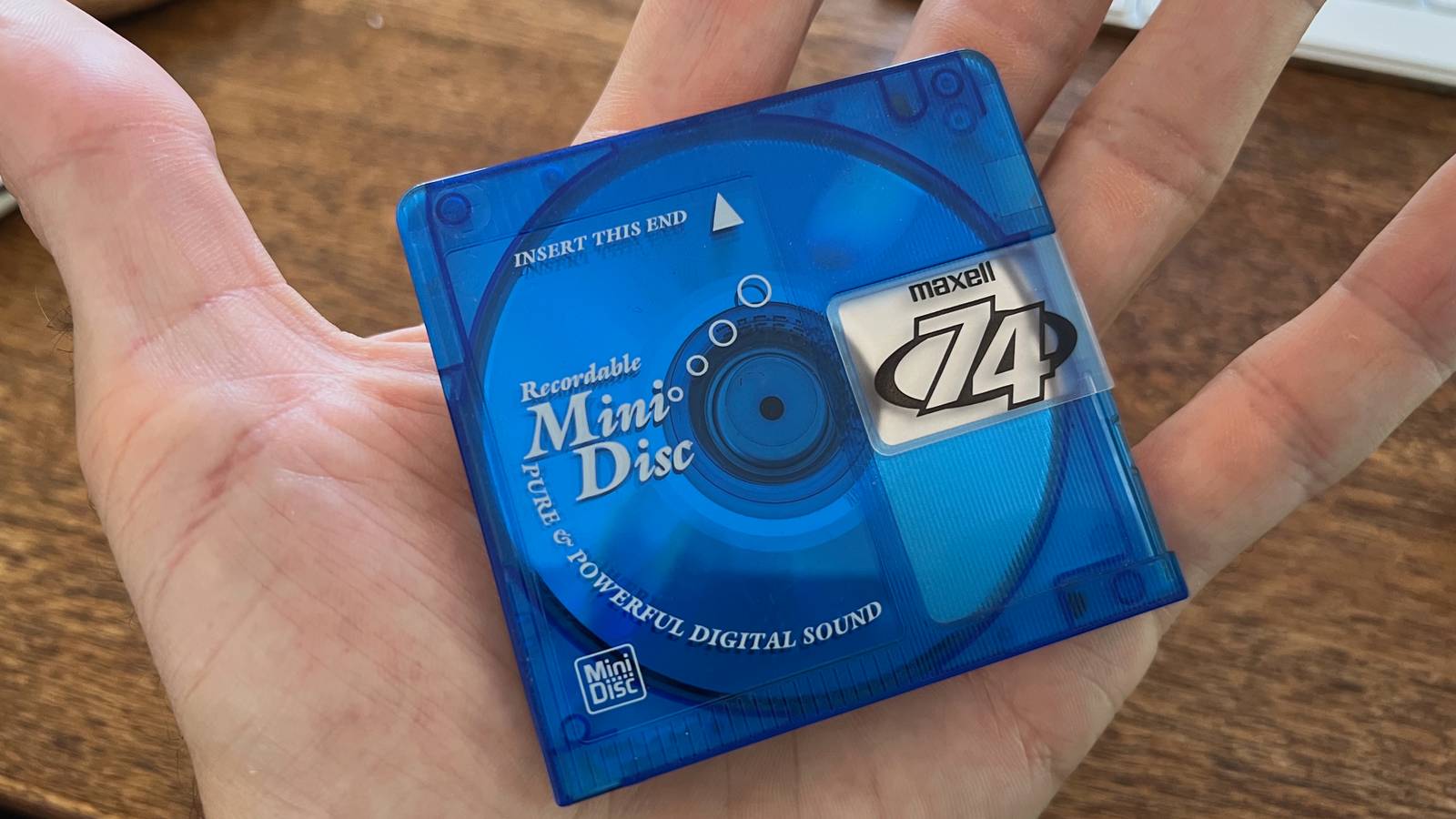
Credit: Tim Brookes / How-To Geek Published Aug 17, 2026, 1:15 PM EDT Tim has been covering technology for almost 20 years, in that time spanning a broad range of topics from security to product reviews. He is especially focused on the Apple ecosystem, productivity, and consumer advice. Over the years Tim has written thousands of articles, reviews, and round-ups in addition to producing video content and original photography. A graduate of journalism, he found his footing as a freelancer with a laptop and loves how he is able to work from practically anywhere. Now a Senior Editor for iPhone, Mac, and Smart Home at How-To Geek, Tim still loves to write. He can also be found crafting round-ups and productivity posts for the Zapier blog. Earlier in his career Tim spent nearly a decade as a writer and eventually Apple section editor for MakeUseOf. Tim currently lives in Brisbane, Australia. Outside of work he loves to hike and work out, play video games, and spend quality time with his wonderful partner and two cats Inka and Roger. Sign in to your How-To Geek account Despite what most tech companies will tell you, not everything needs to be smart, designed around an AI assistant, or turned into an app. Sometimes, the old bits of tech you have lurking in your closet are still the best choice. Here are some retro gadgets that you might still have (or can pick up for cheap) that work just as well as they ever did. Old digital and analog cameras No need to buy a cutting-edge mirrorless rig Credit: Tim Brookes / How-To Geek Both film and digital cameras still have their place in a world dominated by smartphones that do it all. I take probably 95% of my photos on an iPhone, turning to my not-so-old mirrorless camera maybe 5% of the time. Despite smartphone photography’s massive advances over the past decade, the quality difference between a “real” camera and the control you get outside of an app is still striking. In addition to my Sony A6500 mirrorless, I still have the Nikon D50 I purchased way back in 2005 tucked away in a camera bag. This is the camera that taught me how to take pictures, the first camera I ever used to make real money photographing live music events, and a camera that punched way above its weight in terms of what digital point-and-shoots were capable of back in the day. In the years following, I also managed to get my hands on a first-generation Canon 5D, which was my first (and only) full-frame digital SLR. I also have a few film cameras, which I’ve dabbled with throughout the years, notably a Pentax K1000 and a Yashica FX-2. All of this gear still works, with some of it being around 50 years old, and the digital cameras pushing 20. If you’re looking for a real upgrade to your smartphone’s capabilities, buying a real camera is the way to go. Ideally, you’ll want to avoid going too vintage with a digital camera body, something like a decade-old full frame Sony still stands the test of time. But the world is your oyster when it comes to film cameras and lenses, as long as you take into account any quirks with the autofocus system that may result in you being limited to manual focusing. Be warned: the term “gear acquisition syndrome” was virtually invented for photography nerds. Buying camera gear can be as addictive as actually using it, and doing so won’t even necessarily improve your photography. You have been warned! Nikon D3500 Brand Nikon Video Resolution Max: 1920 x 1080 This APS-C sensor DSLR camera is perfect for beginners to learn the basics without breaking the bank. Photo Resolution Max: 6000 x 4000 Battery 1 x EN-EL14A Rechargeable Lithium-Ion Battery Pack, 7.2 VDC, 1230 mAh Connection Bluetooth Size 4.9 x 3.8 x 2.7in Weight 12.88 oz Storage SDHC, SDXC, SD Stereo receivers An old hi-fi is one of the best budget investments you can make Credit: RIch Hein / How-To Geek It can feel like the world has given up on the home stereo systems of the past in favor of Bluetooth speakers and soundbars. But that doesn’t have to be the case, since many stereo separates are still entirely usable in the modern era. The fact that these systems are indeed modular—where every component in the stack performs a different function, be it an amplifier, a CD player, or a tuner—means you can effectively build your ideal system for cheap by combing eBay and Facebook Marketplace. This also applies to surround sound receivers, but on a smaller scale. Since 5.1 and 7.2 systems are a relatively modern invention by comparison, there’s far less choice out there for the discerning second-hand buyer, and the prices are usually a lot higher. Desirable modern standards like HDMI 2.1 and eARC can also provide a compelling reason to upgrade. But humble two-channel stereo receivers are a different beast altogether. Not only can you mix and match a receiver with a set of speakers that suits your wattage, space, and decor, but you’ll find that they usually sound better and fuller than the modern Bluetooth and all-in-one systems they replace. Many are highly desirable for their looks, particularly the silver separates systems of the 70s, with their big bouncing VU meters and chunky volume knobs. Look out for brands like Marantz, Sansui, Teac, Rotel, Technics, Pioneer, Yamaha, and Kenwood (among others). Be aware that some may require maintenance, from new capacitors to crackly knobs caused by old potentiometers that need a bit of cleaning. Learn how to match amps with speaker impedance (measured in ohms) to avoid damaging anything. Expect your inputs to all be analog, and you might even find a few pleasant surprises, like a moving magnet (MM) phono pre-amp for use with old turntables. Plus, you can “modernize” these things by adding Bluetooth audio bridges, adding AirPlay with a compatible adapter, and plugging in a cheap DAC for any digital audio signals you might want to connect. MP3 players, CDs, and MiniDisc Rock out with retro vibes Credit: Tim Brookes / How-To Geek Perhaps lumping MP3 players in with physical media like CDs and enthusiast “recordables” like MiniDisc will get me in trouble, but the use case scenarios for these things in the modern age are virtually identical. Anywhere you need or desire offline audio, these devices will do the trick (even today). Perhaps the most obvious use for these is in the car. This is especially true of the larger hard-drive-based MP3 players like the iPod, which can carry massive amounts of music. I bet if you dig out an old iPod and plug it into your car on a long drive, you’d even rediscover some favorites from the past (and probably experience some “what was I thinking?” moments). Not long ago, I found out my car actually has a CD player, hidden in the glove box. This was news to me, but it’s made me seriously consider picking up some cheap CDs the next time I go thrifting. It’s no secret that physical media has seen something of a resurgence among younger audiences, and CDs are no exception, thanks to benefits like price, quality, and packaging. Portable CD players, notably Sony’s shock-resistant Discman range, can be found at bargain prices online. MiniDisc is a little more complex, but thankfully, recorders are cheap and accessible (for now). The biggest downside is that MiniDisc media prices have shot up ever since Sony announced that production would cease. That means there’s a finite number of MiniDiscs left, and many enthusiasts are holding onto them dearly. That said, it’s easy to record to the medium thanks to the browser-based Web MiniDisc Project. Old handheld consoles "Homebrewing a 3DS is easier than you think" Credit: Tim Brookes / How-To Geek Though collectors have certainly pushed the prices up over the last decade or so, old handheld consoles are still just as good as they always were. Unlike home consoles, which need to be plugged into a TV, portables are all-in-one units that won’t require that you buy a video scaler to display an analog composite or component signal on a modern all-digital TV. Some of them make great display pieces, like my partner’s old Game Boy that still works just as well as it always did in its green LCD glory. Others remain the single best ways to enjoy games released for the platform, something that’s especially true of Nintendo’s DS family. Despite strides being made in dual-screen attachments from Retroid for this particular handheld generation, an original console will still cost less and feel like the more authentic choice. Refreshed models like the Game Boy Advance Micro and SP are also highly sought-after bits of kit. These platforms are defined by their games, and they still hold up today. Tetris or Super Mario Bros. on an original Game Boy is still utterly addictive. The 3D effect on a Nintendo 3DS may have been a gimmick, but it’s not been replicated on any portable device since. Even weirdo consoles like the Bandai WonderSwan and Neo Geo Pocket Color are worth a look if you can get your hands on them. On top of this, many such platforms are compatible with flashcarts that can carry your entire collection everywhere you go. Not only are these cheaper than dedicated portable emulators, they’re arguably better since they retain the look and feel of the original hardware. Calculators You've probably got a TI-84 sitting around somewhere Calculators might be the most boring item on this list, but they might also be the most under-appreciated. This is especially true of the fancy, scientific graphing calculators that many of us scrambled to purchase long ago in the weeks before term started. While you can still buy them, these chunky old Casio and Texas Instruments study aids are far rarer than they once were. This is to be expected, since you have software on your smartphone, tablet, and laptop that can do way more than even the priciest calculator could. But in the right context, calculators still absolutely have their place. I’m talking about offices, or anywhere in the house you might have a desk or need to work on numbers like taxes, expenses, or a budget. In this setting, a dedicated calculator is probably quicker than grabbing your phone. You can leave them in place and tap away as necessary. They’re more pleasant to use on account of having tactile buttons, a big benefit over modern touchscreens that provide no feedback. Best of all, some of them can even run DOOM. Quiz 8 Questions · Test Your KnowledgeVinyl vs. CDsTrivia challenge Warm crackle or digital clarity — find out how much you really know about these two audio formats. HistorySoundTechnologyFormatCulture Begin In what decade did the compact disc (CD) first become commercially available to the public? A1970sB1980sC1990sD1960s That's right! The CD was jointly developed by Sony and Philips and launched commercially in 1982, first in Japan and then in Europe and North America. Billy Joel's '52nd Street' holds the distinction of being the first album released on CD. Not quite — the CD made its commercial debut in the 1980s, launching in Japan in October 1982. It was a collaborative effort between Sony and Philips, and it quickly began challenging vinyl's dominance in the music market. Continue What type of audio signal does a vinyl record store and reproduce? ADigital signalBOptical signalCAnalog signalDBinary signal Correct! Vinyl records store audio as a continuous analog signal — a physical groove that mimics the waveform of the original sound. This is a key reason many audiophiles argue vinyl sounds more 'natural' compared to digital formats. The correct answer is analog signal. Vinyl grooves represent a continuous physical approximation of the original sound wave, which is the defining characteristic of analog audio. CDs, by contrast, store audio as digital binary data. Continue What is the standard sampling rate used on audio CDs? A32,000 HzB48,000 HzC96,000 HzD44,100 Hz Spot on! The CD standard, known as the Red Book standard, specifies a sampling rate of 44,100 Hz (44.1 kHz). This rate was chosen because it exceeds twice the upper limit of human hearing (20 kHz), satisfying the Nyquist theorem for accurate audio reproduction. The correct answer is 44,100 Hz. This specific rate was established in the Red Book CD standard developed by Sony and Philips. It was partly influenced by the sample rates used in early digital audio recording equipment adapted from video technology. Continue What is the standard diameter of a 12-inch vinyl record commonly used for full-length albums? A10 inchesB12 inchesC14 inchesD8 inches Correct! The standard LP (long-playing) record measures 12 inches in diameter and typically plays at 33⅓ RPM. This format became the dominant way to release full albums from the late 1940s onward and remains the standard for vinyl releases today. The answer is 12 inches. The 12-inch LP, playing at 33⅓ RPM, became the industry standard for album releases after Columbia Records introduced the format in 1948. The 7-inch single at 45 RPM was its smaller companion format. Continue Which major record store chain's collapse in 2013 was seen as a symbol of the CD format's decline? ATower RecordsBSam GoodyCHMVDVirgin Megastores Right! HMV entered administration in the UK in January 2013, widely covered as a landmark moment in the decline of physical music retail, especially CDs. Streaming services and digital downloads had severely eroded CD sales, making it hard for physical-format retailers to survive. The answer is HMV, the iconic British music retailer that entered administration in January 2013. While Tower Records had already collapsed in 2006, HMV's 2013 failure was a particularly high-profile moment that underscored how streaming had devastated the CD retail market. Continue What laser color does a standard CD player use to read disc data? ABlue laserBGreen laserCInfrared laserDRed laser That's correct! Standard CD players use an infrared laser (780 nm wavelength) to read the pits and lands on the disc surface. Blu-ray players, by contrast, use a blue-violet laser with a much shorter wavelength, allowing for much higher data density. Standard CD players actually use an infrared laser operating at around 780 nm. It's DVDs that use a red laser (650 nm), and Blu-ray players that use a blue-violet laser (405 nm) — the shorter the wavelength, the more data that can be packed onto a disc. Continue What term describes the gentle background noise often heard on vinyl records, sometimes considered part of their charm? AClippingBWow and flutterCSurface noiseDBit depth Exactly right! Surface noise refers to the hiss, crackle, and pop sounds created by the stylus interacting with dust, microscopic imperfections, or wear on the vinyl groove. Many vinyl enthusiasts actually find this sonic texture warm and characterful compared to the silence of digital formats. The correct term is surface noise. It's the hiss and crackle produced by the stylus tracking imperfections in the vinyl groove. 'Wow and flutter' refers to pitch instability caused by speed variations in the turntable, which is a different vinyl-related issue. Continue Which artist's 'Thriller' (1982) became one of the best-selling albums ever, released at the height of the transition between vinyl and CD formats? APrinceBMadonnaCMichael JacksonDDavid Bowie Correct! Michael Jackson's 'Thriller', released in November 1982, is widely recognized as the best-selling album of all time. It launched during a fascinating transitional moment in music history — vinyl was still dominant, but CDs were just arriving in stores for the first time. The answer is Michael Jackson. His album 'Thriller' was released in November 1982 — the very same year the CD format launched commercially. It went on to become the best-selling album in history, selling across both vinyl and, later, CD formats as the market shifted. See My Score Challenge CompleteYour Score / 8 Thanks for playing! Try Again Don't dismiss old tech, it may still be useful There are a few other items that I considered including on this list, but that didn’t make the cut since they don't feel as instantly accessible. CRT TVs and monitors are great for old consoles, but most analog broadcasts and older connections are now defunct. Turntables may be retro, but they never really went out of fashion. The same could be said of “dumb” watches, with renewed interest in Casio’s digital models. Even dictaphones have their place, but most of us will ditch them for digital files and automatic dictation features.
5 retro gadgets that still "just work"
Full Article
Original Source
Read the full article at Howtogeek →KhanList aggregates and links to publicly available news content. We do not host full articles from third-party sources. Always verify important information with original sources.