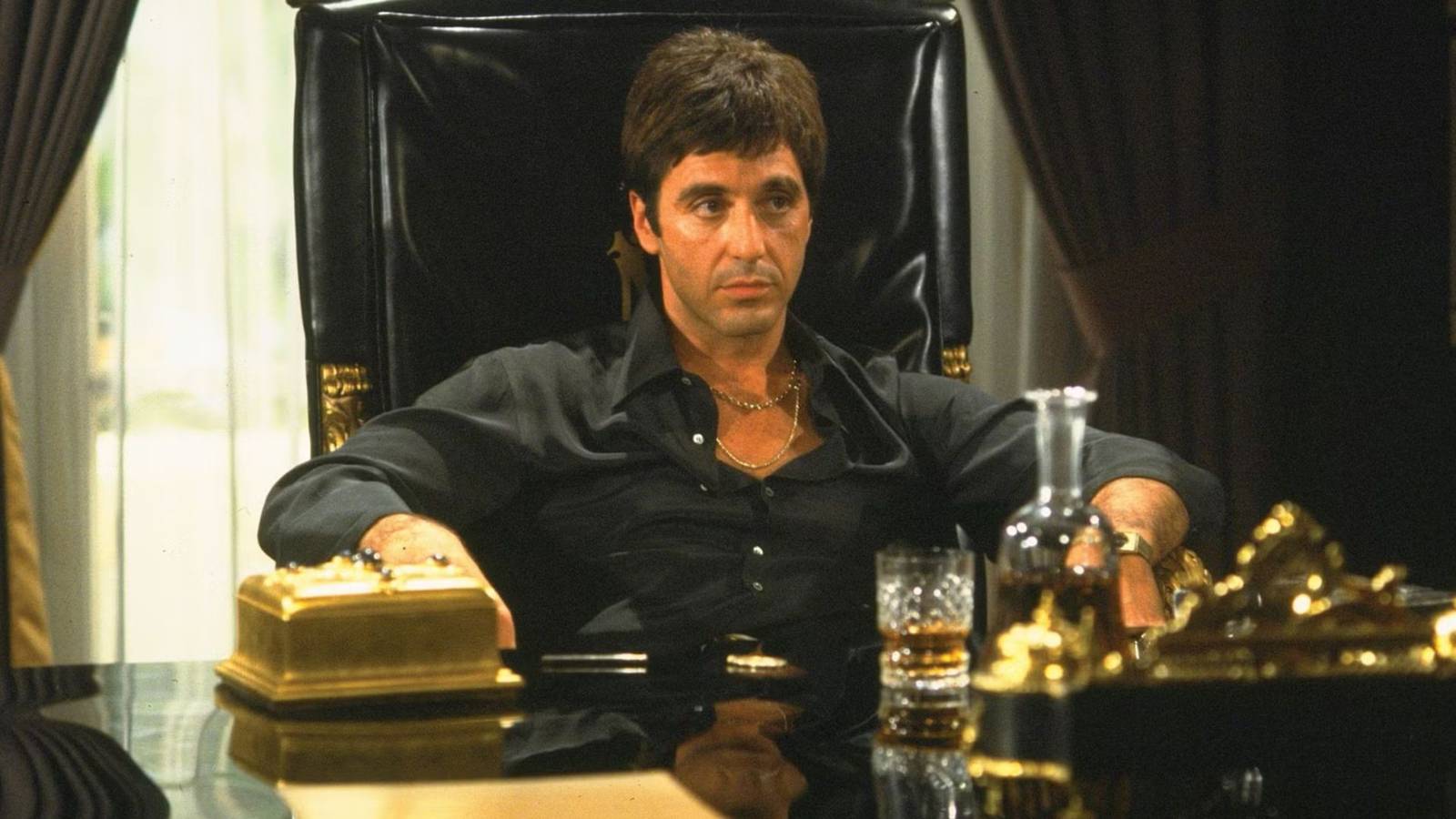
Published Jul 26, 2026, 11:00 AM EDT Shawn S. Lealos is an entertainment writer who is a voting member of the Oklahoma Film Critics Circle. He has written for Screen Rant, CBR, ComicBook, The Direct, The Sportster, Chud, 411mania, Renegade Cinema, Yahoo Movies, and many more. Shawn has a bachelor's degree in professional writing and a minor in film studies from the University of Oklahoma. He also has won numerous awards, including several Columbia Gold Circle Awards and an SPJ honor. He also wrote Dollar Deal: The Story of the Stephen King Dollar Baby Filmmakers, the first official book about the Dollar Baby film program. Shawn is also currently writing his first fiction novel under a pen name, based in the fantasy genre. To learn more, visit his website at shawnlealos.net. Scarface remains one of the most iconic gangster movies of all time, and it has developed a reputation even greater than its status as a movie. After over 40 years, several parts of Brian De Palma's 1983 movie don't work as well as they did when it was released in theaters. This does not mean that it is not a great movie, because it is still held up as a classic, but that makes the film's rough edges worth looking at because nothing is perfect. Some of these things were considered low points of the movie when it came out. Despite the good moments in the movie, critics savaged Scarface in reviews, and it didn't receive its current cult favorite status until a reappraisal years later. That makes sense because this is nearly a three-hour movie, written by Oliver Stone, directed by Brian De Palma, and starring Al Pacino. The more retrospective concerns surround how the film treats female characters, but even in 1983, there was controversy surrounding violence, profanity, and Cuban stereotyping. The movie is also a product of its times, with the 1980s levels of excess in the film, and one standout is that one expletive is used around 207 times in the movie, or 1.2 times every minute. Scarface is still one of the best gangster movies ever, but it is not without its problems. 5 Tony Montana's Cartoonish Accent Scarface follows Tony Montana, a Cuban refugee trying to make his mark in the United States. However, Al Pacino stars as Montana, and the actor is a New Yorker of Italian-American descent. This fits well with his role in the gangster masterpiece The Godfather. Pacino's accent draws more criticism than any other element of the film, and it remains the most widely mocked part of his performance. This is one thing from Scarface that was criticized even back in 1983 when the movie came out, with critics complaining that the accent was both ridiculous and an example of overacting. This is a rough thing to hear, especially considering how beloved Pacino is as an actor, but it is one of his most over-the-top performances in a career that is usually much more respectful. Steven Bauer plays Manny, and as one of the few Cubans in the cast, it helps make Pacino's campy delivery stand out. It has since been parodied more than almost any other accent. 4 The Rampant Misogyny Toward Elvira And Gina One of the biggest complaints when looking back at Scarface might have a little more to do with the story than the movie itself. The film has only two significant female roles, Elvira (Michelle Pfeiffer) and Gina (Mary Elizabeth Mastrantonio), and both are largely defined by their relationships to Tony. The movie shows Elvira as a woman dependent on men for her money, and as a woman whom Tony is there to help "save." Tony physically assaults his sister Gina after she is seen with a man, and later kills Manny after he marries her, on-screen violence that reads as controlling and misogynistic today. This is something that wasn't touched upon at the time of its release. The 1983 controversy centered on violence, profanity, and Cuban stereotyping, but not on gender. Today, the misogyny in Scarface is noted in academic studies. 3 Uneven Pacing Across The Sagging Middle Act When a movie is three hours in length, it needs to have good pacing to keep the entire movie breezing along. The Godfather and its first sequel are both very long movies, and they are both entertaining looks at the gangster genre that keep things moving. One of the problems when looking back on Scarface today is that the middle especially sags and slows down the entire story. Even reviews at the time noted its length, saying it was lumbering along. The opening has a great look at Tony Montana making his way to America, and the end has some incredible moments of violence and the end of Tony's story. However, the middle has a lot of scenes that slow the film to a crawl, and much of the middle sections are bloated and don't work well in moving the story forward. For anyone preferring tightly paced movies, Scarface fails on that level. 2 Michelle Pfeiffer's Underwritten Role Michelle Pfeiffer was one of the best actresses of the 1980s, but she is completely wasted in Scarface. Yes, this is Tony Montana's story, and gangster movies have always struggled with female characters, but she deserves better. The Godfather is terrible when it comes to depicting the women in the story. Scarface is even worse because Tony's story involves the women in his life, and the film still shortchanges them. It is a problem that Pfeiffer's character is a helpless drug addict who needs Tony Montana to save her, although she does leave him before the end. Pfeiffer was only 24, opposite Pacino's 42, a large age gap that makes her framing as nothing more than a woman on the arm of the mobster make sense. Later reappraisal credits Pfeiffer with lifting the material through her icy screen presence, which means she stands out, even in a criminally underwritten role. 1 Over-The-Top Violence Is Campy Compared To Modern Crime Films One of the biggest problems with Scarface is an element the movie is still celebrated for. The violence is too over-the-top and campy compared to modern crime movies. Today, when a crime movie shows violence, it is often harsh and shocking and shows how brutal life is for these criminals and mobsters. However, the violence here is excessive and cumulative, and it almost received an X rating because of the violence and language. That said, the violence is too much in the movie. The last scene, with Tony delivering his iconic Scarface line, "Say hello to my little friend," before spraying bullets all over his house, is the most famous in the movie. Between the over-the-top accent and the final gunfight, this has been spoofed and honored nonstop throughout the years. Today, audiences are so desensitized by decades of graphic crime films that violence like this is cartoonish rather than disturbing. Release Date December 9, 1983 Runtime 170 minutes Director Brian De Palma
5 Reasons It's Hard To Watch Scarface Today
Full Article
Original Source
Read the full article at Screenrant →KhanList aggregates and links to publicly available news content. We do not host full articles from third-party sources. Always verify important information with original sources.