
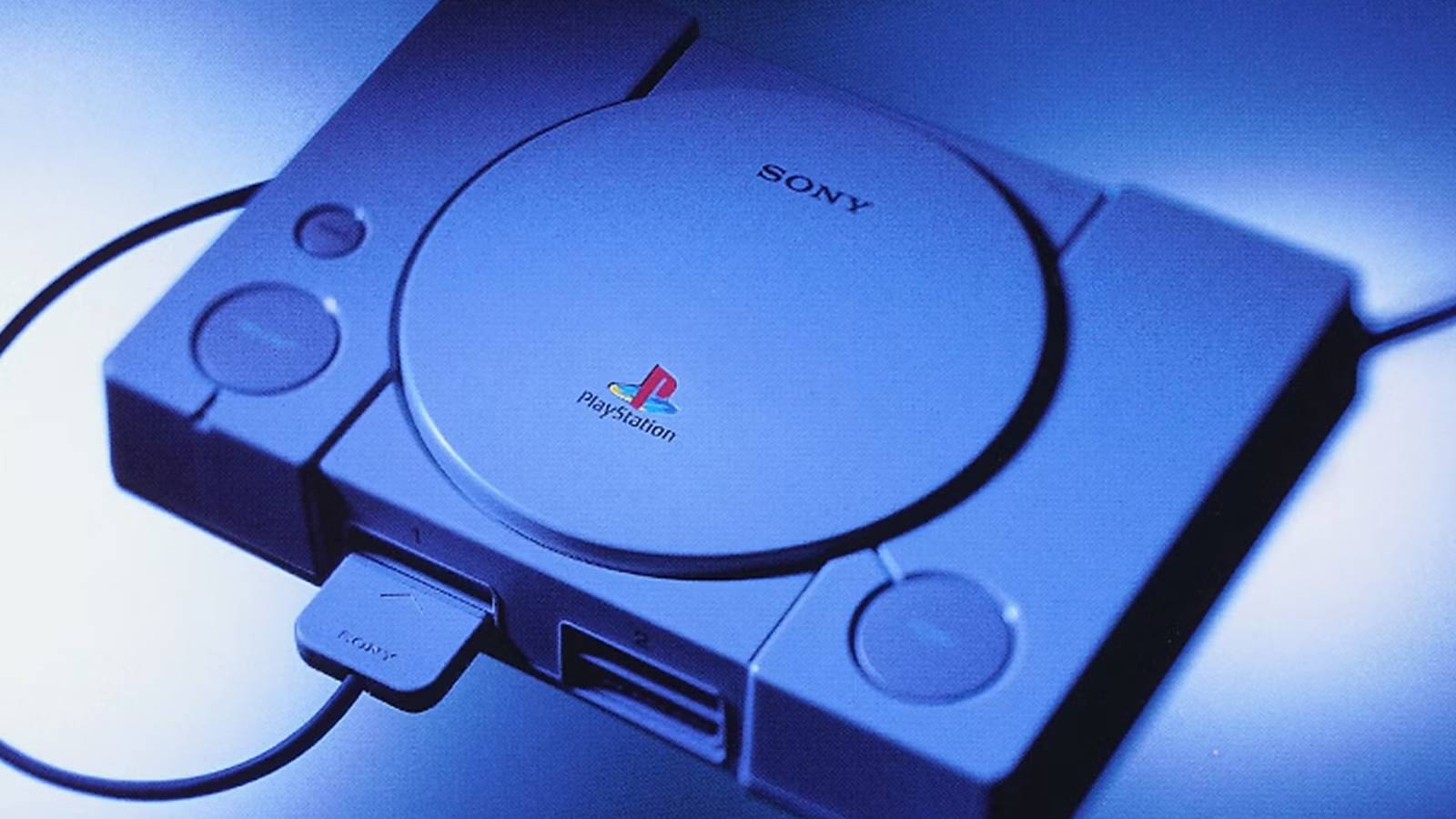
Published Aug 31, 2026, 4:00 PM EDT Sharmila is an engineer-turned-gaming hardware journalist and freelance contributor at ScreenRant who has been covering the gaming and tech industry since 2021. While she first built her expertise writing about video games, she has since pivoted towards gaming hardware, with a focus on PC components, peripherals, handhelds, and performance-driven tech. When she’s not testing gear or writing about the latest hardware trends, she can usually be found diving into competitive shooters or keeping up with the evolving esports scene. PlayStation 1 was Sony’s first foray into gaming hardware, and boy, was it a revolution. It highlighted the benefits of CDs over cartridges, offering more storage space, cheaper production, and room for full-motion video and recorded music—things cartridge-based consoles couldn’t easily accommodate. That shift changed what developers thought was possible, inviting a lot of creativity. Of course, the PS1 went on to sell more than 100 million units in its lifetime, cementing the Sony brand as a serious contender, rather than a one-console novelty. That era of experimentation is also why so many PS1 titles still appear on “must-play” lists decades later. There were real hardware limitations at the time that limited the studios, including small memory cards, slow load times, and a fixed polygon budget. But even with those limitations, developers often designed around the flaws in ways that led to genuinely new ideas and great games. Which is why you definitely shouldn’t miss out on the five most iconic PS1 games I’ve listed below. 5 Silent Hill Image via Konami Silent Hill was developed by Team Silent, a group inside Konami Computer Entertainment Tokyo, and published by Konami. It launched in North America in early 1999, months before Europe and Japan got their own releases, and it never left the PlayStation during the PS1’s lifetime. The plot starts with Harry Mason crashing his car near a fog-choked town called Silent Hill. Mason goes looking for his missing daughter, but what he finds instead is a cult, a monster-infested alternate dimension, and also some of the most unsettling sound design in gaming history, courtesy of composer Akira Yamaoka. And the famous fog? Many would think it was an artistic choice, but it was, instead, a way to hide the PS1’s draw-distance limitations and improve performance. The foggy view eventually became a crucial part of the Silent Hill experience. Silent Hill sold more than two million copies and picked up an 86 on Metacritic, numbers that were considered pretty strong for a horror title at the time. It also set the template for "psychological" horror as a genre, separate from the action-heavy survival horror (think Resident Evil). Ever played a horror game that uses radio static, wrong turns, or a character’s own guilt as a weapon against them? That’s Silent Hill inspiration, right there. Metal Gear Solid was released in Japan on September 3, 1998, and hit North America that October. It was developed and published by Konami, directed by Hideo Kojima. This gem never got a PS1-generation port to a rival console. The GameCube and PC versions came years later, well after the PS1 had been replaced by the PS2. You play as Solid Snake, a retired special forces operative sent to infiltrate a nuclear weapons facility seized by a renegade unit called FOXHOUND. What made it stand out was how it used its own hardware: Cutscenes were rendered with the same engine as gameplay rather than prerecorded video, and one boss, Psycho Mantis, reads your PlayStation memory card and comments on other games you’ve saved—a gag still referenced today because nobody had done anything like it before. Metal Gear Solid shipped more than six million copies and holds a 94 on Metacritic, a score that still ranks among the highest of any PS1 title. It remains one of the earliest and best examples of a truly cinematic action game, so you definitely shouldn’t miss it for the world. 3 Spyro the Dragon Insomniac had only shipped one prior game—a first-person shooter called Disruptor—before taking a swing at a mascot platformer like Spyro the Dragon, and the gamble paid off. It remained one of the best PlayStation exclusive games and kept it up for three entries, but that was enough for it to earn a permanent “PS1 must-play” tag. The plot begins with a small purple dragon named Spyro who has to free the elder dragons from his world. These “elder dragons” have been frozen in crystal by a villain named Gnasty Gnorc, and Spyro has to help them while collecting gems along the way. There was something about the movement mechanics of this game that made players come back again and again. Spyro could run, glide, charge, and breathe fire with almost no input lag, which was a big deal during the PS1 era. The game’s hub-world structure lets you explore at your own pace across 35 levels, making it a cozy and fun game. The soundtrack, composed by former Police drummer Stewart Copeland, is still one of the more unusual credits in gaming history. Interestingly, Spyro the Dragon had a slow start, but the game eventually sold five million copies worldwide. Well, Spyro proved that a mascot platformer didn’t need an edge or an attitude to work, only some good level design. 2 Crash Bandicoot Crash Bandicoot came from Naughty Dog, a studio nobody had heard of yet, and was published by Sony. It released in North America on September 9, 1996, barely a year after the PS1 itself launched in the region, and it stayed exclusive to PlayStation for its entire original trilogy. For the plot, Dr. Neo Cortex mutates a bandicoot named Crash with an “Evolvo-Ray.” But the experiment fails, and Crash escapes to rescue his captured girlfriend and stop Cortex from building an army of mutant animals. Of course, the story didn’t sell the game as much as the presentation did. Crash Bandicoot was one of the first games to render fully 3D characters and environments on a home console, and Naughty Dog got clever about hiding the PS1’s technical limits by funneling players through linear, corridor-style levels dressed up as open jungles and ruins. And it worked. Crash Bandicoot sold more than six million units, making it one of the best-selling games on PS1 and, at the time, the top-selling game in the United States on the console. It gave Sony a mascot as recognizable as Mario or Sonic, built entirely for its own hardware. 1 Vagrant Story Vagrant Story is the most obscure title on this list, and the last major PS1-exclusive RPG Square put out before setting its eyes on the PS2. Square developed and published it; it was released in Japan in February 2000 and in North America that May. But weirdly, it never got ported to any other platform in its generation. Vagrant Story was directed, produced, and written by Yasumi Matsuno, with much of the same team that made Final Fantasy Tactics. You are Ashley Riot, an agent investigating a cult tied to a ruling class of a kingdom in a ruined city called Leá Monde. Unlike most JRPGs of the era, Vagrant Story rendered its cutscenes in real time using the in-game engine rather than prerecorded video, which pushed the PS1 close to its performance ceiling. At the same time, it gave the game a distinct, moody look that fans can’t forget. This PS1 gem earned a 92 on Metacritic and a perfect 40 out of 40 from Japan's Famitsu magazine—a rare score for any game, let alone a late-cycle release competing for attention against the newly launched PS2. Its combat system, built around targeting specific body parts and matching weapon properties to enemy weaknesses, was more tactical than most action-RPGs attempted at the time. Vagrant Story may not be as widely remembered as the other PlayStation games on this list, but it’s the kind that rewards anyone willing to track it down. Brand Sony Original Release Date September 9, 1995 Original MSRP (USD) $299.99 HDR Support No Weight 3.2lb (1.5kg)
5 PS1 Games Everyone Should Play Before They Die
Full Article
Original Source
Read the full article at Screenrant →KhanList aggregates and links to publicly available news content. We do not host full articles from third-party sources. Always verify important information with original sources.