
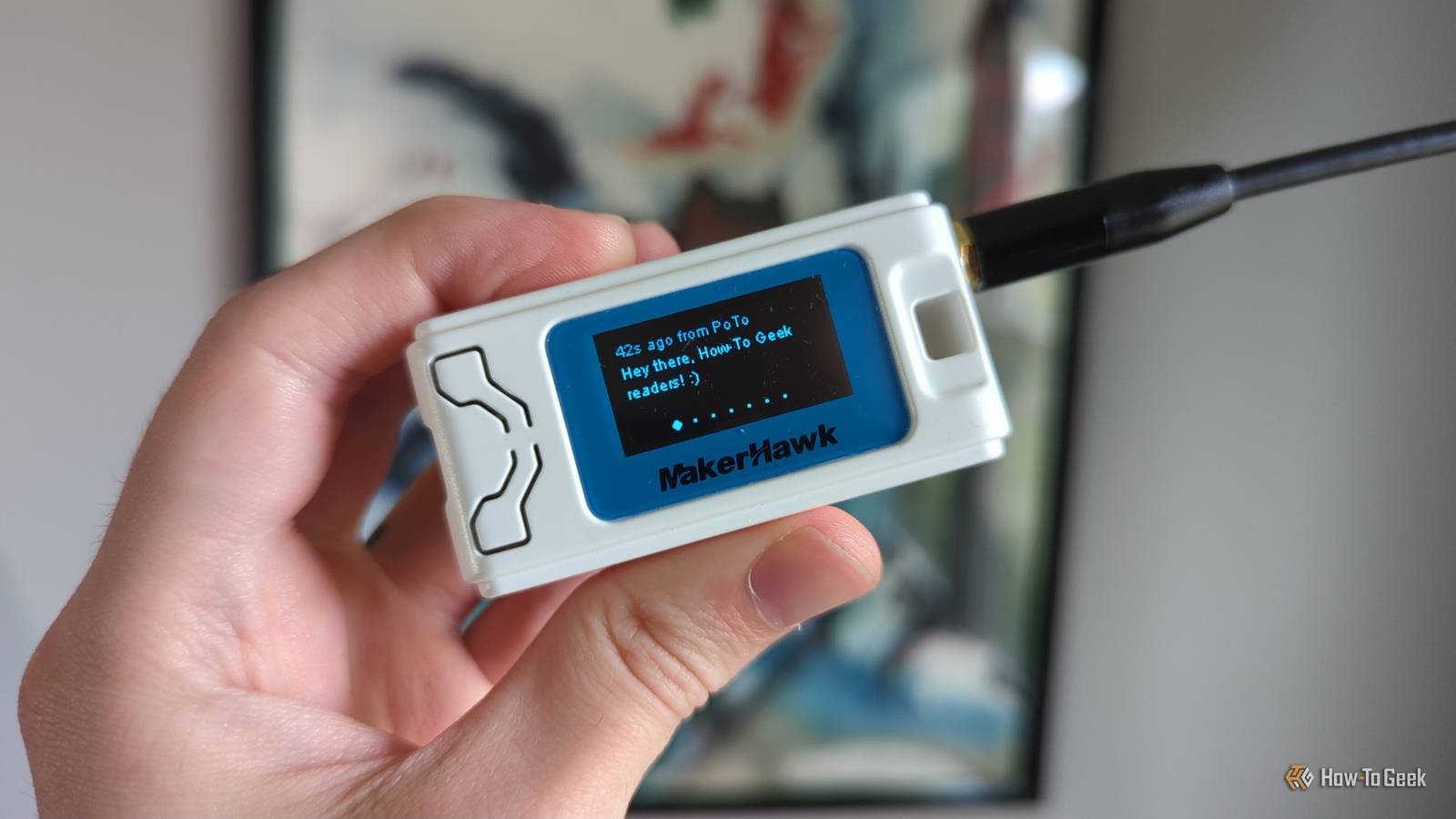
Published Oct 15, 2026, 6:00 AM EDT Patrick Campanale has been in the tech space for well over a decade, specializing in PC/gaming news and reviews, as well as maker-focused products to build small businesses. With a start in technology back in 2010 surrounding the Palm/webOS ecosystem, Patrick spent his formative years developing mobile applications as well as blogging for various publications, eventually leading to starting his own website in 2014. After running a technology blog for a few years, he stepped out of that role and into the world of high-end custom PC manufacturing and building, with a focus on YouTube video production and overclocking. Then, in 2017, Patrick joined the 9to5Toys team as an editor/writer/reviewer with over 14,000 articles being published during his time there, ranging from deals and roundups to in-depth reviews on the latest technology, video games, 3D printers, and more. In his free time, Patrick loves to create projects from wood using various robots and methods, including leveraging the technologies of CNCs and lasers. If Patrick isn't working on a computer or playing video games, he's likely in his 2-car garage workshop creating something unique. In addition to all this, Patrick is also the media director at his local church where he feels God has called him to serve, and he loves every minute of it. Off-grid mesh networking is something that I've never really thought a whole lot about, but it has gotten much more intriguing to me lately. You can actually do a lot with off-grid mesh networking, way more than just messaging. Here are some projects that you can build with mesh-capable microcontrollers, and the third one definitely is my favorite. A basic Meshtastic node is the place to start One cheap board and your phone No off-grid mesh networking project would be complete without Meshtastic, so that's the perfect place to start. If you've never heard of Meshtastic, it's the backbone of most off-grid mesh projects. You can run Meshtastic on a wide range of hardware. Some require a bit of programming know-how, and others you can simply flash. I would probably start with the $30 Heltec ESP32 LoRa 32 V4 Development Board if you're just getting started. It has an ESP32-S3, SX1262 LoRa radio, and an OLED display already set up and ready to go. The Heltec V3 is also a solid option if you want something fully ready to go, with a built-in rechargeable battery and a case. You simply flash the board with the Meshtastic Web Flasher, pair it over Bluetooth to the iOS or Android app, and you're ready to go. You'll want to verify that it's the right band for your region — we use 915MHz in the US. A standard Meshtastic node is limited to three hops, boosted to a max of seven if you want to let it go further. Plus, there are tons of 3D-printable cases for the Heltec V4 (or V3 if you go that route). Simply head on over to MakerWorld, Printables, or any other 3D printing site and search for the model you bought, 3D print it, and get your off-grid mesh communication deployed. The T-Deck turns Meshtastic into a pocket messenger No phone required Credit: Jeff Geerling While a Heltec Meshtastic node allows you to send messages through the mobile companion app, the T-Deck lets you use the node itself as a messenger. The LilyGo T-Deck Plus is a bit more on the expensive side, but it's honestly a fantastic value for what you get. You could build your own if you wanted, but the LilyGo T-Deck Plus includes an ESP32-S3 built-in, as well as an onboard QWERTY keyboard, trackball, screen, LoRa radio, GPS, and a rechargeable battery. It looks kind of like an old BlackBerry, and could honestly fit in your pocket even with the antenna sticking out. But you could also unscrew the antenna to store it away in a bag if you needed it to be more compact. At the end of the day, the LilyGo T-Deck Plus is one of the best plug-and-play ways to have a fully off-grid communication device, as it relies on LoRa and doesn't need a mobile companion app or Bluetooth connection to function. ESP32 LoRa Heltec V3 Device (2 Pack) Dimensions (exterior) 4.5x1.3x.1.1 inches Compatibility Meshtastic These two LoRa radios are Meshtastic-ready so you can hit the ground running in building a mesh network that you can send messages over long distances. They have OLED displays, 915MHz antennas, USB-C connectivity, and Wi-Fi and Bluetooth support. A solar repeater does the heavy lifting Put it up high and forget it The thing with off-grid mesh radios is the signal can only travel so far on its own. If there isn't something to receive the signal within a certain distance, then it just dies in the void. However, you can actually install your own repeaters to help the signal travel further to reach a house that's many, many miles away. This all starts with a RAK WisBlock system. It has a very low idle power draw, making it ideal for a solar-powered setup. Heltec would work too, but it definitely draws more power. You'll want to build this system in a few parts — a 5V solar panel, 18650 battery cells (or LiPo), an IP65/IP67 junction box or 3D-printed enclosure, an external fiberglass antenna, and some form of a mount. On the mount — height matters more than anything else, so just get it up as high as you possibly can. There are 3D prints out there that give you everything you need to mount this type of node to a pole or tree, so definitely check those out. At the end of the day, if you live on a large piece of land, putting some Meshtastic nodes around the property will ensure that your devices are always able to communicate regardless of where they are. Remote sensors make the mesh actually useful Your mailbox, tank, or gate, miles away Okay, so far I've either talked about sending messages or building repeaters, but that's not the only thing off-grid mesh networks are good for. Meshtastic actually has the ability to handle I2C modules or detection sensor modules for a wide range of sensors. You can set it up to read things like environmental variables (like a weather station), contact sensors, moisture sensors, proximity sensors, and so much more. As a simple example — if you live on a large piece of land where the mailbox is a car ride away, then you could set up a Meshtastic system at your mailbox that serves a bunch of purposes. It could read a simple contact sensor on the mailbox to let you know when it's been opened or closed; it could read the weather there; and it could also act as a Meshtastic node and repeater. From the mailbox node, Meshtastic can integrate with Home Assistant to let you know when the mail has arrived by flashing some lights or sending you a notification. ESP-NOW is the cheapest mesh you can build No LoRa, no router, short range If you don't want to dive into LoRa or Meshtastic, there is another standard that you can use with just about any ESP32 you already own — ESP-NOW. This feature is actually built by Espressif and it's the brand's own peer-to-peer protocol. It runs on the 2.4GHz radio that is already in nearly every ESP32. It doesn't actually need a Wi-Fi network or router to function, even though it uses the 2.4GHz radio. What ESP-NOW does is a direct connection between the ESP32 modules and nothing more. It supports either direct or broadcast-only modes, and even supports multi-hop setups to cross larger distances. Range, however, is measured in meters, not miles. Packets max out at 250 bytes, and the range is heavily varied depending on how many walls there are, what they're made from, and more. Some manufacturers claim hundreds of meters outdoors with special external antennas, but this is something that would be used more likely for a door sensor or something in your yard, not several hundred feet away. 3-pack ESP32-S3 N16R8 This 3-pack of ESP32-S3 N16R8 microcontrollers are perfect for your DIY projects. Being the N16R8 models, there's enough memory and storage to run projects using platforms like MicroPython instead of having to rely on just straight C coding. Also, the breadboard pins are included in the package, though you will have to solder them on. Start with one node and grow from there You don't have to start with a dozen Meshtastic nodes and have your friends all buy their own—though that would certainly be fun. You can simply start with one Meshtastic node and grow from there. This hobby has so many ways you can go with it, from messaging to sensors and things I've probably never even thought about yet. So, start small and let it grow from there. You might try the messaging system only to hate it, but absolutely fall in love with how the sensor aspect works.
5 off-grid mesh builds that go way past texting, starting with a $30 board
Full Article
Original Source
Read the full article at Howtogeek →KhanList aggregates and links to publicly available news content. We do not host full articles from third-party sources. Always verify important information with original sources.