
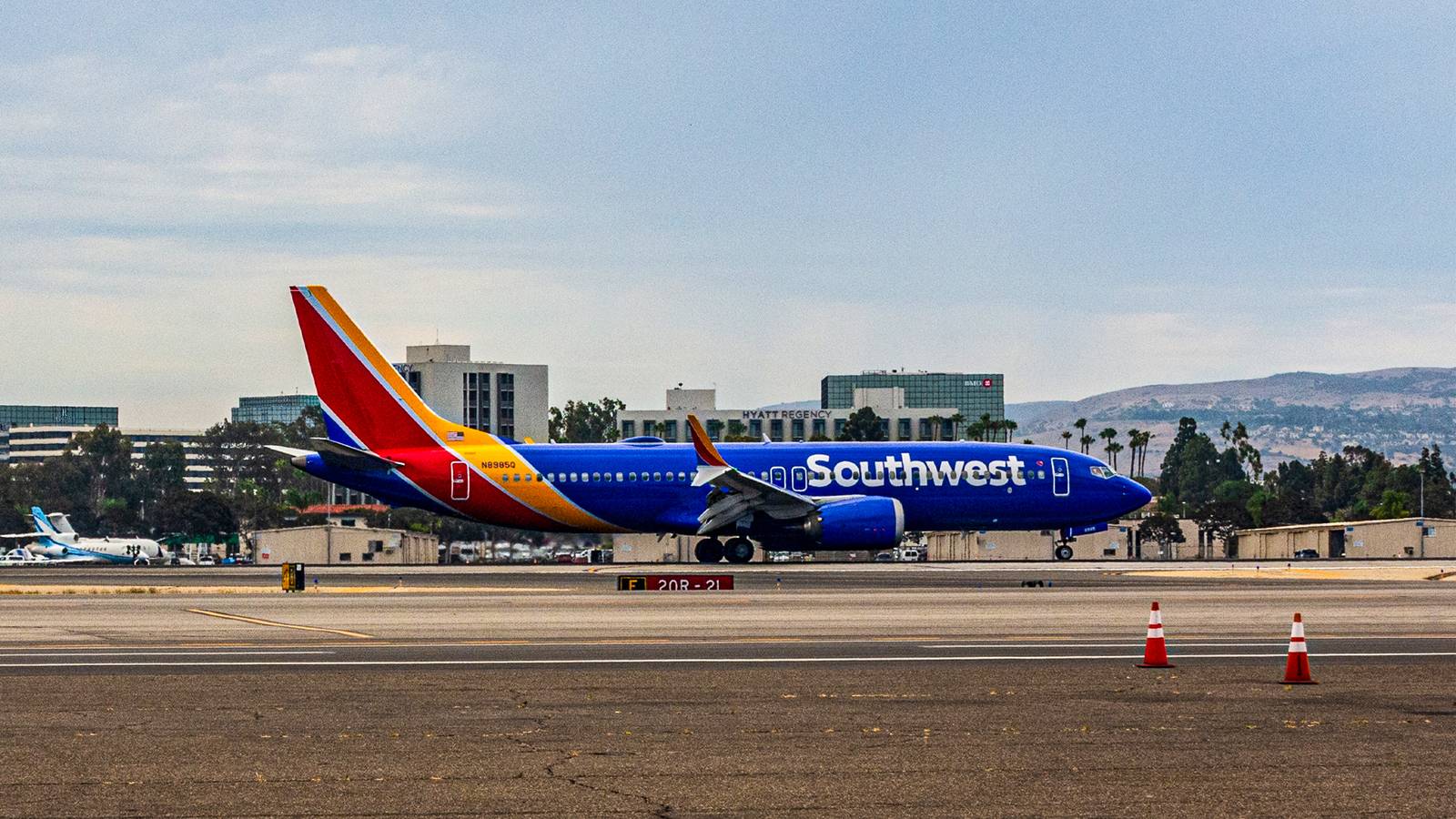
No matter how much innovation occurs to reduce noise and pollution, jet aircraft remain noisy, particularly when taking off and departing, as well as during approaches and landings. This can be very problematic for residents near major international hubs, where flights may operate at a near-constant pace for long periods. Because of this, some airports operate with noise abatement procedures to minimize the impact of operations on residents, and you occasionally even see full curfews. Curfews exist so that locals don't get their sleep disturbed by departing aircraft. Often, operators don't necessarily ban planes from arriving past curfew. However, they may charge steep fines, while there have been instances of denied arrivals past curfew at various other airports as well. These strict rules cluster airline operations, although they usually only take effect when flight volumes would typically be lower anyway, and curfews can be found at airports all around the world. London Heathrow Airport (LHR) Restricted nighttime departures and limited arrivals Credit: Jarek Kilian I Shutterstock LHR does not necessarily have a set and done curfew like the remaining airports on this list, but overnight operations are significantly restricted. The airport is not prohibited from receiving overnight arrivals, but no departures are scheduled between 10:45 pm and 6:00 am. The UK government tightly restricts overall nighttime aircraft movements, only allowing 5,800 movements annually during overnight hours. There are also quotas that cap the amount of noise the airport may generate. BA is currently the largest airline serving LHR, while the airport is also home to a major hub for Virgin Atlantic. In total, there are 85 airlines serving the airport, housed in one of four terminals. LHR operates with only two runways, making it one of the busiest two-runway airports in the world, and it is notoriously slot-restricted. The nightly curfew further restricts availability, making it extremely difficult and expensive to either begin or expand service to LHR, since the slots are very scarce. Heathrow also does not have any scheduled overnight freight operations. It is granted night flights by season, with any 'left over' movements from the summer season carried over to the winter if any go unused. While there is no hard-set ban on nighttime arrivals, the airport does not have any arrivals scheduled between 10:55 pm and 4:50 am, while there is a voluntary ban on flights stopping arrivals before 4:30 am on flights scheduled to land between 4:30 am and 6:00 am. Zurich Airport (ZRH) Flights restricted from 11:30 PM to 6:00 AM Credit: Michael Derrer Fuchs I Shutterstock ZRH is the primary hub for SWISS and is the largest airport in Switzerland. There are over 60 airlines operating services to ZRH, connecting the airport to well over 200 airports in over 70 countries in Europe, North America, Asia, and Africa. It is predominantly a Star Alliance hub due to the presence of SWISS (a Star Alliance member and part of the Lufthansa Group). However, ZRH still sees considerable traffic from SkyTeam and oneworld carriers, as well as from non-affiliated airlines. Officially, ZRH does not operate from 11:30 PM to 6:00 AM. Generally, the last flights of the day are scheduled to leave or arrive before 11:00 PM, while the airport has a 30-minute grace period to allow for delays. Lufthansa Group Airlines Main Hubs Air Dolomiti Frankfurt Airport (FRA), Munich Airport (MUC) Austrian Airlines Vienna International Airport (VIE) Brussels Airlines Brussels Airport (BRU) Discover Airlines Frankfurt Airport (FRA), Munich Airport (MUC) Edelweiss Zurich Airport (ZRH) Eurowings Berlin Brandenburg Airport (BER), Cologne Bonn Airport (CGN), Dortmund Airport (DTM), Dusseldorf Airport (DUS), Hamburg Airport (HAM), Hannover Airport (HAJ), Nuremberg Airport (NUE), Prague Václav Havel Airport (PRG), Stuttgart Airport (STR) ITA Airways Rome Fiumicino Leonardo da Vinci International Airport (FCO) Lufthansa Frankfurt Airport (FRA), Munich Airport (MUC) SWISS Zurich Airport (ZRH), Geneva Airport (GVA) The airfield does not permit any operations while it is closed, with any exceptions requiring special approval, and certain types of aircraft operations have earlier cutoffs than the general 11:30 PM closing time. There are also surcharges added to the final aircraft operations for the day. Zurich Airport operates with three runways, as well as three airside piers labeled Terminal A, B, and E. The three piers are linked to a central airside building, while a groundside building runs alongside, containing check-in facilities, shopping outlets, parking, public transport, and more. Although the curfew does limit airline scheduling flexibility, most airlines aren't looking to start service past curfew, and the airport remains well connected and busy, ensuring excellent connectivity. Frankfurt Airport (FRA) Flights are restricted from 11:00 PM to 5:00 AM Credit: Markus Mainka I Shutterstock As the primary hub for German flag carrier Lufthansa, FRA is one of the largest and busiest airports in Europe. On its own, Lufthansa connects Frankfurt to over 150 destinations around the world, while the added totals from all other carriers serving FRA amount to over 250 destinations worldwide. It is a major Star Alliance hub due to Lufthansa's hub presence. However, it also attracts significant service from members of the competing airline alliances and from independent carriers. Every night, FRA operates with a curfew between 11:00 PM and 5:00 AM. During this time, no flights are allowed to operate in or out of the airport. In addition, the 'shoulder' periods of 10:00 PM to 11:00 PM and 5:00 AM to 6:00 AM are heavily restricted. At these times, the airport operates at a much lower capacity than during the rest of the day. While emergencies, disaster relief, and medical aid missions can, of course, still use the airport during curfew hours, these are the only exceptions. Frankfurt Airport operates with four runways, three of which run parallel to one another. One of the parallel runways is mainly used for arrivals only. Meanwhile, the airport's fourth runway is mainly used for departures. There are three terminals with about 144 gates, which include the new Terminal 3 that opened in April 2026. The airport is quite busy during the day, and making night operations available would significantly increase FRA's noise profile. Instead, however, the airport essentially prohibits any late-night scheduled operations. Orange County John Wayne Airport (SNA) Flights are restricted from 10:00 PM to 7:00 AM Credit: Coby Wayne I Shutterstock Unlike the other airports on this list, SNA is not a large airline hub. Instead, it's a relatively small spoke airport with strong, high-yield demand to destinations within North America but constrained by its facilities. SNA operates with strict noise abatement procedures, while the airport challenges aircraft performance due to the short runway and steep climb required. Meanwhile, SNA also operates with one of the strictest nightly curfews of any airport in the US, with flights prohibited from 10:00 PM to 7:00 AM. This time restriction specifically applies to departures, while arriving aircraft are restricted from 11:00 PM to 7:00 AM. Meanwhile, the curfew is extended to 8:00 AM on Sundays. The airport may authorize operations during curfew hours under special circumstances. These include emergencies or delays outside of the airline's control. Otherwise, however, the curfew is strictly enforced, while the airport's noise abatement procedure is quite famous for the steep climb angle. The airport has two runways, but only one of them is used by commercial aircraft. Even this runway is only 5,700 feet (1,737 meters) long, which means that departing aircraft need to perform powerful takeoffs before performing the steep climb out of the airport. There is one main building divided into three airside terminals and 22 gates in total, while Terminal C contains a Federal Inspection Station for non-precleared international arrivals, used by Aeromexico, Air Canada, and WestJet. Sydney Kingsford Smith Airport (SYD) Flights are restricted from 11:00 PM to 6:00 AM Credit: Kate33 I Shutterstock SYD is the busiest airport in Australia, serving as the primary hub for national flag carrier Qantas. It has nonstop service to Asia, Africa, North America, and South America, and is served by over 50 airlines connecting SYD to roughly 100 destinations. Despite the high demand for flights to Sydney, the airport is slot-restricted, which means it's difficult to add flights and expand. Furthermore, the airport generally does not allow takeoffs and landings between 11:00 PM and 6:00 AM. SYD does operate shoulder periods between 11:00 PM and 12:00 AM, as well as between 5:00 AM and 6:00 AM, where a limited number of flights are permitted to operate. In addition, exceptions are naturally granted to emergency aircraft, law enforcement, and aeromedical services. However, with this and the airport's slot restrictions, expansion is very difficult for new airlines or existing carriers, which has led to demand for a new airport to supplement SYD's operations, now named Western Sydney International (Nancy Bird Walton) Airport (WSI). WSI is now open to passenger flights, and crucially, there is no curfew. This means that airlines looking to serve Sydney with nighttime operations now have the option to do so, and there's a significant number of carriers for whom this could be appealing. Singapore Airlines is one such example, as it will be launching new flights to WSI that will depart WSI back to Singapore after SYD's curfew starts. The lack of a curfew at WSI should appeal to more airlines in the future, as SYD remains at capacity.
5 Notable Airports With Night Flight Curfews That Shape Airline Schedules
Full Article
Original Source
Read the full article at Simpleflying →KhanList aggregates and links to publicly available news content. We do not host full articles from third-party sources. Always verify important information with original sources.