
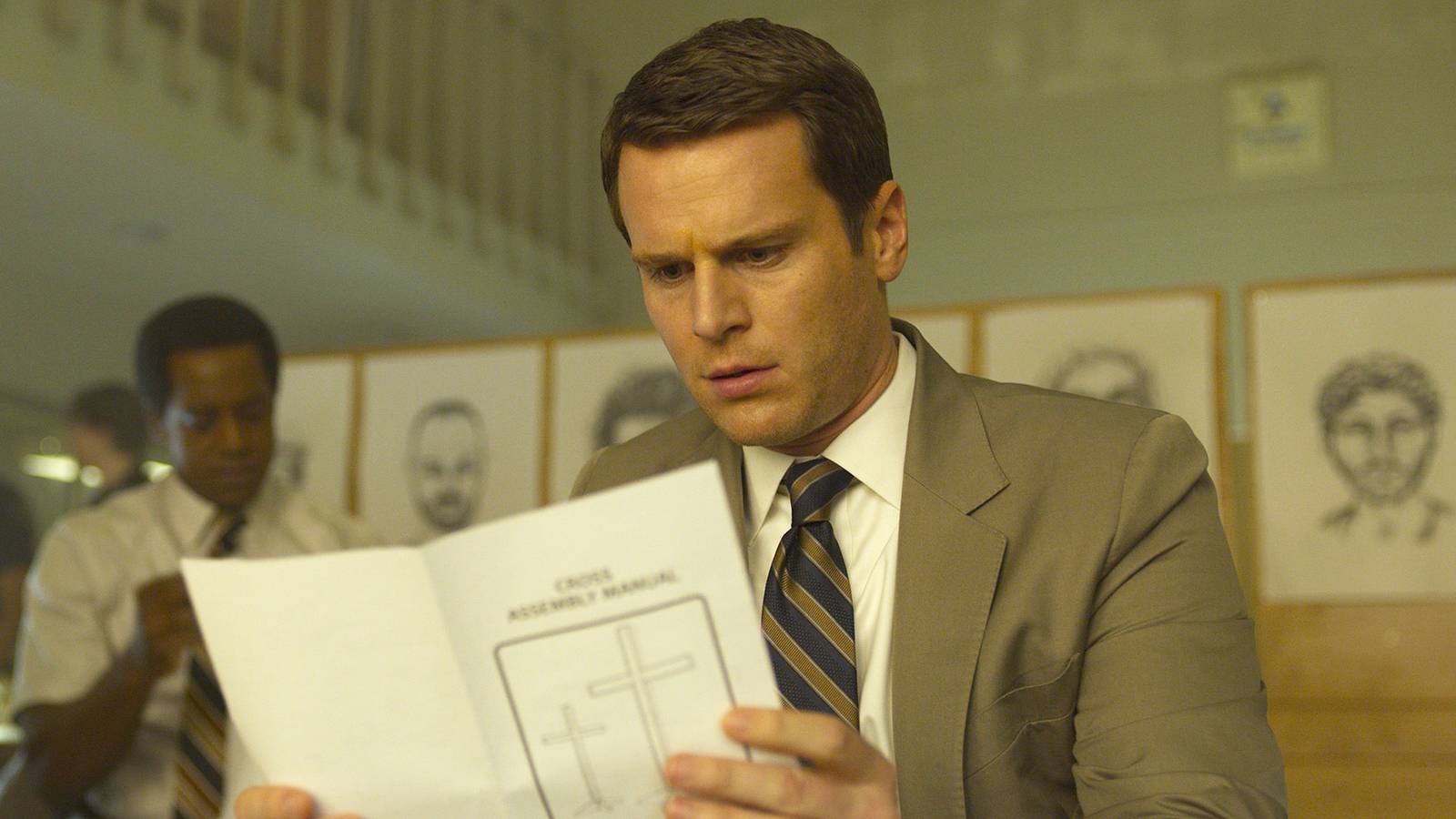
Image via Netflix Published Aug 30, 2026, 8:22 AM EDT Jiminna Shillingford is an avid reader and a passionate storyteller. She is obsessed with all things TV, from anime and romantic fantasy to action-packed series. With that deep affection, Jiminna longs to share her excitement with all her readers through the Collider platform as a TV author. Through her writing she has created stories and blog posts of amazing book recommendations, showcasing her love of writing. Jiminna's goal is to inspire others to discover and embrace their love of stories in all of its forms. Sign in to your Collider account Netflix has delivered a catalog of serious crime shows over the years, but only a few on that list feel so carefully crafted that every episode stands as its own art piece. Some of the platform's best in the genre do more than follow criminals, investigations, or shocking cases; these episodic icons use each chapter to sharpen tension, deepen the world, show how crime affects entire communities and systems, or reveal something painful about the characters. When a Netflix crime series is dubbed a true masterpiece, there is no doubt that any of its episodes are significant. Crime series like the British banger, Top Boy, which was able to gain new life on Netflix as it continues to deliver its layered storytelling about loyalty, ambition, violence, and poverty, and the masterful series Mindhunter, which, even with its short run, delivers tension through interviews, observation, psychology, and silence, are just two series that prove Netflix hosts true compelling watches in the genre that never wastes any of their installments. Compiled on this list are such series, captivating crime watches which showcase that the streaming platform's high-quality catalog of series does exist, and they are masterpieces in their own right for making every one of their episodes feel intense, purposeful, and incredibly impossible to dismiss. 5 'Top Boy' (2011–2023) Image via Netflix This Netflix crime drama is an easy pick for this list of five because it masterfully adds another layer to its interesting plots and the characters’ choices, showcasing how power is gained, lost, and protected. The British drama Top Boy is set in East London, following Dushane Hill (Ashley Walters) and Sully (Kane Robinson) as they navigate the drug trade, with their partnership repeatedly shifting between resentment, loyalty, and violent competition. With Netflix’s revival of the show, Dushane makes his way back to his London home in hopes of reclaiming his position, only to find himself challenged by a younger rival whose ambitions far surpass his own. Top Boy may not have originated on Netflix, but because of the platform, the show gained new life as it dove straight into the brutal criminal world of the drug trade. Top Boy’s refusal to make the drug trade economy feel glamorous makes it a truly raw and captivating watch. Each episode of the series delivers emotional power, some coming even from people standing outside the deadly business whose futures just so happened to be shaped by it. Top Boy doesn’t produce installments that feel like repetitive gangster chess matches, but instead offers viewers social breadth by diving into how crime, poverty, ambition, loyalty, and survival affect an entire community from different perspectives, giving every episode proper meaning to the story, marking it as a true masterful crime drama. 4 'Ripley' (2024) Image via Netflix The miniseries Ripley is one of Netflix’s most carefully controlled crime gems that ensures every episode feels like it was shaped with a specific purpose. Set in early-1960s New York, the eight-episode crime drama centers around the small-time grifter Tom Ripley (Andrew Scott), who, quite unexpectedly, receives an offer from an initially random wealthy man who believes Tom is close friends with his son, Dickie Greenleaf (Johnny Flynn). Tom is sent away to Italy to play the role of friend and convince Dickie to return home, only for the assignment to gradually pull him right into the world of wealth and privilege that he desperately desires for himself. Ripley may wield a short run, but each of its striking black-and-white episodes stands as an essential piece of the larger crime saga. The series is honestly almost perversely patient, but this careful patience becomes the series’ truly greatest source of captivating suspense. From simply cleaning a room and carrying an object up the stairs to improvising around an inconvenient witness, such scenes can occupy countless minutes, going out of their way to showcase just how brilliantly Ripley understands that crime is partly logistics and physical labor—and somehow turning those ordinary details into such addictive television. Each fantastic episode offers the audience a slow-burn that controls every aspect of its elegant tension, marking every one a masterpiece that trusts its atmosphere as much as its plot. Collider Exclusive · TV Medicine Quiz Which Fictional Hospital Would You Work Best In? The Pitt · ER · Grey's Anatomy · House · Scrubs Five hospitals. Five completely different ways medicine goes sideways on television — brutal, chaotic, romantic, brilliant, and ridiculous. Only one of them is the ward your instincts were built for. Eight questions will figure out exactly where you belong. 🚨The Pitt 🏥ER 💉Grey's 🔬House 🩺Scrubs FIND YOUR HOSPITAL → 01 A critical patient comes through the door. What's your first instinct? Medicine under pressure reveals who you actually are. AStay completely present — block everything else out and work through it step by step, right now. BTriage fast and delegate — get the right people on the right problems immediately. CTrust my gut and move — I work best when I stop overthinking and just act. DAsk the question everyone else is ignoring — what's the thing that doesn't fit? ETake a breath, make a joke to cut the tension, and then get to work — panic helps no one. NEXT QUESTION → 02 Why did you go into medicine in the first place? The honest answer says more about you than the one you'd give in an interview. ABecause I wanted to be where it matters most — right at the edge, when someone's life is actually on the line. BBecause I wanted to help people — genuinely, one patient at a time, in a system that makes it hard. CBecause I was drawn to the intensity of it — the stakes, the drama, the feeling of being fully alive. DBecause medicine is the most interesting puzzle there is — and I needed a problem worth solving. EBecause I wanted to make a difference — and also, honestly, I didn't know what else to do with my life. NEXT QUESTION → 03 What do you actually want from the people you work with? Who you want beside you under pressure is who you are. ACompetence and calm — I need people who don't fall apart when things get bad. BTrust and reliability — I want to know that when I pass something off, it's handled. CConnection — I want colleagues who become family, even if that gets complicated. DIntelligence and the willingness to be challenged — I have no interest in people who just agree with me. EFriendship — people I actually like spending twelve hours a day with, because those hours are going to happen either way. NEXT QUESTION → 04 You lose a patient you fought hard to save. How do you carry it? Every doctor who's worked a long shift has had to answer this question. AI carry it. All of it. I don't look for ways to put it down — that weight is part of doing this work honestly. BI process it and move — you have to, or the next patient suffers for the one you just lost. CI feel it deeply and lean on the people around me — I don't think you're supposed to handle that alone. DI go back over every decision — not to punish myself, but because I need to understand what I missed. EI grieve it genuinely, find some way to laugh about something unrelated, and try to be kind to myself — imperfectly. NEXT QUESTION → 05 How would your colleagues describe the way you work? Your reputation on the floor is usually more accurate than your self-image. AIntense and completely present — no small talk during a shift, but exactly who you want there. BSteady and dependable — not the flashiest in the room but never the one who drops something. CPassionate and occasionally chaotic — brilliant on the hard cases, prone to drama everywhere else. DBrilliant and difficult — right more often than anyone else, and everyone knows it, including me. EWarm and self-deprecating — not the most intimidating presence, but genuinely good at this and easy to like. NEXT QUESTION → 06 How do you feel about hospital protocol and procedure? Every institution has rules. What you do with them is a choice. AProtocol is the floor, not the ceiling — I follow it until the patient needs something it can't provide. BI respect it — the system is broken in places, but the structure is there for a reason and I work within it. CI follow it until my instincts tell me not to — and my instincts are usually right, even when they cause problems. DRules are for people who haven't thought hard enough about when to break them. EI try to follow it and mostly do — with a few memorable exceptions that still come up in meetings. NEXT QUESTION → 07 What does this job cost you personally? Nobody works in medicine without paying a price. What's yours? AEverything outside these walls — I've given this job my full attention and the rest of my life has gone around it. BMy idealism, mostly — I came in believing the system could be fixed and I've made a complicated peace with that. CStability — my personal life has been as chaotic as the OR, and that's not entirely a coincidence. DMy relationships — I am not easy to know, and the people who've tried to would probably agree. EMy sense of gravity — I use humour as a coping mechanism, which not everyone appreciates in a hospital. NEXT QUESTION → 08 At the end of a long shift, what keeps you coming back? The answer to this question is the most honest thing about you. AThe fact that it's real — that nothing else I could be doing would matter this much, right now, today. BThe patients — individual human beings who needed something and got it because I was there. CThe people I work with — I have walked through impossible things with these people and I'd do it again. DThe next unsolved case — there's always another puzzle, and I'm not done yet. EBecause despite everything — the exhaustion, the loss, the absurdity — I actually love this job. REVEAL MY HOSPITAL → Your Assignment Has Been Made You Belong In…Your answers have pointed to one fictional hospital above all others. This is the ward your instincts, your temperament, and your particular brand of dysfunction were built for. The PittYou are built for the most unsparing version of emergency medicine television has ever shown — one that puts you inside a single fifteen-hour shift and doesn't let you look away. You need your work to be real, not romanticised — meaning over drama, honesty over aesthetics. You find purpose inside the work itself, not in the chaos surrounding it. You've made peace with the fact that this job takes from you constantly, and gives back in ways that are harder to name. Pittsburgh Trauma Medical Center demands exactly that kind of person — and you would not want to be anywhere else. ERYou are the person who keeps the whole floor running — not the most brilliant in the room, but possibly the most essential. You show up, do the work, absorb the losses, and come back the next day without needing the job to be anything other than what it is. You care about patients as individual human beings, not as cases to solve or dramas to live through. You believe in the system even when it fails you — and you understand that emergency medicine is about holding the line just long enough. ER is television about endurance. You have it. Grey's AnatomyYou came to medicine with your whole self — your ambition, your emotions, your relationships, your history — and you have never quite managed to leave any of it at the door. You feel things fully and form deep attachments to the people you work with. Your personal and professional lives are permanently, chaotically entangled — and that entanglement drives both your greatest disasters and your most remarkable saves. You understand that extraordinary medicine often happens at the intersection of clinical skill and profound human connection. It's messy at Grey Sloan. You would not have it any other way. HouseYou are drawn to the problem above everything else — the symptom that doesn't fit, the diagnosis hiding underneath the obvious one. You're not primarily motivated by the patient as a person — though you are capable of caring, even if you'd deny it. You work best when the stakes are highest and the standard answer is wrong. Princeton-Plainsboro exists to house one extraordinary, impossible mind — and everyone around that mind is there because they're smart enough to keep up. The only way forward here is to think harder than everyone else in the room. That is exactly what you do. ScrubsYou understand that medicine is tragic and absurd in almost equal measure — and that the only sane response is to hold both of those things at the same time. You are warm, self-aware, and funnier than most people in your field. You use humour to get through terrible moments — and at Sacred Heart, that's not a flaw, it's a survival strategy. You lean on the people around you and let them lean back. The laughter and the grief are genuinely inseparable here. Scrubs is a show about learning to become someone worthy of the job. You are still very much in the middle of that process — which is exactly right. ↻ RETAKE THE QUIZ 3 'When They See Us' (2019) Image via Netflix This underrated Netflix limited series is a true-story-based crime drama that is genuinely devastating to sit through as it delivers a story rooted in real injustice. The four-part miniseries, When They See Us, focuses on five Black and Latino teenagers: Korey Wise (Jharrel Jerome), Kevin Richardson (Asante Blackk), Antron McCray (Caleel Harris), Yusef Salaam (Ethan Herisse), and Raymond Santana (Marquis Rodriguez), who are wrongfully accused in connection with the 1989 assault of a jogger in Central Park. The young defendants are interrogated under extreme pressure, separated from the understanding and the protection they deserve, and pushed into statements that do not accurately describe what actually occurred. Few Netflix crime series are as necessary or as difficult as When They See Us. The show is truly a masterpiece despite its extremely short run, but its status as such does not necessarily mean it's enjoyable. When They See Us is pretty exhausting and enraging, and it's done intentionally so, as it forces its audiences to sit with the mechanics through which racial prejudice, fear, political pressure, and institutional self-protection can turn even children into convenient defendants. There isn’t a moment in the four-part miniseries that the examination of the different stages of the case feels like fluff or filler, as each installment exposes another tragic layer of the injustice forced upon teens, marking it not as a feel-good masterpiece per se, but one that is emotionally powerful and deserves to be seen by all. 2 'Adolescence' (2025) Image via Netflix Adolescence is one of Netflix’s most recent masterpieces where every episode transforms one terrible accusation into a heart-wrenching study of masculinity, family, school life, and social pressure. The miniseries follows thirteen-year-old Jamie Miller (Owen Cooper), who is arrested after being accused of murdering his female classmate. Unfortunately for his parents, they are plunged into a nightmare in which unconditional love and parental certainty collide with evidence that they have no idea how to process. With each episode designed as a continuous take, Adolescence uses its technical ambition not only for its captivating spectacle but also to strengthen character development, performances, and emotional storytelling. It stands as one of the finest crime shows of the past decade, available on the Netflix platform for subscribers to get lost in. Adolescence may be only four installments, but every one of those episodes has a distinct function, ranging from accusation and investigation to psychological confrontation and familial aftermath. Together, these four masterful episodes of Adolescence form a brilliantly crafted crime series in which no chapter feels interchangeable or insignificant. It’s a quality watch that, by its finale, proves that even the shortest of series can be true masterpieces when it is laden with carefully constructed episodes that make for pretty memorable television. 1 'Mindhunter' (2017–2019) Image via Netflix This underrated crime TV series stands as one of Netflix’s most gripping procedural dramas. Set in the late 1970s, Mindhunter centers around FBI agent Holden Ford (Jonathan Groff), who becomes convinced that law enforcement cannot effectively understand a new kind of murderer using old investigative techniques. When gaining a more experienced partner in Bill Tench (Holt McCallany), the two team up on interviewing imprisoned killers to study their behavioral patterns that might help solve ongoing crimes. As their research expands, the series follows the two and their development of criminal profiling, as well as the personal cost of spending hours trying to understand people who have committed terrible crimes. Mindhunter delivers episode after episode of genuinely intelligent, controlled, and honestly quite disturbing content. Somehow, the series is able to make two people sitting in a prison interview more terrifying than many chase sequences seen on television. From the directorial emphasis on stillness and framing to behavioral detail and captivating pauses, Mindhunter’s suspense comes from what each scene slowly and quite masterfully reveals rather than what it can immediately deliver. Conversations become as intense as traditional action with carefully chosen words, subtle expressions, and uncomfortable moments of pressure. Mindhunter is truly remarkable in its attention to detail, as even its quietest episodes feel purposeful, allowing the series to maintain quite an extraordinary level of high quality. The show is no slouch at all, a Netflix hidden gem whose true mystery is not “who did it?” but whether evil can be categorized without oversimplifying both the psychology and people behind it. Mindhunter Release Date 2017 - 2019 Network Netflix
5 Netflix Crime Shows Where Every Episode Is a Masterpiece
Full Article
Original Source
Read the full article at Collider →KhanList aggregates and links to publicly available news content. We do not host full articles from third-party sources. Always verify important information with original sources.