
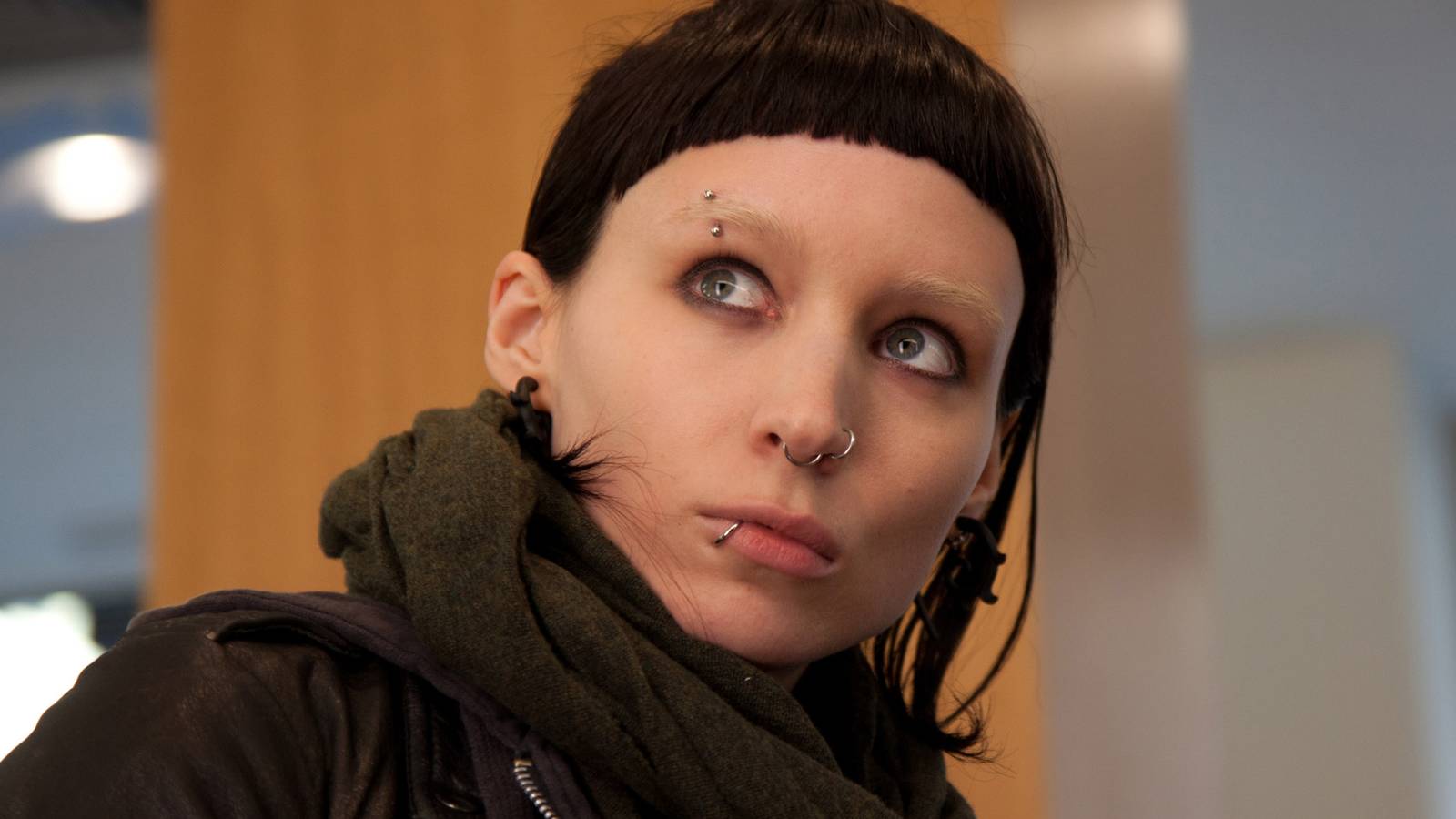
Image via Sony Pictures Releasing Published Aug 29, 2026, 6:52 AM EDT Dyah (pronounced Dee-yah) is a Senior Author at Collider, responsible for both writing and transcription duties. She joined the website in 2022 as a Resource Writer before stepping into her current role in April 2023. As a Senior Author, she writes Features and Lists covering TV, music, and movies, making her a true Jill of all trades. In addition to her writing, Dyah also serves as an interview transcriber, primarily for events such as San Diego Comic-Con, the Toronto International Film Festival, and the Sundance Film Festival. Dyah graduated from Satya Wacana Christian University in October 2019 with a Bachelor's degree in English Literature, concentrating on Creative Writing. She is currently completing her Master's degree in English Literature Studies, with a thesis on intersectionality in postcolonial-feminist studies in Asian literary works, and is expected to graduate in 2026. Born and raised between Indonesia and Singapore, Dyah is no stranger to different cultures. She now resides in the small town of Kendal with her husband and four cats, where she spends her free time cooking or cycling. Sign in to your Collider account There's a certain skill required to deliver thrills through words, and these books understand the assignment. While movies and television shows have the luxury of building suspense through visual cues, books have to do it differently. Not everyone is willing to sift through hundreds of pages in one sitting, but a well-written thriller should keep you sitting in anticipation, turning the pages until you lose track of time. And with modern thrillers, where the tension often comes from more contemporary anxieties, there is even more material to draw inspiration from. Whether it's being stranded on a coastal island during a storm or confronting a painful history of abuse, here are modern thriller books that are perfect from the first page to the last. 'The Silent Patient' (2019) Image via Celadon Books A BookTok sensation by Alex Michaelides, The Silent Patient follows Alicia Berenson, a successful painter whose perfect life changes forever when she shoots her husband, Gabriel, five times. After the murder, Alicia completely stops speaking and is eventually placed in the Grove, a psychiatric facility where numerous therapists fail to uncover why she refuses to talk. Six years later, psychotherapist Theo Faber takes on her case, convinced he can get her to break her silence. As Theo investigates Alicia's past, he discovers troubling relationships, childhood trauma, and clues hidden in her paintings and diary. One of the thriller genre's most clever and unsuspecting tools is the unreliable narrator. In this case, there are two narrators: Theo's investigations and Alicia's diary entries. One of them is a professional, and the other has lived through the experience itself. However, that doesn't automatically mean either one is telling the whole story. Michaelides effectively controls the information readers receive, whether it's through short chapters, clashing perspectives, or building enough tension for readers to question whom they can actually trust. The Silent Patient proves that violence sometimes doesn't have to be so ostentatious to bring the thrills, but the unsettling trust issue alone between two connected people is more than enough to keep readers on the edge of their seats. 'The Girl with the Dragon Tattoo' (2005) Image via Norstedts Förlag Before it became a blockbuster hit, The Girl with the Dragon Tattoo was already a widely praised novel by Stieg Larsson. Disgraced journalist Mikael Blomkvist gets a second chance in his career when businessman Henrik Vanger hires him to investigate the disappearance of his niece, Harriet. Presumed to have vanished from the family's isolated island 40 years earlier, Blomkvist, along with the genius hacker Lisbeth Salander, digs into the case, uncovering long-buried family secrets and disturbing clues that may explain Harriet's disappearance. As the investigation deepens, the pair realizes that the Vanger family has more sinister secrets than they initially expected. In true Nordic literature fashion, The Girl with the Dragon Tattoo is not for the faint-hearted. It is bleak, cold, brutal, and utterly unforgiving. Nobody is trying to be a hero, nor do they intend to be one. There is a thin line between being a hero and seeking redemption, which can easily be mistaken for revenge. Given Lisbeth's troubled past, which is also connected to Harriet's case, it would only take one wrong move for the investigation to cross that line. What starts as a search for answers slowly and painfully becomes something far more personal, muddying the boundaries between justice and vengeance. 'The Guest List' (2020) Image via William Morrow Set on a remote island off the coast of Ireland, Lucy Foley's The Guest List follows the glamorous wedding of Jules Keegan, a successful magazine publisher, and Will Slater, a popular television personality. When a storm cuts the island off from the mainland, the celebration immediately turns into every bride's worst nightmare. But this is far more sinister than a soiled dress, mixed-up catering, or a bridesmaid sleeping with her would-be husband: before they say their "I dos," Will is found stabbed to death. The worst part is that nearly all of their handpicked guests have a solid reason to murder Will. Typically, in these situations, one can't help but feel bad for the victim—especially when nearly every one of his guests has an intention to kill him. Their motives stem from a years-old traumatic incident that could tarnish Will's reputation if revealed. In this Knives Out-esque whodunit, however, nobody is perfect—even the dead guy. The cruel irony is that Will isn't so innocent after all, making the whole ordeal feel a little karmic. Still, there's something claustrophobic about being stuck on the same island as a potential murderer, knowing that there are only two possible outcomes: you could become the next victim, or you could be the killer yourself. Collider Exclusive · Horror Survival Quiz Which Horror Villain Do You Have the Best Chance of Surviving? Jason Voorhees · Michael Myers · Freddy Krueger · Pennywise · Chucky Five killers. Five completely different ways to die — if you're not smart enough, fast enough, or self-aware enough to avoid it. Only one of them is the villain your particular set of instincts gives you a fighting chance against. Eight questions will figure out which one. 🏕️Jason 🔪Michael 💤Freddy 🎈Pennywise 🪆Chucky TEST YOUR SURVIVAL → 01 Something feels wrong. You can't explain it — you just know. What do you do? First instincts are the difference between the survivor and the first act casualty. ALeave immediately. I don't need to understand a threat to respect it. BStay quiet and observe. If I can see it, I can understand it. If I can understand it, I can avoid it. CStay awake. Whatever this is, I am not going to sleep until I feel safe again. DConfront it directly. Fear grows in the dark — I'd rather know what I'm dealing with. ECheck everything, trust nothing. The threat might be closer than I think — and smaller. NEXT QUESTION → 02 Where are you most likely to find yourself when things go wrong? Setting is everything in horror. Where you are determines which rules apply. ASomewhere remote — a cabin, a campsite, off the grid and away from people. BA quiet suburban neighbourhood where nothing ever happens. Except tonight. CIn my own head — the most dangerous place of all, depending on what's already in there. DWherever children are — because something about this place attracts the worst things. ESomewhere ordinary — a house, a toy store, a place where the last thing you'd expect is a threat. NEXT QUESTION → 03 What is your most reliable survival asset? Every survivor has a quality the villain didn't account for. What's yours? APhysical fitness — I can run, I can swim, I can outlast something that relies on brute persistence. BSpatial awareness — I always know the exits, the hiding spots, the fastest route out. CPsychological resilience — I've faced my worst fears before. They don't have the same power over me. DEmotional steadiness — I don't panic. Panic is what gets you caught. EScepticism — I don't underestimate threats because of how they look. Size is irrelevant. NEXT QUESTION → 04 What kind of fear is hardest for you to fight through? Knowing your weakness is the first step to not dying because of it. AThe unstoppable — something that will not stop, cannot be reasoned with, and is always getting closer. BThe invisible — a threat I can feel but can't locate, watching from somewhere I can't see. CThe psychological — something that uses my own mind and memories against me. DThe unknowable — something ancient, shapeless, that feeds on the fear itself. EThe mundane — a threat so ordinary-looking that no one will believe me until it's too late. NEXT QUESTION → 05 You're with a group when things start going wrong. What's your role? Horror movies are brutally clear about who survives group situations and who doesn't. AThe one who says "we need to leave" first — and means it, even when no one listens. BThe one who stays quiet, watches the others, and figures out the pattern before anyone else does. CThe one who holds the group together when panic sets in — because someone has to. DThe one who asks the questions nobody wants to ask — because ignoring them gets people killed. EThe one who takes the threat seriously when everyone else is laughing it off. NEXT QUESTION → 06 What's the horror movie mistake you're most likely to make? Honest self-assessment is a survival skill. Denial is not. AGoing back for someone — I know I shouldn't, but I can't leave them behind. BAssuming I'm safe once I've found a hiding spot. That's when it finds me. CFalling asleep when I absolutely cannot afford to. Exhaustion is its own enemy. DLetting my curiosity override my instincts — I always need to understand what I'm dealing with. EDismissing the threat because of how it looks. That's exactly what it wants. NEXT QUESTION → 07 What's your best weapon against something that can't be stopped by conventional means? Every horror villain has a weakness. The survivors are always the ones who find it. AThe environment itself — I use the terrain, the water, the geography against it. BPatience — I wait, I watch, and I strike at the one moment it doesn't expect. CLucidity — if I can stay in control of my own mind, it loses its primary weapon. DCourage — facing it directly, refusing to run, taking away the fear it feeds on. EImprovisation — I use whatever's at hand, however unconventional. Creativity over brute force. NEXT QUESTION → 08 It's the final scene. You're the last one standing. How did you make it? The final survivor always has a reason. What's yours? AI kept moving. I never stopped, never hid for too long, never let it corner me. BI figured out the pattern before anyone else did — and I used it against the thing following it. CI stayed awake, stayed lucid, and refused to give it the one thing it needed most. DI stopped being afraid of it. And the moment I did, everything changed. EI took it seriously from the start — and I never once made the mistake of underestimating it. REVEAL MY VILLAIN → Your Survival Odds Have Been Calculated Your Best Chance Is Against…Your instincts, your strengths, and your particular way of thinking under pressure point to one villain you actually have a fighting chance against. Everyone else — good luck. Jason VoorheesJason is relentless, but he is also predictable — and that is the gap you would exploit. He moves in straight lines toward his target. He doesn't strategise, doesn't adapt, doesn't outsmart. He simply pursues. Your ability to keep moving, use the environment, and resist the panic that freezes most victims gives you a genuine edge. The Crystal Lake survivors were always the ones who stopped running in circles and started thinking about terrain, water, and distance. You think like that. Which means Jason, for all his indestructibility, would face someone who simply refused to be where he expected. Michael MyersMichael watches before he moves. He is patient, methodical, and almost impossible to detect — until it's too late for anyone who isn't paying close enough attention. But you are paying attention. You notice the shape in the window, the car parked slightly wrong, the silence where there should be sound. Michael's power lies in the invisibility of ordinary suburbia — the fact that nothing ever looks wrong until it already is. Your spatial awareness and instinct to map every room, every exit, and every shadow before you need them is precisely the quality Laurie Strode had. You are not a victim waiting to happen. You are someone who already suspects something is wrong — and acts on it. Freddy KruegerFreddy wins by getting inside your head — using your own fears, your own memories, your own subconscious as weapons against you. That strategy requires a target who can be destabilised. You are harder to destabilise than most. You've faced uncomfortable truths about yourself and you haven't looked away. The survivors on Elm Street were always the ones who understood what was happening and chose to face it rather than flee from it. Freddy's greatest weakness is that his power evaporates in the presence of someone who refuses to give him the fear he feeds on. Your psychological resilience — the ability to stay grounded when reality itself becomes unreliable — is exactly the quality that keeps you alive here. PennywisePennywise is ancient, shapeshifting, and feeds on terror — but it has one critical vulnerability: it cannot function against someone who genuinely stops being afraid of it. The Losers Club didn't survive because they were braver than everyone else. They survived because they faced their fears together, and faced them honestly. You ask the questions others avoid. You look directly at what frightens you rather than turning away. That directness — the refusal to let fear fester in the dark — is Pennywise's worst nightmare. It chose the wrong target when it chose you. You are exactly the kind of person whose fear tastes like nothing at all. ChuckyChucky's greatest advantage is that nobody takes him seriously until it's already too late. He exploits the gap between how something looks and what it actually is. You don't have that gap. You take threats seriously regardless of how they present — and you never make the mistake of underestimating something because of its size or appearance. Chucky relies on surprise, on the delay between recognition and response. You close that delay faster than almost anyone. Your instinct to treat every unfamiliar thing with appropriate scepticism — rather than dismissing it because it seems absurd — is the exact quality that keeps you breathing. Against Chucky, not laughing is already winning. You are very good at not laughing. ↻ RETAKE THE QUIZ 'No Exit' (2017) Image via William Morrow Taylor Adams' No Exit follows college student Darby Thorne as she drives through the Colorado mountains to reach her critically ill mother. When a violent blizzard forces her to stop at an isolated highway rest area, Darby finds herself trapped with four strangers, with no phone signal and no way to leave until the storm passes. But while searching for reception outside, she notices a child inside a van and discovers nine-year-old Jay, who has been kidnapped and locked inside a dog kennel. The terrifying part is that the kidnapper has to be one of the strangers inside. No Exit doesn't turn Darby into a superhero. She's just a person who happens to be in the wrong place at the wrong time. There's only so much an art student can do, especially when she's trying to save both herself and a young child. But Darby makes use of the skills she does have, relying on her observant nature to study the rest stop, figure out its exits, and keep an eye on the four strangers around her while trying to keep the kidnapped girl alive. Even something as harmless as sharing coffee or playing cards becomes uncomfortable when she knows that any one of them could be the kidnapper. 'Gone Girl' (2012) Image via Phoenix Whether you've seen the "Cool Girl" monologue or are just a fan of Rosamund Pike's movie adaptation, Gillian Flynn's Gone Girl sets the barometer for marital thrillers. Gone Girl follows Nick Dunne, a former journalist whose life falls apart when his wife, Amy, disappears on their fifth wedding anniversary. When he returns home to find signs of a struggle, Nick quickly becomes the focus of a police investigation and intense media attention. As suspicion grows, the story shifts between Nick's perspective and Amy's diary entries, revealing how they met, fell in love, and built a seemingly happy life together in New York. But beneath their perfect marriage lies growing resentment, financial problems, and secrets neither has been willing to confront. For all its drama and suspense, Gone Girl is also deliciously fun and scandalous to read. It's a true guilty pleasure watching how messy and unpredictable Nick and Amy's marriage becomes. Just when you think you understand what happened to Amy, Flynn pulls the rug out from under you. Gone Girl challenges the idea that nobody is as innocent as they seem, and though their actions may be harsh, sometimes they are victims of even harsher circumstances themselves. Suddenly, all those petty arguments between husband and wife take on a much darker meaning, making the whole story feel even more unsettling. Gone Girl Release Date October 3, 2014 Runtime 149 minutes With his wife's disappearance having become the focus of an intense media circus, a man sees the spotlight turned on him when it's suspected that he may not be innocent. Director David Fincher Writers Gillian Flynn Producers Arnon Milchan, Ceán Chaffin, Joshua Donen Main Genre Thriller Budget $61 million Studio(s) 20th Century Distributor(s) 20th Century Executive Producer(s) Bruna Papandrea, Leslie Dixon
5 Modern Thriller Books That Are Perfect From the First Page to Last
Full Article
Original Source
Read the full article at Collider →KhanList aggregates and links to publicly available news content. We do not host full articles from third-party sources. Always verify important information with original sources.