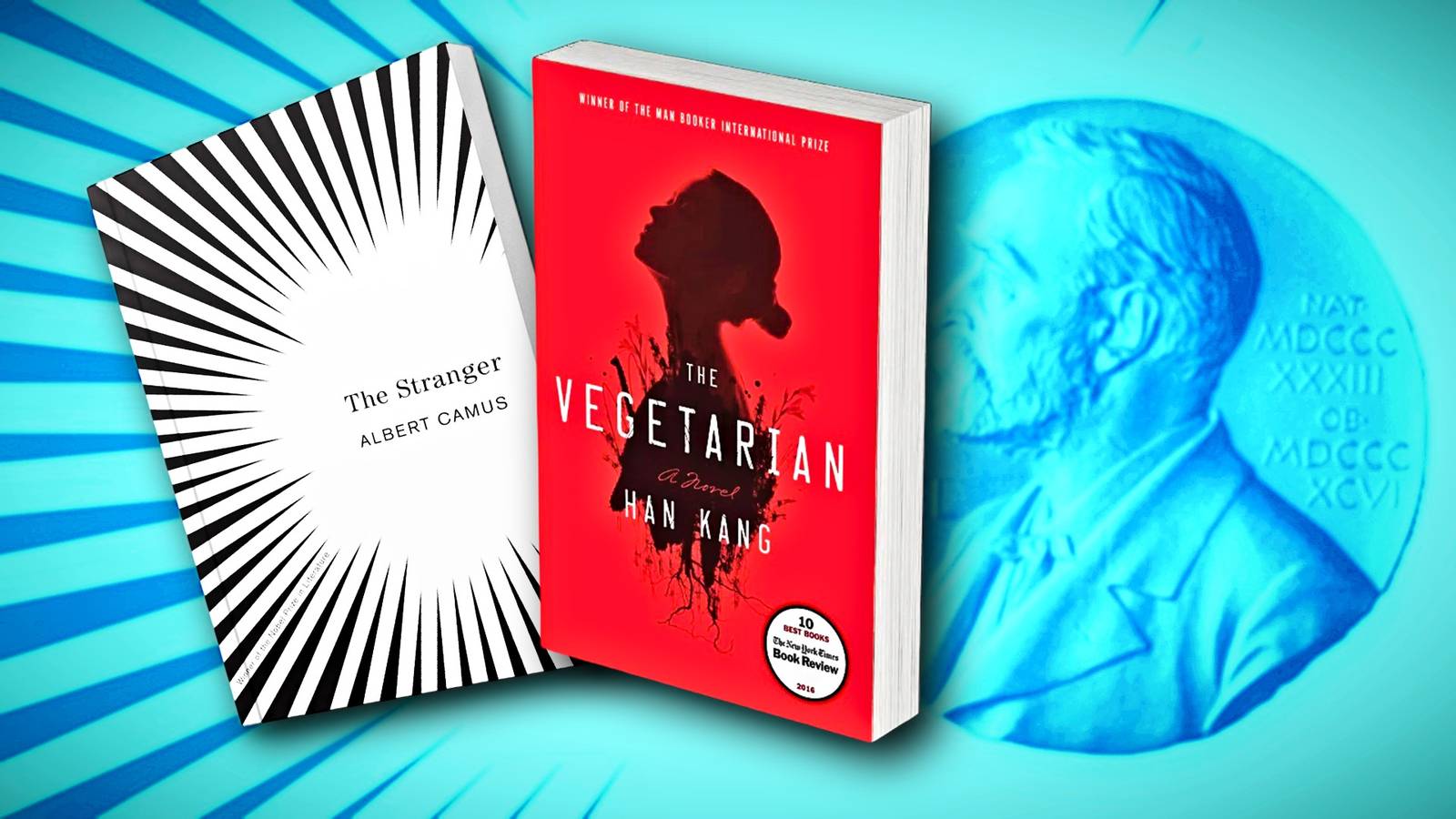
Published Jul 19, 2026, 10:10 PM EDT Vanessa Piña has been a freelance writer for the ScreenRant anime section since 2024. As a senior writer, she focuses on timely coverage of the latest anime releases and updates on popular franchises. Although it is well known that the Nobel Prize in Literature is awarded not for specific novels but for an author's complete oeuvre and its impact, there is no doubt that many readers use the award as a guide for their next reads, hoping to discover high-quality books. However, seeking out the works of Nobel laureates can be overwhelming, as most readers struggle to decide where to begin amidst the vast array of writers or simply don't know which work is best suited for a first foray into their writing. While renowned writers like Ernest Hemingway or William Golding are available in almost every library, there are other international authors whom every book lover should read at least once. These writers offer something unique, and their works have earned a place among the greatest books in history. From contemporary titles to essential classics, these books by Nobel Prize winners are masterpieces that have truly earned their reputations, and readers won't regret picking up. 6 Blindness by José Saramago 1998 Nobel Prize in Literature The Portuguese writer José Saramago penned novels featuring brilliant allegories, such as Death with Interruptions and All the Names. However, Blindness (1995) is perhaps his most profound and contradictory work, since its narrative is constructed through meticulous metaphors while inviting readers to formulate their own interpretations. The novel follows a society suddenly struck by an epidemic of white blindness that plunges it into collapse, affecting everyone except one immune woman. Although blindness might not seem like an apocalyptic scenario in itself, the novel portrays a dystopian and bleak environment where even everyday conditions become unbearable and being different leads to its own psychological torment. Blindness explores moral boundaries in situations of extreme survival marked by segregation, political factions, and harrowing events not for the faint of heart. So, rather than a conventional novel, Blindness becomes a provocative synthesis combining sociology and politics to reflect on human limitations and the fragility of modern societies. Blindness is not an easy book to approach. The absence of quotation marks, the long paragraphs that make it difficult to identify the speaker, and the lack of character names constitute a stylistic choice that may be complex to grasp at first. Yet this creates a sense of indeterminacy and claustrophobia in the novel, conveying the experience of losing one's sight to the reader and aligning perfectly with the message that the story aims to convey. While the novel was also adapted into a movie in 2008 starring Julianne Moore and Mark Ruffalo, reading Blindness is truly a one-of-a-kind experience for book lovers. 5 The Vegetarian by Han Kang 2024 Nobel Prize in Literature The Vegetarian is Han Kang’s most popular work, and rightly so, as it's one of those novels that linger in the mind long after reading. With a less lyrical prose than that of Kang's Human Acts and Greek Lessons, The Vegetarian follows Yeong-hye’s life after she decides to stop eating meat. Although this action sets the story in motion, the novel is neither a critique of vegetarianism nor does it treat the subject as its central theme; rather, it serves as a vehicle to depict a transformation affecting the protagonist, much like the one in Franz Kafka’s The Metamorphosis. The Vegetarian is divided into distinct sections and adopts the perspectives of three different narrators, all deeply flawed and unreliable, connected to Yeong-Hye. But in an oppressive environment, anything that breaks with the established norm is perceived as a fierce affront. Thus, the novel offers a profound look at bodily autonomy and loneliness within a stifling society. Consequently, although The Vegetarian contains psychological and body-horror elements, its fantastical elements can feel as much like a fever dream as a realistic tale viewed through a different lens. This makes The Vegetarian a disturbing book, featuring many scenes designed to make the readers uncomfortable. Yet, it succeeds in impacting readers, as it masterfully explores how self-preservation can be mistaken for rebellion. The novel is replete with symbolism that invites readers to reflect on numerous issues, including empathy toward others. Therefore, regardless of whether its poetic language and themes appeal to every reader, The Vegetarian is an essential work that can be critically analyzed from various perspectives. 4 The Stranger by Albert Camus 1957 Nobel Prize in Literature The Stranger by Albert Camus is a short yet layered novel that has become a masterpiece of existentialism, rich in reflections on morality and the meaning of life. The novel chronicles the mundane life of Meursault following his mother's death and a motiveless murder. The Stranger is not only a novel that readers of Fyodor Dostoevsky’s Crime and Punishment will appreciate, given the influence of and contrast between the two works, but the protagonist also clashes with readers due to how unusual he is. Mired in apathy and a lack of commitment, and characterized by a passivity toward both existence and death, Meursault is a fascinating figure whose individual perspective critiques society's coldness and indifference in the face of injustice. Despite its brevity, The Stranger delivers ample material for debating the essence of absurdism, making it an ideal title for readers wishing to explore philosophical fiction. 3 Voices from Chernobyl by Svetlana Aleksiévich 2 2015 Nobel Prize in Literature The Nobel Prize celebrates not only fiction writers but also those whose meticulous investigative work explores real-life events from another viewpoint, such as Svetlana Alexievich. Her oral history books have brought visibility to ordinary people, and Voices from Chernobyl: The Oral History of a Nuclear Disaster is not merely a chronicle intended as political critique or a technical explanation of a catastrophe. Instead, it is a collection of diverse testimonies that open the readers' eyes to human vulnerability, survival, and the way people continue to live their daily lives amidst tragedy. It's precisely because of how she captures reality from a human perspective that Voices from Chernobyl is a harrowing work. It contains heart-wrenching stories that evoke pain and sorrow in the readers yet also compel deep reflection. The book doesn't point fingers directly but becomes an ode to life and resilience in disastrous circumstances. It also inspired the 2019 HBO miniseries Chernobyl, making Voices from Chernobyl a must-read for anyone wishing to gain a deeper understanding of one of the most horrific events that humanity has ever faced. 1 Love In The Time of Cholera by Gabriel García Márquez 1982 Nobel Prize in Literature As one of the greatest writers in the Spanish language, Gabriel García Márquez’s complete ouvre has garnered immense critical acclaim. One Hundred Years of Solitude is a work exploring a family's history across several generations, rooted in Colombia's culture and steeped in magical realism, stands as his best-known masterpiece. However, another of his novels, Love in the Time of Cholera, deserves greater attention for its complex portrayal of the universal theme of love. At first glance, Love in the Time of Cholera is described as a love story viewed through the passage of time, tracing the relationship of Florentino Ariza and Fermina Daza. Nonetheless, the novel is far removed from a typical heart-fluttering romance. Just as reality and magic intertwine in the story of the Buendía family, love and obsession can become indistinguishable in Love in the Time of Cholera. García Márquez examines every aspect of love, even comparing its physical manifestations to the symptoms of a disease. The novel portrays the full spectrum of human relationships, from platonic to requited love, and from the beautiful to the toxic, including the ways people idealize their partners and justify their actions. It examines how social structures influence relationships, offering a critique of patriarchy, class distinctions, and emotional dependency. Above all, the novel shines through its depiction of the evolution of love and the way feelings transform over time. The narrative of Love in the Time of Cholera elevates the magnitude of love, avoiding excessive sentimentality and captivating the reader to turn the experience into something truly extraordinary.
5 Masterpieces by Nobel Prize Winners Every Book Lover Should Read Once
Full Article
Original Source
Read the full article at Screenrant →KhanList aggregates and links to publicly available news content. We do not host full articles from third-party sources. Always verify important information with original sources.