
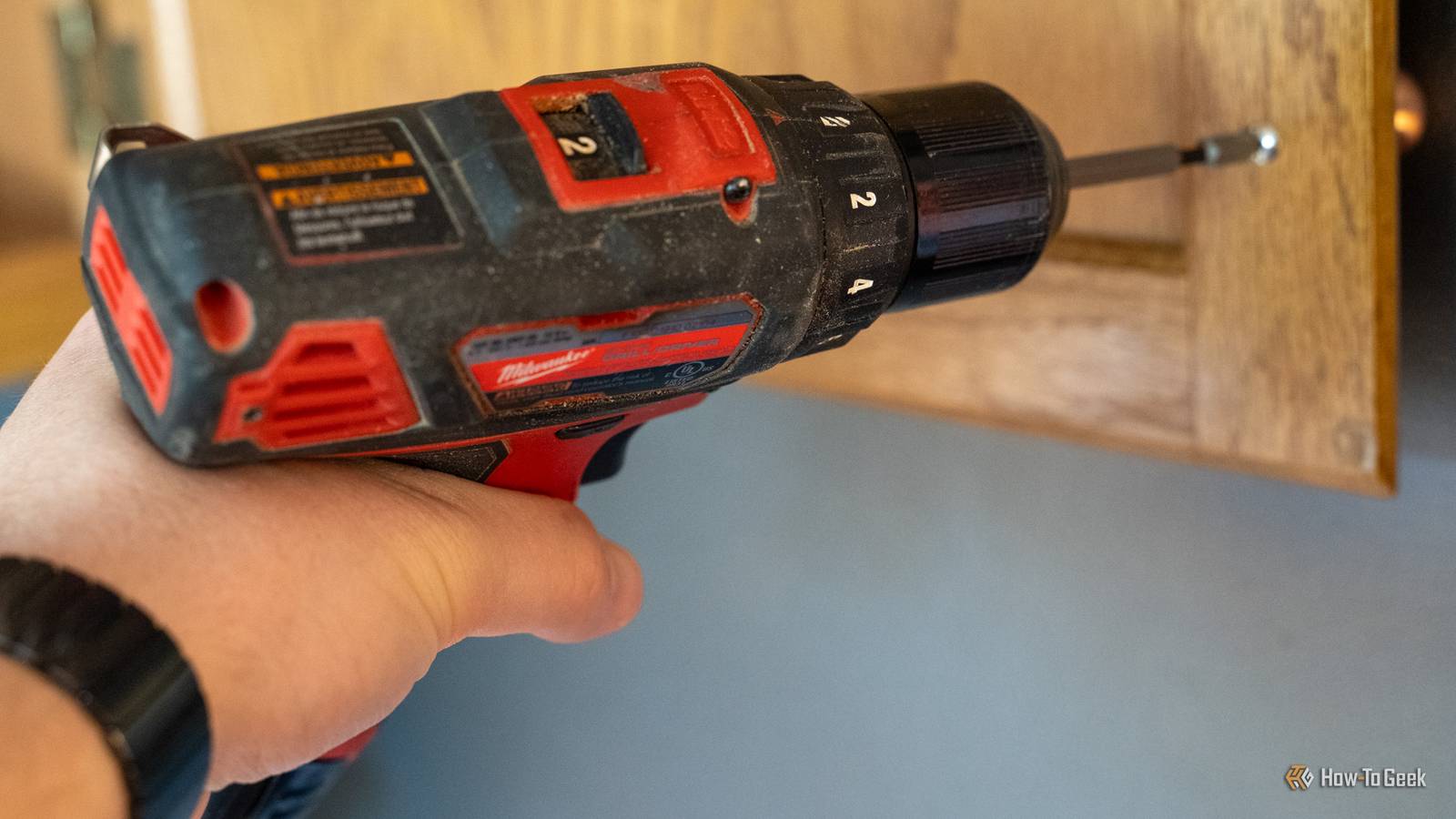
Published Oct 19, 2026, 12:00 PM EDT Patrick Campanale has been in the tech space for well over a decade, specializing in PC/gaming news and reviews, as well as maker-focused products to build small businesses. With a start in technology back in 2010 surrounding the Palm/webOS ecosystem, Patrick spent his formative years developing mobile applications as well as blogging for various publications, eventually leading to starting his own website in 2014. After running a technology blog for a few years, he stepped out of that role and into the world of high-end custom PC manufacturing and building, with a focus on YouTube video production and overclocking. Then, in 2017, Patrick joined the 9to5Toys team as an editor/writer/reviewer with over 14,000 articles being published during his time there, ranging from deals and roundups to in-depth reviews on the latest technology, video games, 3D printers, and more. In his free time, Patrick loves to create projects from wood using various robots and methods, including leveraging the technologies of CNCs and lasers. If Patrick isn't working on a computer or playing video games, he's likely in his 2-car garage workshop creating something unique. In addition to all this, Patrick is also the media director at his local church where he feels God has called him to serve, and he loves every minute of it. When I bought my Milwaukee M12 tools, I thought they would just be something to hold me over until I eventually got 18V tools. However, after using them for years, I realize that there are simply some jobs that are better suited for 12V tools over 18V tools, and I'm so glad that I bought the M12 kit when I did instead of waiting to just buy 18V tools. Furniture assembly doesn't need 18 volts A smaller driver is less likely to strip screws out Credit: Patrick Campanale / How-To Geek Growing up, the only tools that my family had were Ryobi 18V, which was honestly way overkill for many projects that we used the tools for. Things like assembling a bed frame, building a couch, or putting a trampoline together simply don't need the extra power of 18V. Likewise, the projects that I often work on today just don't need the extra 18V power. While I definitely do woodworking projects and things of that nature, putting together furniture is just as easy with 12V as 18V. In fact, I'd say it's easier. The lower torque settings on drills make it more difficult to strip screws, and the more lightweight and compact design of my M12 gear is easier to maneuver than an 18V tool when in tighter spaces (like inside of a couch). These days, even though I have 18V tools, if I'm doing furniture assembly, I reach for the 12V tools because they're easier for both my wife and myself to use. The only time I go for an 18V tool is if my 12V batteries are dead or there's a really stubborn bolt or screw that I need the extra oomph for—though neither case happens all that often. Cabinet hardware is a control job, not a power job Weight matters when you're working at eye level Assembling cabinets is something that needs a more delicate touch. Many cabinets are made from either particleboard (compressed sawdust and glue, basically) or plywood. Both materials can strip out fairly easily. Because of this, whenever I'm assembling cabinets or doing jobs around cabinet doors or drawers, I typically reach for my 12V tools. They're more compact and way easier to control when I'm holding them up in the air. I also don't need tons of torque when installing hinges, pulls, or anything else of that nature. The actual cabinet boxes I use 18V tools for all the time because that needs the extra power to drive into the stud quicker, but for the hardware 12V reigns supreme as it's the smaller platform that's simply easier to control. M12 has more than enough torque for studs Shelves and mounts are well within its range Credit: Milwaukee While I did just mention that I reach for my 18V to hang cabinets, there are many times when I still use my 12V tools with studs involved. If I'm hanging something that I don't need to worry about driving in quickly, a 12V tool works just fine. For example, when I put shelving up in my office closet, a 12V impact driver worked just fine. I was hanging small 1x2s that were only a few feet long, so the support strip was very lightweight. Using the 12V tool gave me something easier to maneuver in the closet. The lighter battery was especially nice in that scenario, too. I have even used my Milwaukee M12 impact driver to drive 3-inch-long lag screws to hang my wood rack in my workshop because my 18V batteries were dead. It honestly handled the task just fine and I didn't feel like it was lacking at all, though it did take slightly longer than my 3-speed 18V impact would have. But, for a fraction of the weight, it did a fantastic job. Tight spaces are where M12 pulls furthest ahead The stubby impact and ratchet fit where bigger tools won't Credit: Milwaukee I've already alluded to this a bit, but I absolutely love my M12 tools for places where my 18V tools simply can't fit. For instance, when I was installing our new sink basin and faucet, my 12V tools fit under the sink much easier than my 18V tools. In fact, I started with my 18V tools and asked my wife to grab my 12V tools for me. The overall size of the 12V tools makes them easier to use in a scenario like that. Also, the weight of the tools makes them easier to hold over the head for longer periods of time before my arms start to go weak. Likewise, when doing work on my vehicle, I'll often reach for my M12 ratchet because I can get it into areas of the engine bay that a 18V tool simply couldn't get into. It's easier to use under the hood, and it makes spinning bolts or nuts off a simple chore compared to using manual ratchets. The Hackzall is the compact saw a homeowner needs One-handed cuts beat a full-size Sawzall in tight spots Going along the same lines of working in compact spaces, my 12V Hackzall is another tool that is absolutely crucial for those tighter moments. While I've not had many chances to use it, I'm glad that I have the M12 Hackzall because it's everything that a Sawzall/reciprocating saw is, but in a much smaller form factor. The overall length is shorter than most 18V reciprocating saws and it also can use quite short blades. I have used it primarily for plumbing tasks and it's never let me down. Plus, it's much easier to use the M12 Hackzall one-handed than it is to use my larger 18V reciprocating saw one-handed, which is another big bonus. M18 still wins when the job gets big These five job categories are just areas where M12 is the better choice, I think, but that doesn't mean M18 or other 18V platforms don't have their place. For example, when doing work on my vehicles, I'll typically reach for 18V tools if I'm doing something with wheels, brakes, or suspension. M12 is fine in the engine bay, but M18 has more power when I need it. Likewise, if I'm driving a large lag screw into a big support structure, I'm going to reach for my 18V tools. But, for the most part, my M12 tools drive the majority of my DIY projects and I wouldn't have it any other way.
5 jobs where my Milwaukee M12 tools beat the 18V kit I was saving for
Full Article
Original Source
Read the full article at Howtogeek →KhanList aggregates and links to publicly available news content. We do not host full articles from third-party sources. Always verify important information with original sources.