
Published Oct 5, 2026, 2:00 PM EDT Experienced ICAO English Language Proficiency Instructor for pilots and ATCOs and conference interpreter who is passionate about facilitating effective communication within aviation-related businesses. Possess a deep understanding of the aviation industry, including aviation regulations, terminology, and industry-specific communication protocols. Has been working at numerous airshows across Europe since 2014. Being an ultralight pilot in her free time, she also promotes safety and efficiency in aviation operations. Based in Italy and Malta The Boeing 777X is finally approaching the point where years of development, flight testing, and certification work could translate into a final and long-awaited first airline delivery. But despite the first production-standard aircraft now flying and Boeing still postponing and now targeting 2027 for the first handover, the program still has several important hurdles to clear. The 777-9 was originally scheduled to enter service in 2020, meaning that its eventual arrival will come roughly seven years later than initially planned. Boeing has already absorbed billions of dollars in program-related charges, and the long delay has created some secondary problems: some of the earliest aircraft were built years before the production standards are now expected at certification, with some of the oldest 777X aircraft being rejected by the airline that initially ordered them, resulting in one airframe already being dismantled instead. In this article, we'll cover five major obstacles still standing between the 777X and its first delivery. 5 The GE9X Still Has Certification Work To Complete A durability problem inside the engine has complicated the final stages of testing Credit: Wirestock Creators | Shutterstock The latest hurdle involves the GE Aerospace GE9X, the only engine option available for the 777X. In September, Boeing CEO Kelly Ortberg warned that some 777-9 certification testing could spill into 2027 because GE Aerospace needed additional work to validate a fix for a durability issue involving a mid-seal inside the engine. Boeing’s Morgan Stanley Laguna Conference materials confirm that Ortberg discussed the 777-9’s remaining certification work on September 16. The problem is relatively specific but potentially important because it affects the certification testing sequence. According to Reuters, GE discovered in February that the mid-seal was not as durable as expected, identified the root cause in April, and redesigned the component. Improved GE9X engines began shipping to Boeing during the third quarter of 2026. There is an important distinction here. GE Aerospace's CFO Rahul Ghai said the company remains confident that the seal issue will not delay the planned 2027 entry into service, while Boeing has warned that additional engine certification work could push some testing into next year. The existing seal can reportedly meet certain certification requirements, but the redesigned component requires its own FAA approval for use in production aircraft. 4 Boeing Still Has Several FAA Gates To Clear Reaching the final stages of certification does not mean the 777-9 is certified Credit: Chad Robertson Media | Shutterstock The 777-9 has made significant progress through the FAA's Type Inspection Authorization process. Boeing received FAA approval for TIA 4B during the second quarter of 2026, allowing another major phase of certification flight testing to proceed. By July, Boeing said the test fleet had accumulated more than 4,800 flight hours and approximately 1,700 flights, with around half of the planned certification testing complete. However, Boeing acknowledged that most TIAs had been granted, but TIA 5 and the ETOPS-focused authorizations remained. The latter is particularly important because the 777-9 is intended to operate long-haul routes over oceans and other remote areas where extended-range twin-engine operational approval is essential. Thus, the GE9X work intersects directly with one of the remaining regulatory gates rather than being an entirely separate issue. The FAA's own sequencing has also raised questions about how quickly the 777X can cross the finish line. FAA Administrator Bryan Bedford said in May that he expected the 737 MAX 7 first, followed by the MAX 10 and then the 777X, hopefully in early 2027. Aviation Week reported Bedford's comments after the CAPA Airline Leader Summit. Boeing continues to officially target its first delivery in 2027, but the regulatory workload leaves little room for further slippage. 3 Production-Standard Aircraft Still Need To Prove Themselves Certification flight testing is only part of the journey toward an airline-ready 777-9 Credit: billlinphotos | Shutterstock One of the most important developments in 2026 has been Boeing's move from relying primarily on dedicated test aircraft toward testing production-standard jets. This matters because an aircraft that completes development testing is not automatically ready to be handed to an airline. Boeing must demonstrate that the configuration intended for customers works reliably as a complete operational product. The clearest example is the first 777-9 intended for Lufthansa. On May 7, the aircraft made a three-hour, 27-minute maiden flight from the Boeing Everett factory with its full Lufthansa passenger cabin installed. Boeing said the aircraft would undergo ground and flight testing focused on cabin systems and connectivity, while production aircraft would also support certification and delivery preparations. Work remains beyond the described certification flights. Boeing must complete functional and reliability activities, operational proving, and testing required for extended operations. The company's maintenance-validation work also feeds into future ETOPS testing, showing that the final stages involve not only flying the airplane but also validating how airlines will maintain and operate it once it enters service. 2 Aged 777-9s Need Rework Before They Can Be Delivered Years of delay have turned early production aircraft into a major change-incorporation project Credit: Ian Dewar Photography | Shutterstock The 777X's unusually long development timeline has created a problem most new aircraft programs don't face on anything like this scale. Boeing has already built a number of 777-9s, but those airplanes were assembled years before the final production configuration is expected to enter commercial service. As a result, they cannot simply come out of storage and be handed over to customers. Boeing has established a separate effort to incorporate the required changes on the early aircraft. The company has said that each already-built 777-9 will have its own plan and schedule depending on when it goes through final assembly. That means the work can't be treated as a single standardized modification campaign, because the configuration and outstanding changes vary from aircraft to aircraft, according to Aviation Pros, citing the Seattle Times, which reported Boeing's explanation. The consequences are already visible. Boeing confirmed that WH007, one of the earliest 777-9s ever built in 2019, was dismantled instead of being completed for delivery to Emirates, as the cost of updating the uncertified jet to final production standards and the airline's requirements exceeded its value. The aircraft had remained partially assembled for years, and reporting from The Air Current said Boeing ultimately determined that completing and reworking the airframe did not make economic sense. The aircraft's fate highlights why the first delivery is not simply a matter of obtaining a certificate: Boeing must also turn years-old airframes into aircraft that customers are willing and able to operate. 1 Airlines Still Have To Accept The Early-Built Aircraft Customer acceptance could determine how successfully Boeing converts its inventory into deliveries Credit: Gunnar E Eide | Shutterstock Perhaps the most unusual hurdle comes after Boeing has completed the technical work. Airlines ultimately have to accept the aircraft, and at least one major 777X customer has already made clear that it does not want some of the earliest examples. Emirates President Sir Tim Clark said at the 2026 Farnborough Airshow that his airline would not accept its first 10 or 11 777-9s because of their age and the extent of modifications required, according to Aviation Week. That creates a commercial problem alongside the engineering one. Emirates built the earliest aircraft years before their eventual certification, and Clark has argued that bringing them to the latest standard would require extensive work. Aviation Week also reported that Boeing has established a separate line to update early-build 777-9s, illustrating the scale of the change-incorporation challenge. For Boeing, the ultimate goal is not only to certify a new airplane and build additional production-standard aircraft. It also needs to resolve what happens to the early inventory that was produced during the program's prolonged development. The first delivery itself is expected to go to Lufthansa, the 777-9 launch customer, rather than Emirates. Boeing has already flown Lufthansa's first customer-configured aircraft, providing a visible link between certification testing and the eventual handover. The remaining hurdles at a glance Hurdle What Boeing still needs to accomplish Why it matters for first delivery GE9X durability and certification Complete validation and FAA approval of the redesigned mid-seal The engine issue is tied to the timing of ETOPS-related testing FAA certification gates Complete remaining TIAs, certification deliverables and ETOPS approval The 777-9 cannot enter commercial service without regulatory approval Production-standard testing Complete testing on customer-configured aircraft and operational proving Demonstrates that the airline-ready configuration works as intended Rework of early aircraft Bring already-built 777-9s to the required production standard Years-old aircraft cannot simply be delivered in their original configurations Customer acceptance Secure airline acceptance of reworked aircraft and resolve rejected early examples Certification alone does not guarantee that customers will take delivery Currently, the 777X is much closer to commercial service than its long history of delays might suggest, but the final stretch remains unusually complicated. Boeing has accumulated thousands of flight-test hours, passed major TIA milestones, and begun flying production-standard aircraft, while still targeting a first delivery in 2027. However, the program now has to complete several interlocking tasks, not just a single final certification event. The GE9X seal issue, remaining FAA approvals, production-aircraft testing, extensive rework, and customer acceptance must all converge before Lufthansa can finally take delivery of the first 777-9. After a program originally supposed to enter service in 2020, the gap between reaching one milestone and completing the entire delivery process has rarely been so significant.
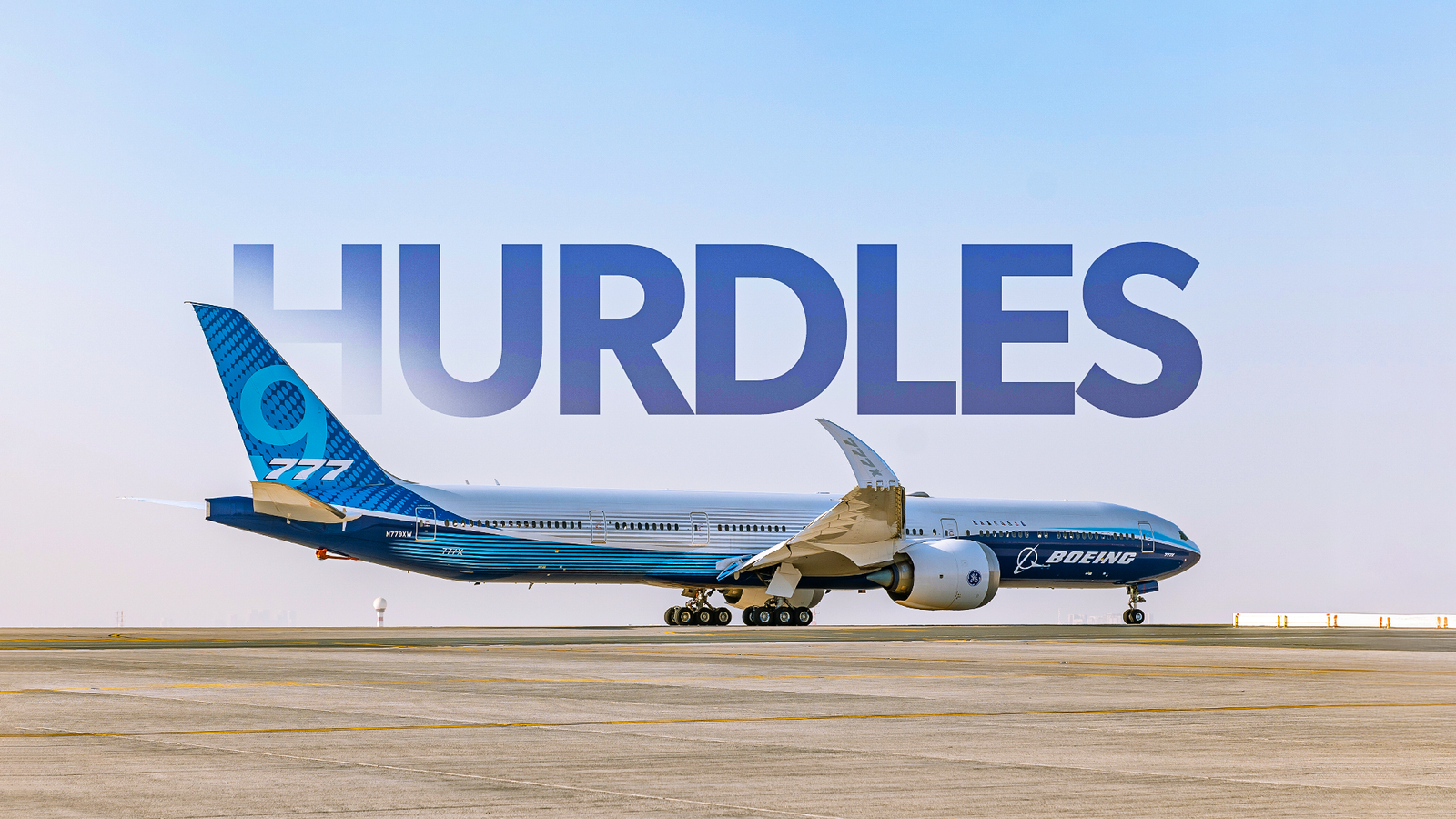
5 Hurdles Standing Between The Boeing 777X & Its 1st Delivery
Full Article
Original Source
Read the full article at Simpleflying →KhanList aggregates and links to publicly available news content. We do not host full articles from third-party sources. Always verify important information with original sources.