
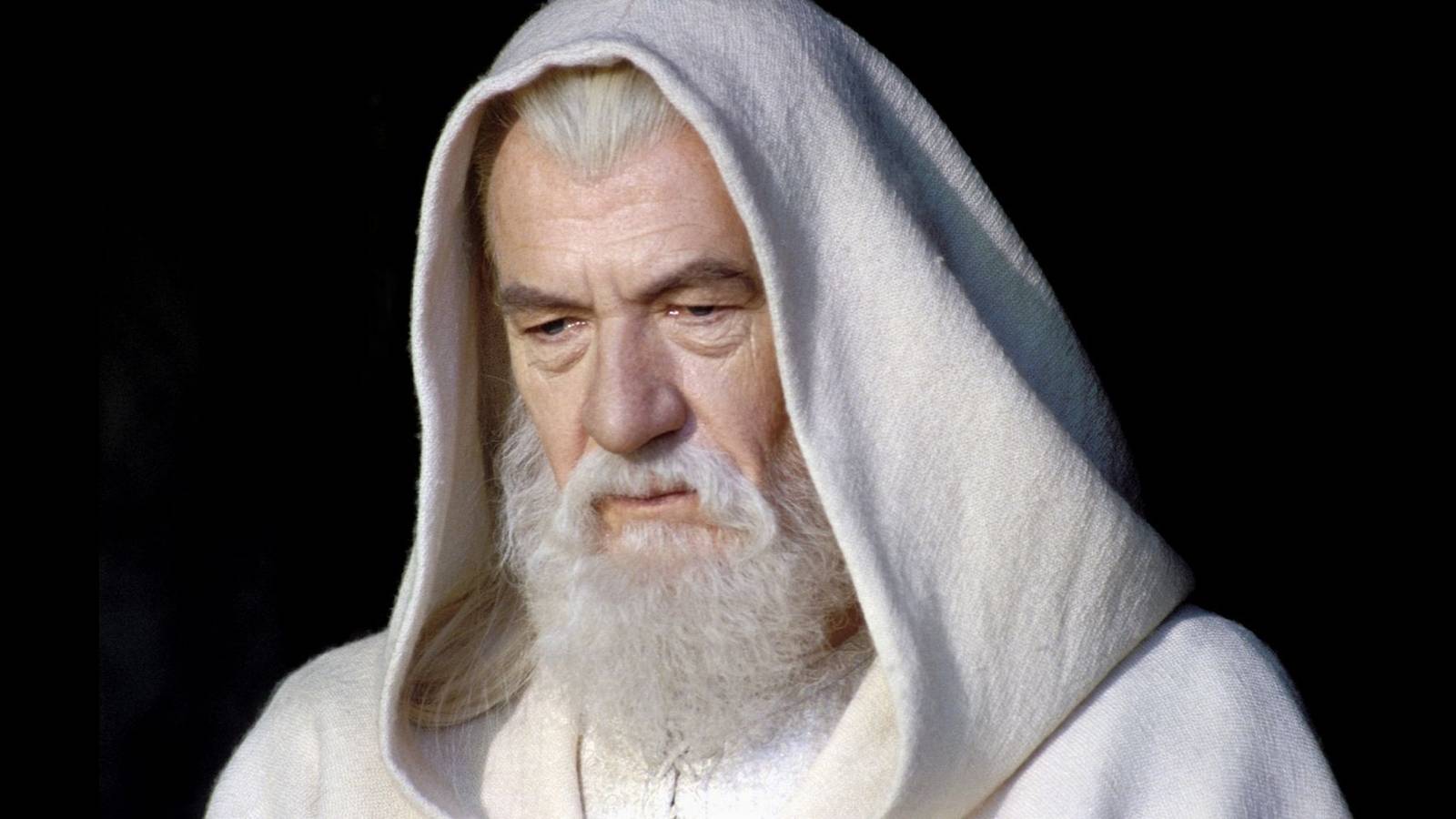
Image via New Line/courtesy Everett Collection Published Nov 21, 2026, 4:01 PM EST Kelcie Mattson is a Senior Features author at Collider. Based in the Midwest, she also contributes Lists, reviews, and television recaps. A lifelong fan of niche sci-fi, high fantasy, Gothic horror, elaborate action, and witty detective fiction, becoming a pop culture devotee was inevitable once the Disney Renaissance, Turner Classic Movies, BBC period dramas, and her local library piqued her imagination. Rarely seen without a book in one hand and a cup of coffee in the other, Kelcie explores media history (especially older, foreign, and independent films) as much as possible. You'll also find her enjoying video games, amateur photography, geeking out over all music genres, admiring birds from her porch, trying to overcome her meager baking skills, and attending fan conventions with her Trekkie family. Sign in to your Collider account What elevates a fantasy novel from great to exceptional? Although there are certain structural expectations to meet, the genre defines itself by its boundless capacity for creative flexibility and evolution. The real magic happens when all the imagination-captivating trappings we associate with comforting escapism fuse with intimately relatable and resonant metaphors; in short, works by authors who are unafraid to grapple with humanity's best and bleakest aspects, demand justice, and underscore what most matters. That is the genre's guiding light. Given fantasy's vast history, it's impossible to give every noteworthy title its due. The following five series were selected according to their cultural impact and longevity, whether they achieved their ambitious aims, and the crucial ways in which their writers' perspectives deconstruct and revitalize well-worn tropes into infinitely more authentic products — as only the most transformative, timeless stories can. 5 'The Wheel of Time' (1990–2013) Image via Macmillan Publishers Robert Jordan allegedly envisioned his career-defining The Wheel of Time as a smaller undertaking. His lore proceeded to explode into 14 installments and a cumulative word count that might make prospective readers faint from intimidation. The payoff, however — a comprehensive magic system, history, culture, religion, and political intrigue, with themes surrounding external and internal imbalance, dichotomy, and division — is worth relishing. Jordan's initial set-up pulls from numerous philosophical and mythological influences and also unabashedly homages the mechanics of old-fashioned tales. This enthusiastic lack of cynicism contributes to the series' appeal. An equally key component to Jordan's success is his deft ability to twist expectations from the beginning, planting subversions and nourishing their seeds until they blossom into a polished, awe-inspiring behemoth of a world. The characters whirled around by the stormy clash between their cosmic destinies and personal autonomy aren't effortlessly flawless heroes or automatically irredeemable villains; they either grow into or surpass their archetypical origins. And despite sometimes succumbing to unfortunate stereotypes, The Wheel of Time's gender dynamics remain astonishingly progressive for the '90s fantasy landscape. The Dragon Reborn might be male, but an abundant ensemble of formidable women drives the plot forward. Few other authors demonstrate such a consistent track record with epic endings, either — every battle is a feverish home run that catapults readers' hearts into their throats. 4 'Discworld' (1983–2015) Image via Terry Pratchett / Doubleday / Transworld Publishers The late and dearly missed Terry Pratchett is one of those beloved figures who, in terms of mainstream awareness, still feels like an underappreciated genius. Playfully satirizing fantasy's fundamentals doesn't invalidate Discworld's ingenuity, nor Pratchett's unrivaled mastery over prose and plotting. His life's work comprises 41 breezily paced books, all of which take place on the titular planet — which just so happens to be carried by four giant elephants riding atop an even larger turtle. (Because, why not?) While interconnected, Pratchett divides Discworld into multiple sub-series. These shenanigan-filled misadventures feature different stylistic flourishes and lead characters, like a gritty film noir-esque detective, a hapless and cowardly wizard, a resourceful witch-in-training and her keen, stereotype-defying elderly mentors (plus some exuberant fairies), and a version of Death who speaks in all-caps but negates most of his intimidation factor once he names his requisite pale horse "Binky." Such versatility means there's a corner of Discworld to suit everyone's preference. Yet no matter which protagonist or genre takes center stage, each installment retains astute insights on society, class, prejudice, and the universal insecurities and uncertainties that plague humanity. Pratchett sheathes his dagger-piercing reflections inside a vibrantly witty heart. The results nourish the mind and the soul. 3 'The Realm of the Elderlings' (1995–2017) Image via Del Rey One of her generation's most strikingly effective and inventive fantasy voices, Robin Hobb hit the ground running in 1995 with Assassin's Apprentice and hasn't let her foot off the gas since. Instead of crafting one massive sequential series, a la The Wheel of Time, The Realm of the Elderlings' 16 novels span four trilogies and one quartet, three of which (Farseer, The Tawny Man, and The Fitz and the Fool) follow the trials and tribulations of FitzChivalry Farseer, an expert assassin with an illegitimate aristocratic heritage. The Liveship Traders and The Rain Wild Chronicles explore beyond Fitz's homeland of the Six Duchies; the former trilogy's seafaring saga of multi-generational female determination and liberation includes sentient ships, whereas Rain Wild upsets the medieval-inspired realm's power hierarchy by re-introducing dragons. Hobb, arguably, can't be compared against anyone except herself. In terms of sheer breadth and depth, the only thing that matches her superb premises is her psychologically rich work. Human complexity is the proverbial tool of her trade, and she refuses to either sugarcoat our repellent facets or descend into outright nihilism. It's a pleasure to witness her creations — all prone to moral ambiguity, immaturity, and mistakes, but earning empathy — mature over the decades. Their dimensionality and gravitas ignite her world. In turn, the world's machinations shape their wounds, which Hobb exposes one affecting layer at a time by examining patriarchal violence from survivors' perspectives, bigotry, queer sexuality, gender fluidity, ecology, enslavement, the intersection of colonialism and Machiavellian regimes, and religious propaganda. As a woman in a space long overpopulated by the white male perspective, she's a trendsetter worthy of that designation. 2 'The Broken Earth' (2015–2017) Image via Orbit The Broken Earth, N. K. Jemisin's follow-up series to her acclaimed The Inheritance Trilogy, enshrined her status in the history books. She became the first author to win the Hugo Award for Best Novel for every book in a trilogy and the first to win the same award three years in a row (from 2015 to 2017). The Broken Earth's fantasy-meets-sci-fi premise unfolds on the Stillness, a single-continent planet routinely wrecked by environmental devastation. This instability reflects the Stillness' civilization; humanity has reshaped their daily lives around apocalyptic threats, but the prevailing power structure dooms itself by perpetuating systemic oppression, discrimination, and dehumanizing exploitation. Orogenes, the only people who can magically temper the planet's geological calamities, are vital to the Stillness' survival, yet reviled and persecuted. Meanwhile, non-orogene individuals are sorted into strict caste systems predicated upon whatever predetermined resources they can contribute to society. Partially inspired by "the protests in Ferguson, Missouri, over the killing of unarmed Black teenager Michael Brown," Jemisin's staggering sophomore achievement serves as both a mirror and a warning. The futuristic Stillness is terrifyingly easy to visualize; ancient sins continue to rule and ruin, and these forces are as fundamentally destructive and merciless as climate change. The Broken Earth's themes, realized through three women's entwined journeys, concern the haunting effects of cumulative trauma on identity and autonomy as well as everything it actually requires to interrogate, shatter, and remake a corrupt world. It's a seismic feat from an extraordinary creator, intricate and urgent and acutely unforgettable — a work of art as relevant and limitless as fantasy should be. 1 'The Lord of the Rings' (1954–1955) Image via HarperCollins Is this the most obvious choice under the sun? Of course. Does The Lord of the Rings wield an incalculable level of pop culture influence that's usually reserved for Greek myths and Bible tales? Undoubtedly. Fantasy as we know it rests largely upon J. R. R. Tolkien's shoulders. But let's set aside the author's tremendous footprint long enough to acknowledge a more impressive fact: The Lord of the Rings still feels as fresh as the day it was published. Countless direct and indirect adaptations have either revisited or channeled every corner of Middle-earth, yet the saga remains an irreplaceably distinct and immersive magnum opus. Heavily informed by Tolkien's horrifying time as a combat soldier during World War I, his poignant ode to gentleness, compassion, community, altruistic sacrifice, and "the smallest person" triumphing against insurmountable evil dazzles with all the sharpness of a fresh-cut diamond in direct sunlight. Even when hope dawns anew, however, Tolkien tempers his fictional victory with the bittersweet ache that accompanies acknowledging humankind's vulnerabilities, fears, and tragedies — which war's life-altering scars compound beyond measure. Resilience and integrity demand a high cost. Tapping into the emotional intimacies we universally share is why the Fellowship's journey, especially Frodo Baggins' unfathomable burden as an unlikely and haunted hero, has provided catharsis to generations of fans. The Lord of the Rings embodies fantasy's enduring importance, not to mention the reasons why we gravitate toward storytelling throughout our lifetimes like it's oxygen. After 72 years, world-shifting feature films, and at least one more movie and two seasons of Prime Video's The Rings of Power on the way, it's safe to say that Tolkien's legacy shows no signs of ever diminishing. The Lord of the Rings
5 Greatest Fantasy Book Series of All Time, Ranked
Full Article
Original Source
Read the full article at Collider →KhanList aggregates and links to publicly available news content. We do not host full articles from third-party sources. Always verify important information with original sources.